
Decades before the V-22 Osprey, America built an aircraft that could lift off vertically like a helicopter, then cruise at over 400 mph like an airliner — by rotating its entire wing. It worked. It was decades ahead of its time. And almost nobody remembers it.
The LTV XC-142A tiltwing was one of the boldest V/STOL experiments ever flown, and a direct ancestor of the ideas that power today's tiltrotors.
Informations clés
- Taper: Tri-service tiltwing V/STOL transport prototype
- Builders: Ling-Temco-Vought, Ryan and Hiller
- Premier vol : 29 September 1964; first full transition 11 January 1965
- Pouvoir: Four cross-linked GE T64 turboprops driving big four-blade props
- Performance: Vertical takeoff; over 400 mph in cruise; up to 32 troops
- Construit: Five prototypes; program wound down by the late 1960s
Turn the whole wing
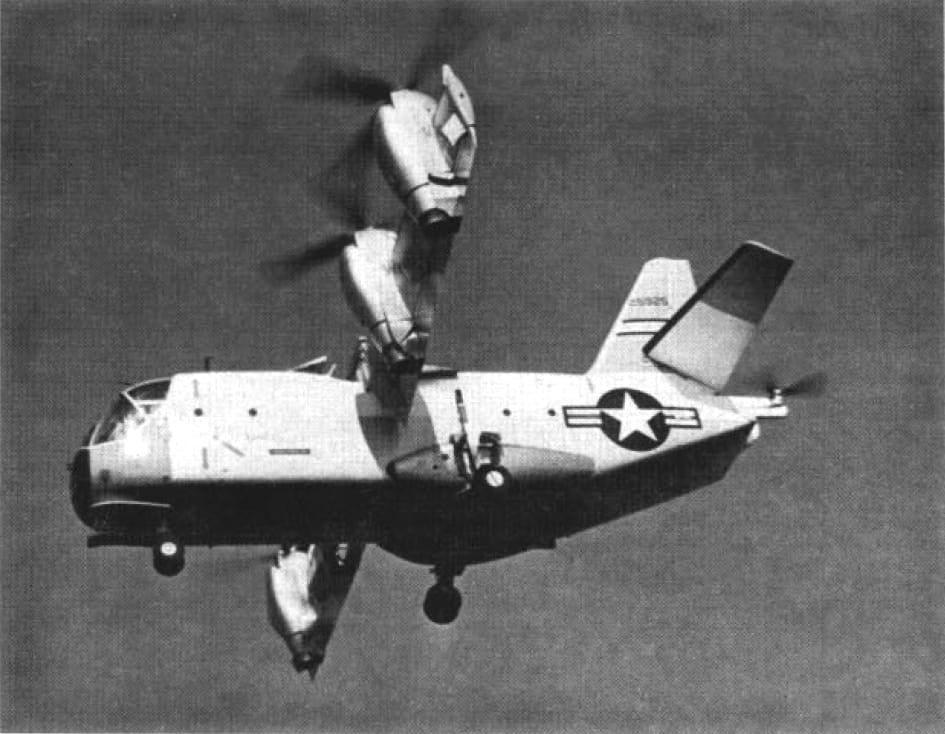
The problem with combining a helicopter's vertical lift and an airplane's speed is the propellers: for hover they must point up, for cruise they must point forward. The XC-142's answer was audacious — tilt the entire wing, engines, propellers and all, through nearly a right angle. Wing pointed up, the aircraft hovered; wing rotated forward, it flew like a conventional turboprop.
Four big General Electric turboprops were cross-linked by shafts so that if one engine failed, the others kept all four propellers turning. On 29 September 1964 the XC-142 first flew conventionally; by 11 January 1965 it had performed the full trick — vertical takeoff, transition to forward flight, and vertical landing.
The XC-142 in flight, tilting its wing between hover and cruise.
Brilliant, and brutally complicated
On paper the XC-142 delivered everything the Army, Navy and Air Force wanted: it could carry 32 troops into a clearing and then dash away at airliner speeds. In practice, the mechanical complexity was punishing. The cross-linked drive shafts, gearboxes and tilting mechanism demanded constant maintenance, control in the hover was demanding, and the program suffered a fatal accident that cost a crew their lives.
Across five prototypes, the fleet logged hundreds of flights and dozens of pilots — a serious, thorough test program. But the reliability and complexity concerns, combined with shifting service priorities, meant no production order ever came. By the late 1960s the tri-service enthusiasm had faded, and the XC-142 was retired.
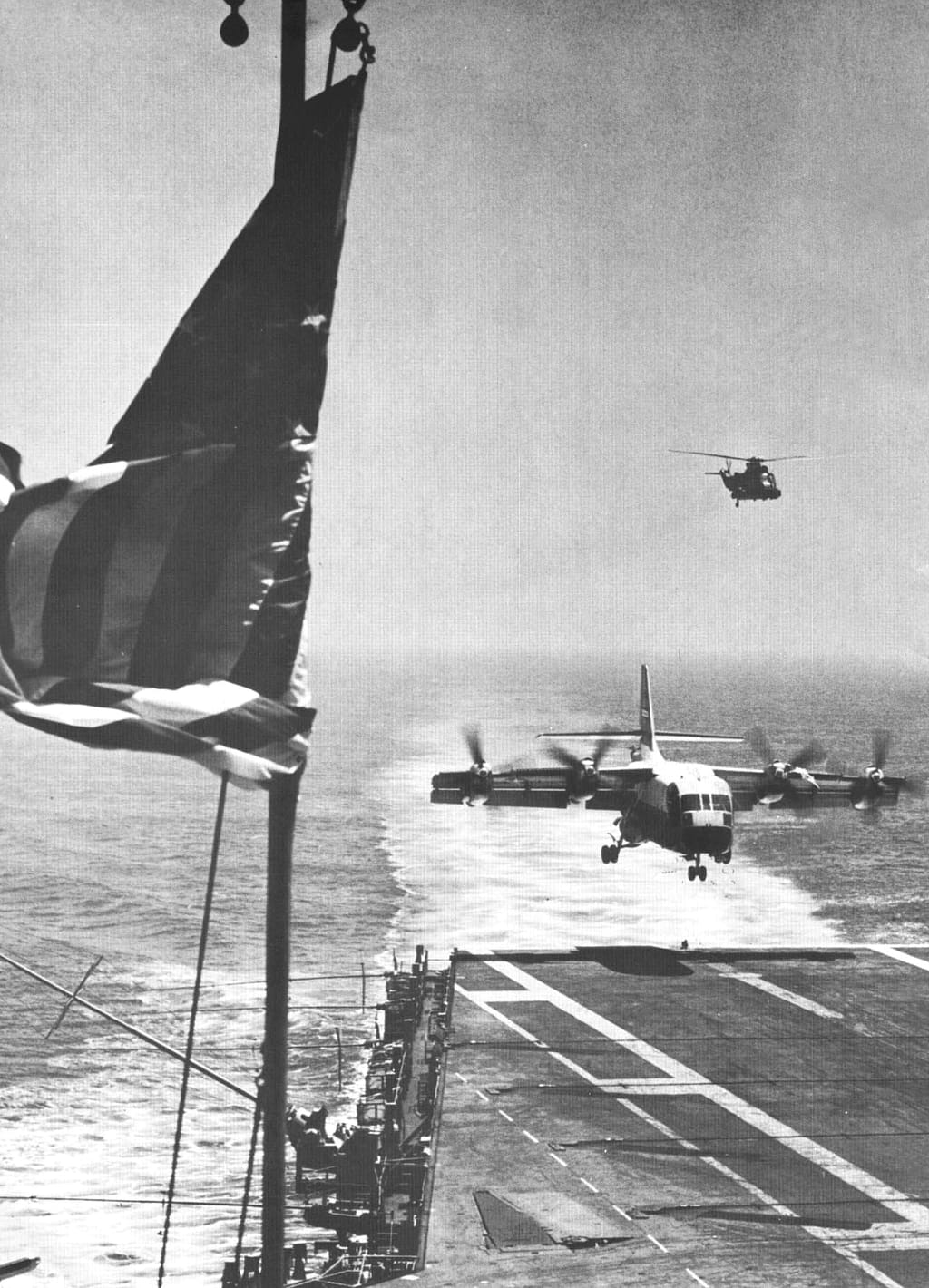
The tilt-wing wonder and why it never entered service.
Ahead of its time, in the best and worst ways
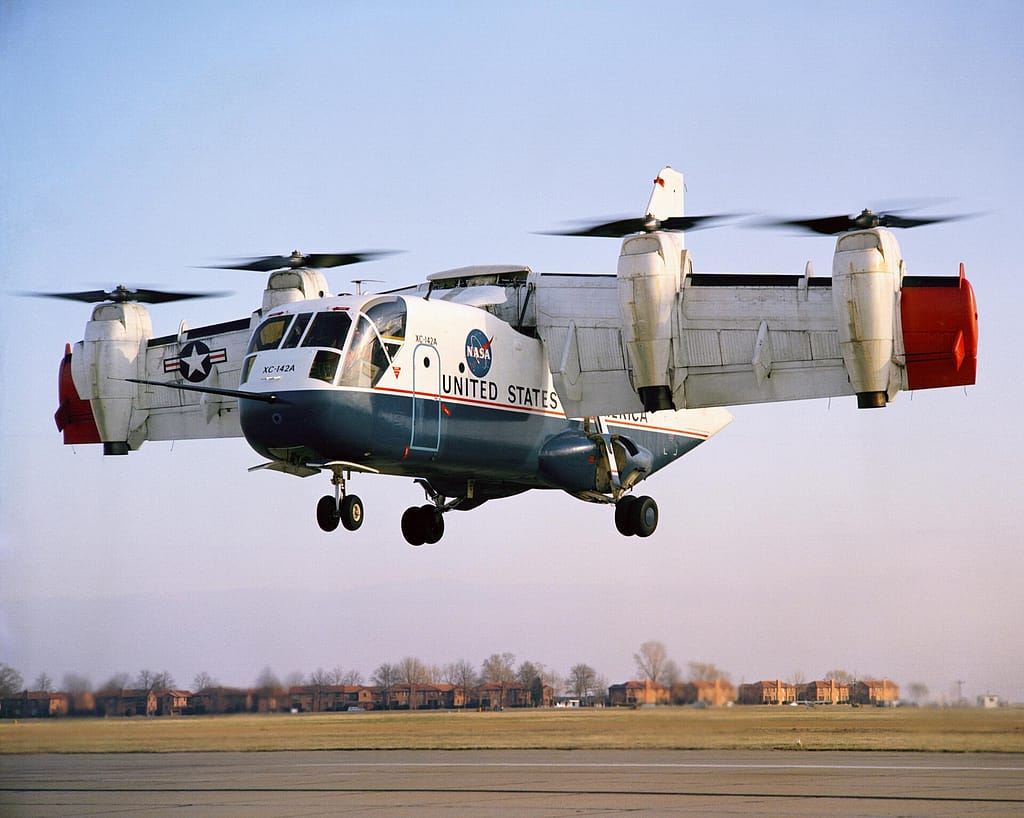
The XC-142 proved a vertical-lift transport with airplane-like speed was genuinely achievable — the technology of the 1960s just wasn't ready to make it reliable or affordable. The dream did not die; it evolved. The tiltrotor V-22 Osprey eventually delivered the same promise using a different mechanism, backed by the digital flight controls the XC-142's engineers never had.
So the XC-142 belongs to that noble club of aircraft that failed commercially while succeeding completely as pioneers. It answered the question “can it be done?” with a resounding yes — and left the how-to-do-it-well for the next generation.
Sources: Wikipedia (LTV XC-142); Vintage Aviation News; AeroCorner; Vertipedia.
Articles similaires


0 commentaire