
Une partie de Les Ailes de la Guerre — De Zeppelin à la Sixième Génération, notre série sur les grands tournants de l'aviation militaire.
On 9 June 1982, the Syrian air-defence crews dug into Lebanon’s Bekaa Valley watched small, slow aircraft buzzing overhead and did the natural thing: they switched on their radars and prepared to shoot. It was a fatal mistake. The little aircraft were unmanned Israeli drones — decoys and scouts with no one aboard to kill — and the moment the Syrian radars lit up, they gave away their exact positions to the Israeli jets waiting nearby.
What followed was a massacre of machines. In a matter of hours, seventeen of nineteen Syrian missile sites were destroyed and dozens of Syrian aircraft were swatted from the sky, for almost no Israeli loss. It was one of the most lopsided air battles in history — and at the heart of it was a new kind of aircraft that risked no pilot at all. The age of the drone had begun.
FAITS RAPIDES
| Quoi | The drone, or uncrewed aircraft — flying and fighting with no one aboard |
| Percée | Israel’s Scout and Mastiff drones in the Bekaa Valley, 1982 |
| The killer app | Persistent, expendable eyes — and, later, weapons |
| American icons | The armed MQ-1 Predator and MQ-9 Reaper |
| The new wave | Cheap drones by the thousand, as seen over Ukraine |
| What’s next | Autonomous “loyal wingmen” flying alongside crewed fighters |
The unmanned eye
The idea of a pilotless aircraft is older than it sounds — the First World War produced radio-controlled flying bombs, and for decades air forces used drones as gunnery targets. But the drone as a serious tool of war was largely an Israeli invention. In the 1970s and 80s, Israel built small, cheap reconnaissance drones like the Scout and Mastiff that could loiter for hours over a battlefield, beaming back live television pictures to commanders on the ground.
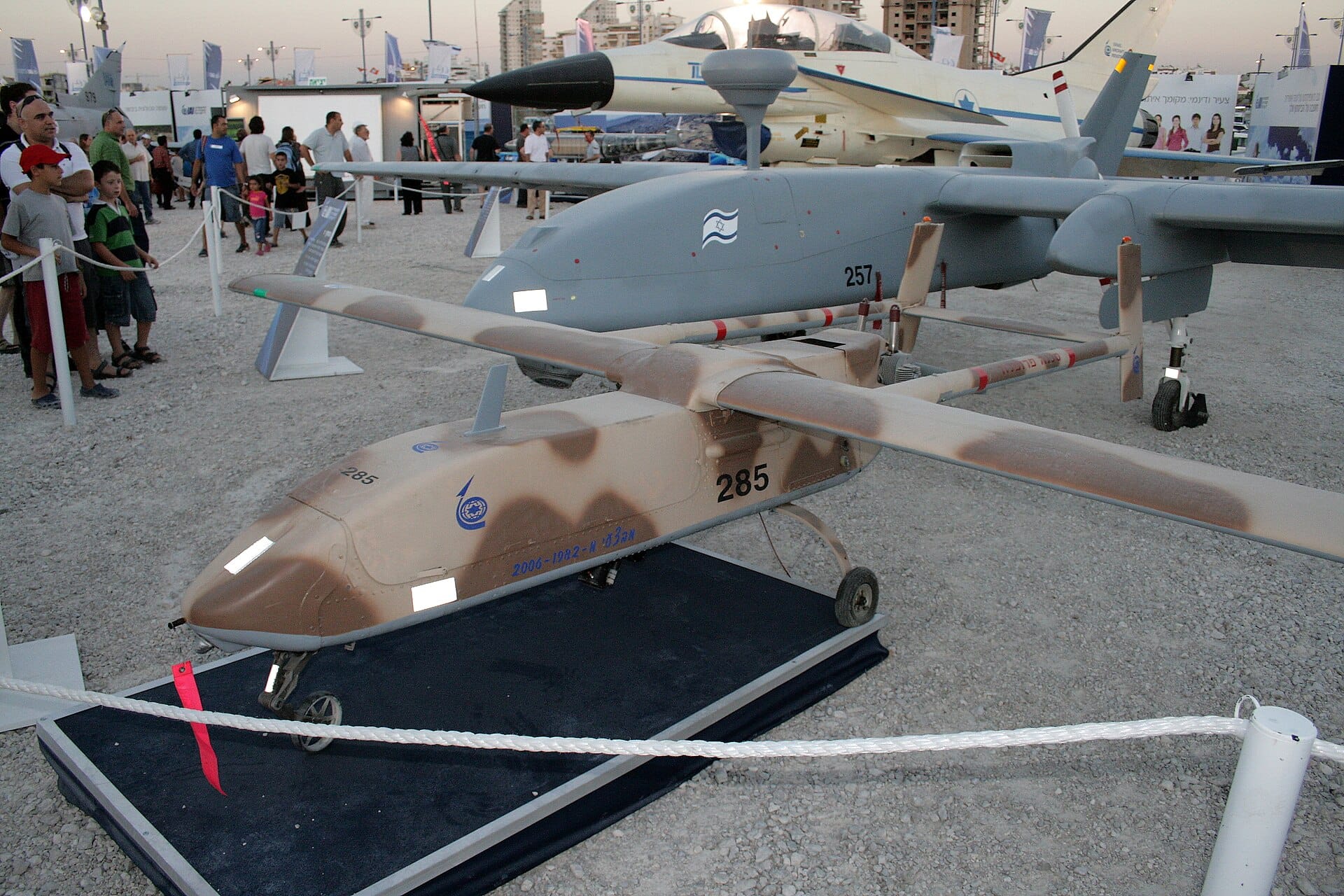
What made them revolutionary was not speed or firepower but patience. A fighter pilot can stay over a target for minutes; a drone can stay for hours, or be thrown away without a funeral. That changed the maths of war.
The Bekaa showed what the maths could buy. Israel sent unmanned decoys ahead to make the Syrian radars reveal themselves, used other drones to watch the results in real time, and fed it all to the waiting jets. Over the days that followed, Syria lost its entire forward missile network and around eighty aircraft, while Israeli losses were negligible. No single weapon won that battle, but the patient, unmanned eye made the whole machine work — and air forces around the world took note.
The hunter-killer
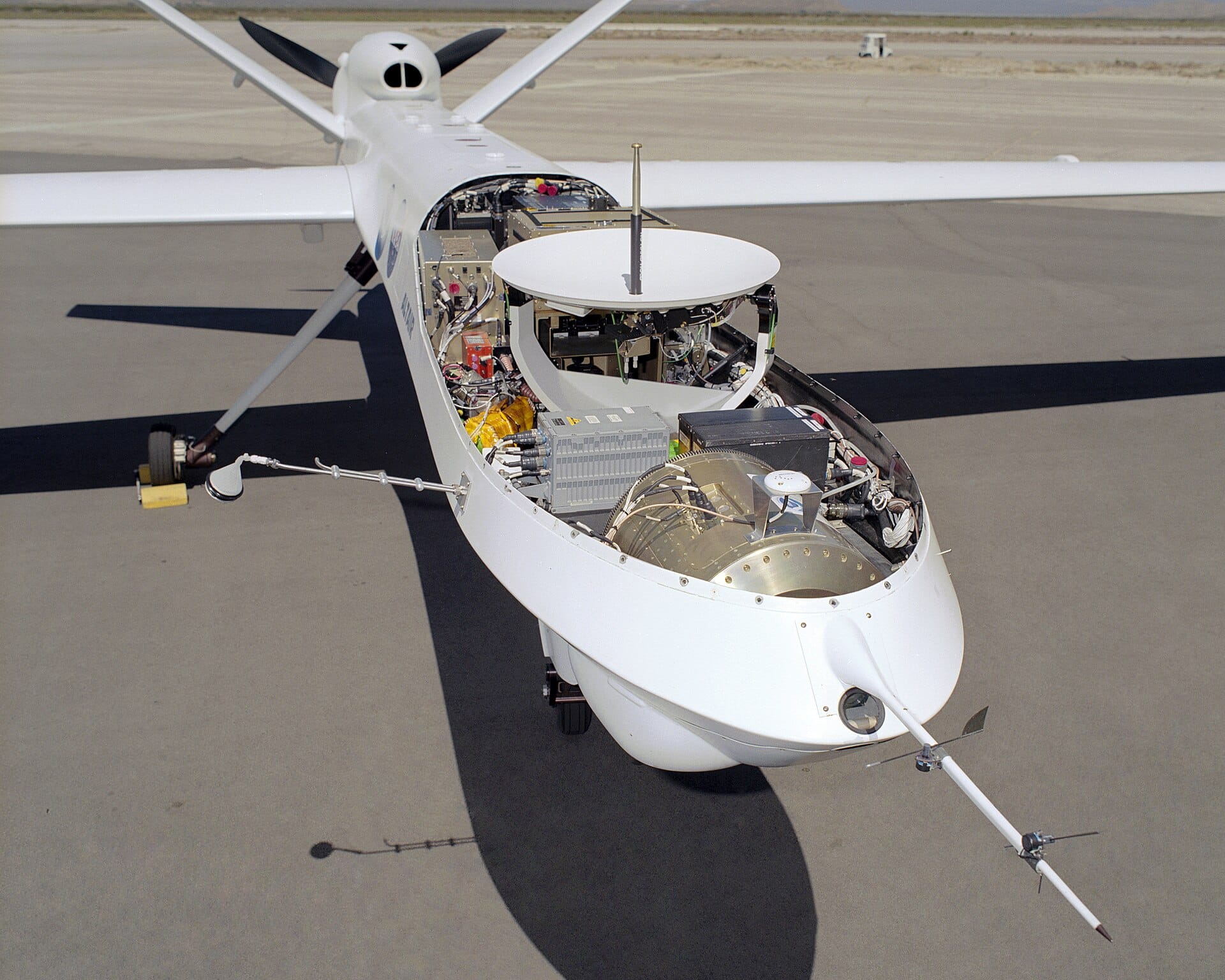
The Americans took the next step: they armed the drone. The MQ-1 Predator and its bigger brother the MQ-9 Reaper could not only watch a target for hours but destroy it with a missile — all controlled by a crew sitting in a trailer thousands of miles away, often on another continent. For two decades these hunter-killers defined American warfare, and raised hard new questions: what does it mean to fight a war by remote control, with the “pilot” commuting home for dinner after a day of combat half a world away?
The Predator did not begin as a killer. It first flew in the 1990s as a pure reconnaissance drone, watching the wars in the Balkans. Only after 2001 was it armed with missiles and sent to hunt as well as watch — and once it could, the temptation to use it everywhere proved irresistible. For two decades the armed drone became the signature weapon of the long campaigns in Afghanistan, Iraq, Yemen and beyond, killing from a clear sky with a patience no crewed aircraft could match.
Cheap, lethal, by the thousand
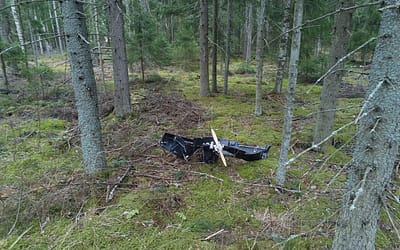
Then the drone got cheap — and that changed everything again. The warning came in 2020, in a short, brutal war over the disputed region of Nagorno-Karabakh, where one side used relatively inexpensive Turkish-built drones to hunt down the other’s tanks, guns and air-defence vehicles almost at will. Military observers watched the footage and understood that something had shifted: expensive armoured forces could now be picked apart from above by aircraft costing a tiny fraction of their targets. The war in Ukraine has been defined by small, expendable drones bought almost by the crate: quadcopters dropping grenades, racing first-person-view drones flown straight into tanks, and long-range one-way attack drones launched in swarms. Suddenly a weapon costing a few hundred dollars could destroy a vehicle — or even a helicopter — worth millions. The expensive hunter-killers were not immune either; even the mighty Reaper fleet has taken losses, and the counter-drone fight has become so universal that a pilot in a propeller trainer once shot one down with a rifle.
The loyal wingman
The newest chapter folds the drone back in with the crewed aircraft. The major air forces are now building autonomous “loyal wingman” drones — uncrewed jets, flown by artificial intelligence, that fly into the most dangerous parts of a battle alongside a human-piloted fighter that hangs back and directs them. It is the defining feature of the sixth generation of air power, and it means that, increasingly, the first aircraft into the fight will have no one inside it at all.

POWERS COMPARED — THE DRONE THROUGH THE ERAS
| The pioneers | Israel, which turned the reconnaissance drone into a war-winner in 1982 |
| The armed era | The United States, with the Predator and Reaper hunter-killers |
| The cheap-mass era | Ukraine, Russia, Turkey (Bayraktar) and Iran (Shahed) — drones by the thousand |
| Le verdict | The most consequential aircraft of the 21st century often has no pilot |
Sources: Israeli Air Force historical accounts; U.S. Air Force; standard analyses of the Bekaa Valley campaign and the wars in Ukraine and the Middle East.
| 1. | Le dirigeable en guerre | Comment le Zeppelin a transporté pour la première fois la guerre dans les airs |
| 2. | Première mission : reconnaissance | Les yeux qui ont conquis la Marne et sont montés en orbite |
| 3. | Le combattant | La quête centenaire du contrôle de l'air |
| 4. | Folkestone, 1917 | Le jour où le bombardement stratégique est né |
| 5. | La révolution de la précision | Quand les bombes et les missiles ont appris à viser eux-mêmes |
| 6. | La Guerre des Sorciers | Comment la guerre électronique a appris à aveugler l'ennemi |
| 7. | Yeux en orbite | Comment l'espionnage s'est étendu à l'espace |
| 8. | Furtivité | Comment les avions ont appris à disparaître des radars |
| 9. | L'essor du drone | La guerre sans pilote dans le cockpit |
| 10. | La sixième génération | Quand le chasseur a appris à voler tout seul |
0 commentaire