
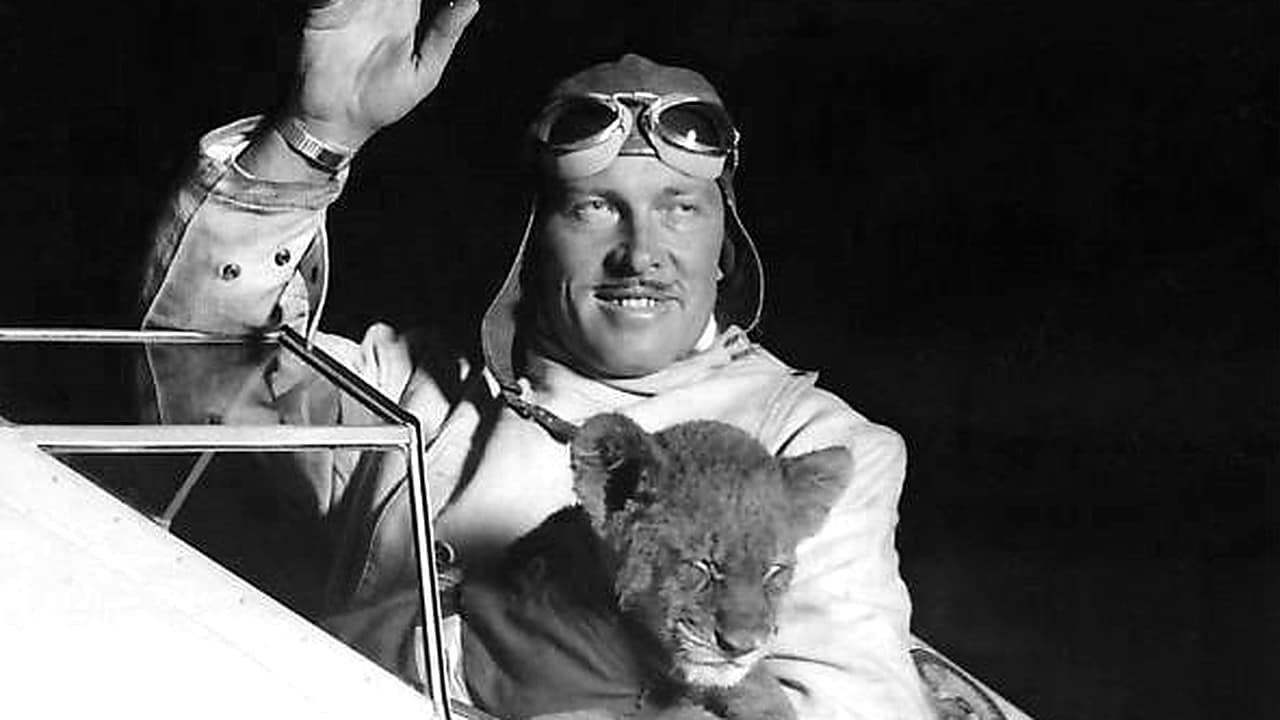
Picture a man leaning out of an open cockpit in a powder-blue military tunic he designed himself, a waxed moustache curling at the tips, waving to the crowd — and cradling a live lion cub in the crook of his arm. That was Roscoe Turner, and in the 1930s he was the most famous, fastest, and by some distance the most theatrical pilot in America.
He won three Thompson Trophies, shattered transcontinental speed records, and understood something his rivals never quite did: that in the golden age of air racing, being fast was only half the job. The other half was being unforgettable.
Informations clés
- Pilote: Roscoe Turner (1895–1970)
- Fame: three-time Thompson Trophy winner (1934, 1938, 1939)
- Trademark: a self-designed uniform, waxed moustache and a pet lion
- Gilmore: a lion cub that flew with him, complete with its own parachute
- Also: multiple transcontinental speed records; MacRobertson Race, 1934
- Honour: the last civilian awarded the Distinguished Flying Cross
The uniform, the moustache, the swagger
Turner came up the hard way — a Mississippi farm boy who barnstormed, wing-walked and even did a short stretch in prison before he made his name. Along the way he built a persona: a tailored blue tunic modelled on Royal Air Force officers, fawn jodhpurs, riding boots, a winged “RT” brooch, and the title “Colonel,” handed to him honorarily by a couple of state governors and never given back.
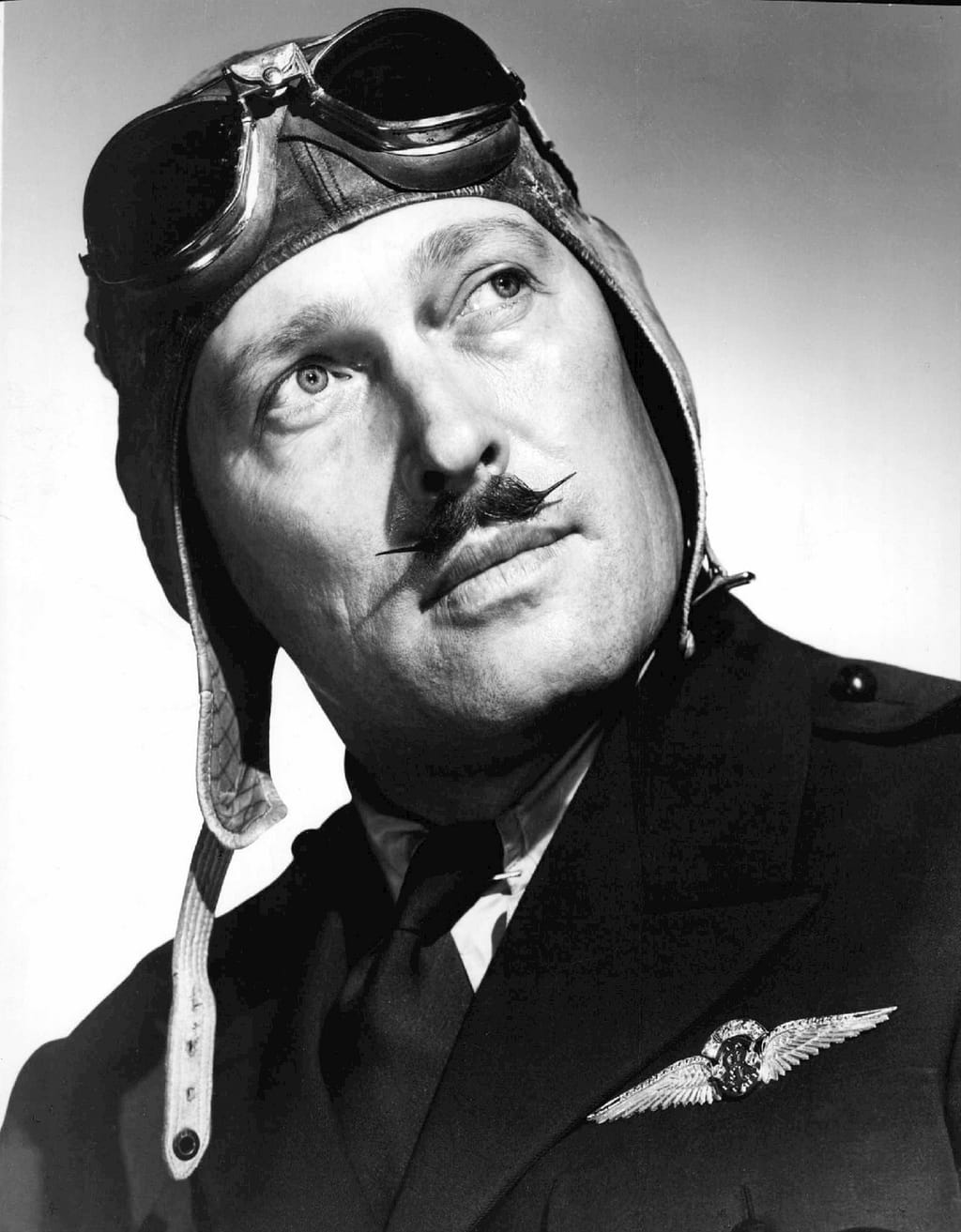
He confessed in later life that he never actually enjoyed wearing the outfit. He wore it anyway, because it made him instantly recognisable, and recognisability sold sponsorships, tickets and headlines.
Roscoe Turner himself, talking about speed and air racing.
A lion named Gilmore
His masterstroke was the lion. One of Turner’s backers was the Gilmore Oil Company, whose emblem was a red lion’s head. So Turner acquired a lion cub, named him Gilmore after the sponsor, raised him at his Beverly Hills home — and took him flying. Fitted with a specially made parachute, Gilmore rode along on stunts and publicity flights, clocking up thousands of miles in the air.
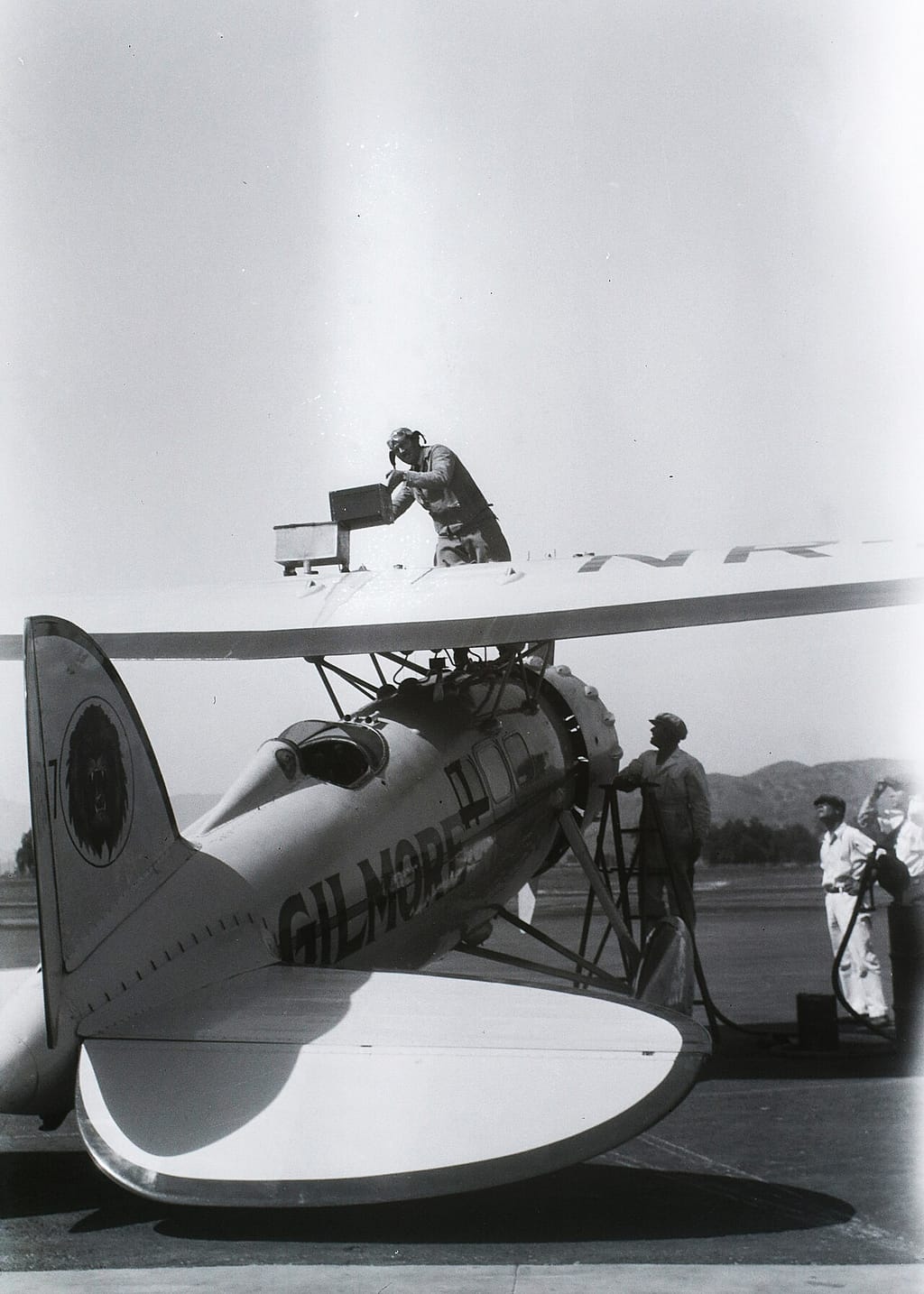
By about 1935 Gilmore had grown too large and too strong to share a cockpit, and retired to a lion farm. He lived to 1952; his body was later stuffed and mounted, and today he sits in the collection of the Smithsonian’s National Air and Space Museum — probably the only lion ever to earn a place in an aviation museum. Turner, ever the showman, played every appearance for the cameras.
The story of how a pilot and a lion cub became media stars.
The fastest man in the sky
Beneath the theatrics was a genuinely great racing pilot. Turner flew sleek Wedell-Williams racers and later his own Turner-Laird RT-14 Meteor to win the Thompson Trophy three times — in 1934, 1938 and 1939 — and repeatedly broke the coast-to-coast speed record. He raced in the same lethal era as the notorious Gee Bees, stubby flying engines that killed several of the sport’s biggest names. In 1934 he even flew a Boeing 247 airliner in the great London-to-Melbourne MacRobertson Race, finishing third across the world.
After his third Thompson win in 1939, at the top of the sport, he walked away.
The Gee Bee racer — the beautiful, deadly machines of Turner’s era.
The last showman
Turner spent his later years running a flight school and an airline that eventually grew into part of the network behind US Airways. In 1952 he became the last civilian ever awarded the Distinguished Flying Cross. He died in 1970, and his gold-and-silver Meteor racer now hangs in the Smithsonian, not far from Gilmore.
Plenty of pilots flew faster in the decades that followed. None ever matched Roscoe Turner for sheer, unrepeatable style — the colonel who wasn’t quite a colonel, in a uniform he didn’t like, with a lion in his lap and a nation watching.
Sources: Roscoe Turner (Wikipedia); Carroll V. Glines, Roscoe Turner: Aviation’s Master Showman (Smithsonian, 1995); Smithsonian National Air and Space Museum (“Gilmore the Flying Lion”).
0 commentaire