
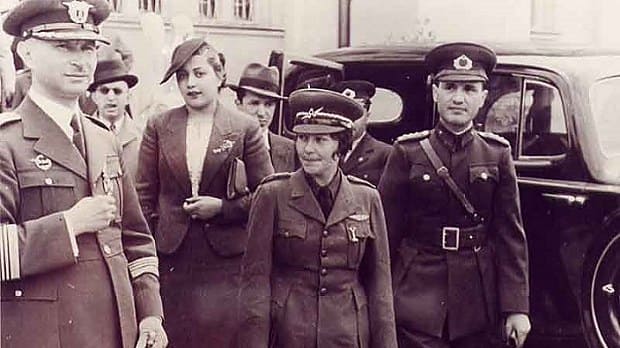
Le matin du 5 mai 1935, un mélange de poussière, d'herbe printanière et d'huile de moteur flottait dans l'air. Sur un nouvel aérodrome aux abords d'Ankara, la jeune République turque inaugurait une école de pilotage lors d'une cérémonie qu'elle affectionnait particulièrement : des planeurs tournoyant dans le ciel anatolien, des parachutistes étrangers planant au-dessus de la foule, et, au centre de tout cela, Mustafa Kemal Atatürk, contemplant son pays apprendre à lever les yeux vers le ciel.
À ses côtés se tenait une jeune femme frêle de vingt-deux ans, aux yeux sombres et graves. C'était sa fille adoptive, et les parachutes la bouleversèrent. Atatürk le remarqua. Souhaiterait-elle sauter elle aussi ? Avant la fin de la journée, le président avait ordonné au directeur de l'école de l'inscrire comme première élève.
Elle s'appelait Sabiha Gökçen, et ce nom était en lui une sorte de prophétie. Atatürk l'avait choisi pour elle six mois plus tôt seulement, lorsque la nouvelle loi turque sur les noms de famille l'exigeait : Gökçen, de gök — "of the sky." She had never touched an aircraft. Within two years she would be, by Guinness World Records' reckoning, the first woman in history to fly a fighter in combat — a distinction that carries both glory and a shadow.
Informations clés
- Born 22 March 1913 in Bursa; died 22 March 2001 in Ankara — on her 88th birthday
- Orphelin dès son plus jeune âge ; adopté par Mustafa Kemal Atatürk après leur rencontre à Bursa en 1925, à l'âge de 12 ans
- Inscrite comme première femme stagiaire de l'école de pilotage de Türkkuşu lors de son ouverture, le 5 mai 1935
- Trained on military aircraft at Eskişehir in 1936-37 under a special programme — war academies did not admit women
- Elle a effectué des missions de bombardement lors des opérations de Dersim en 1937 ; elle est reconnue par le Guinness World Records comme la première femme pilote de chasse.
- Environ 8 000 heures de vol à son actif ; instructeur en chef de Türkkuşu à partir de 1938
- L'aéroport international Sabiha Gökçen d'Istanbul, inauguré en janvier 2001, porte son nom.
Un portrait documentaire de Sabiha Gökçen, orpheline de Bursa devenue aviatrice recordwoman.
Un orphelin aux portes du président
She was born in Bursa on 22 March 1913, in the last exhausted years of the Ottoman Empire, to Mustafa İzzet Bey and Hayriye Hanım — a family, by the official account, of Bosniak origin. Both parents died while she was a child, and she was raised in poverty by her brother. Then, in 1925, the founder of the Republic came to Bursa on an official visit, and a twelve-year-old girl did something remarkable: she asked permission to speak with him.
What she wanted was an education — a place at boarding school. What she got was a family. Struck by her nerve and moved by her circumstances, Atatürk asked her brother's permission to take her to the Çankaya presidential residence in Ankara, where she joined the several other daughters he had adopted. She studied at the Çankaya Primary School and later at the Üsküdar American Academy in Istanbul.
It is worth pausing on how deliberate this was. Atatürk had no biological children; he adopted daughters and raised them as public arguments — living proof of what the new, secular, westernising Republic intended for its women. In 1934, Turkish women won the full right to vote and stand for parliament, ahead of France and Switzerland. The president's daughters were expected to embody the point. None of them would embody it quite like Sabiha.
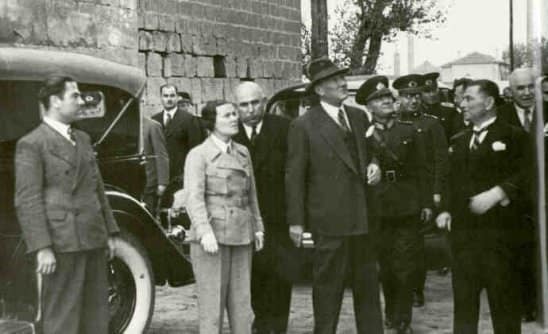
Oiseau turc
At Türkkuşu — "Turkish Bird," the civil aviation school of the Turkish Aeronautical Association — she trained first as a glider pilot and parachutist, then was sent with seven male classmates to the Soviet Union, to Crimea, for an advanced course in powered flight. The trip broke off in grief: in Moscow she learned that her adoptive sister Zehra had died, and she returned to Turkey and withdrew from the world for a time. It was Atatürk who insisted she climb back into a cockpit. On 25 February 1936 she flew a powered aircraft for the first time.
Les académies militaires turques n'admettaient pas les femmes ; Atatürk contourna donc le problème. Un uniforme personnalisé fut confectionné et un programme spécial de onze mois fut mis en place à l'école d'aviation militaire d'Eskişehir pour l'année universitaire 1936-1937. Elle passa ensuite six mois au sein du 1er régiment d'aviation de la base aérienne d'Eskişehir, pilotant des bombardiers et des chasseurs aux côtés d'officiers.
In 1937 she flew in the Aegean and Thrace military exercises and drew praise for her airmanship. Then, that summer, came the assignment that made her a record-holder — and the one that history weighs very differently now.
L'ombre de Dersim
In 1937 and 1938 the Turkish state waged a brutal campaign against a rebellion in Dersim, a remote eastern region populated largely by Kurdish Alevis. Aircraft flew sortie after sortie against villages as well as fighters, and thousands of people — combatants and civilians — were killed or deported. Gökçen flew bombing missions in those operations; a General Staff report noted the "serious damage" caused by her 50-kilogram bomb. For her performance she received a commendation and the Turkish Aeronautical Association's first jewelled Murassa Medal.
She said those words herself, to the newspaper Milliyet, in 1956 — without apparent regret. There is no honest way to tell her story around this chapter, and Turkey itself has begun to say so: in 2011, then prime minister Recep Tayyip Erdoğan issued a formal apology for Dersim, calling it "one of the most tragic events of our near history."
So the world's first female combat pilot earned the title in a campaign against her own country's civilians. Both facts are true at once. The Turkish press of 1937 saw only the first, and crowned her "The Flying Girl" — the airborne face of the Republic's new woman.
La fille volante
En juin 1938, elle effectua une tournée de cinq jours au-dessus des capitales des Balkans, qui lui valut un immense succès et lui valut des décorations de Yougoslavie et de Roumanie. L'aviation était pour elle une forme de diplomatie, et elle y excellait : calme, photogénique et d'une précision irréprochable dans les airs.
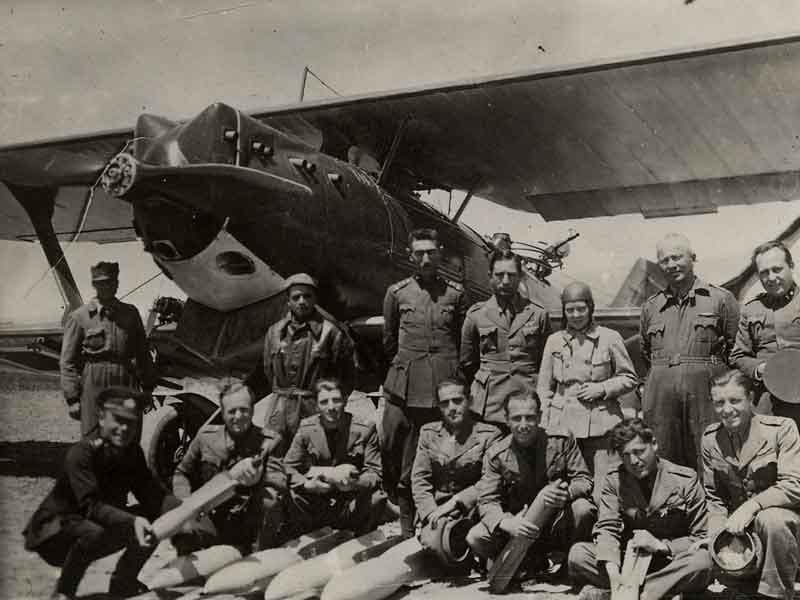
La même année, elle fut nommée instructrice en chef de l'école de pilotage de Türkkuşu, poste qu'elle occupa jusqu'au milieu des années 1950. Elle siégea au conseil d'administration de l'association et forma personnellement quatre femmes pilotes. Lorsqu'elle cessa de voler en 1964, elle totalisait environ 8 000 heures de vol. En 1981, elle publia ses mémoires., Une vie sur les traces d'Atatürk.
The honours kept arriving long after the propellers stopped. The FAI awarded her its Gold Air Medal in 1991. In 1996 the United States Air Force put her on its poster of the twenty greatest aviators in history — the only woman among them.
Noms et silences
In January 2001, Istanbul opened its second airport and named it Sabiha Gökçen International. She lived just long enough to see it: she died of heart failure in Ankara on 22 March 2001 — her 88th birthday. Today her name is spoken over tannoys by millions of travellers who may know nothing else about her.
Three years after her death, her story acquired one more contested layer. In February 2004 the Turkish-Armenian newspaper Agos published an article by editor Hrant Dink, in which a woman named Hripsime Sebilciyan claimed to be Gökçen's niece — and that Gökçen was born an Armenian orphan taken from an orphanage after the genocide. The mainstream daily Hürriyet picked the story up, and the reaction was ferocious: the Turkish General Staff declared the debate an abuse of "national values," and her adoptive sister Ülkü Adatepe insisted on the official account. The claims remain unproven and disputed; what is not disputed is the ugliness they exposed. Dink was assassinated by a nationalist gunman in 2007, and many observers count the Gökçen affair among the events that painted the target on him.
Even her famous record carries a footnote — France's Marie Marvingt flew bombing missions in 1915, and Russia's Evgeniya Shakhovskaya flew military reconnaissance a year earlier, though neither as a trained fighter pilot, which is why Guinness gives Gökçen the title. Perhaps that is the fitting summary of Sabiha Gökçen: every superlative about her requires a second sentence. This week, with Turkish air power back in the headlines over the F-35, it is worth remembering where that story began — with an orphan from Bursa who asked a president for an education and was handed the sky.
Images d'époque : Gökçen elle-même raconte ses souvenirs d'Atatürk.
Sources : Wikipédia, Guinness World Records, Runway Girl Network, biographie archivée de l’armée de l’air turque, Milliyet (1956), BBC News
Questions connexes
Qui était Sabiha Gökçen ?
Sabiha Gökçen (1913-2001) était une aviatrice turque considérée comme la première femme pilote de chasse au monde. Orpheline dès son plus jeune âge, elle fut adoptée par Mustafa Kemal Atatürk, fondateur de la Turquie moderne. Formée comme pilote militaire dans les années 1930, elle devint instructrice en chef à l'école de pilotage de Türkkuşu, totalisant environ 8 000 heures de vol.
Pourquoi Sabiha Gökçen est-elle considérée comme la première femme pilote de chasse ?
Gökçen participa à des missions de bombardement lors des opérations de Dersim en 1937, dans l'est de la Turquie. Le Livre Guinness des records la reconnaît comme la première femme pilote de chasse au monde. Elle avait suivi une formation sur des avions militaires à Eskişehir en 1936-1937 grâce à un programme spécial, les académies militaires turques n'admettant alors pas de femmes.
Quel était le lien entre Sabiha Gökçen et Atatürk ?
Mustafa Kemal Atatürk rencontra la jeune orpheline à Bursa en 1925, alors qu'elle avait environ douze ans, et l'adopta. Son nom de famille, " Gökçen ", évoque le ciel, et il l'encouragea à se lancer dans l'aviation. Elle devint l'un des symboles les plus visibles des opportunités offertes aux femmes turques par les réformes d'Atatürk.
Quel est le nom de l'aéroport international Sabiha Gökçen ?
L'aéroport international Sabiha Gökçen d'Istanbul, situé sur la rive asiatique de la ville, porte le nom de l'aviatrice pionnière. Inauguré en janvier 2001, année de son décès, il est aujourd'hui l'un des deux principaux aéroports d'Istanbul, perpétuant ainsi son nom pour des millions de voyageurs.
Quand Sabiha Gökçen est-elle née et quand est-elle décédée ?
Elle est née le 22 mars 1913 à Bursa, dans les dernières années de l'Empire ottoman, et est décédée le 22 mars 2001 à Ankara, le jour de son 88e anniversaire. Elle avait été la première femme stagiaire de l'école de pilotage Türkkuşu lors de son ouverture le 5 mai 1935.
Quelles autres femmes pionnières de l'aviation ont marqué l'histoire ?
De nombreuses femmes ont brisé les barrières dans l'aviation. Américaine Jacqueline Cochran Il a fondé les WASP et a ensuite franchi le mur du son, tandis que Florence " Pancho " Barnes Elle devint une pilote de voltige célèbre parmi les débuts de l'aviation. Sabiha Gökçen figure parmi ces pionnières comme la première femme reconnue comme pilote de chasse.
0 commentaire