
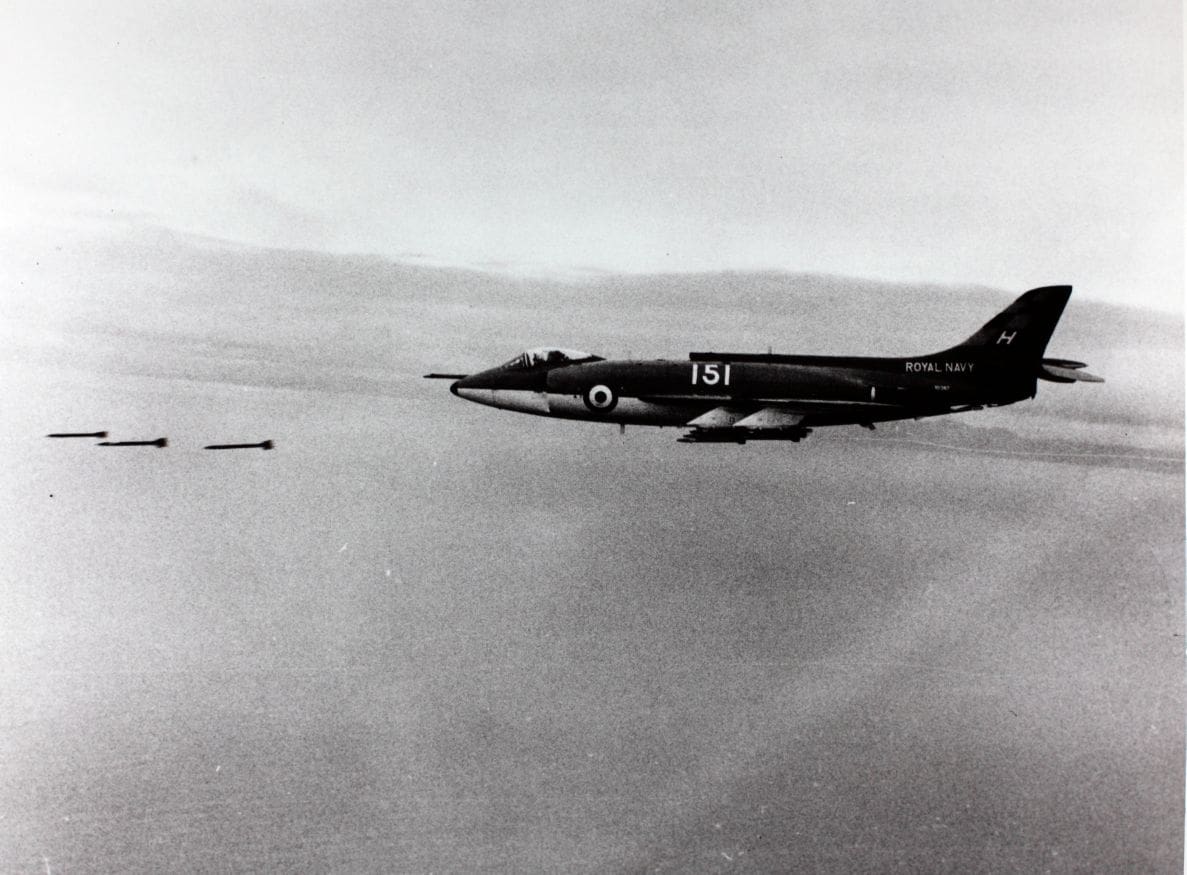
When the Supermarine Scimitar first crashed onto a carrier deck in 1958, it arrived as the biggest, heaviest and most powerful aircraft the Fleet Air Arm had ever tried to operate from a ship. Twin Rolls-Royce Avons gave it such brutal thrust that a pilot could stand on the brakes at full power and still be dragged forward, the engines simply overpowering the wheels.
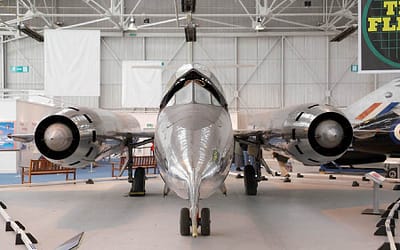
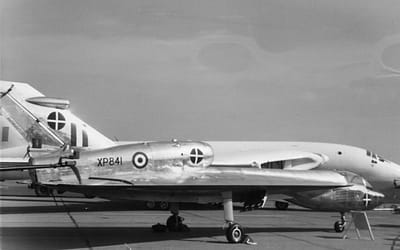
Its ancestry was strange. The design traced back to a 1940s idea for an undercarriage-less fighter meant to belly-land on flexible rubber decks, complete with a butterfly tail. Sanity prevailed, wheels were added, and after a decade of prototypes the swept-wing Type 544 finally flew in January 1956 as the direct forerunner of the production jet.
FAITS RAPIDES
| Taper | Single-seat naval strike fighter |
| Premier vol | 19 January 1956 |
| centrale électrique | 2 x Rolls-Royce Avon 202 turbojets |
| vitesse maximale | 740 mph (1,190 km/h) at sea level |
| Nombre construit | 76 |
| Pertes | 39 in accidents (over half the fleet) |
| Destin | Retired 1969; Supermarine’s last aircraft |
Britain's Naval Nuclear Bruiser
By the time it entered service the Scimitar had been recast from fighter to low-level strike aircraft, capable of lugging a British nuclear bomb under its belly at wave-top height. Four 30mm Aden cannon and a fistful of hardpoints made it the most heavily armed thing on the deck, and pilots loved how it felt hurtling low and fast.
Fast it certainly was. Down at sea level the Scimitar could push toward 740 mph, a genuinely quick machine that pioneered blown flaps and fully powered flight controls for the Royal Navy.
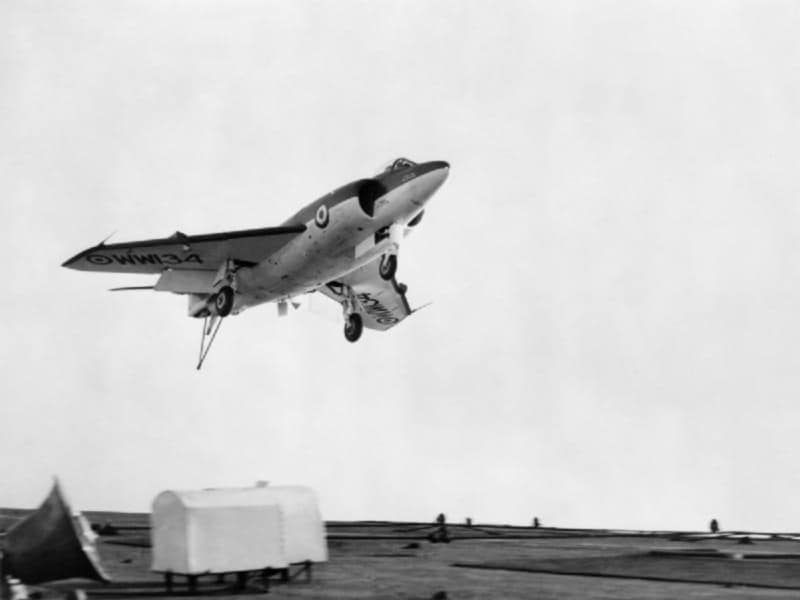
A Deadly Line of Work
All that size and power came at a terrible price. The Scimitar was a big aircraft flying off relatively small British carriers, and it suffered dreadfully: thirty-nine were lost in accidents, more than half the entire production run. In one tragedy filmed by the press in 1958, an arrestor wire snapped and a Scimitar tumbled off HMS Victorious into the sea, its pilot unable to escape the sinking cockpit.
Superseded as a strike aircraft by the Blackburn Buccaneer, the Scimitar found a final job as an airborne tanker, topping up the underpowered early Buccaneers just after they launched. The last examples flew on until 1969.
It was flawed, unforgiving and gone too soon, yet the Scimitar was also the proud last word from the company that built the Spitfire.
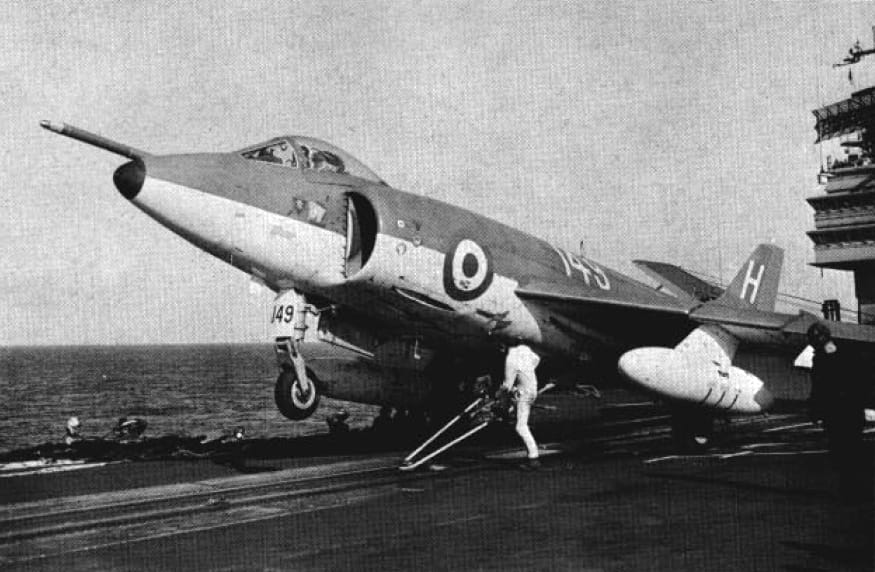
A short history of the Fleet Air Arm’s brutal, doomed swept-wing jet:
Sources: Wikipedia; Flight (1957); Andrews & Morgan, Supermarine Aircraft Since 1914.
0 commentaire