
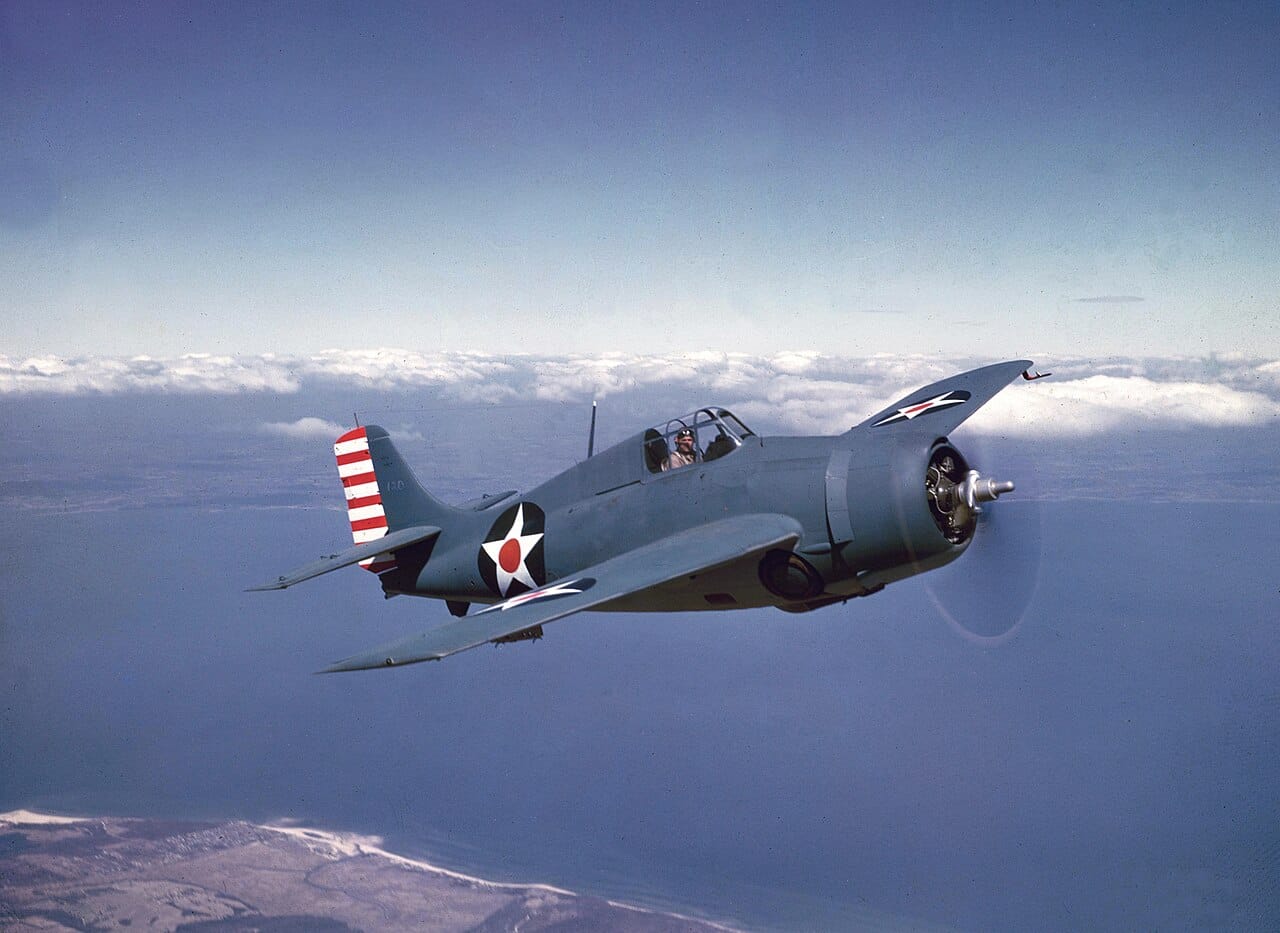
In the first months of the Pacific War, the Mitsubishi Zero was a nightmare. It could out-climb, out-turn and out-accelerate the stubby Grumman Wildcats the U.S. Navy sent against it, and American pilots who tried to fight it on its own terms — twisting, turning, trying to get on its tail — simply died. The Navy did not have a better aircraft coming any time soon. What it had was a lieutenant commander with a box of matches.
John “Jimmy” Thach could not make the Wildcat turn like a Zero. So he stopped trying, and asked a different question: how could two average fighters, working together, beat one superior fighter?
Informations clés
| Invented by | Lt. Cdr. John S. “Jimmy” Thach, U.S. Navy |
| Quand | Devised in 1941, before America had even fought the Zero |
| The problem | The A6M Zero out-climbed and out-turned the Grumman F4F Wildcat |
| The idea | Two-plane sections that turn toward each other so each covers the other’s tail |
| débuts au combat | The Battle of Midway, June 1942 |
| The lesson | Teamwork and tactics beating raw aircraft performance |
A Box of Matches in Coronado
Thach did not have the Zero’s measure from experience — in 1941 no American had yet dogfought one. He had intelligence reports, and they were alarming enough. Working the problem became an obsession he carried home each night.
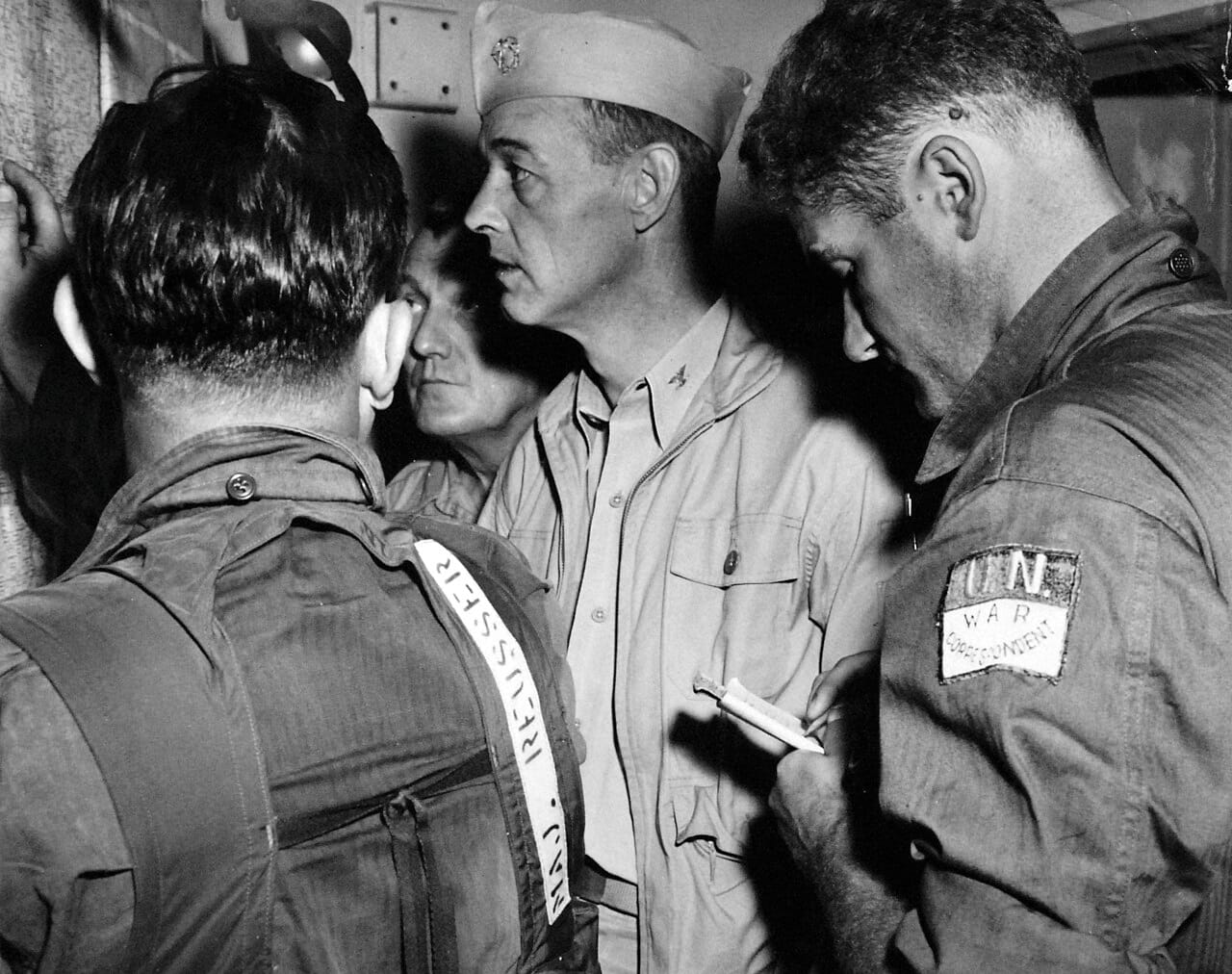
He was not exaggerating the threat he was trying to solve.
A clear visual explanation of the beam-defence geometry Thach worked out with those matches.
How the Weave Works
The manoeuvre — Thach called it the “beam defence position” — needs only two aircraft flying abreast, a little apart. The instant a Zero dives onto the tail of one Wildcat, both American pilots turn hard toward each other. The attacker, fixed on his target, suddenly finds the other Wildcat sweeping across his nose with a clear, head-on shot. To keep chasing is to be shot; to break off is to lose the kill. The Zero’s superior turn rate, its whole advantage, becomes the very thing that flies it into a trap.
How a matchstick idea let outclassed Wildcats defeat a better fighter.
Midway: The Weave’s Baptism
Thach got to prove it himself at Midway in June 1942, leading a tiny escort of Wildcats that was jumped by a swarm of Zeros. Badly outnumbered, his pilots fell into the weave, and it held: turning into each attack, covering one another, they shot Zeros out of the sky and most of them came home — an outcome that should have been impossible given the numbers and the aircraft. Word spread fast, and the beam-defence position quickly acquired the name it still carries: the Thach Weave.
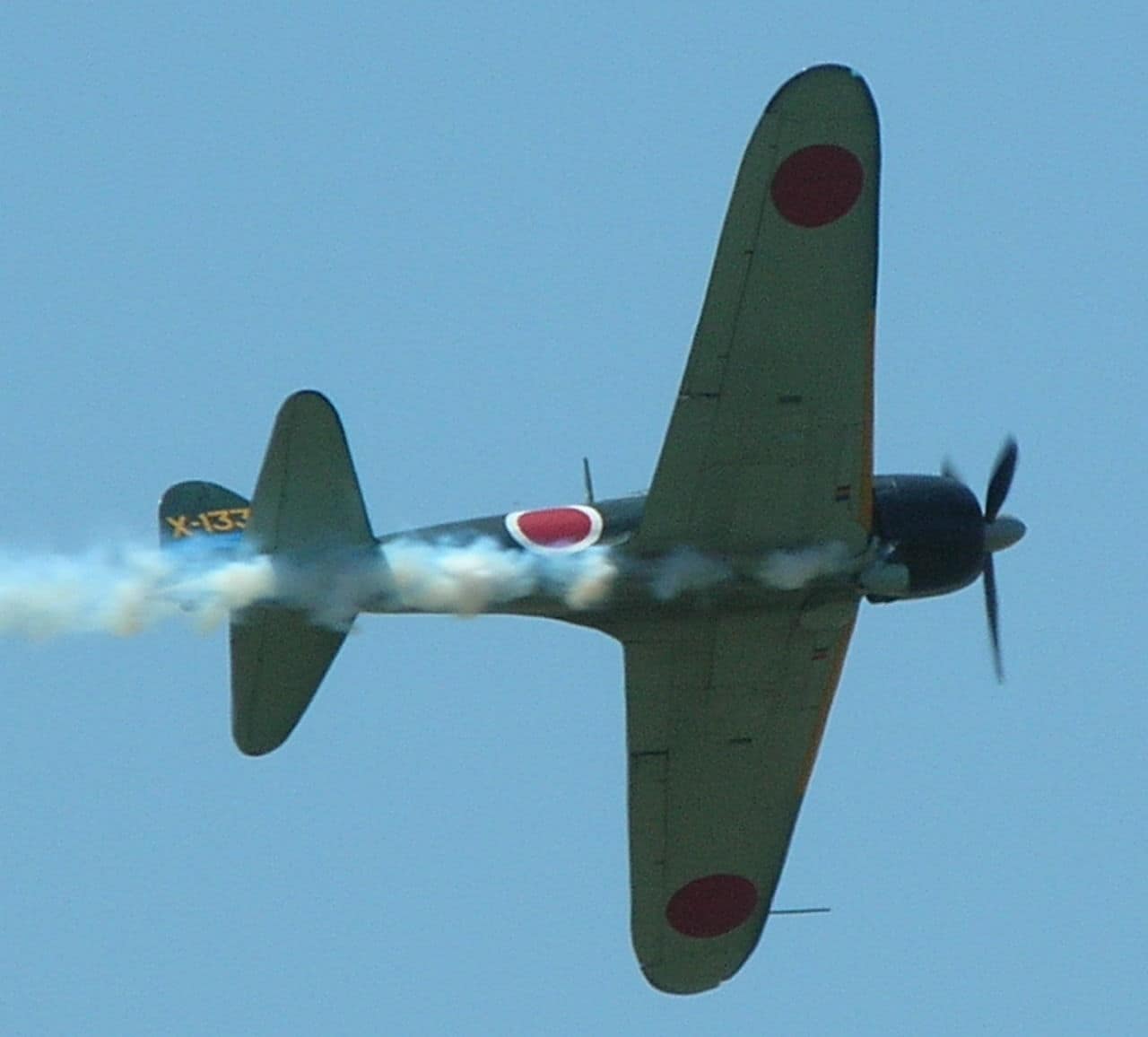
Tactics Over Technology
The Thach Weave is remembered because it is the purest example of a recurring truth in air combat: the better idea can beat the better machine. It stayed in the manuals long after the Wildcat was gone — used by Hellcats and Corsairs, revived in Korea, and taught, in spirit, to jet pilots decades later. Thach went on to become an admiral, but nothing he did outranked the tactic he worked out with kitchen matches on a dining-room table in Coronado.
The story of the tactic and the man who devised it.
Sources: U.S. Naval Institute oral history of Adm. John S. Thach; Naval History Magazine; U.S. Navy records.
Questions connexes
What is the Thach Weave?
The Thach Weave is an air-combat tactic in which two fighters fly in sections that turn toward each other so each covers the other's tail. Devised by US Navy Lt. Cdr. John "Jimmy" Thach in 1941, it let a pair of average fighters defeat a single superior enemy through teamwork.
Who invented the Thach Weave?
Lt. Cdr. John S. "Jimmy" Thach of the US Navy devised the weave in 1941, before America had fought Japan's Zero. Working at his dining table with kitchen matches to represent aircraft, he found a geometry that let two inferior fighters protect one another.
Why was the Thach Weave needed?
In early 1942 the Mitsubishi A6M Zero out-climbed and out-turned the Grumman F4F Wildcat, and US pilots who tried to dogfight it on its own terms were killed. Thach could not make the Wildcat turn like a Zero, so he devised tactics that beat performance with teamwork.
When was the Thach Weave first used in combat?
The Thach Weave made its combat debut at the Battle of Midway in June 1942, where it helped Wildcat pilots survive against faster, more agile Zeros. It proved that coordinated tactics could overcome an enemy's raw aircraft performance.
What aircraft did the Thach Weave counter?
It countered the Mitsubishi A6M Zero, which early in the Pacific War out-climbed and out-turned the Grumman F4F Wildcat. The weave neutralised the Zero's advantages by ensuring that a Zero on one Wildcat's tail was exposed to the guns of its weaving partner.
Does the Thach Weave still work today?
The underlying principle — mutual support between a pair of fighters — remains fundamental to air combat and is still taught. Its lesson that teamwork can beat a superior machine echoes through modern dissimilar air-combat training.
What are other famous air-combat manoeuvres?
Beyond the Thach Weave, aviation has produced spectacular manoeuvres such as Pugachev’s Cobra, in which a fighter pitches its nose past vertical while still moving forward, briefly stalling to bleed speed and force an overshoot.
0 commentaire