

Just after dawn on Monday, air-raid sirens and the buzz of engines reached a city most of the war had never touched. Nizhnekamsk sits roughly 1,200 kilometres (750 miles) from the nearest Ukrainian-held ground, deep in the Russian republic of Tatarstan. By mid-morning on 10 August 2026, one of Russia's largest and most advanced oil refineries was burning, and Ukraine had just landed one of the longest-range blows of the entire war.
It was also one of the deadliest. Russian authorities in Tatarstan said at least 12 people were killed and dozens more wounded when drones struck industrial and civilian sites across the city; several outlets, citing regional officials, put the toll at 13, including a child. Whichever figure holds, it was among the heaviest civilian tolls inside Russia in months.
The target was no accident. Ukraine's General Staff said its forces had hit Tatneft's TANECO refinery, a pillar of the Russian fuel supply, and confirmed a fire at the plant. For Kyiv, it was another strike in a slow-burning campaign to choke the machine that keeps Russia's army moving.
Informations clés
- Date: 10 August 2026 (Monday morning)
- Cible: Tatneft's TANECO refinery, Nizhnekamsk, Republic of Tatarstan
- Distance: ~1,200 km (750 mi) from Ukrainian-controlled territory
- Victimes: at least 12 killed (some officials said 13, including a child); dozens wounded
- Russian claim: 456 Ukrainian drones intercepted overnight across ~15 regions
- Arme: long-range one-way attack drones (An-196 "Liutyi" class and similar)
A strike at the far end of the map
Deep-strike drone raids have become routine, but the geography here is the story. Nizhnekamsk is a city of roughly 240,000 people about 800 km east of Moscow, and around 1,200 km from the front. Reaching it means flying a small, propeller-driven drone for hours across Russian territory, threading between air-defence belts that thin out the further east you go.
The industrial zone Ukraine went after is one of the most valuable in the country: alongside the huge Nizhnekamskneftekhim petrochemical works sits Tatneft's TANECO refinery, one of Russia's newest and most technologically advanced, with a reported throughput of more than 16 million tonnes of crude a year. Ukraine's General Staff said the plant caught fire; video shared online showed thick columns of smoke rising over the complex.
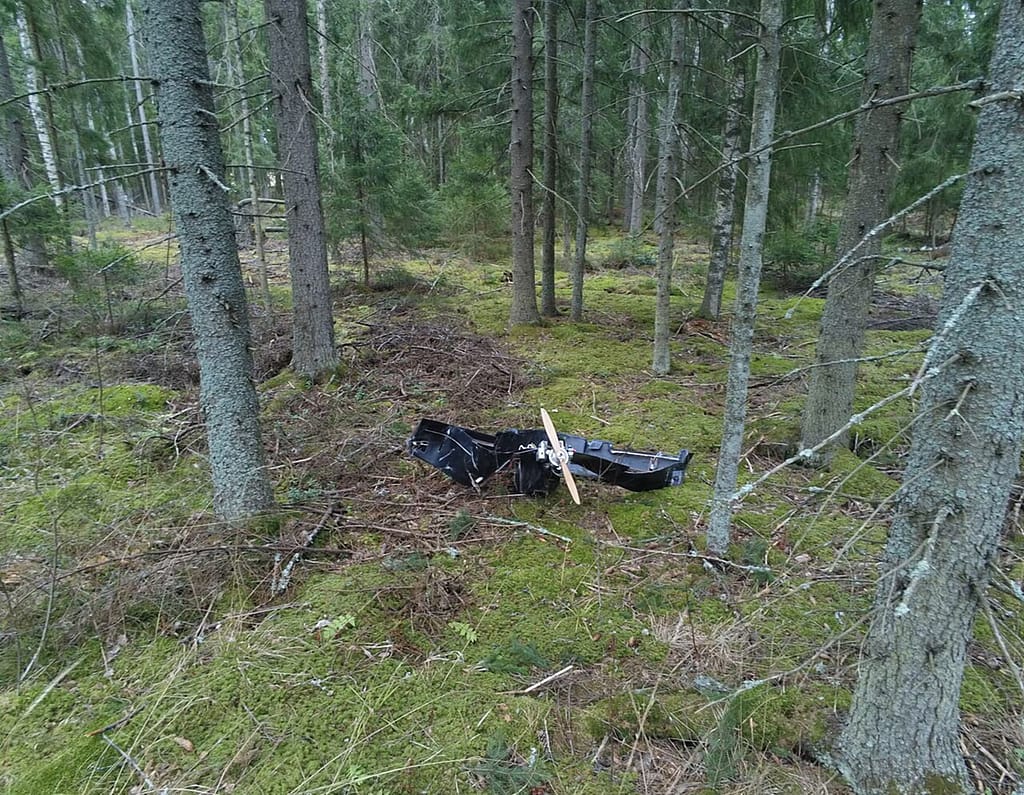
The human cost was immediate and, unusually for these raids, severe. Tatarstan's emergency services described a “massive” assault on industrial and civilian facilities, with multidisciplinary medical teams rushed in from Kazan to treat the wounded. Regional head Rustam Minnikhanov called the attack “barbaric,” said civilian infrastructure had been hit, and declared a period of mourning.
Why Ukraine keeps hunting refineries
The logic behind the campaign is blunt: an army runs on fuel, and refineries are where crude becomes the diesel and jet fuel that move tanks, trucks and aircraft. Damage one badly enough and the effects ripple through the whole war effort — and, increasingly, through Russian filling stations, where fuel shortages have become a recurring headache.
The Tatarstan raid was not a one-off. According to defence outlet 19FortyFive, every one of Russia's eleven largest oil refineries has now been struck at least once by Ukrainian long-range drones — a measure of how far and how systematically the campaign has spread since Kyiv began fielding its own domestically built strike drones.
A night of drones, both ways
Moscow's response underlined the scale of the effort. Russia's defence ministry claimed it had intercepted 456 Ukrainian drones overnight across some 15 regions, from Tatarstan to occupied Crimea — a figure that, even allowing for the usual wartime inflation, points to one of the largest single-night drone operations of the war.
The exchange ran in both directions. Russian strikes on Ukrainian cities continued through the same 24 hours, a reminder that the drone war has settled into a grinding, round-the-clock rhythm that neither side shows any sign of easing.
Footage circulated on social media showed the moment of impact and heavy smoke over the Nizhnekamsk plant.
For Ukraine, the message of the Tatarstan strike is that almost nowhere in European Russia is now out of reach. For the towns around these refineries, it is that the war they watched on television has arrived overhead — and that the next raid may already be in the air.
Sources: Al Jazeera, NBC News, CBS News, Reuters, NPR, TASS, Kyiv Independent, 19FortyFive. Casualty figures as reported by Tatarstan regional authorities and Russia's Investigative Committee; combat claims attributed to the parties making them.
0 commentaire