
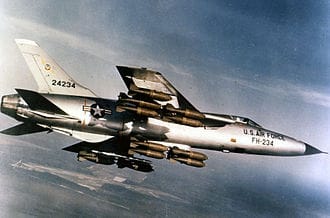
Informations rapides — Belettes sauvages
Mission: SEAD — Suppression des défenses aériennes ennemies
Devise: ""Premier entré, dernier sorti" (officiel) / YGBSM (non officiel)
Premier meurtre : 22 décembre 1965, Capitaines Allen Lamb et Jack Donovan
Aéronef: F-100F (Première Guerre mondiale), F-105F/G (Troisième Guerre mondiale), F-4C (Quatrième Guerre mondiale), F-4G (Vième Guerre mondiale), F-16CJ
Arme principale : Missile antiradar AGM-45 Shrike
Le problème SAM
En juillet 1965, un missile soviétique SA-2 Guideline abattit un F-4C américain au-dessus du Nord-Vietnam. Premier missile sol-air (SAM) abattu de la guerre, il changea la donne. Les groupes d'attaque américains suivaient des itinéraires et des altitudes prévisibles, des cibles faciles pour un missile à guidage radar capable d'atteindre 18 300 mètres. Les pertes commencèrent à s'accumuler. L'US Air Force avait besoin d'un moyen de neutraliser les sites de missiles sol-air. Personne n'y était jamais parvenu. Le programme Wild Weasel I vit le jour en novembre 1965 : des F-100F Super Sabre biplaces modifiés, équipés de récepteurs d'alerte et de guidage radar capables de détecter les émissions radar des SAM. Le concept était simple et suicidaire : voler vers le signal radar, provoquer le tir du site, puis le détruire à l'aide de bombes ou du nouveau missile antiradar AGM-45 Shrike, qui se liait au faisceau radar du SAM.Premier meurtre
Le 22 décembre 1965, les capitaines Allen Lamb (pilote) et Jack Donovan (officier de guerre électronique) remportèrent la première destruction d'un site de missiles sol-air (SAM) grâce au programme Wild Weasel, au nord-ouest d'Hanoï. La tactique s'avéra efficace : foncer sur le radar, le forcer à vous suivre, puis attaquer. Lamb détruisit le site à l'aide de roquettes de 70 mm et de tirs de canon de 20 mm. La marge d'erreur se mesurait en secondes. Dès 1966, le programme fut transféré au Republic F-105F Thunderchief, une version biplace du chasseur-bombardier rapide et lourd qui supporta l'essentiel des frappes de l'opération Rolling Thunder. Le " Thud " était plus rapide que le F-100 et pouvait emporter à la fois des missiles Shrike et des bombes conventionnelles, permettant ainsi aux équipages du Weasel de neutraliser un site SAM puis de le bombarder lors du même passage. Le F-105G suivit, doté de systèmes de guerre électronique améliorés.Premier arrivé, dernier sorti
La doctrine opérationnelle des Wild Weasels – ' Premiers arrivés, derniers partis " – était exactement ce qu'elle semblait être. Avant qu'un groupe d'attaque ne pénètre dans l'espace aérien défendu, les Weasels s'y engouffraient en premier pour localiser et neutraliser les sites de missiles sol-air. Pendant que les bombardiers atteignaient leurs cibles, les Weasels survolaient la zone, occupant les opérateurs de missiles. Une fois les avions d'attaque sortis, les Weasels restaient sur place pour couvrir le retrait. C'était la mission la plus dangereuse de l'aviation de combat. Les sites de missiles sol-air ripostaient. La DCA sillonnait le ciel à basse altitude. Et les Weasels devaient suivre des profils prévisibles – en direction de la menace – tandis que tous les autres appareils de la formation s'en éloignaient. Les équipages qui se portaient volontaires pour les Wild Weasels savaient parfaitement à quoi ils s'engageaient. La réaction de Donovan, exprimée par quatre lettres, n'était pas de la bravade. C'était une évaluation juste.Questions connexes
Que sont les belettes sauvages ?
Les Wild Weasels sont des avions et des équipages de l'US Air Force spécialisés dans la destruction des sites de missiles sol-air et de radars ennemis — une mission appelée SEAD (Suppression des défenses aériennes ennemies). Ils volent délibérément vers les missiles qui tentent d'éliminer tous les autres systèmes, d'où leur devise " Premiers arrivés, derniers partis "."
En quoi consiste la mission SEAD ?
SEAD (Suppression des défenses aériennes ennemies) consiste à localiser et neutraliser les radars et les batteries de missiles sol-air qui menacent les aéronefs amis. Les équipages de Wild Weasel attirent l'ennemi pour qu'il active ses radars, puis ciblent et détruisent les sites afin que les autres aéronefs puissent opérer en toute sécurité.
Que signifie YGBSM ?
YGBSM est la devise non officielle de Wild Weasel — une version imprimable serait " Vous plaisantez ? ". Elle provient de la réaction du capitaine Jack Donovan lorsqu'on lui a dit qu'il volerait droit sur les sites de missiles nord-vietnamiens pour les détruire avant qu'ils ne le détruisent, et l'acronyme est resté.
Quand les Wild Weasels ont-ils vu le jour ?
La mission Wild Weasel a débuté pendant la guerre du Vietnam, avec la destruction d'un site de missiles nord-vietnamien le 22 décembre 1965. Les premiers équipages pilotaient des chasseurs F-100 modifiés directement sur la nouvelle menace des missiles sol-air fournis par les Soviétiques.
Pourquoi la devise de la Belette sauvage est-elle ' Premier entré, dernier sorti ' ?
Parce qu'ils arrivent avant l'attaque principale pour neutraliser les défenses aériennes ennemies et restent sur place jusqu'au départ de tous les autres appareils, protégeant ainsi ces derniers. Le fait de pénétrer en premier dans l'espace aérien le plus dangereux et d'en repartir en dernier illustre le risque extrême que ces équipages acceptent.
J'ai suivi une formation de technicien en guidage et contrôle de missiles dans l'USAF en 1968 et j'étais affecté à la base aérienne de Nellis, à Las Vegas, au sein de l'atelier de missiles qui fournissait les armes à l'école de pilotage. Nous préparions des AIM-7, des AIM-9, des AGM-12, des AGM-45 et des AGM-78. Il s'est avéré qu'un problème affectait les AGM-45 et n'a été résolu qu'en 1979. L'unité de contrôle et l'unité de guidage étaient séparées par l'ogive, un câble les reliant. L'unité de contrôle comportait deux connecteurs distincts : l'un pour le mode de piqué (DIVE), l'autre pour le mode d'élévation (LOFT). L'équipe d'assemblage devait choisir le mode à utiliser avant l'assemblage final. Ce choix n'était ni affiché dans le cockpit, ni communiqué aux équipes de chargement. Le problème était qu'un missile LOFT ne peut pas être utilisé en piqué, et un missile DIVE ne peut pas être utilisé en élévation. J'ai dû commencer à identifier les munitions après avoir lu les rapports de tir qui m'étaient revenus à l'atelier. Finalement, les instructeurs de pilotage ont refusé de me croire quand je disais qu'il y avait un problème.