
It was supposed to be a photograph. Five gleaming aircraft, all powered by the same company’s engines, tucked into tight formation over the California desert for a publicity shot. Twenty minutes later, two of them were falling out of the sky, and two of America’s finest pilots were dead.
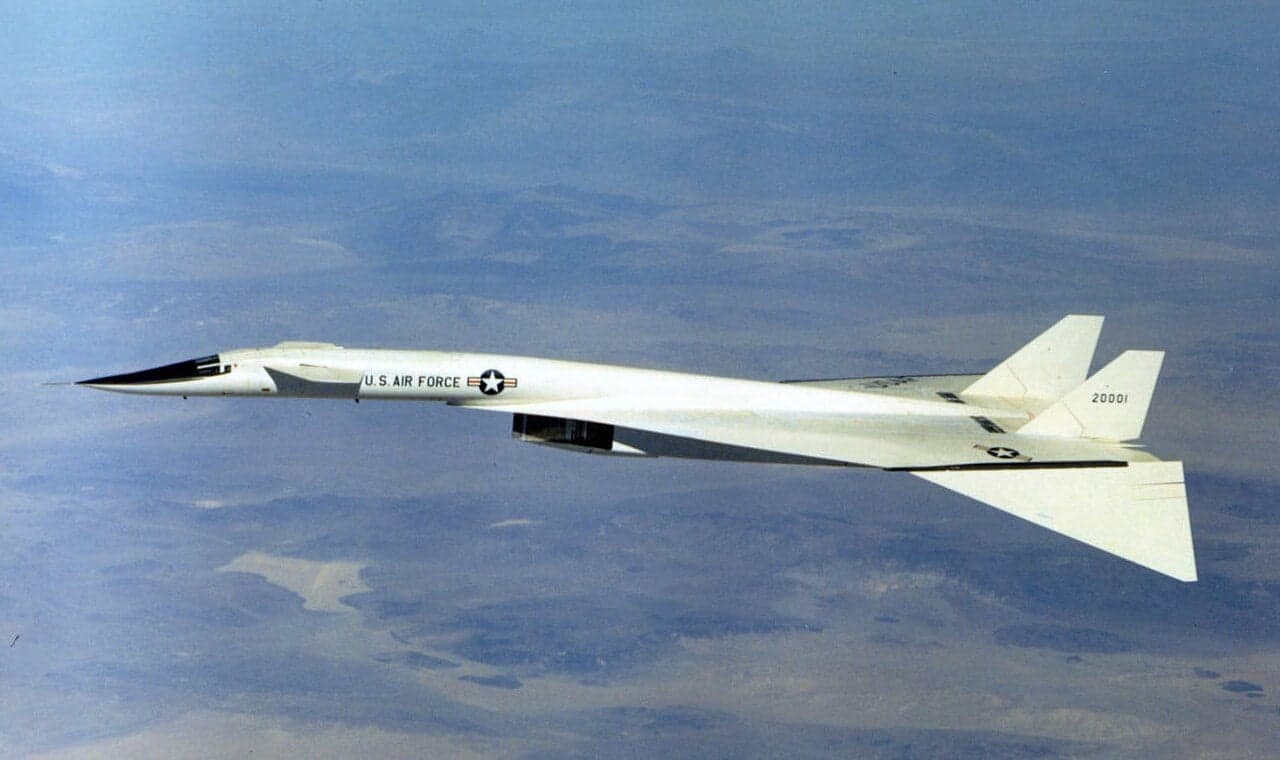
The centerpiece of that formation was the most magnificent aircraft the United States ever built and never used: the North American XB-70 Valkyrie.
A bomber from the future
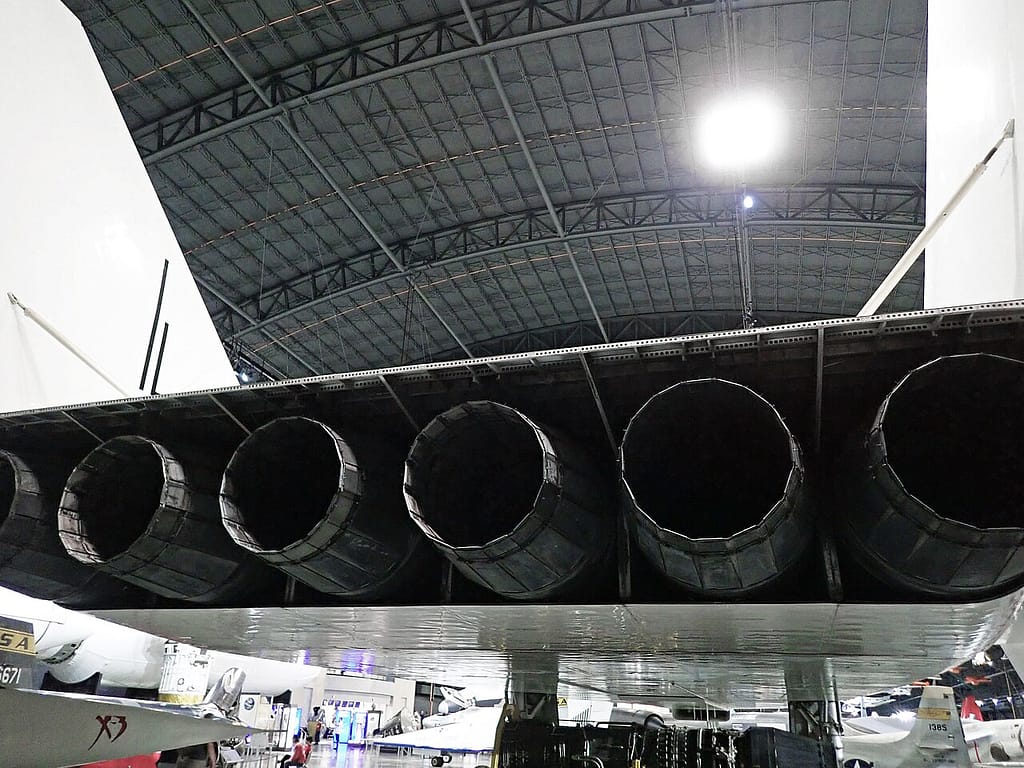
The Valkyrie was conceived in the 1950s as a Mach 3 nuclear bomber — a white, six-engined delta the size of an airliner that would streak across the Soviet Union faster than any interceptor could climb. By 1961 surface-to-air missiles and cheaper ICBMs had made the idea obsolete, and the bomber program was cancelled before a single Valkyrie flew. Two were finished anyway, as research aircraft. They remain among the most beautiful machines ever to leave the ground.
The first Valkyrie reached Mach 3 in October 1965. The second, on the morning of 8 June 1966, had just finished a series of test runs when it joined a formation for General Electric — which had built the engines of all five jets and wanted an advertisement.
The formation
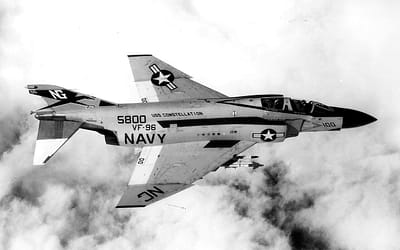
Alongside the Valkyrie flew a T-38 Talon, an F-4 Phantom II, an F-5, and a NASA Chasseur stellaire F-104 flown by one of the greatest test pilots alive, Joe Walker. At the controls of the Valkyrie were North American’s chief pilot Al White and Major Carl Cross, on his first flight in the type. What none of them fully understood was that the XB-70’s drooped wingtips trailed an invisible tornado — a wake vortex — strong enough to swat another aircraft from the sky.
Walker’s F-104 drifted too close. The vortex flipped it up and over the top of the Valkyrie, where it struck the twin tails and exploded.
Informations clés
- Aéronef: North American XB-70A Valkyrie (second airframe), a Mach 3 research aircraft
- Date: 8 June 1966, over the Mojave Desert, California
- Cause: a NASA F-104 caught in the XB-70’s wingtip wake vortex, collided with its tails
- Tué : F-104 pilot Joe Walker; XB-70 co-pilot Maj. Carl Cross
- A survécu : XB-70 pilot Al White, who ejected in the capsule with a crushed arm
- The photo: a General Electric engine-publicity shoot
Al White’s ten seconds
For a moment, White did not even know it was his aircraft in trouble. Then the Valkyrie began to roll, yawed violently, and fell into a flat spin. He fought to reach the ejection capsule as his arm jammed in its clamshell doors. When he finally fired out, the world went silent.
White survived, though his landing in the capsule felt, in his words, like “a metal garbage can full of bricks landing on a concrete sidewalk.” Carl Cross never got out. Only later did White piece together what had happened.
The invisible killer
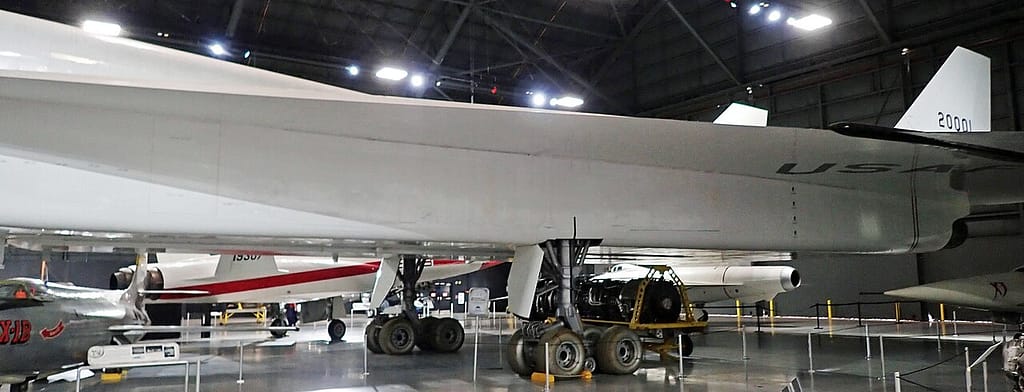
In 1966 the danger of wake turbulence behind a large aircraft was barely appreciated. The collision helped change that; today, spacing behind “heavy” aircraft is a basic rule of the sky, taught to every airline pilot. The surviving Valkyrie flew research missions for a few more years and now rests, gleaming and enormous, in the National Museum of the U.S. Air Force.
The Valkyrie never dropped a bomb, never fought an enemy, never entered service. It is remembered for a single terrible morning — and for being, right to the end, the most beautiful aircraft that never was.
Sources: The Aviation Geek Club; Al White’s account in the NAA Retiree Bulletin (1996); John Fredrickson, “North American Aviation in the Jet Age”; National Museum of the US Air Force.
0 commentaire