
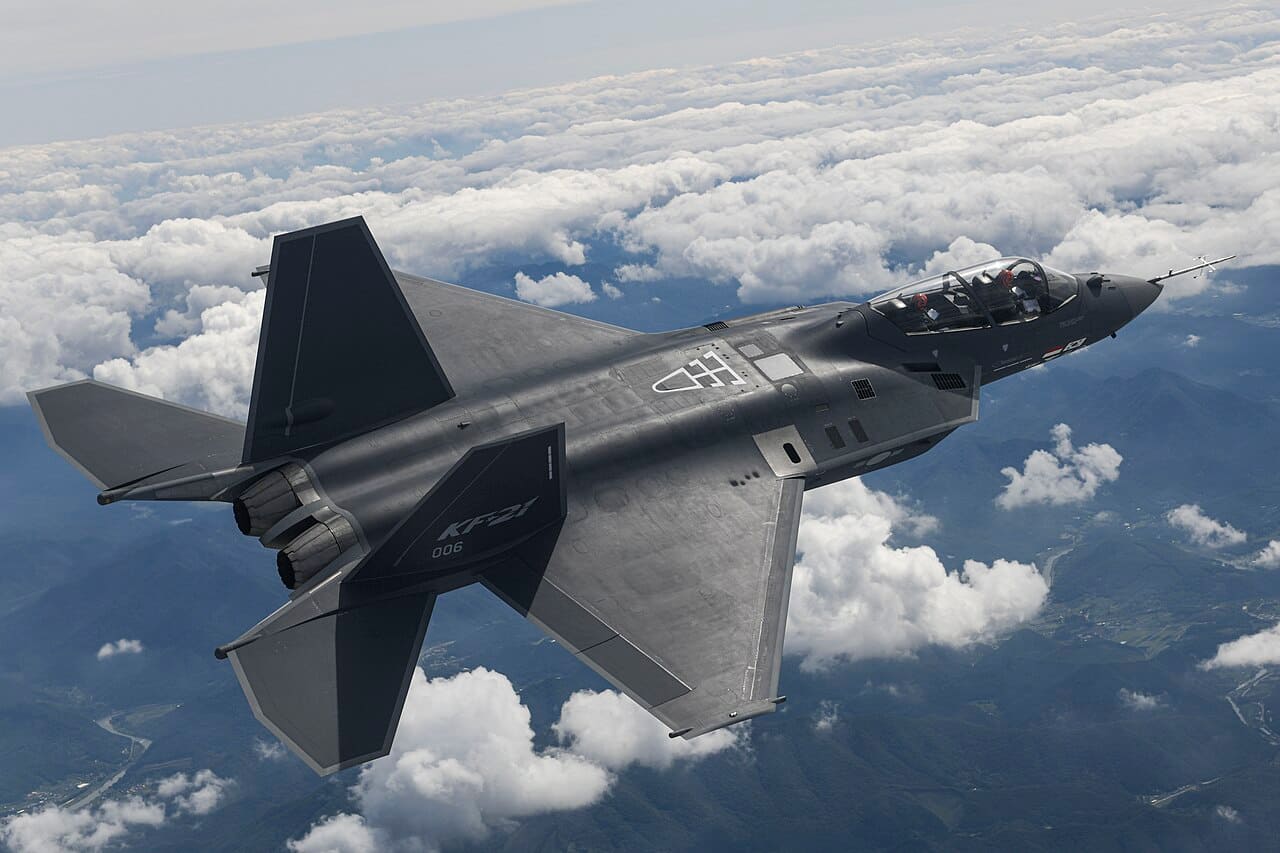
Indonesia has officially abandoned its plan to co-produce South Korea's KF-21 Boramae fighter jet, ending a partnership that was supposed to give Jakarta its own production line and a seat at the table of advanced fighter manufacturing. Instead, Indonesia will simply buy the jets off the shelf — a quiet admission that years of payment disputes, IP friction, and shifting priorities have gutted what was once billed as Southeast Asia's most ambitious defense-industrial venture.
The confirmation came on June 29, 2026, when Indonesian Defense Ministry spokesperson Rico Ricardo Sirait told the Jakarta Globe that "the government is adjusting the scheme in the KF-21 Boramae program. We will no longer co-produce the jet, but will adopt a direct procurement mechanism." This is a dramatic update to the KF-21 export story we covered earlier this year.
A Partnership That Never Quite Worked
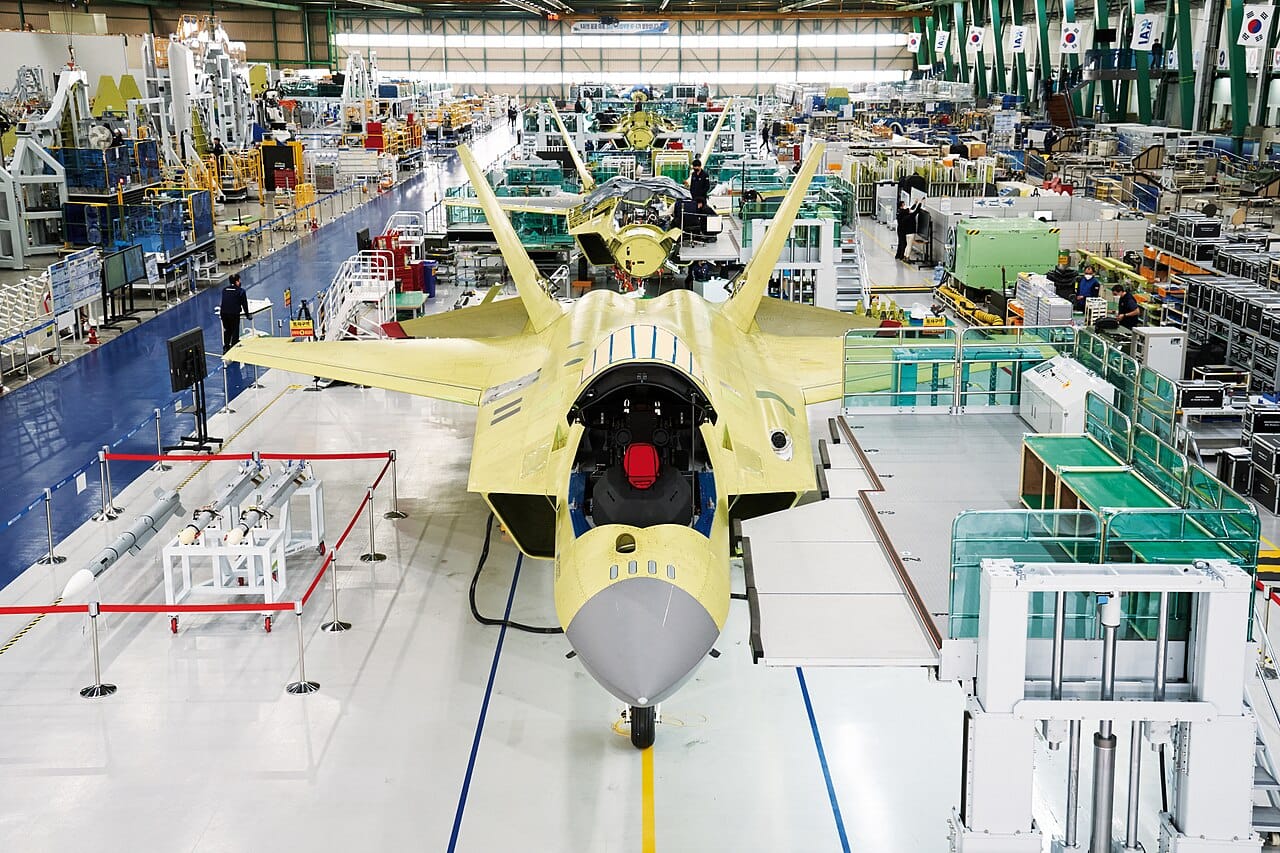
Indonesia joined the KF-21 program in 2010 with a commitment to cover 20% of development costs — roughly 1.6 trillion won ($1 billion) — in exchange for co-production rights, technology transfer, and a prototype. The idea was that Indonesia's PT Dirgantara Indonesia (PTDI) would eventually assemble KF-21s in Bandung, building genuine aerospace manufacturing capability.
It didn't work out that way. Jakarta repeatedly delayed payments, citing budget constraints. In 2018, Indonesia tried to renegotiate its cost share. In 2022, payments resumed, only for the relationship to hit another snag in 2024 when two Indonesian engineers were accused of attempting to steal KF-21 technical data on flash drives. A subsequent investigation cleared them, but the damage to trust was done.
By mid-2025, South Korea's Defense Acquisition Program Administration (DAPA) cut Indonesia's contribution to 600 billion won ($389 million) — barely a third of the original commitment — and correspondingly slashed the scope of technology transfer. The writing was on the wall.
What Indonesia Gets — and What It Doesn't
Under the revised deal, Indonesia will receive the fifth KF-21 prototype — a single-seat aircraft that first flew in May 2023 and has been used for AESA radar verification and aerial refueling tests. The prototype is valued at 350 billion won, with an additional 174.2 billion won covering technology transfer and 75.8 billion won for development data. Indonesia has now paid the full 600 billion won.
But what Jakarta doesn't get is what matters most: no production line, no assembly work for PTDI, and far less industrial know-how than originally promised. Indonesia drops from co-development partner to retail customer.
Separately, the two countries are negotiating a deal for 16 production KF-21s — a straightforward export transaction that South Korean President Lee Jae-myung and Indonesian President Prabowo Subianto discussed at an April 2026 summit.
The KF-21 Marches On
Indonesia's retreat does nothing to slow the Boramae's momentum in South Korea. KAI rolled out the first of 40 Block I production aircraft in March 2026, and the jet completed its maiden production flight just 22 days later. The KF-21 received its initial type certificate after passing all 745 inspection requirements across 14 airworthiness categories. Deliveries to the Republic of Korea Air Force are expected in September 2026, with 80 additional Block II aircraft to follow by 2032.
Jakarta's Fighter Shopping Spree
For Indonesia, the KF-21 downgrade is just one thread in an increasingly tangled fighter procurement web. Jakarta has signed contracts for 42 Dassault Rafales — the first of which was recently delivered — and 48 Turkish KAAN stealth fighters with significant local assembly rights. It has abandoned a planned F-15EX purchase and budgeted $9 billion for the Chinese J-10C, though that deal has yet to materialize.
The result is a procurement strategy that is ambitious in scope but fragmented in execution. Indonesia is simultaneously courting French, Turkish, Chinese, and South Korean fighters — a portfolio approach that spreads risk but also dilutes the industrial benefits that were supposed to be the whole point of programs like the KF-21.
Related Questions
What is the KF-21 Boramae?
The KF-21 Boramae is a 4.5-generation fighter developed by Korea Aerospace Industries (KAI). It made its maiden flight in 2022 and has since completed more than 1,600 test flights, forming the core of South Korea’s advanced-fighter ambitions.
Why did Indonesia drop KF-21 co-production?
After years of payment disputes and intellectual-property friction, Indonesia confirmed on June 29, 2026 that it will buy KF-21 jets directly rather than co-produce them, abandoning what was billed as Southeast Asia’s most ambitious defense-industrial venture.
What was Indonesia’s original role in the KF-21 program?
Indonesia joined as a co-development partner expecting its own production line and technology transfer. Its financial contribution was later cut to about 600 billion won ($389 million) — roughly a third of the original commitment — shrinking the technology it would receive.
What does Indonesia get under the revised KF-21 deal?
Under the revised arrangement, Indonesia receives the fifth KF-21 prototype — a single-seat aircraft that first flew in May 2023 and was used for AESA radar and aerial-refueling tests — plus a reduced package of technology transfer.
What other fighter jets is Indonesia buying?
Alongside direct KF-21 purchases, Indonesia is acquiring Dassault Rafale fighters from France, part of a broad effort to modernize its air force through multiple foreign suppliers.
Who develops the KF-21 Boramae?
Korea Aerospace Industries (KAI) develops the KF-21 for South Korea. It is one strand of Seoul’s expanding defense industry, which also includes advanced weapons such as an air-launched hypersonic anti-ship missile.
0 Comments