

South Korea just put the world on notice. In a slickly produced video released in February 2026, defence and rail group Hyundai Rotem revealed a concept for an air-launched hypersonic anti-ship cruise missile, built on the same scramjet technology that powers the country's land-based "Hycore" program. The message was blunt: a carrier-killer-class weapon, dropped from a jet, screaming toward a warship faster than Mach 5.
But here is the part the breathless headlines skip. What Hyundai Rotem showed was a concept — a mix of real test footage and digital animation. There has been no flight test of the air-launched variant. What is real, and verified, is the technology underneath it. And that is impressive enough.
Quick Facts
| Revealed | Air-launched hypersonic anti-ship cruise missile concept (Hyundai Rotem) |
| When | Video released February 2026 |
| Status | Concept/animation reveal — not a flight test of the air-launched variant |
| Underlying tech | “Hycore” scramjet; exceeded Mach 6 in a 2024 test |
| Likely platforms | F-15K today; KF-21 Boramae in future |
| Mass-production target | ~2035 (Hyundai Rotem assessment) |
What South Korea actually revealed
The reveal came as a video, first published online, portraying a sleek missile separating from an aircraft, lighting a booster, and streaking toward a surface ship. Per Army Recognition, the footage did not depict a live missile launch but instead presented a conceptual visualization of the air-launched variant. So: a mock-up reveal, not a test.
The air-launched missile is described as a distinct configuration derived from the ground-launched Hycore system. Reporting says the airborne version drops the interstage section used on the land-based round, swaps in a single booster optimized for air launch, and adds larger wings for long-range cruise once the scramjet takes over.

South Korea’s hypersonic cruise missile push, explained.
The real engine: "Hycore"
Strip away the animation and you reach the genuinely hard part — and the genuinely confirmed part. Hycore is a scramjet-powered flight vehicle developed since 2018 by Hyundai Rotem and the state-run Agency for Defense Development (ADD), with Hanwha Aerospace contributing propulsion expertise. It is the technological backbone of the whole missile family.
According to The Korea Times, during a 2024 test launch Hycore exceeded Mach 6 — roughly 7,340 km/h — at an altitude of 23 kilometres. That flight validated the propulsion and thermal-management systems that make sustained hypersonic flight possible.
Scramjets are why this matters. Instead of arcing on a predictable ballistic trajectory, a scramjet-powered cruise missile breathes air and maneuvers at speeds above Mach 5 deep inside the atmosphere — compressing a defender's reaction time to seconds and complicating interception. That is the whole point of a carrier-killer.
Why Seoul wants a fighter-launched hypersonic punch
The strategic logic is regional and stark. China fields anti-ship ballistic missiles and is advancing hypersonic glide vehicles. Russia has operationalized the Zircon. North Korea named hypersonics a national priority back in 2021 and has been test-firing ever since. South Korea does not want to be the odd one out.
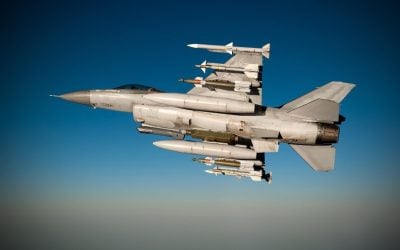
An air-launched variant is the flexible card. Hung under a jet, it extends reach far beyond fixed launch sites and lets Seoul project maritime strike power into contested waters. Reporting points to the F-15K as a near-term carrier and the indigenous KF-21 Boramae as a future platform — the same fighter South Korea is already clearing for an expanding air-to-ground arsenal.
A reality check on the timeline
Now for the cold water. Hyundai Rotem's own internal assessment, reported by The Korea Times, points to mass production around 2035 — not next year. ADD has spoken of completing remaining technical tasks toward the end of the decade, with deployment in the early-to-mid 2030s. One March 2026 analysis warned that full-rate production could realistically slip toward the mid-2040s.
Quoted performance figures — Mach 6-plus, a roughly 800-km total strike range combining powered cruise and hypersonic glide — come from program reporting and should be read as targets, not certified results. Hycore has flown and exceeded Mach 6; the weaponized, air-launched anti-ship missile has not.
The honest takeaway: South Korea has crossed the genuinely difficult propulsion threshold, and it is now openly advertising where it wants to take that technology. The animation is a statement of intent. The Mach 6 flight is the receipt. Turning the two into an operational fighter-launched carrier-killer is the decade-long job that starts now.
Sources: Army Recognition (Feb 2026); The Korea Times (Mar 2026); The War Zone; Aviation Week; Seoul Economic Daily.
Related Questions
What did South Korea reveal with its hypersonic missile?
South Korean defence and rail group Hyundai Rotem released a video in February 2026 unveiling a concept for an air-launched hypersonic anti-ship cruise missile. It is built on the same scramjet technology behind the country's land-based 'Hycore' program. The reveal was a concept animation, not a flight test of the air-launched variant.
What is a hypersonic missile?
A hypersonic missile travels at more than five times the speed of sound (above Mach 5), often while manoeuvring, making it very hard to intercept. Some use scramjet engines that burn air at high speed for sustained cruise. South Korea's Hycore scramjet reportedly exceeded Mach 6 in a 2024 test, the basis for its proposed air-launched hypersonic weapons.
What is a scramjet engine?
A scramjet (supersonic combustion ramjet) is a jet engine with no moving compressor that compresses incoming air using the vehicle's own high speed, burning fuel in a supersonic airflow. Scramjets only work once already travelling very fast, so they need a booster to get going. South Korea's Hycore scramjet reportedly passed Mach 6 in a 2024 test.
Which aircraft would carry South Korea's hypersonic missile?
Hyundai Rotem's concept suggests the missile could be carried by the F-15K today and the indigenous KF-21 Boramae - South Korea's own 4.5-generation fighter - in future. The company assessed a mass-production target of around 2035, so any operational air-launched capability would still be years away.
Is South Korea's air-launched hypersonic missile operational?
No. The February 2026 reveal was a concept animation, not a live launch of the air-launched version. While the underlying Hycore scramjet reportedly exceeded Mach 6 in a 2024 ground or flight test, Hyundai Rotem's own assessment put mass production around 2035, meaning the air-launched anti-ship variant remains a development goal rather than a fielded weapon.
Related Posts


0 Comments