
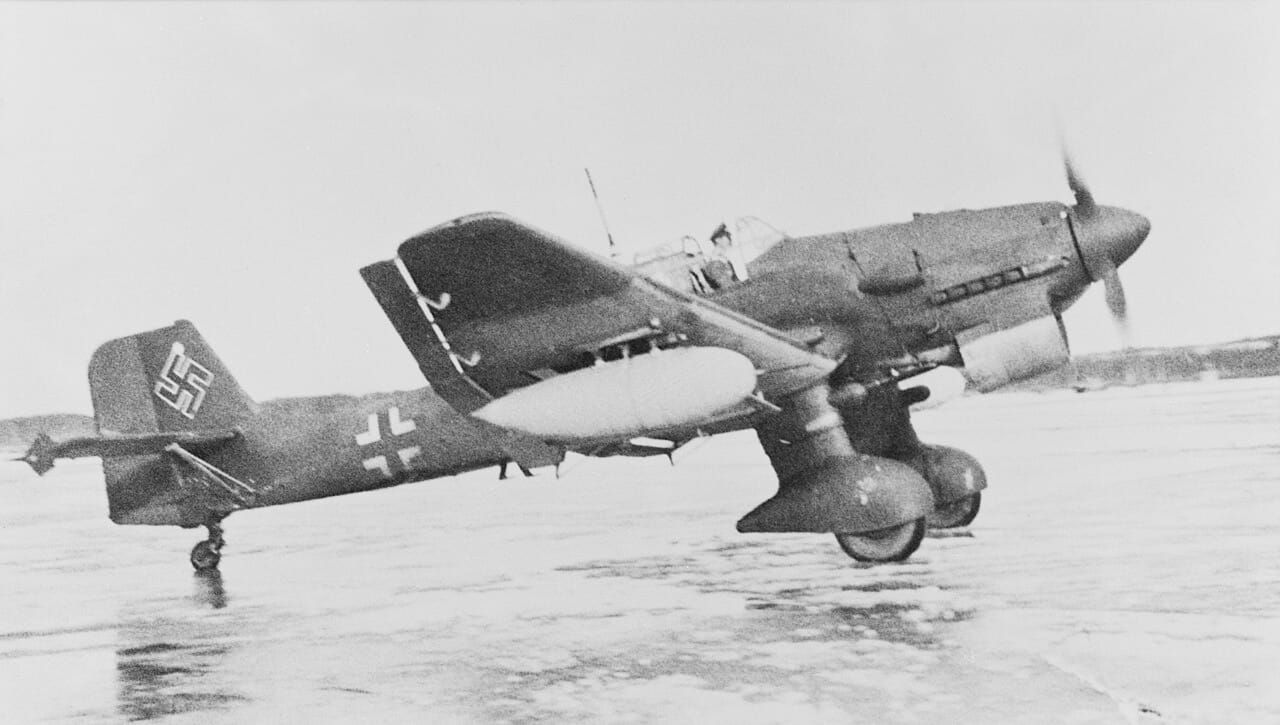
By any measure of raw combat output, Hans-Ulrich Rudel is one of the most extraordinary military pilots who ever lived. He flew 2,530 combat missions, was shot down some thirty times, lost a leg and kept fighting, and was decorated more than any other German serviceman of the Second World War.
He was also an unrepentant Nazi to the end of his life, a man who spent his postwar decades helping war criminals escape justice. His story is a study in how remarkable skill and courage can sit alongside a thoroughly reprehensible cause.
Informazioni rapide
- Pilota: Hans-Ulrich Rudel (1916–1982), Luftwaffe Ju 87 Stuka pilot
- Missions: 2,530 combat sorties, overwhelmingly on the Eastern Front
- Credited with: 519 tanks, the Soviet battleship Marat, and hundreds of vehicles and guns
- Shot down: Around 30 times — almost always by ground fire
- Wounded: Right leg amputated below the knee in 1945; he flew again within weeks
- After the war: A committed, unrepentant Nazi who aided fugitive war criminals
The tank killer
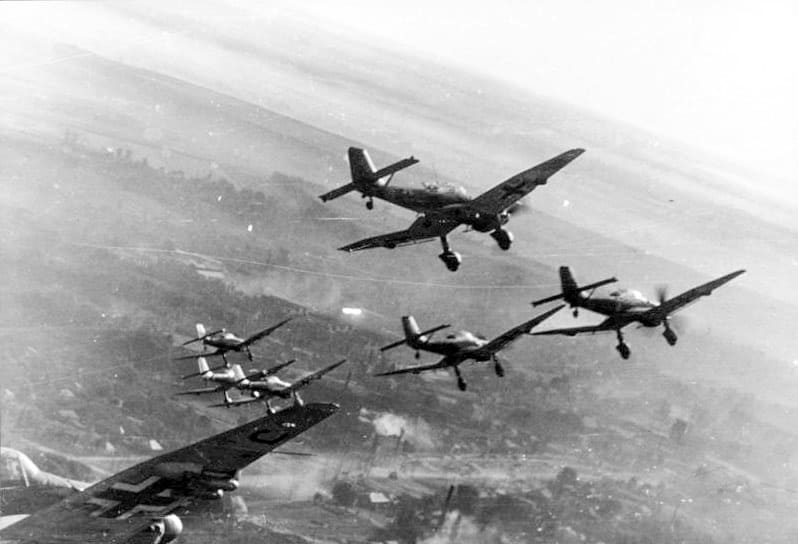
Rudel made his name in the Junkers Ju 87 Stuka, the gull-winged dive bomber that had terrorised Europe in 1940 and was, by the mid-war years, dangerously obsolete. Flying it low and slow over the Eastern Front, into massed Soviet anti-aircraft fire, was close to suicidal. Rudel did it thousands of times.
German records credit him with destroying 519 tanks, along with a Soviet battleship, the Marat, which he crippled in a September 1941 attack, plus a cruiser, a destroyer and hundreds of vehicles and artillery pieces. Even allowing for the uncertainty of wartime claims, no other ground-attack pilot came close.
The leg and the medal
In February 1945 a shell smashed his right leg, which was amputated below the knee. Most men would have finished the war in a hospital. Rudel was back in a cockpit within weeks, flying combat missions on a prosthetic leg.
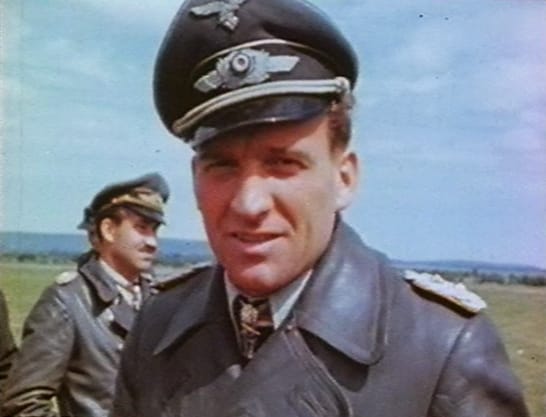
His superiors ran out of medals to give him. In January 1945 he received the Knight’s Cross with Golden Oak Leaves, Swords and Diamonds — a grade of the decoration created specifically for him, and awarded to no one else.
The part that is not heroic
Here the story turns. Rudel never renounced Nazism. After the war he fled to Argentina, became a fixture of neo-Nazi politics in both Latin America and West Germany, and founded the Kameradenwerk, a network that helped fugitive Nazi war criminals escape to South America and the Middle East. He remained, openly and proudly, what he had always been.
It is a genuinely difficult legacy. The RAF ace Douglas Bader, who had lost both his own legs, wrote a foreword to the English edition of Rudel’s memoir, admiring the airmanship while making no excuse for the man’s politics. That is about as far as anyone honest can go: Rudel’s courage in the air was real, and so was the cause he served. Both facts belong in the same sentence.
Sources: War History Online; Wikipedia; Hans-Ulrich Rudel, “Stuka Pilot”. Combat totals are German wartime claims.
0 Commenti