
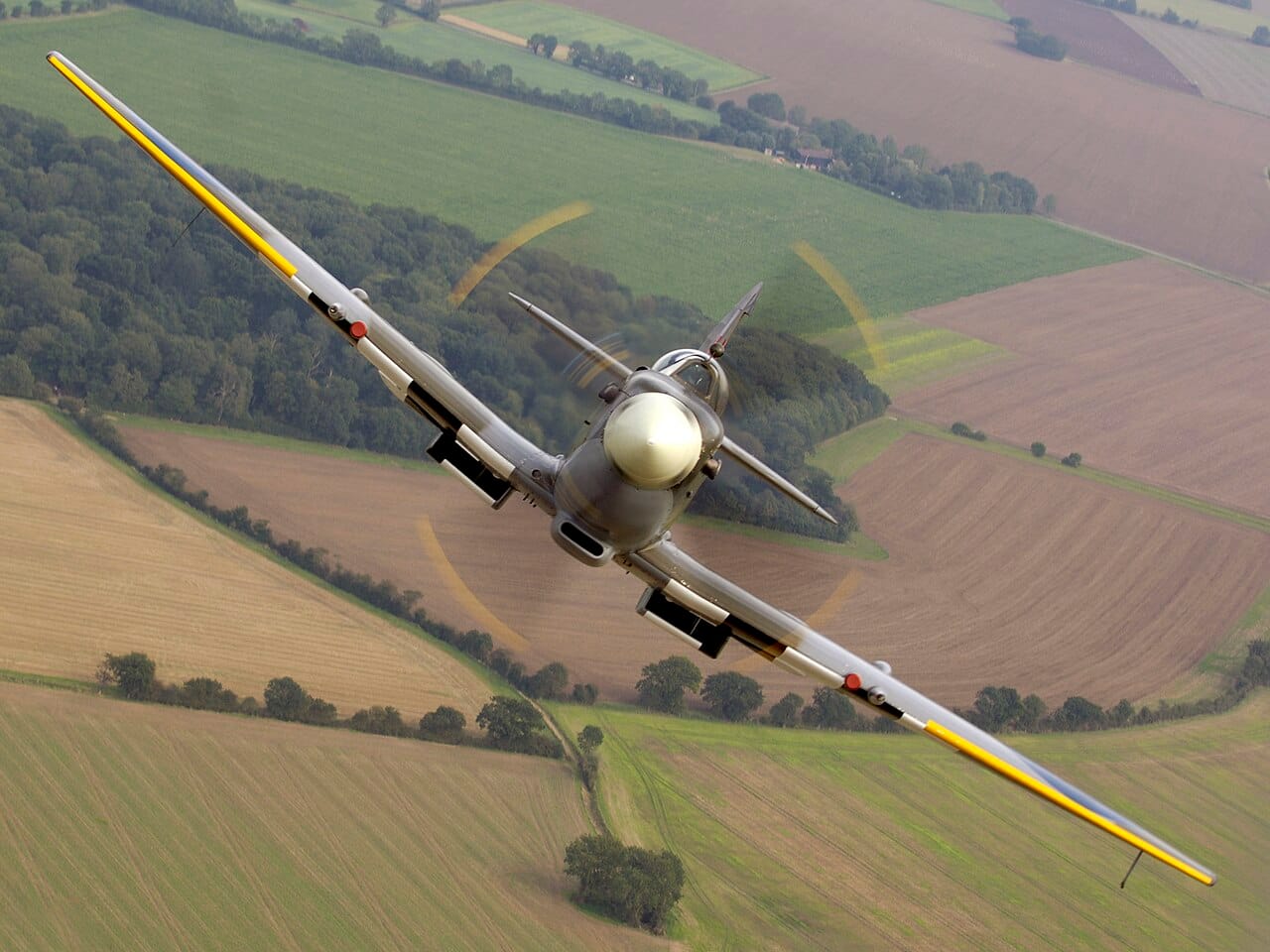
In December 1931, a cocky 21-year-old RAF pilot named Douglas Bader tried a low, showy roll in his biplane, clipped a wingtip on the grass, and crashed. Surgeons took his right leg above the knee that day, and his left below the knee months later. His flying career, everyone agreed, was over.
They were wrong. On two artificial legs he would become one of the most famous fighter aces of the Battle of Britain — and one of the most incorrigible escapers of the war.
Informazioni rapide
- Pilota: Group Captain Sir Douglas Bader, RAF
- Lost his legs: 1931, in a low-level aerobatic crash — both were amputated
- Comeback: Talked his way back into RAF fighters at the outbreak of war
- Victories: Credited with around 22 aerial kills
- Shot down: Over France in 1941; captured and eventually sent to Colditz
- Legend: Subject of the book and film “Reach for the Sky”
Back on tin legs
Bader called his prosthetics his “tin legs,” and he attacked them with the same stubbornness he brought to everything. Within months he was walking without a stick; within a year he was driving and even flying again. The peacetime RAF still invalided him out — the rules had no place for a legless pilot. Bader had a view about rules.
When war broke out in 1939 and Britain suddenly needed every pilot it could find, he got his chance. Flying the Supermarine Spitfire and the Hurricane, he became a leading ace of the Battle of Britain and a fierce advocate of the massed “Big Wing” formations — a man the Luftwaffe eventually had to shoot down simply to be rid of him.
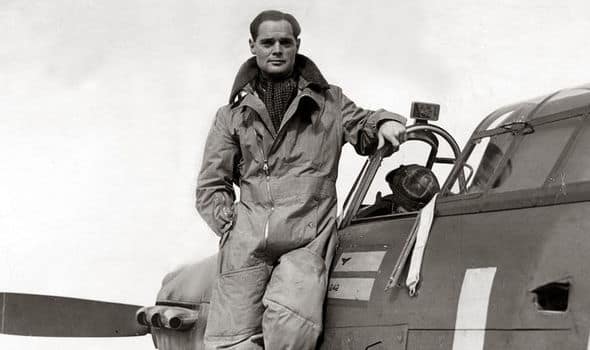
Operation Leg
In August 1941 they finally did. Shot down over occupied France, Bader escaped his falling fighter only by abandoning a prosthetic leg trapped in the cockpit. Captured, he was such a persistent escaper that the Germans eventually threatened to take his legs away at night.
There was a stranger courtesy, too. The RAF asked permission to deliver Bader a replacement leg, and the Germans agreed to a safe-conduct airdrop — a mission the crews dubbed “Operation Leg.” Fitted with the new limb, Bader promptly used it to try to escape again, and kept trying until the exasperated Germans locked him up in Colditz.
The measure of the man
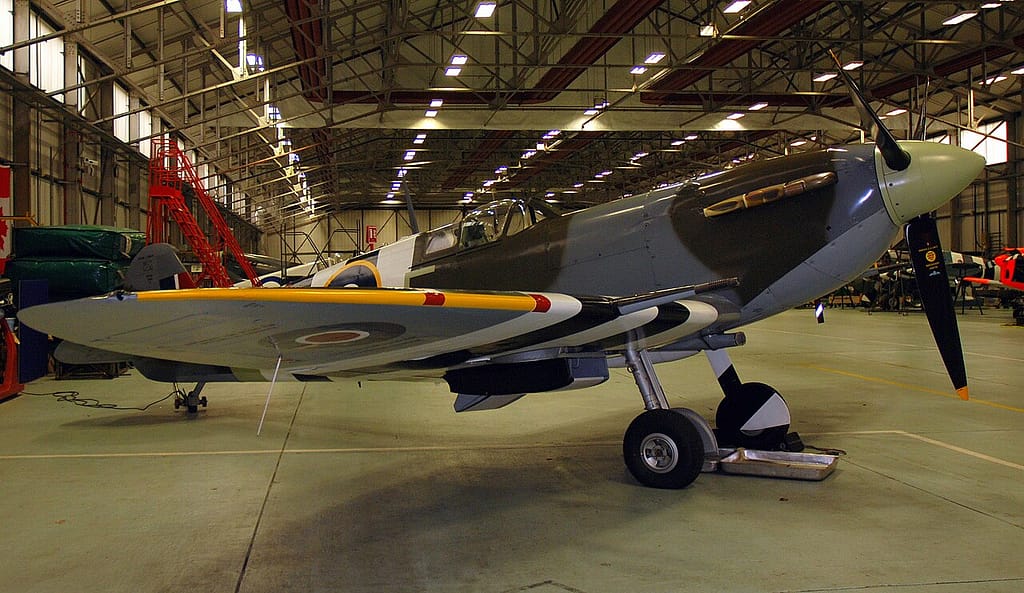
After the war Bader was knighted and spent decades campaigning for disabled people, insisting that a lost limb was an obstacle to be beaten rather than an excuse. He even wrote a foreword to the memoir of the German Stuka ace Hans-Ulrich Rudel, one legless flier saluting another’s airmanship across the old battle lines.
He kept flying almost to the end of his life, in 1982 — the boy whose career was declared over at 21, who answered by writing one of the most improbable chapters in aviation history.
Sources: Paul Brickhill, “Reach for the Sky”; War History Online; Sky HISTORY; Blesma; Wikipedia.
0 Commenti