
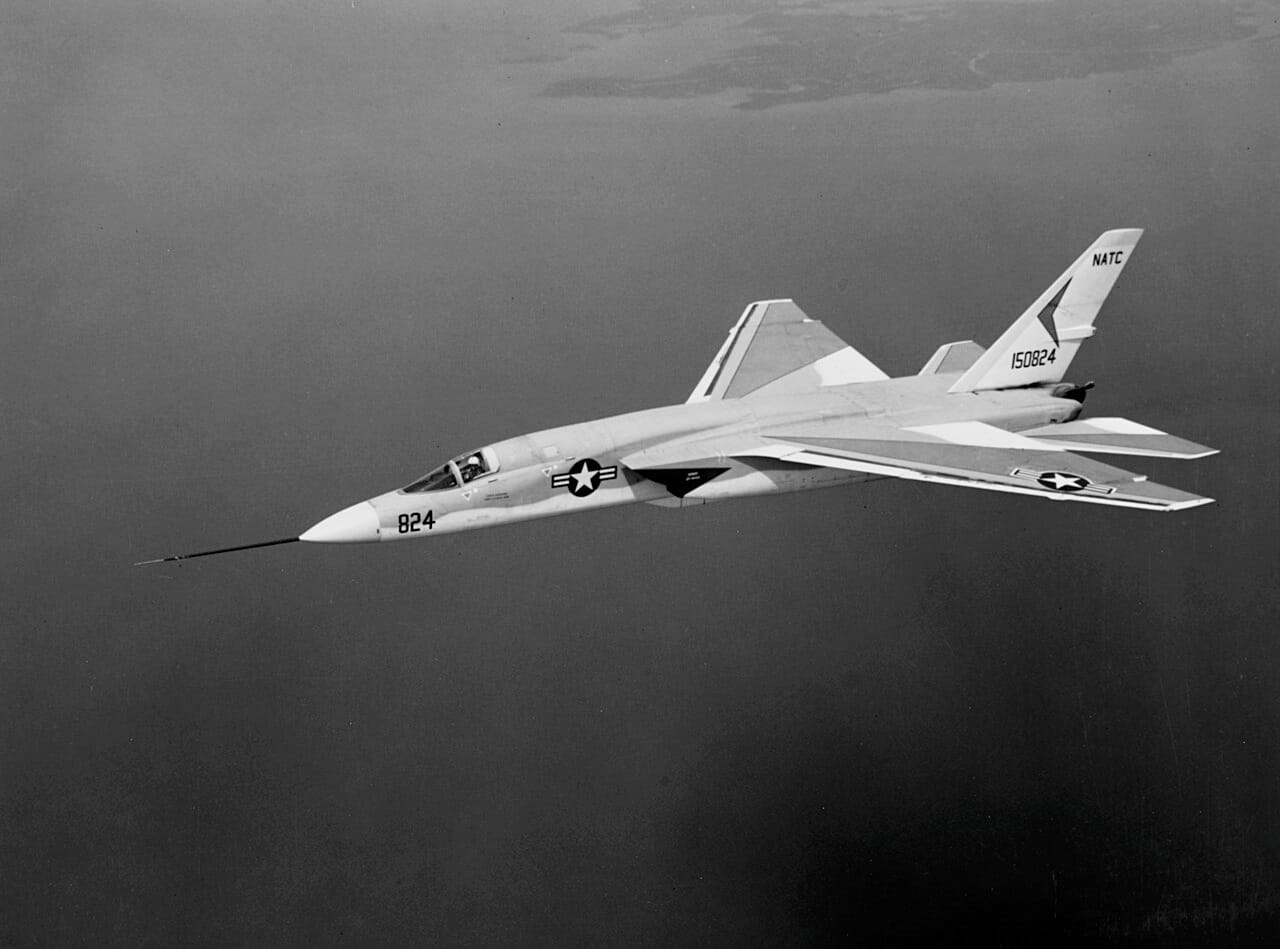
It may be the most beautiful aircraft the United States Navy ever sent to sea: long, impossibly sleek, twin-finned and built to sprint at twice the speed of sound off a carrier deck. The North American A-5 Vigilante looked like it had arrived from a decade in the future. It was also, as a nuclear bomber, a near-total failure — undone by one clever idea that simply refused to work.
The story of the Vigilante is the story of that idea, and of the second, unexpected life the aircraft found once everyone gave up on the first.
Informazioni rapide
| Aeromobili | North American A-5 Vigilante (originally designated A3J) |
| Primo volo | 1958 |
| Performance | Mach 2 at altitude — extraordinary for a carrier bomber |
| Ahead of its time | Early fly-by-wire, a digital bombing computer and variable engine inlets |
| The flaw | A “linear” bomb bay that ejected its weapon rearward — and never worked |
| Second life | Rebuilt as the RA-5C, the Navy’s fast carrier reconnaissance jet |
A Jet From the Future
When it first flew in 1958, the Vigilante was almost absurdly advanced. It carried an early fly-by-wire flight-control system, one of the first digital computers ever fitted to a combat aircraft for navigation and bombing, and variable inlet ramps to let it reach Mach 2. It was bigger than some contemporary bombers, yet it flew off aircraft carriers. Everything about it was ambitious — including the part that broke it.
A profile of the Navy’s supersonic leviathan and the ideas built into it.
The Bomb Bay That Did Not Work
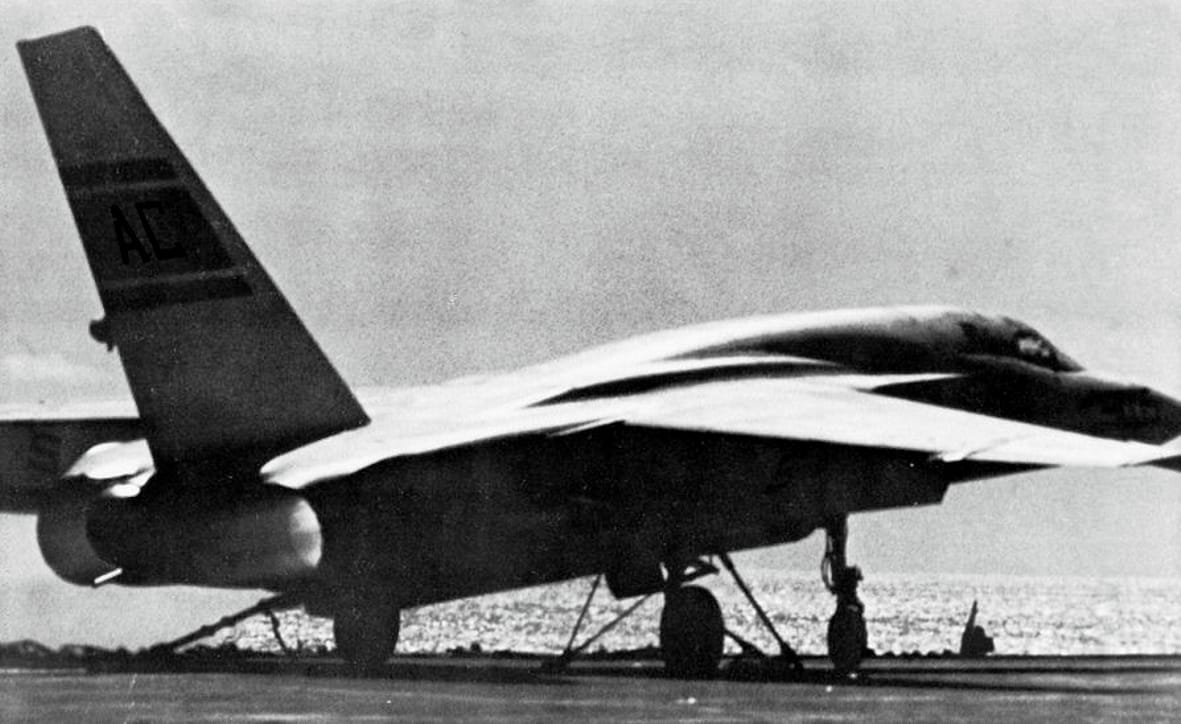
The Vigilante’s nuclear weapon was not carried under the wings or in a conventional bay. Instead it sat in a long tunnel running between the two engines, coupled to two fuel cans behind it. At release, the whole train was ejected indietro out of a port between the exhaust nozzles — the theory being that the bomb would decelerate and drop cleanly behind the fast-moving jet. In practice it did nothing of the sort.
A closer look at the RA-5C and the linear delivery system that doomed the bomber.
Reborn as a Spy
Rather than scrap a superb airframe, the Navy rebuilt it. As the RA-5C, the troublesome tunnel was filled with fuel tanks — feeding the thirsty engines — and the aircraft was packed with cameras and sensors to become the fleet’s fast reconnaissance platform. In Vietnam the RA-5C was invaluable, screaming over targets to bring back the imagery no one else could get. But its very speed dictated straight, predictable, high-energy runs, and it paid for them: the Vigilante suffered heavily among reconnaissance losses over North Vietnam.
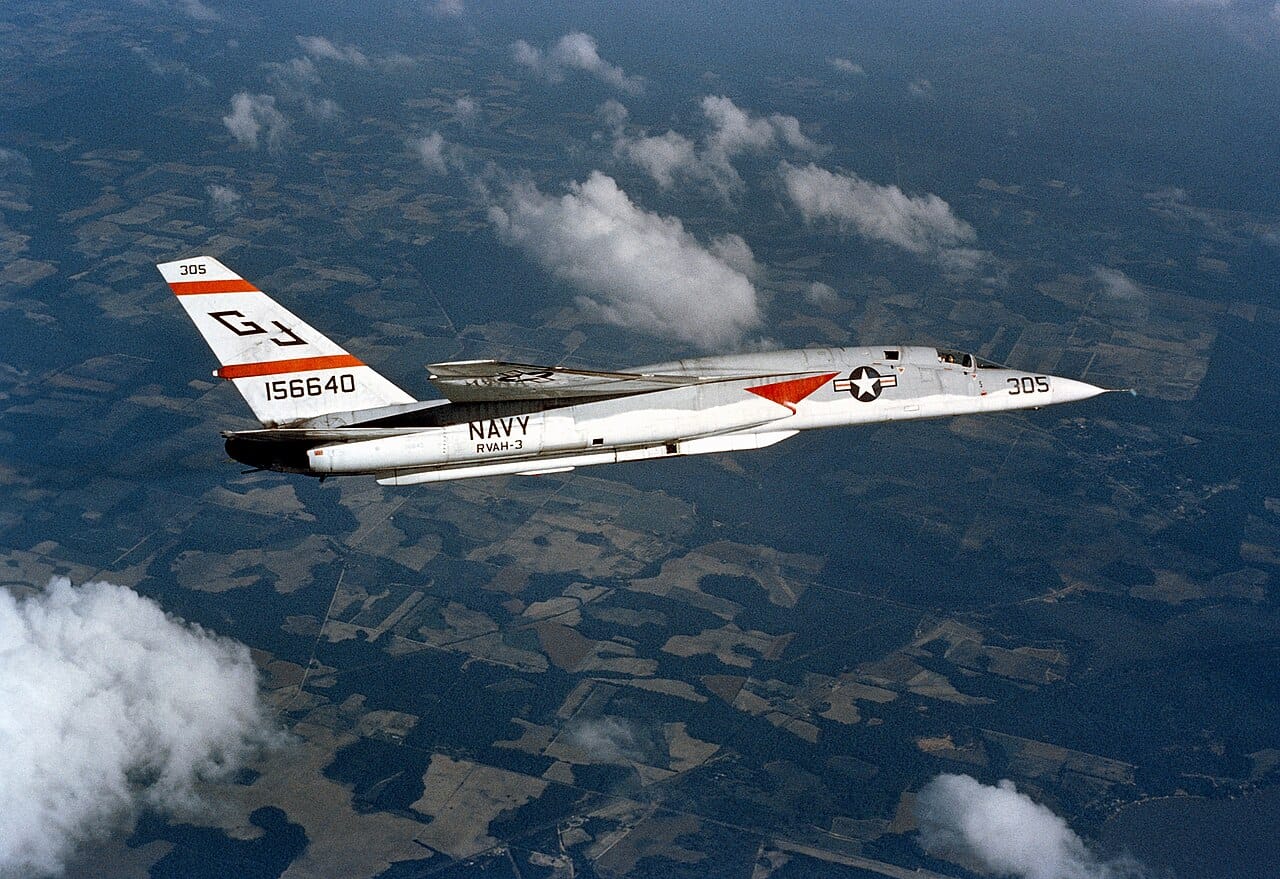
The rise and fall of one of naval aviation’s most striking aircraft.
Beautiful and Doomed
Only around 150 Vigilantes were ever built, and they were gone from the fleet by the end of the 1970s, retired as the Navy consolidated its reconnaissance onto other types. What remains is one of aviation’s most poignant might-have-beens: a machine so far ahead of its era that it reached for a capability the technology could not yet deliver. The Vigilante was faster, sleeker and cleverer than almost anything around it — and its great innovation was the very thing that grounded its original purpose. Sometimes the most beautiful solution is to the wrong problem.
Sources: The Aviation Geek Club; U.S. Naval History and Heritage Command; North American Aviation records.
Domande correlate
What was the North American A-5 Vigilante?
The A-5 Vigilante (originally designated A3J) was a large, twin-engine US Navy carrier bomber that first flew in 1958 and could reach Mach 2. Built to deliver a nuclear weapon, it packed cutting-edge technology, but its bombing system failed and it was rebuilt as the RA-5C reconnaissance jet.
Why did the A-5 Vigilante fail as a bomber?
Its nuclear weapon sat in a linear bomb bay — a long tunnel between the two engines — coupled to two fuel cans that were meant to eject rearward out the tail. The mechanism never worked reliably, so the Vigilante never succeeded in its intended nuclear strike role.
What made the A-5 Vigilante so advanced?
First flown in 1958, the Vigilante carried an early fly-by-wire flight-control system, one of the first digital computers fitted to a combat aircraft for navigation and bombing, and variable inlet ramps to reach Mach 2 — technology years ahead of its contemporaries.
What was the RA-5C Vigilante?
The RA-5C was the reconnaissance version of the Vigilante and the aircraft's successful second life. After the nuclear-bomber concept failed, the US Navy rebuilt the fast, high-flying airframe into its premier carrier-based reconnaissance jet.
Was the A-5 Vigilante a carrier aircraft?
Yes. Though larger than some land-based bombers, the Mach 2 Vigilante launched and recovered from aircraft carriers on a pitching flight deck. It served in the same era as smaller Navy jets like the A-4 Skyhawk.
Is the A-5 Vigilante considered a beautiful aircraft?
The Vigilante is often called one of the most beautiful aircraft the US Navy ever sent to sea — long, sleek and twin-finned, it looked like it had arrived from the future. It regularly features on lists of aviation’s most elegant designs.

0 Commenti