
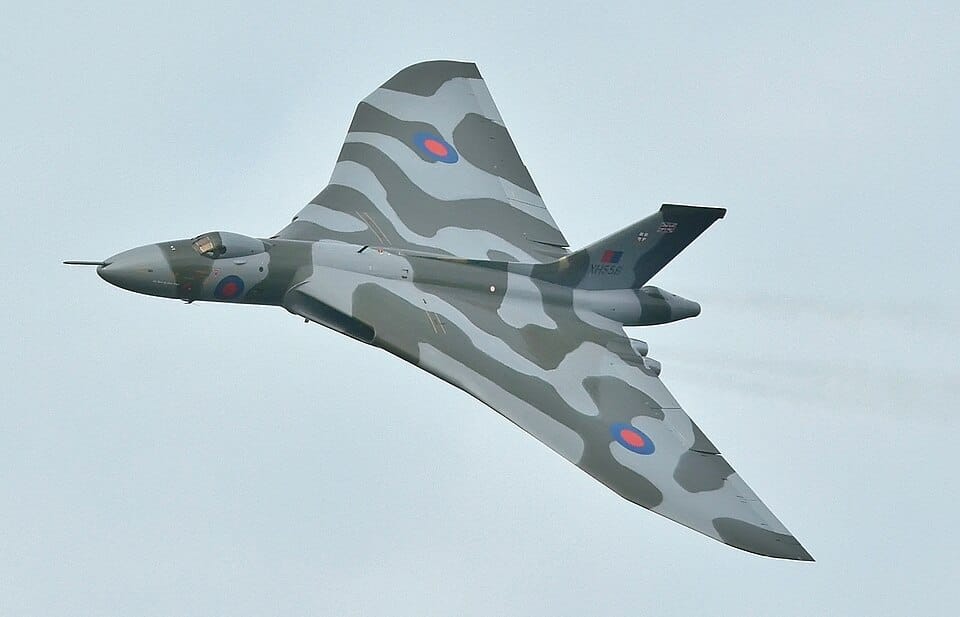
For three decades during the Cold War, Britain's nuclear deterrent rested on the wings of three extraordinary aircraft: the Vickers Valiant, the Avro Vulcan, and the Handley Page Victor. Known collectively as the V-bombers, they were designed to carry atomic and thermonuclear weapons to the Soviet Union — and to do it fast enough and high enough that nothing could stop them. Together they formed one of the most distinctive and capable bomber forces in aviation history.
- Vickers Valiant: First flight 18 May 1951 | 107 built | Retired 1965
- Avro Vulcan: First flight 30 August 1952 | 136 built | Retired 1984
- Handley Page Victor: First flight 24 December 1952 | 86 built | Retired 1993
- Total V-bombers built: 329
- Nuclear role: 1955–1969 (transferred to Polaris submarines)
- QRA scramble target: 4 minutes from klaxon to airborne
Why Britain Needed Three Bombers
In 1946, the British Air Staff issued a requirement for a jet bomber capable of carrying a 10,000-pound nuclear weapon to targets deep inside the Soviet Union at high altitude and high speed. The technology required was so far beyond anything that existed that the Air Ministry hedged its bets, ordering designs from three different manufacturers: Vickers, Avro, and Handley Page. Each company took a radically different approach to the same problem, and all three were ultimately built — an extraordinary decision that reflected both the urgency of the nuclear mission and British uncertainty about which aerodynamic solution would work best.
The Vickers Valiant: First of the Three
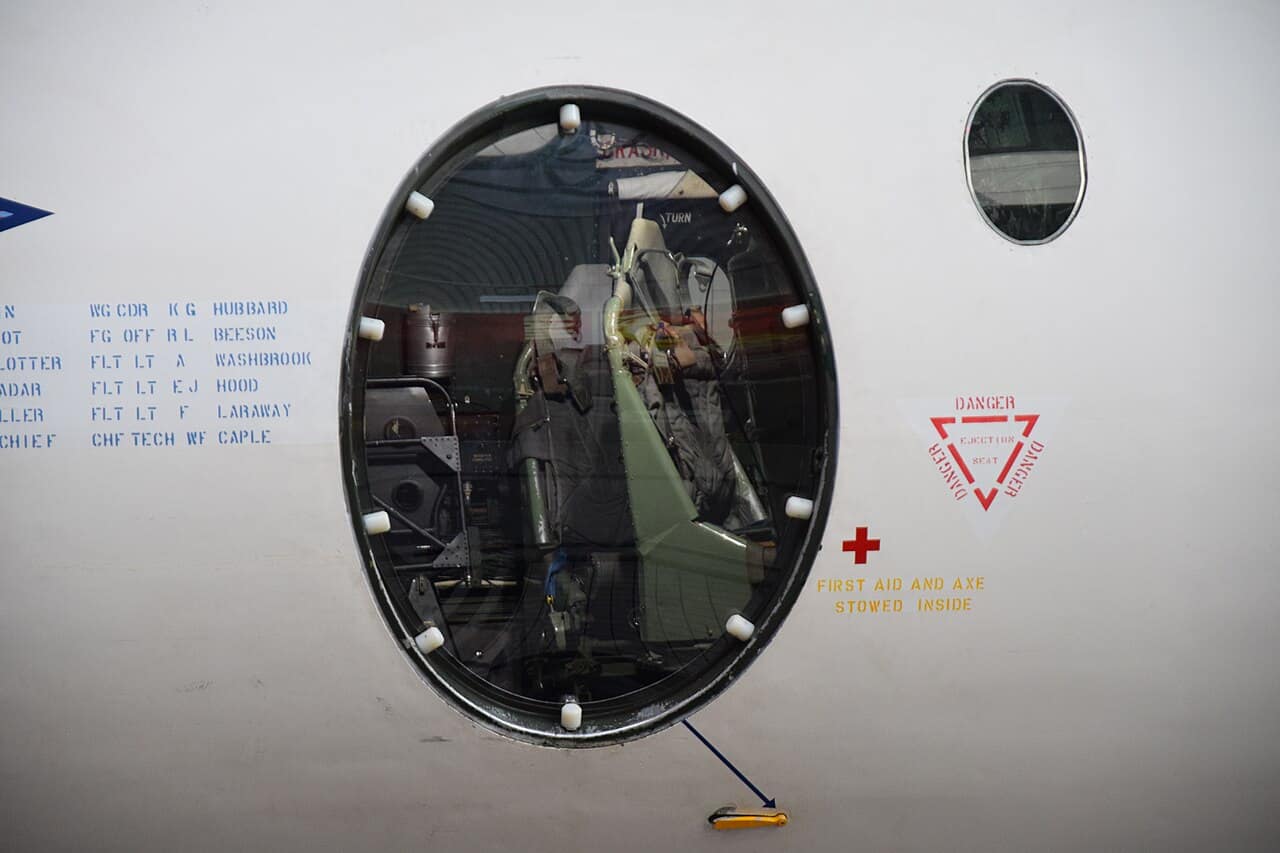
The Valiant was deliberately conservative. Chief designer George Edwards chose a moderately swept wing and conventional tail, prioritising reliability and speed of development over ultimate performance. The approach paid off: the Valiant flew first, entered service first, and on 11 October 1956, became the first British aircraft to drop a live nuclear weapon during Operation Buffalo at Maralinga, Australia.
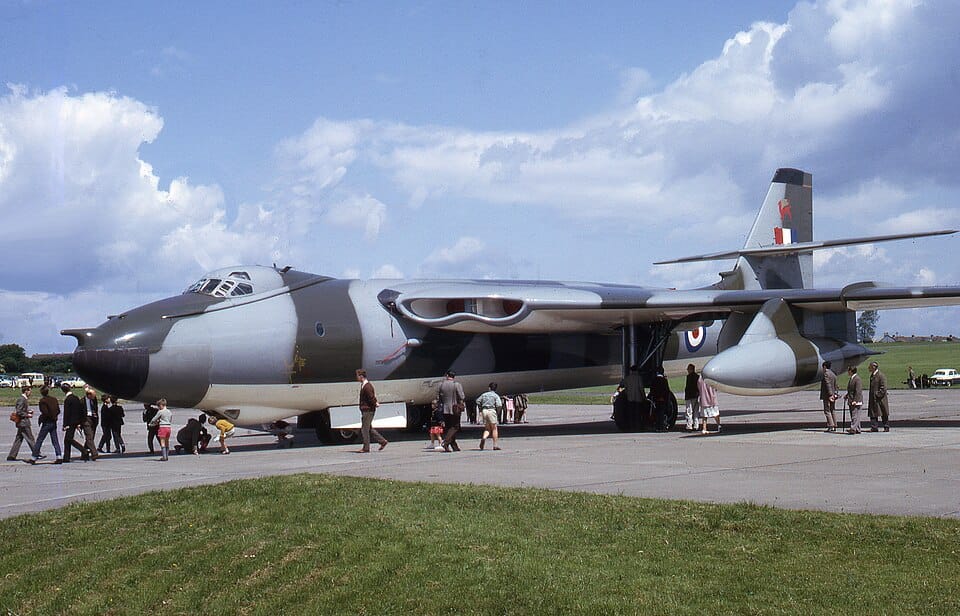
Valiants also dropped Britain's first hydrogen bomb during Operation Grapple over Christmas Island in 1957. In operational service, the Valiant equipped the bulk of the V-force's early squadrons and was the workhorse of RAF Bomber Command's nuclear alert posture through the late 1950s. But the switch from high-altitude to low-level operations in the early 1960s proved fatal. The Valiant's wing spar had not been designed for the stresses of sustained low-level flying, and in 1964, inspections revealed catastrophic metal fatigue across the entire fleet. Every Valiant was grounded and scrapped within months — just nine years after entering service.
The Avro Vulcan: The Delta Giant
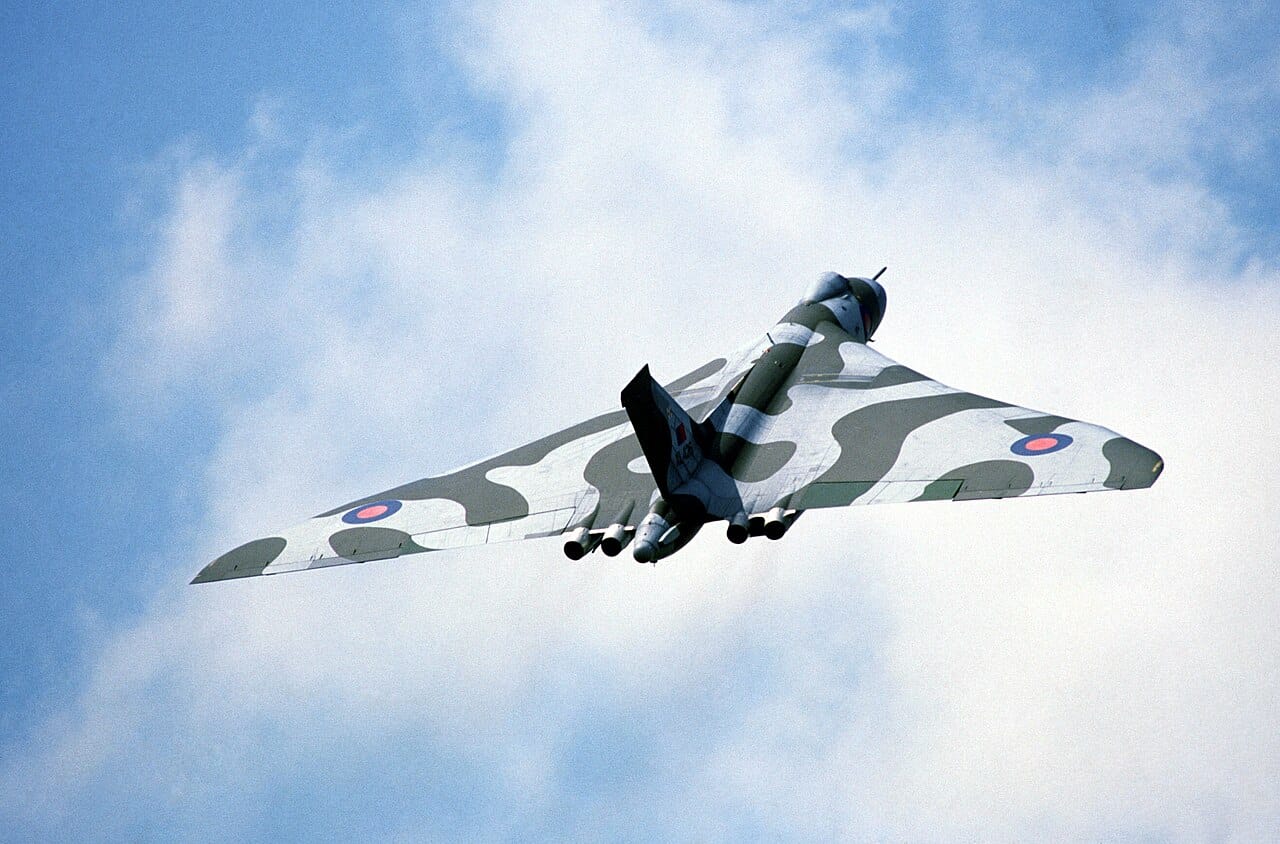
If the Valiant was conservative, the Vulcan was radical. Designer Roy Chadwick and his successor Stuart Davies created an enormous delta-wing aircraft with no tailplane — a configuration that had barely been tested at any scale, let alone on a 100-tonne bomber. The result was one of the most dramatic-looking aircraft ever built: a vast triangle of aluminium that could climb to 56,000 feet and cruise at Mach 0.95.
The Vulcan was remarkably agile for its size. Test pilots routinely performed barrel rolls in the prototype, and operational crews discovered that the big delta could pull manoeuvres that would tear the wings off a conventional bomber. This agility proved valuable when the mission shifted to low-level penetration in the 1960s — the Vulcan could follow terrain contours far more comfortably than the Valiant or Victor.
The Vulcan's most famous combat mission came during the Falklands War in 1982. Operation Black Buck saw Vulcan bombers fly from Ascension Island to the Falklands and back — a round trip of nearly 8,000 miles — to bomb the runway at Port Stanley. The missions required massive Victor tanker support and pushed both aircraft types to their absolute limits. The raids denied Argentina the use of the airfield for fast jets and demonstrated Britain's ability to strike at extreme range.
The Handley Page Victor: Last and Fastest
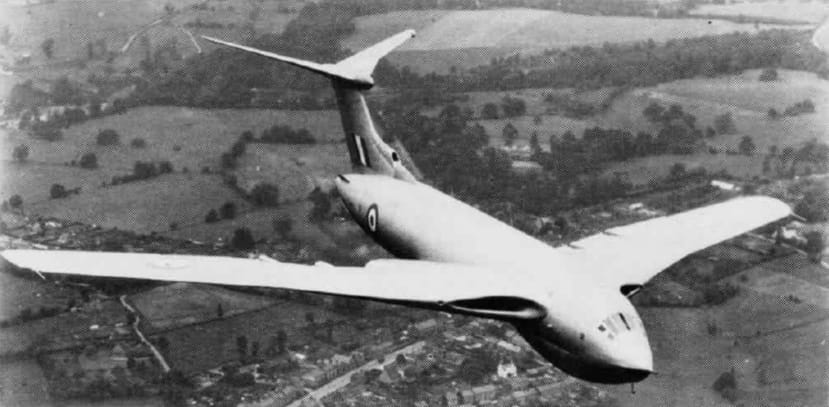
The Victor took the most ambitious aerodynamic approach of the three, with its unique crescent-shaped wing — a compound sweep design that varied from 52 degrees at the root to 35 degrees at the tip. This gave the Victor the best high-altitude performance of any V-bomber: it could reach Mach 0.96 and operate above 60,000 feet. With its elegant T-tail and engines buried in the wing roots, the Victor was widely regarded as the most beautiful of the three.
When the bomber role ended, the Victor found its greatest purpose as an aerial tanker. Converted to K.2 configuration, it became the backbone of RAF long-range operations, most critically during the Falklands Black Buck raids where 11 Victors supported each Vulcan sortie in the most complex aerial refuelling operation ever attempted. The Victor K.2 served until 1993, outliving both its V-bomber siblings by decades.
Quick Reaction Alert
At the height of the Cold War, V-bomber crews lived on a knife's edge. Under Quick Reaction Alert (QRA), armed aircraft sat dispersed at airfields across eastern England, their nuclear weapons loaded and ready. When the klaxon sounded — whether for exercise or for real — crews had to sprint to their aircraft, start engines, and be airborne within four minutes. That four-minute window was the estimated warning time between Soviet missile launch detection and impact on British bases.
The pressure was relentless. Crews slept in their flight suits, ate their meals in the QRA facility, and practiced the scramble procedure until it was muscle memory. The V-force maintained this alert posture continuously from 1962 until the nuclear mission transferred to the Royal Navy's Polaris submarine force in 1969.
The End of the V-Force
The transition away from the V-bombers as Britain's nuclear deterrent began with the cancellation of the American Skybolt air-launched ballistic missile in 1962. Skybolt would have allowed V-bombers to launch nuclear strikes from outside Soviet air defence range, extending their usefulness. When the United States cancelled the programme, Prime Minister Harold Macmillan negotiated the purchase of Polaris submarine-launched missiles instead, effectively ending the V-bomber's strategic nuclear role.
The Valiant was gone by 1965. The Vulcan soldiered on in conventional bombing and maritime radar reconnaissance roles until 1984, with its Falklands swansong providing a spectacular final chapter. The Victor, reborn as a tanker, flew until 1993. Today, the last airworthy Vulcan (XH558) has been retired to Doncaster Sheffield Airport, though it occasionally runs its engines for ground displays. The V-force era is over, but the three aircraft remain among the most distinctive and capable bombers ever designed.
Domande correlate
What were the V-bombers?
The V-bombers were three British jet bombers — the Vickers Valiant, Avro Vulcan and Handley Page Victor — that carried the United Kingdom's airborne nuclear deterrent through the Cold War. Designed to strike the Soviet Union at high altitude and high speed, they entered service in the 1950s, with 329 built in total.
Why did Britain build three different V-bombers?
In 1946 the British Air Staff issued a requirement for a jet bomber able to carry a 10,000-pound nuclear weapon at high altitude and speed — technology far beyond anything then existing. Uncertain which aerodynamic solution would work, the Air Ministry hedged its bets and ordered radically different designs from Vickers, Avro and Handley Page, and built all three.
What were the three V-bombers?
They were the Vickers Valiant (first flight 1951, 107 built, retired 1965), the Avro Vulcan (first flight 1952, 136 built, retired 1984) and the Handley Page Victor (first flight 1952, 86 built, retired 1993). The Valiant was conservative, the Vulcan a radical delta-wing giant, and the Victor the most advanced.
What happened to the Vickers Valiant?
The Valiant flew and entered service first, and on 11 October 1956 became the first British aircraft to drop a live nuclear weapon. But the 1960s switch to low-level flying overstressed its wing spar; in 1964 inspections found catastrophic metal fatigue across the fleet, and every Valiant was grounded and scrapped within months.
Cos'era l'Avro Vulcan?
The Avro Vulcan was a giant delta-wing bomber with no tailplane — a bold configuration barely tested at any scale, let alone on a 100-tonne aircraft. Visually dramatic and long-serving, it retired in 1984, and stands among Britain's most ambitious designs alongside the ill-fated TSR-2.
When did the V-bombers stop carrying nuclear weapons?
The V-force held the primary nuclear role from 1955 until 1969, when the deterrent passed to the Royal Navy's Polaris submarines. On Quick Reaction Alert, V-bomber crews were trained to scramble from klaxon to airborne in about four minutes.
Sources: Royal Air Force Museum; Imperial War Museum; Vulcan to the Sky Trust; British nuclear-deterrent histories.
0 Commenti