
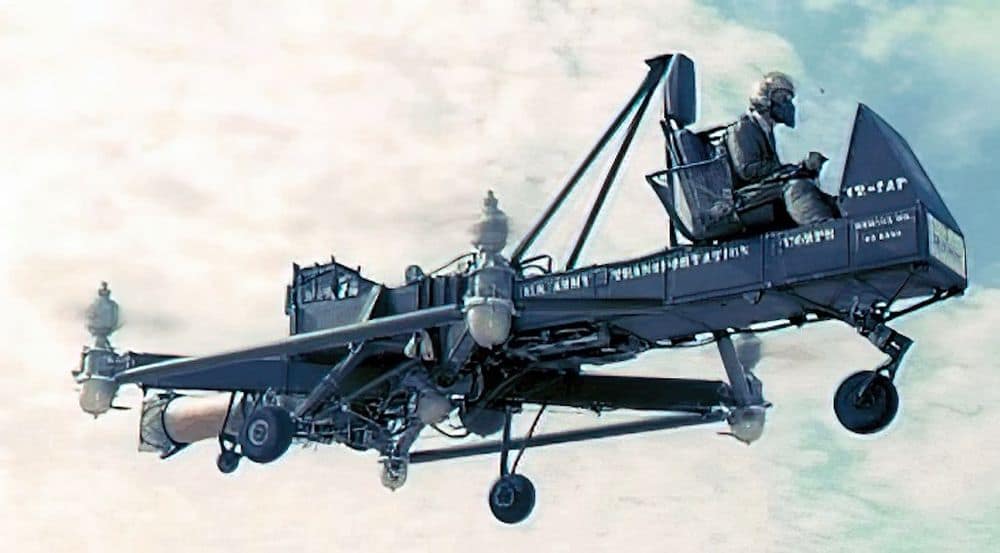
In the late 1950s the US Army went looking for a machine that no one had ever quite built: something between a jeep and a helicopter. A flying jeep — a simple platform a soldier could stand on, lift straight up, and buzz over a battlefield. It sounds like a cartoon. The Army was completely serious, and Curtiss-Wright built them one that actually flew.
They called it the VZ-7. It was, essentially, a manned quadcopter — decades before the word existed.
INFORMAZIONI RAPIDE
| Ruolo | VTOL "flying jeep" (utility platform) |
| Operatore | U.S. Army |
| centrale elettrica | 1 × Turbomeca Artouste IIB turboshaft, 425 shp |
| Rotors | Four vertically-mounted propellers |
| Velocità massima | ~32 mph (51 km/h); ceiling ~200 ft |
| Numero costruito | 2; delivered 1958, returned to the maker 1960 |
The dream of air cavalry
The flying jeep grew out of a bigger idea. In 1954 the paratrooper general James Gavin published a famous essay in Harper’s arguing that the modern army needed a new kind of cavalry — not horses, but machines that could leap over terrain.
Out of that vision came a small fleet of experimental "flying jeeps." Curtiss-Wright’s entry, built by its Santa Barbara division, was the first of them to leave the ground.
Plain, simple — and not quite enough
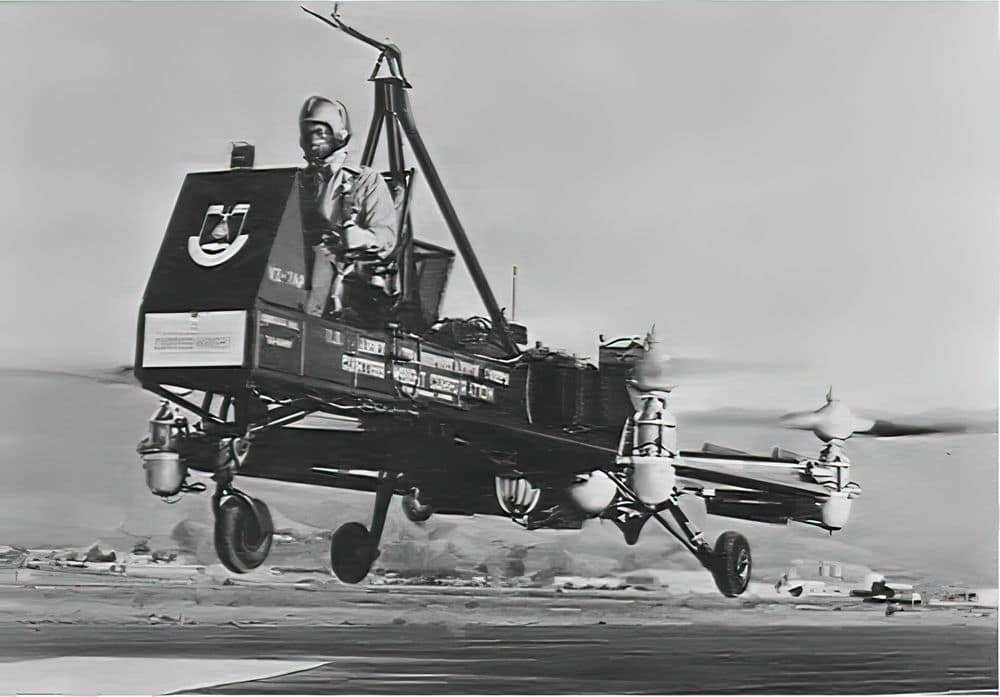
The design could hardly have been simpler. A rectangular truss about 17 feet long carried the pilot, the fuel, and a single 425-horsepower Turbomeca turboshaft driving four upright propellers arranged in a square. To steer, the pilot simply fed more or less power to each propeller; moveable vanes in the exhaust handled the rest. It even lugged a recoilless gun during trials.
And it worked. Pilots found it stable, nimble and easy to fly. The trouble was that "easy to fly" was not the same as "useful." Its top speed was barely 30 mph and it could not climb much above 200 feet — no armour, no speed, no ceiling. As one modern account of the project put it:
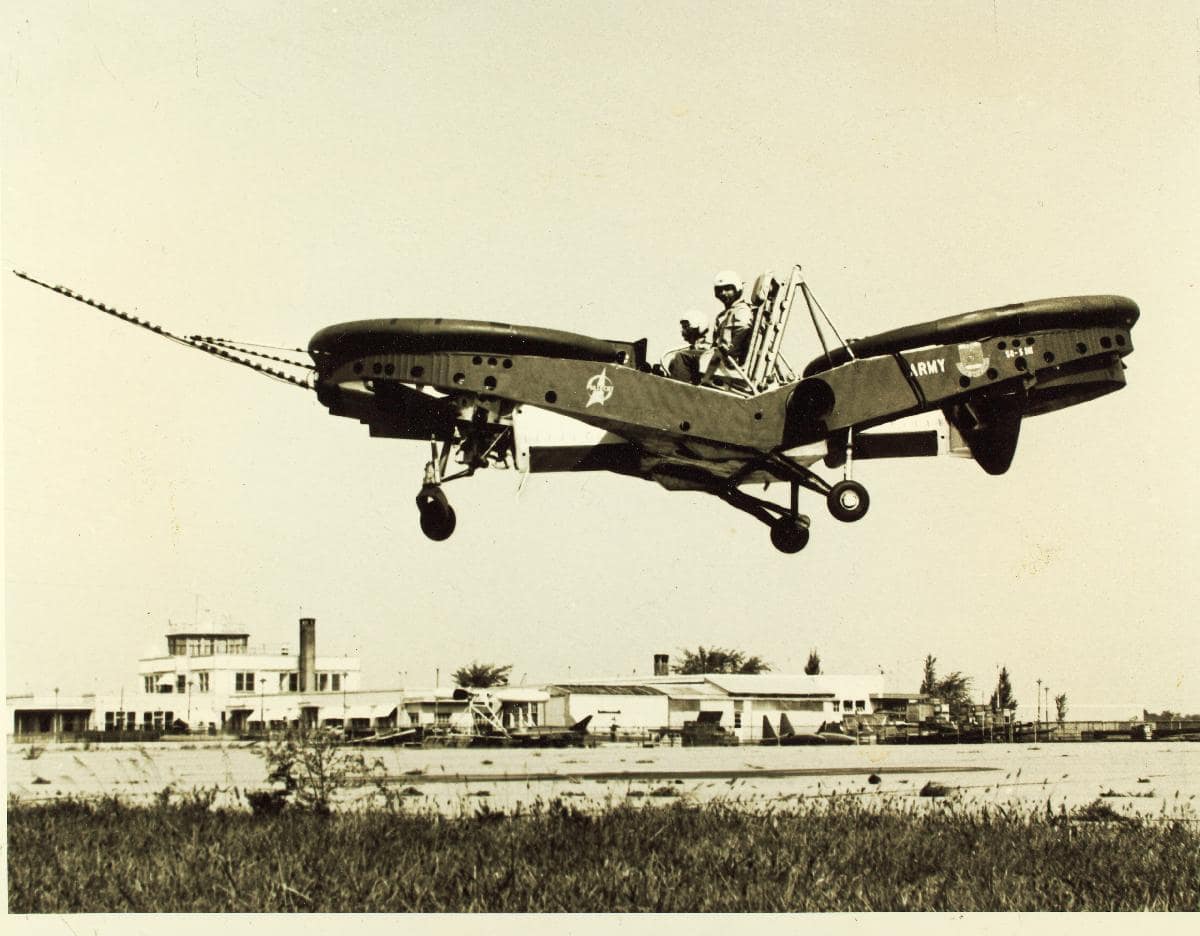
Soon after, every flying-jeep project was quietly shelved. The Army had realised that the helicopter already did the job better, and the humble jeep did the rest. One VZ-7 survives today at the US Army Aviation Museum.
And yet, look at any hobby-shop quadcopter, or the FPV attack drones now reshaping modern war, and the VZ-7 suddenly looks less like a failed curiosity and more like a machine that was simply seventy years early.
Sources: Jets ’n’ Props; Gen. James M. Gavin, Harper’s Magazine (1954); U.S. Army Aviation Museum; Wikipedia.

0 Commenti