
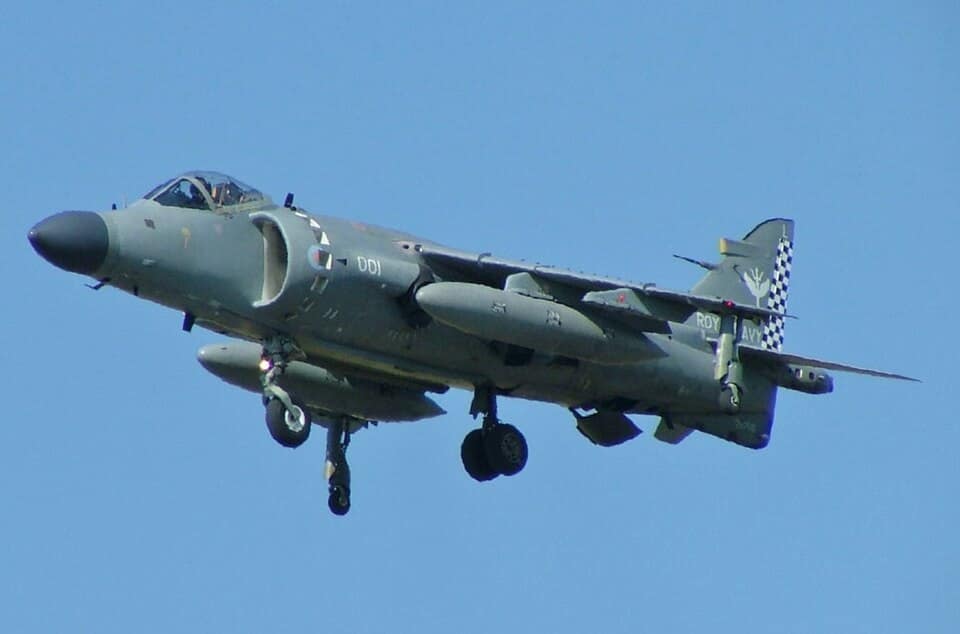
Quick Facts: Sea Harrier in the Falklands
- Aeromobili: BAe Sea Harrier FRS.1
- Squadrons: 800 NAS (HMS Hermes), 801 NAS (HMS Invincible), 809 NAS (reinforcements)
- Air-to-air kills: 20 confirmed, zero losses
- Primary weapon: AIM-9L Sidewinder (all-aspect, ~73% hit rate)
- Total losses: 6 (2 ground fire, 4 accidents) — none in air combat
- Key pilots: Lt Cdr Sharkey Ward (3 kills), Lt Cdr Dave Morgan (2 kills)
The Sidewinder That Changed Everything
The Sea Harrier's secret weapon was not vectored thrust or pilot skill — it was the AIM-9L Sidewinder. Previous Sidewinder variants could only lock onto a target's hot exhaust from behind. The Lima model could lock from any angle, including head-on. Argentine pilots trained to defend against rear-aspect missiles found themselves dying in head-on passes they had been taught were safe. Of roughly 27 AIM-9Ls fired during the war, 19 found their targets — a kill rate of approximately 73 percent. No air-to-air missile in history had achieved anything close in combat conditions. The Sidewinder turned every Sea Harrier intercept into a near-certain kill.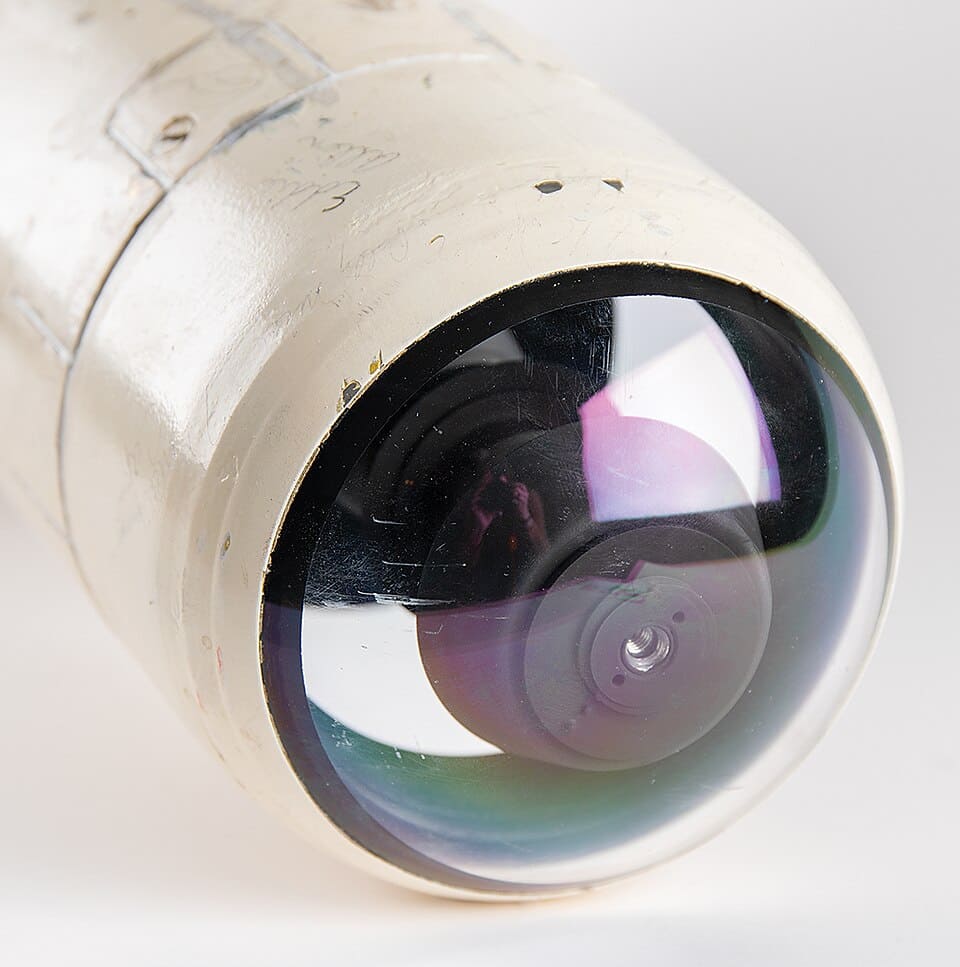
The Pilots Who Made It Work
The Sea Harrier pilots were a small, tight-knit group — fewer than 30 combat pilots for the entire war. They flew multiple sorties per day from carriers rolling in heavy seas, in weather that grounded jets on both sides for days at a time. Combat air patrols lasted hours, with pilots sitting in freezing cockpits scanning empty sky until, suddenly, it was not empty. Lt Cdr Dave Morgan of 800 NAS became the most successful British pilot of the war, destroying two Argentine A-4 Skyhawks on 8 June during the devastating attacks on Sir Galahad and Sir Tristram at Bluff Cove. Ward, commanding 801 NAS from HMS Invincible, claimed three kills and later wrote one of the war's definitive accounts.VIFF — The Myth and the Reality
The Sea Harrier's ability to vector its engine thrust in forward flight — VIFF — has become legendary, often cited as the reason for its dominance. The truth is more prosaic. Most kills were single-pass intercepts using the AIM-9L at ranges where VIFF was irrelevant. The missile did the work; the pilot needed only to get within parameters and fire. VIFF was useful in training and could theoretically force an overshoot in a close-in dogfight, but the Falklands air war was not about dogfighting. It was about radar-guided intercepts at medium altitude, followed by a Sidewinder shot. The Sea Harrier was not a better dogfighter than the Mirage III or A-4 Skyhawk. It simply never needed to be.Un record che resiste ancora
No Western fighter has matched the Sea Harrier's air combat record since 1982. Twenty kills for zero losses, achieved by a subsonic VTOL aircraft that most experts had written off as a naval compromise. The Falklands proved that the right missile, the right training, and the right circumstances could overcome every disadvantage on paper. The Sea Harrier retired from Royal Navy service in 2006, replaced by the joint-force Harrier GR.9. Its successor, the F-35B Lightning II, now flies from the Queen Elizabeth-class carriers. But no amount of stealth or sensor fusion has yet produced a combat record to rival what twenty jump jets accomplished in the South Atlantic winter of 1982.Sources: Sharkey Ward, "Sea Harrier Over the Falklands"; Dave Morgan, "Hostile Skies"; Ministry of Defence, "The Falklands Campaign: The Lessons"; Wikipedia
Domande correlate
How many aircraft did the Sea Harrier shoot down in the Falklands War?
During the 1982 Falklands War, Royal Navy Sea Harriers shot down 20 Argentine aircraft in air-to-air combat while losing none in dogfights. Just 20 jets faced an Argentine air force that outnumbered them roughly five to one, yet achieved one of the most lopsided air-combat records in modern military history.
Why was the Sea Harrier so successful in the Falklands?
The Sea Harrier's success came largely from its weapon, the all-aspect AIM-9L Sidewinder missile. It also relied on skilled, tight-knit pilots flying constant patrols from carriers in rough seas. Argentine jets were faster but operated at the edge of their range, giving the defending Harriers a decisive advantage over the fleet.
What is the AIM-9L Sidewinder?
The AIM-9L Sidewinder was an all-aspect, heat-seeking air-to-air missile. Unlike earlier Sidewinders that could only lock onto a target's exhaust from behind, the 'Lima' model could lock from any angle, including head-on. In the Falklands, roughly 19 of 27 AIM-9Ls fired hit their targets, a kill rate near 73 percent.
How many Sea Harriers were lost in the Falklands?
Six Sea Harriers were lost in the Falklands, but none in air-to-air combat. Two were downed by ground fire and four were lost in accidents. No Sea Harrier was shot down by an enemy aircraft, which is why its record is often summarised as 20 kills for zero air-combat losses.
Who were the top Sea Harrier pilots of the Falklands War?
Lieutenant Commander Dave Morgan of 800 Naval Air Squadron became the most successful British pilot of the war, destroying two Argentine A-4 Skyhawks on 8 June 1982. Lieutenant Commander 'Sharkey' Ward, commanding 801 NAS from HMS Invincible, claimed three kills and later wrote one of the definitive accounts of the air war.
What is VIFF and did Sea Harriers use it in combat?
VIFF, or vectoring in forward flight, is the Harrier's ability to swivel its engine nozzles in flight to decelerate or change attitude rapidly. Although often cited as the secret to its dogfighting success, the Sea Harrier's kills actually came from the AIM-9L Sidewinder and sound tactics. The Harrier flew on for decades before its final retirement.
What aircraft carriers did the Falklands Sea Harriers fly from?
Falklands Sea Harriers flew from two Royal Navy carriers, HMS Hermes (home to 800 NAS) and HMS Invincible (801 NAS), with 809 NAS arriving later as reinforcements. Argentina's few air-launched Exocet missiles posed the gravest threat to those ships, as told in the story of the three Exocets that terrified the Royal Navy.
Post correlati
0 Commenti