
Parte di Ali di guerra: dagli Zeppelin alla sesta generazione, la nostra serie sui grandi punti di svolta dell'aviazione militare.
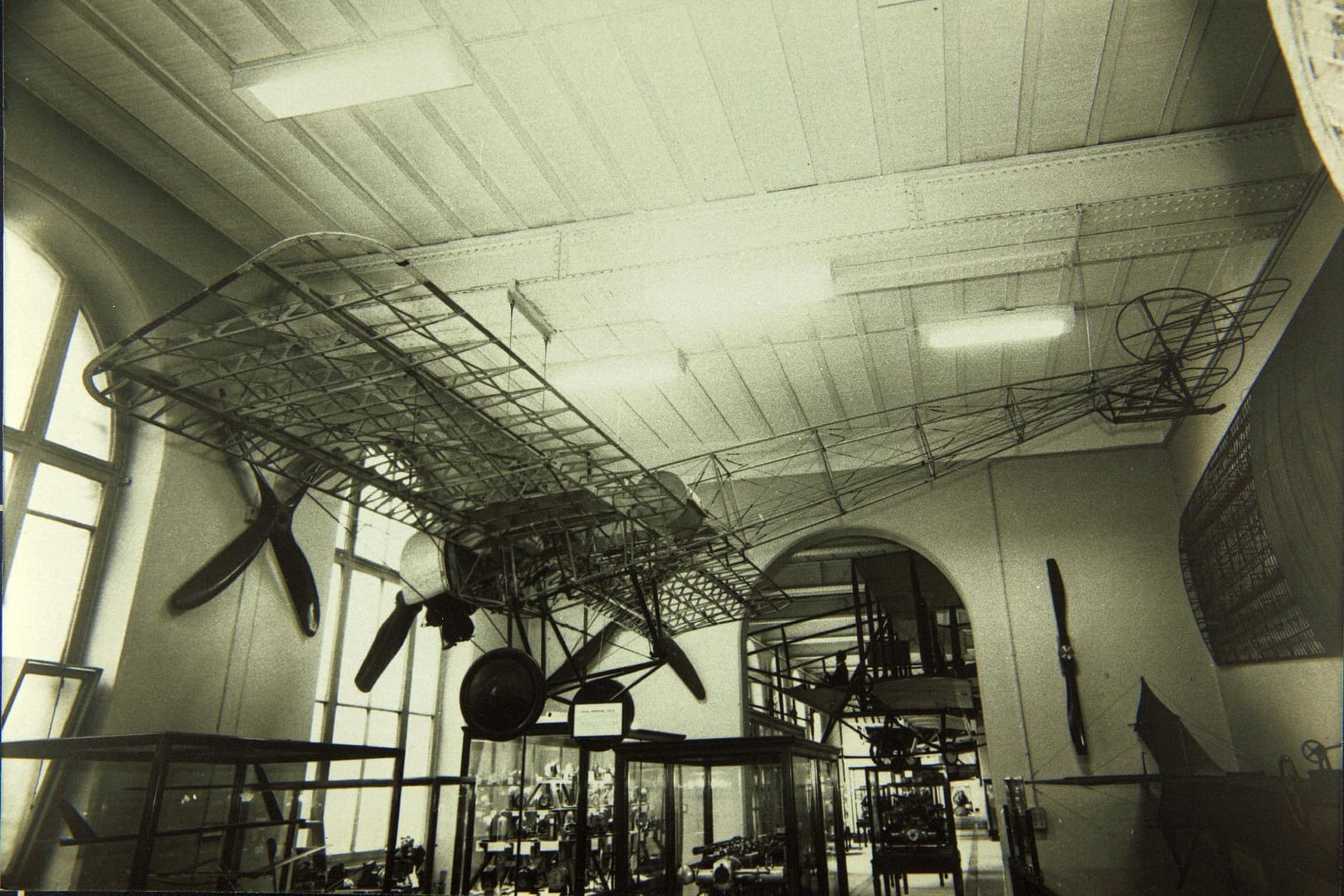
At six o’clock on the evening of 1 July 1915, over the fields east of Lunéville in France, a German lieutenant named Kurt Wintgens did something no pilot had ever done before. He pointed the nose of his little Fokker monoplane straight at a French aeroplane, and fired a machine gun mounted directly in front of him — straight through the arc of his own spinning propeller — without shattering it to splinters.
The French machine, hit in the engine, was forced down. Because it came to earth behind Allied lines, Wintgens was not officially credited; two weeks later he downed another and made it official. But that summer evening was the real moment. For the first time, a pilot could aim his entire aircraft at an enemy and shoot. The fighter — the single-seat machine whose only job is to destroy other aircraft — had just been born.
INFORMAZIONI RAPIDE
| Che cosa | The fighter — the aircraft built to win control of the air |
| Nato | 1 July 1915, with the first synchronised machine-gun attack |
| The key trick | A gear that let a gun fire between the propeller blades |
| First jet duel | F-86 Sabres vs MiG-15s over Korea, 1950–53 |
| The benchmark | Air superiority — whoever holds the sky shapes the war below |
| Oggi | Stealthy fifth- and sixth-generation fighters, flown with robot wingmen |
The gun that fired through the propeller
The problem had stumped designers for years. To aim a fixed gun, a pilot simply pointed his aircraft — but the obvious place to mount it, in the nose, was blocked by the spinning propeller. The solution was a synchronising gear: a mechanism, driven off the engine, that briefly interrupted the gun each time a blade passed the muzzle. Credit for it is genuinely tangled — a German engineer had patented the idea in 1913, a French designer had worked on it, and the French pilot Roland Garros had tried a crude version with steel wedges bolted to his propeller. But it was Anthony Fokker’s company that put a working synchroniser into mass production on the Eindecker.
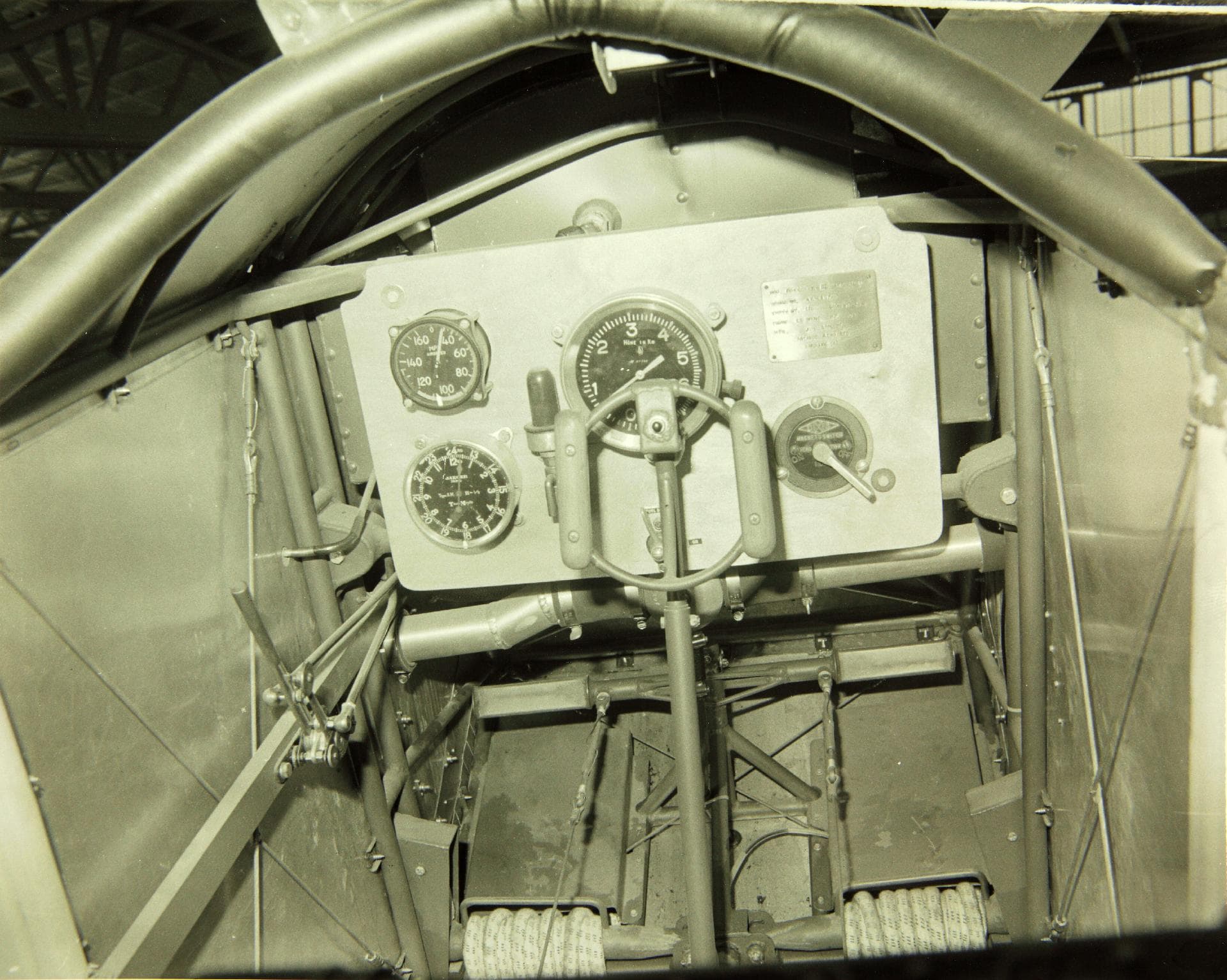
The effect was devastating. Through late 1915 the Eindeckers swept Allied reconnaissance machines from the sky in a period the British grimly called the “Fokker Scourge.” The aces were born — men like the German Oswald Boelcke, who wrote the first rulebook of air combat, and the most famous of all, the Red Baron. The dogfight, that swirling duel of turning aircraft, entered the world and never left it.
It was Boelcke who first turned air fighting from instinct into a craft. He wrote down a short set of rules — keep the sun behind you, attack from above and from the enemy’s blind spot, never run but turn to meet a threat — that pilots have followed in some form ever since. Boelcke himself did not survive the war he helped invent: he died in 1916 when his aircraft collided with a comrade’s in the chaos of a dogfight. His pupil Manfred von Richthofen went on to eighty victories and immortality as the Red Baron, before he too was killed in 1918. From the very beginning, the fighter pilot lived gloriously and briefly.
The monoplane and the Few
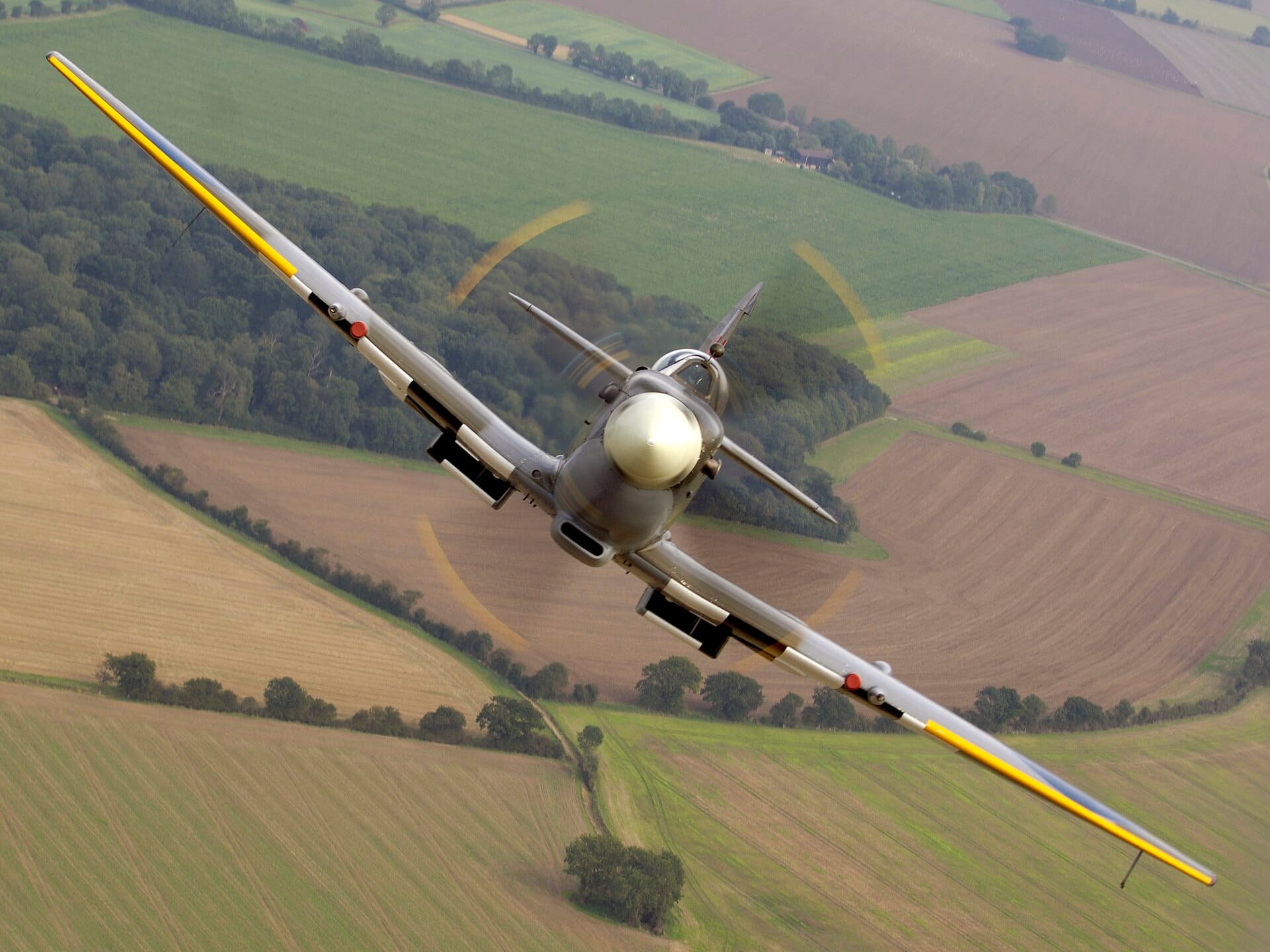
Between the wars the fighter shed its wires and struts and became a sleek, all-metal monoplane with an enclosed cockpit and a retractable undercarriage. When the Second World War came, the duel resumed at twice the speed: the German Messerschmitt Bf 109 against the British Hurricane and Spitfire in the skies over southern England in 1940. The Battle of Britain was the first time a fighter force decided the fate of a nation — and it was won as much by radar and ground control as by the aircraft themselves.
That was the hidden revolution of 1940. Britain had ringed its coast with radar masts and tied them, by telephone, to a central system that tracked incoming raids and guided each squadron to exactly where it was needed. It meant the defenders no longer had to waste themselves flying endless patrols; they could be held on the ground and thrown precisely at the enemy. The aircraft caught the glory, but it was this calm web of information — the world’s first integrated air-defence network — that truly broke the German assault.
The jet age and MiG Alley
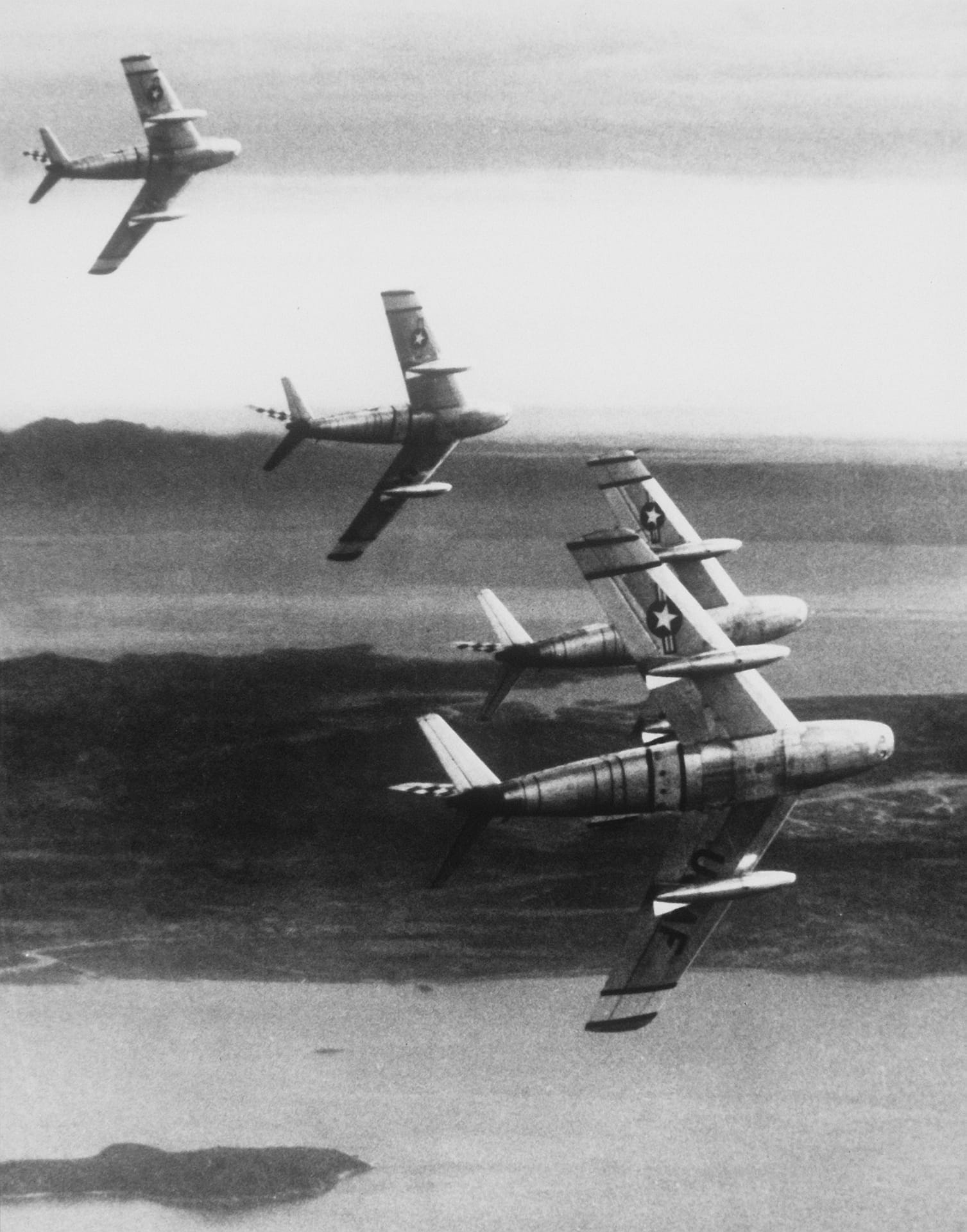
Then came the jet, and everything got faster again. Germany fielded the first jet fighter, the Me 262, too late to matter. The real contest came over Korea, where American F-86 Sabres met Soviet-built MiG-15s in the first large-scale jet-versus-jet combat in history — a swirling, supersonic-edge duel high above the Yalu River that the pilots called “MiG Alley.”
Missiles, Vietnam and Top Gun
The next revolution was the guided missile, which promised to kill at distances where a pilot could not even see his target. Designers grew so confident in the missile that some new fighters were built without a gun at all — a mistake brutally exposed over Vietnam, where rigid tactics and unreliable early missiles let nimble MiGs hold their own. The Americans responded in two ways: with clever tactics, like Robin Olds’ famous Operazione Bolo ambush, and with a school to teach dogfighting properly again — the legendary Top Gun. The lesson, relearned the hard way, was that technology never fully replaces the pilot.
Stealth and the sixth generation
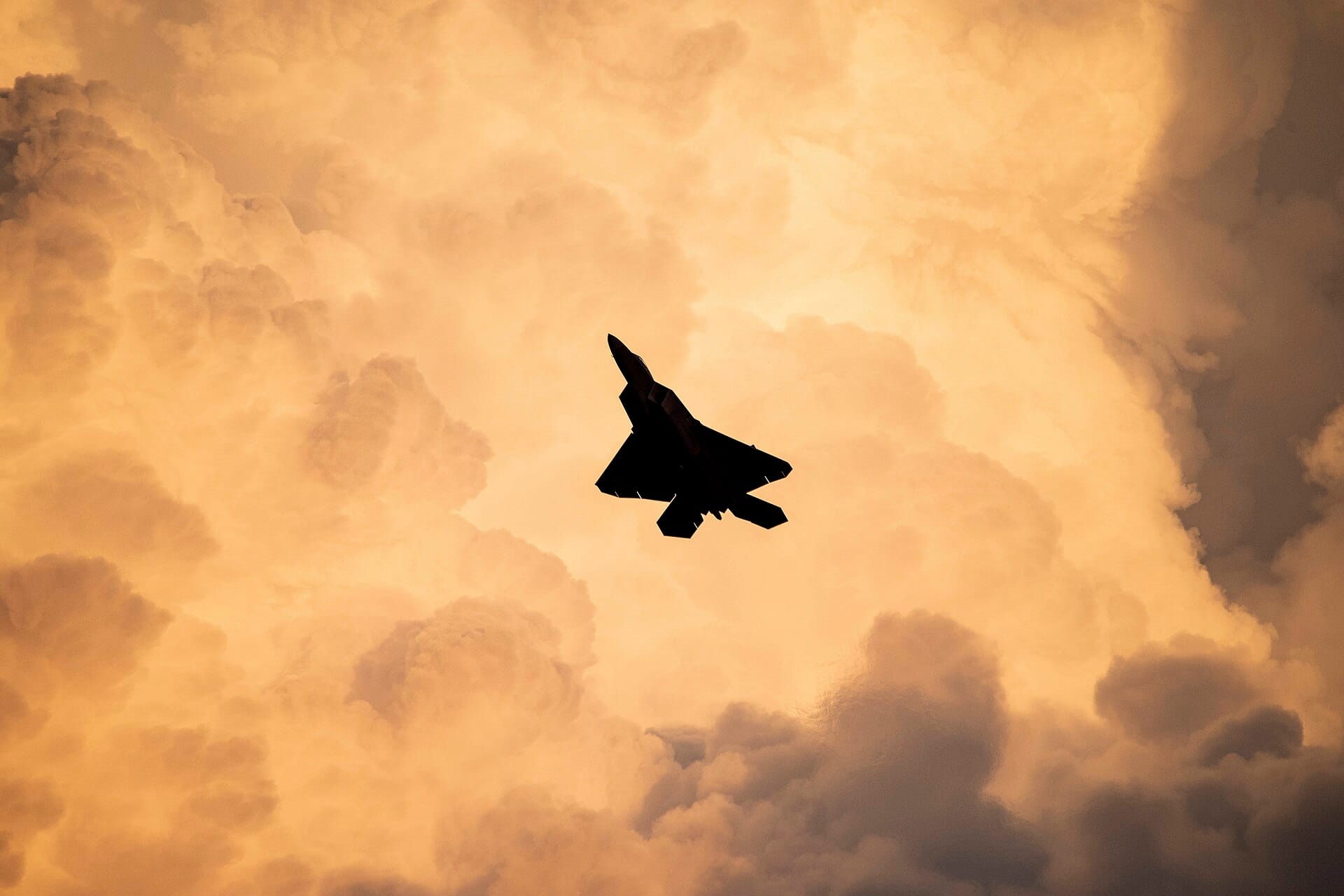
The modern fighter folded everything together: the missile, the radar, and a new quality — near-invisibility. The American F-22 and F-35 can see and shoot long before they are seen themselves. But stealth is no longer an American monopoly: Russia flies the Su-57 and China the J-20, and all three powers are now racing toward a sixth generation in which a human pilot commands a flock of autonomous drones.
A century of the same lesson
For all the changes of machinery, the fighter has spent a hundred years proving the same handful of truths. Height, speed and surprise still win; the pilot who sees first usually wins; and no single technology stays supreme for long. The American F-15 Eagle, designed in the 1970s, went on to score more than a hundred aerial victories without being shot down by an enemy aircraft — one of the most lopsided records in the history of air combat — precisely because it combined a powerful radar, long-reaching missiles and a pilot trained to use them well.
Now that balance is shifting again. As missiles reach further and stealth hides the shooter, the classic turning dogfight has become rarer, and the decisive moment often comes before the enemy is even seen. The next fighters may not carry a human at all. But the goal has never changed since Wintgens first fired through his propeller: to be the one who controls the sky, so that everything beneath it — the armies, the ships, the cities — lives or dies by your leave.
POWERS COMPARED — THE FIGHTER THROUGH THE ERAS
| Prima guerra mondiale | Germany’s synchronised gun (the Fokker Scourge) vs the Allied scramble to copy it |
| Seconda guerra mondiale | The Bf 109 vs the Spitfire; the jet Me 262 vs the Allied Meteor |
| Guerra fredda | The F-86 Sabre vs the MiG-15; later the F-15 vs the MiG-25 and MiG-29 |
| Oggi | The F-22 and F-35 vs Russia’s Su-57 and China’s J-20 — and the sixth generation to come |
Sources: Imperial War Museum; Royal Air Force Museum; National Museum of the U.S. Air Force; standard histories of air combat.
| 1. | Il dirigibile in guerra | Come lo Zeppelin portò per la prima volta la guerra nei cieli |
| 2. | Il primo incarico: la ricognizione. | Gli occhi che vinsero la Marna e salirono in orbita |
| 3. | Il combattente | La centenaria ricerca del controllo dell'aria |
| 4. | Folkestone, 1917 | Il giorno in cui nacque il bombardamento strategico |
| 5. | La rivoluzione della precisione | Quando bombe e missili impararono a puntare da soli |
| 6. | La guerra dei maghi | Come la guerra elettronica ha imparato ad accecare il nemico |
| 7. | Occhi in orbita | Come lo spionaggio si è spostato nello spazio |
| 8. | furtività | Come gli aerei hanno imparato a scomparire dai radar |
| 9. | L'ascesa dei droni | Guerra senza pilota nella cabina di pilotaggio |
| 10. | La sesta generazione | Quando il caccia imparò a volare da solo |
0 Commenti