
Parte di Ali di guerra: dagli Zeppelin alla sesta generazione, la nostra serie sui grandi punti di svolta dell'aviazione militare.
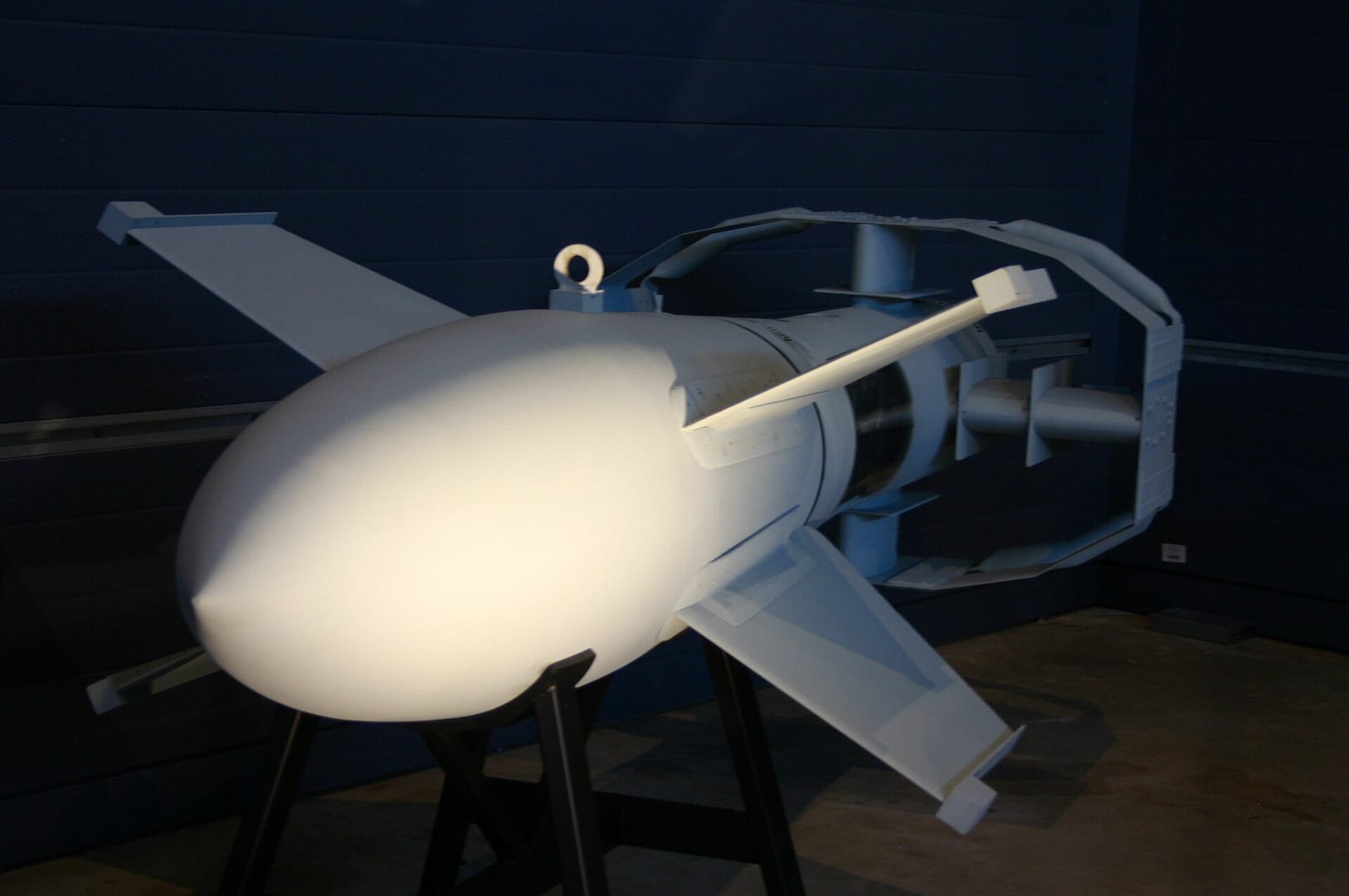
On the afternoon of 9 September 1943, the great Italian battleship Roma was steaming across the Mediterranean — not to fight, but to surrender. Italy had quit the war, and her fleet was sailing to hand itself over to the Allies. High overhead, German Dornier bombers appeared. The Italians, now technically on the Allied side, were not greatly alarmed: bombing a fast-moving warship from that height almost never worked.
But these bombs were different. As they fell, a bombardier in one of the Dorniers watched a flare in the tail of his weapon and nudged it with a small joystick, steering it down by radio onto the moving ship. One of the bombs punched deep into Roma and set off a magazine. The battleship’s own ammunition exploded; she broke in two and sank, taking more than 1,250 men with her, including the admiral commanding the fleet. It was the first time in history a battleship had been sunk by a guided weapon. The age of the precision-guided munition — the “smart” weapon — had begun.
INFORMAZIONI RAPIDE
| Che cosa | The guided, or “precision”, weapon — a bomb or missile that steers itself to the target |
| First combat use | Germany’s radio-guided Fritz X, which sank the battleship Roma in 1943 |
| The air-to-air leap | The heat-seeking AIM-9 Sidewinder, first kills in 1958 |
| The revolution | Laser- and satellite-guided bombs that hit within a few feet |
| Il significato | Precision replaced mass — one bomb where once a thousand were needed |
| The new frontier | Long-range and hypersonic missiles, fired from beyond sight |
The first smart bombs
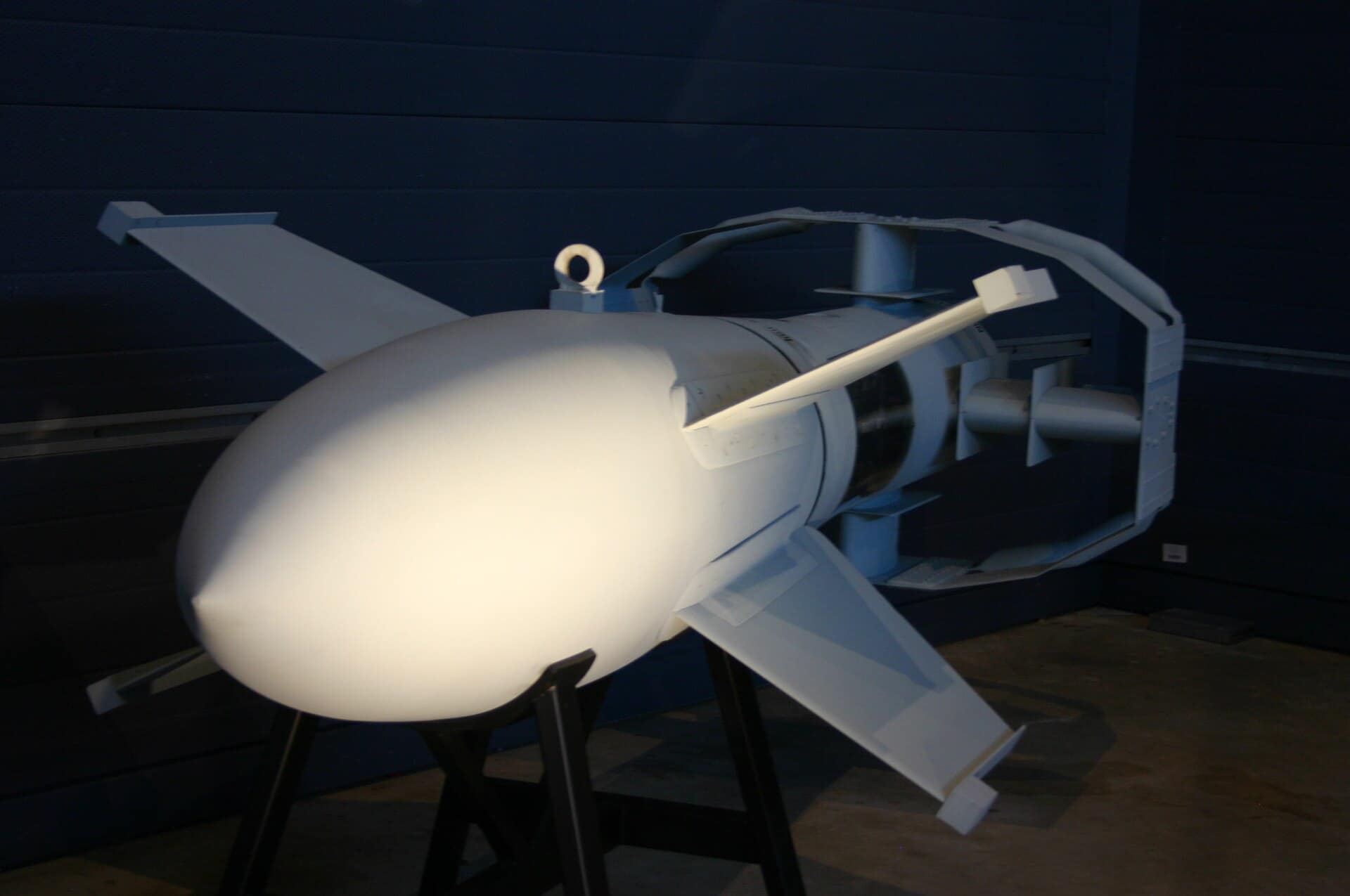
The German weapons of 1943 — the armour-piercing Fritz X and the rocket-boosted Hs 293 anti-ship missile — were astonishingly advanced for their day. Both were steered by an operator in the launching aircraft, who watched a flare on the weapon and guided it by radio. For a few months they were devastating, sinking and damaging warships across the Mediterranean. The Allies eventually learned to jam the radio signals, and the threat faded — but the idea could never be un-thought. A weapon could now be aimed all the way to impact.
The missile learns to chase
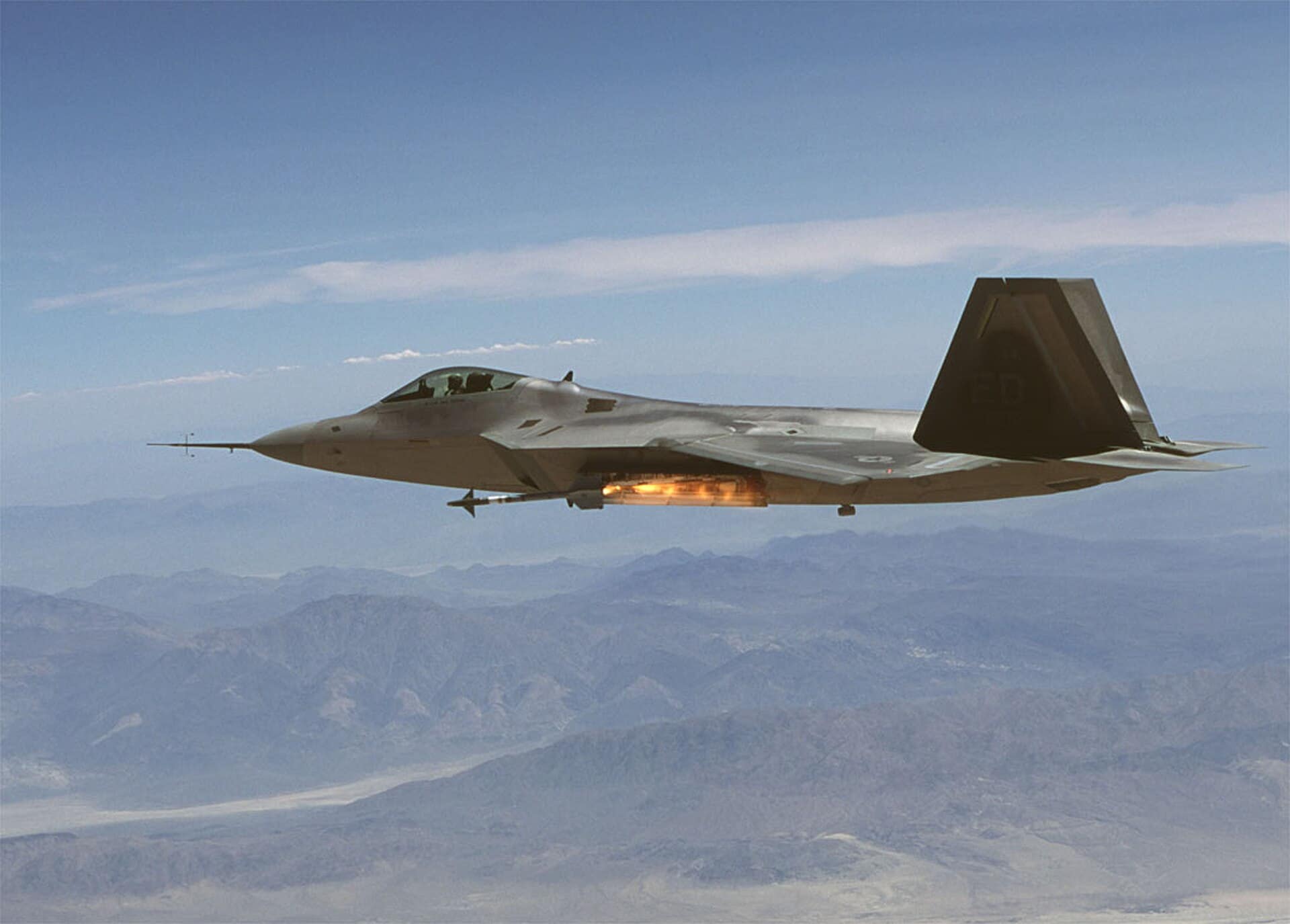
The next leap was a weapon that could find the target itself. The American AIM-9 Sidewinder, born in the 1950s, carried a simple heat-seeking eye that locked onto the hot exhaust of an enemy jet and chased it down. Its first kills came over the Taiwan Strait in 1958, and it transformed air combat: a pilot no longer had to pull his nose exactly onto a twisting enemy and hold it there, as in the days of the gun fighter — he simply had to get close, hear the missile growl, and fire.
The Sidewinder’s story has a delicious twist. In one of those first 1958 engagements, a Sidewinder reportedly lodged in an enemy MiG without exploding and was carried home. Soviet engineers took the captured weapon apart and copied it almost bolt for bolt, producing their own near-identical heat-seeking missile. A single American invention had, in effect, armed both sides of the Cold War — a perfect illustration of how quickly any decisive advantage in the air is studied, stolen and matched.
On the ground, the same logic produced the surface-to-air missile. It was a Soviet SAM that brought down the high-flying American U-2 spy plane in 1960, and over Vietnam a forest of them turned the sky into a deadly place that pilots had to fight their way through — a duel of measure and counter-measure that created its own branch of warfare.
One bomb, one target
Against targets on the ground, precision changed the very arithmetic of bombing. In the Second World War, destroying a single bridge or factory could take hundreds of aircraft dropping thousands of bombs, most of which missed. The classic example came in Vietnam: a notorious bridge known as the “Dragon’s Jaw” shrugged off years of conventional air raids. Then, in 1972, American aircraft arrived carrying the first generation of laser-guided bombs — weapons that rode a beam straight to the target — and dropped the bridge that had defied them for so long.
The contrast was staggering. Earlier in the war, hundreds of aircraft had attacked that same bridge with conventional bombs and failed, at the cost of many shot down. In 1972, a small flight carrying the new guided bombs did in a single mission what years of mass raids had not. That is the real meaning of precision: not just accuracy, but a wholesale collapse in the number of aircraft, bombs and lives needed to achieve a result.
Precision for everyone
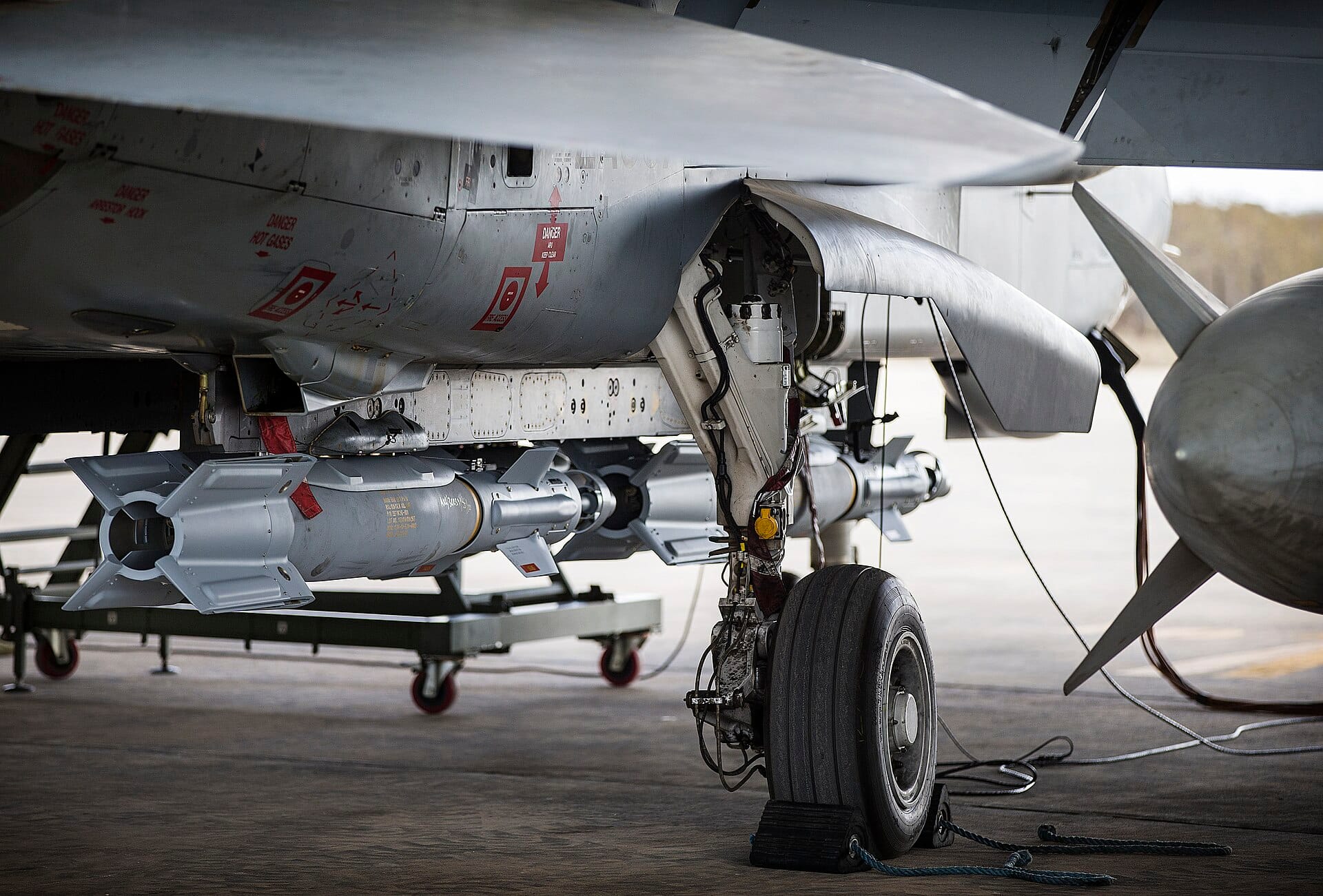
Laser guidance had a weakness — cloud, smoke and dust could break the beam. The answer arrived in the 1990s: cheap kits that bolt onto an ordinary “dumb” bomb and steer it using satellite navigation, hitting within a few feet in any weather, day or night. Suddenly precision was not a rare, expensive specialty but the normal way of doing business. The grim mass bombing of cities that this series traced back to Folkestone in 1917 had, in the West at least, given way to its near-opposite: the deliberate aiming of single weapons at single targets.
The new race: speed and reach
Today the competition is about reach and speed. Modern air-to-air missiles can strike from beyond visual range, dozens of miles away, before a pilot ever sees his enemy — which is exactly why furtività matters so much, since the first to be detected is usually the first to die. And the major powers are now racing to field hypersonic missiles that fly at many times the speed of sound, too fast for current defences to stop. And reach now extends far beyond the battlefield itself. Cruise missiles — small, pilotless, jet-powered weapons that fly low and guide themselves for hundreds of miles — let a navy or air force strike a precise target deep inside a country without risking a single pilot; salvos of them have opened recent wars, hitting command centres on the first night before crewed aircraft ever appeared. The precision that began with one steered bomb over the Mediterranean now reaches across whole oceans.
POWERS COMPARED — THE PRECISION WEAPON THROUGH THE ERAS
| Seconda guerra mondiale | Germany’s radio-guided Fritz X and Hs 293 vs the Allied scramble to jam them |
| Guerra fredda | The Sidewinder and the surface-to-air missile reshape air combat |
| The Gulf War era | Laser- and satellite-guided bombs make one aircraft as deadly as a fleet |
| Oggi | Beyond-visual-range and hypersonic missiles — the US, China and Russia racing for reach |
Sources: National WWII Museum; Smithsonian National Air and Space Museum; National Museum of the U.S. Air Force; standard histories of guided weapons.
| 1. | Il dirigibile in guerra | Come lo Zeppelin portò per la prima volta la guerra nei cieli |
| 2. | Il primo incarico: la ricognizione. | Gli occhi che vinsero la Marna e salirono in orbita |
| 3. | Il combattente | La centenaria ricerca del controllo dell'aria |
| 4. | Folkestone, 1917 | Il giorno in cui nacque il bombardamento strategico |
| 5. | La rivoluzione della precisione | Quando bombe e missili impararono a puntare da soli |
| 6. | La guerra dei maghi | Come la guerra elettronica ha imparato ad accecare il nemico |
| 7. | Occhi in orbita | Come lo spionaggio si è spostato nello spazio |
| 8. | furtività | Come gli aerei hanno imparato a scomparire dai radar |
| 9. | L'ascesa dei droni | Guerra senza pilota nella cabina di pilotaggio |
| 10. | La sesta generazione | Quando il caccia imparò a volare da solo |

0 Commenti