
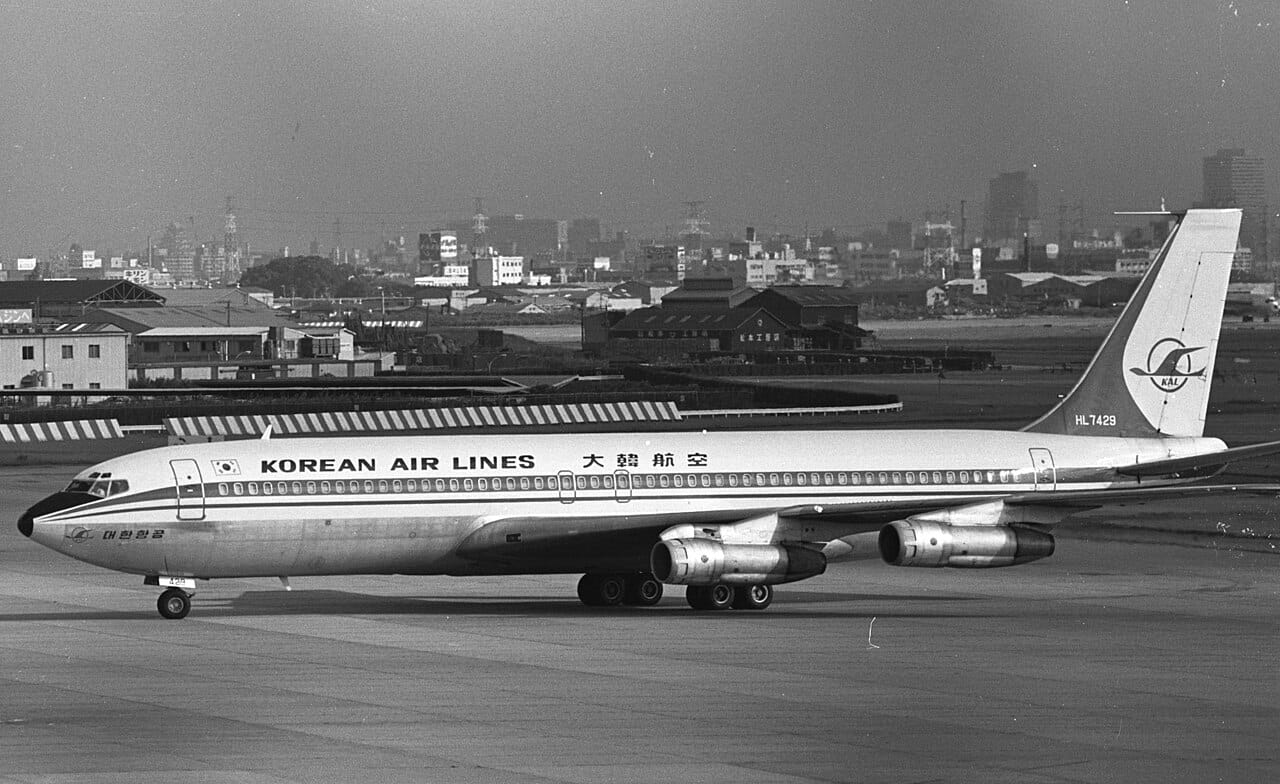
On a freezing April night in 1978, a South Korean airliner full of sleeping passengers wandered a thousand miles off course, over one of the most secret corners of the Soviet Union, and was hit by an air-to-air missile. What happened next is one of the most extraordinary survival stories of the Cold War: a crippled Boeing 707, two dead, and a captain who set his airliner down, in the dark, on a frozen lake.
This is Korean Air Lines Flight 902, the near-forgotten prelude to the far deadlier KAL 007 five years later. Almost everyone aboard lived, and they lived because of cool heads, a little luck, and one very skillful piece of flying.
Informazioni rapide
| Volo | Korean Air Lines Flight 902, Paris to Seoul via Anchorage |
| Data | 20 April 1978 |
| Aeromobili | Boeing 707-321B, HL7429 |
| A bordo | 109 passengers and crew |
| Cause of diversion | Navigation error, then loss of the gyro guidance system |
| Interceptor | Soviet Sukhoi Su-15TM |
| Killed | Two passengers, struck by missile shrapnel |
| Approdo | Forced landing on frozen Lake Korpiyarvi, Soviet Karelia |
| Sopravvissuti | 107, rescued and released within days |
The Wrong Turn Over the Pole
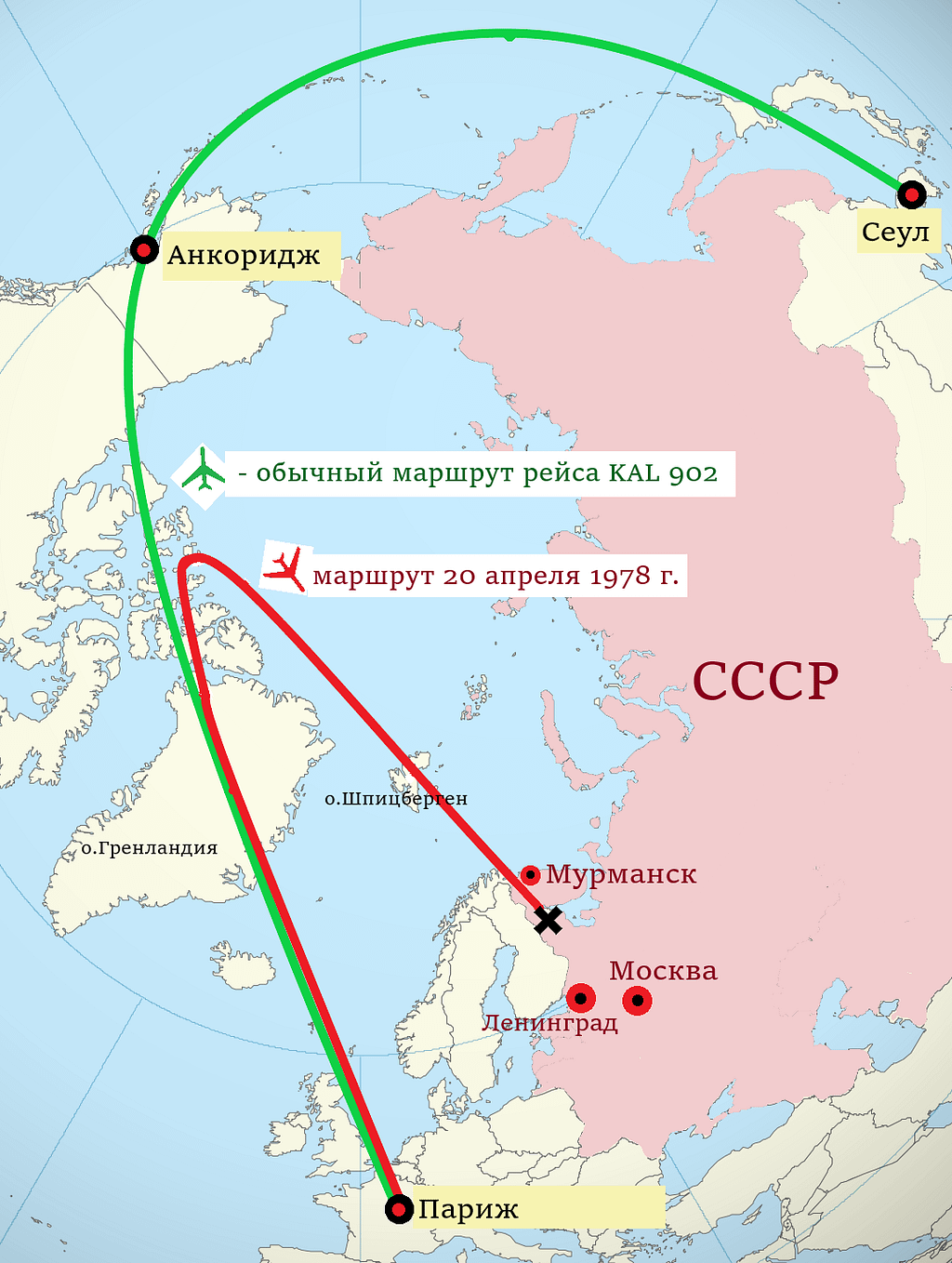
Flight 902 left Paris on the afternoon of 20 April, bound for Anchorage and then Seoul, on the long polar route over the top of the world. For Captain Kim Chang Kyu it was his first time flying it; his navigator, Lee Kun Shik, had done it more than 120 times. Over Greenland the aircraft passed beyond radar coverage and the crew fell back on an old-fashioned gyro guidance system.
Then something went wrong. The 707 began an enormous, gradual right-hand arc, swinging east and then south over the Barents Sea. The turn was so slow that the crew did not notice for a long time. By the time the navigator realised they were badly lost, none of his usual radio beacons would answer, and the aircraft had drifted into the airspace over Murmansk, home to the Soviet Northern Fleet and some of the most sensitive military sites on Earth.
A Red Star at 35,000 Feet
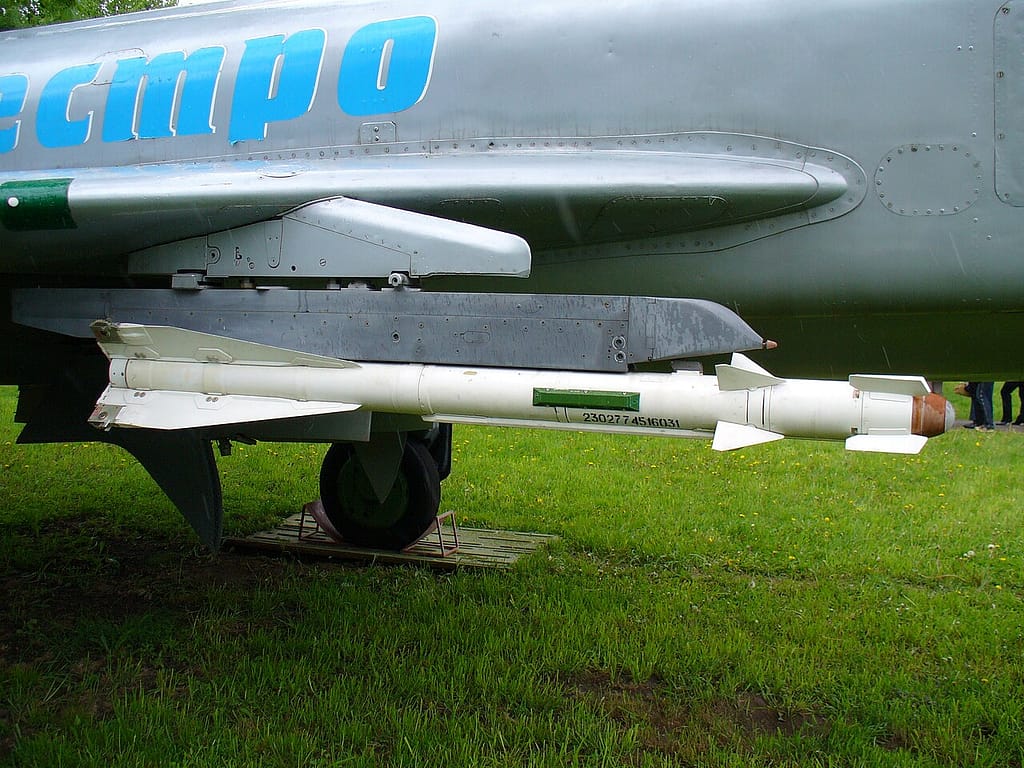
It was the copilot, S.D. Cha, who first saw it: a fighter, flying formation in the darkness at the same height and speed. Through the gloom he made out a red star on its tail. It was a Soviet Su-15 interceptor, and on the ground a tense argument was already under way about what to do with the intruder.
The captain later said that the moment he saw the red star, he switched on his lights and began to descend to show he understood he was in Soviet airspace. It made no difference. The Su-15 fired two missiles. The first missed. The second tore off the tip of the left wing and sent shrapnel ripping through the cabin, killing two passengers, a salesman from Seoul and a coffee-shop owner from Yokohama, and injuring several more. The cabin lost pressure at 35,000 feet.
Landing on the Ice
Captain Kim threw the wounded 707 into a dive, dropping from 35,000 feet to around 4,000 in minutes, then levelled off. The aircraft pulled hard to one side from the wing damage, but it still flew. For an hour and a half he nursed it low over a moonlit landscape of forest and frozen lakes, burning down fuel and hunting for somewhere to land.
He was looking for a lake with a long, straight shoreline, and he wanted to touch down close to the bank, so that if the ice gave way, his passengers might still scramble clear. He rejected the first lake, crossed by a power line, and the second, blocked by an island. On the third he committed, and set the big Boeing down on the ice of Lake Korpiyarvi, less than 90 miles from the Finnish border. Even the Soviets, when they arrived, admitted it was a superb piece of flying.
Prisoners, Then Free
Villagers and militia reached the aircraft within minutes and, to the crew's horror, lit a fire near the fuel-leaking wing. The sparks, mercifully, did no harm. The survivors were taken to the town of Kem and, by most accounts, treated with genuine kindness by ordinary Soviet citizens even as the diplomatic machinery ground into gear. Within days the passengers were flown out through Murmansk aboard a chartered Pan Am 727; when the captain announced they had crossed into Finland, the cabin erupted in cheers.
The pilot and navigator were held longer, interrogated for days and pressed into a scripted confession before being released. The air-defense commander who ordered the shootdown was quietly cashiered. Five years later, tragically, the lesson went unlearned: KAL 007 strayed into Soviet airspace and was shot down with no survivors at all. That Flight 902 ended with 107 people walking off a frozen lake, rather than vanishing into the sea, is down to a navigator's honesty, a village's decency, and a captain who refused to give up on his aircraft.
Sources: George L. Rueckert, Aviation History (HistoryNet); Wikipedia; Simple Flying. Passenger and crew accounts as documented in Rueckert's firsthand report.
0 Commenti