
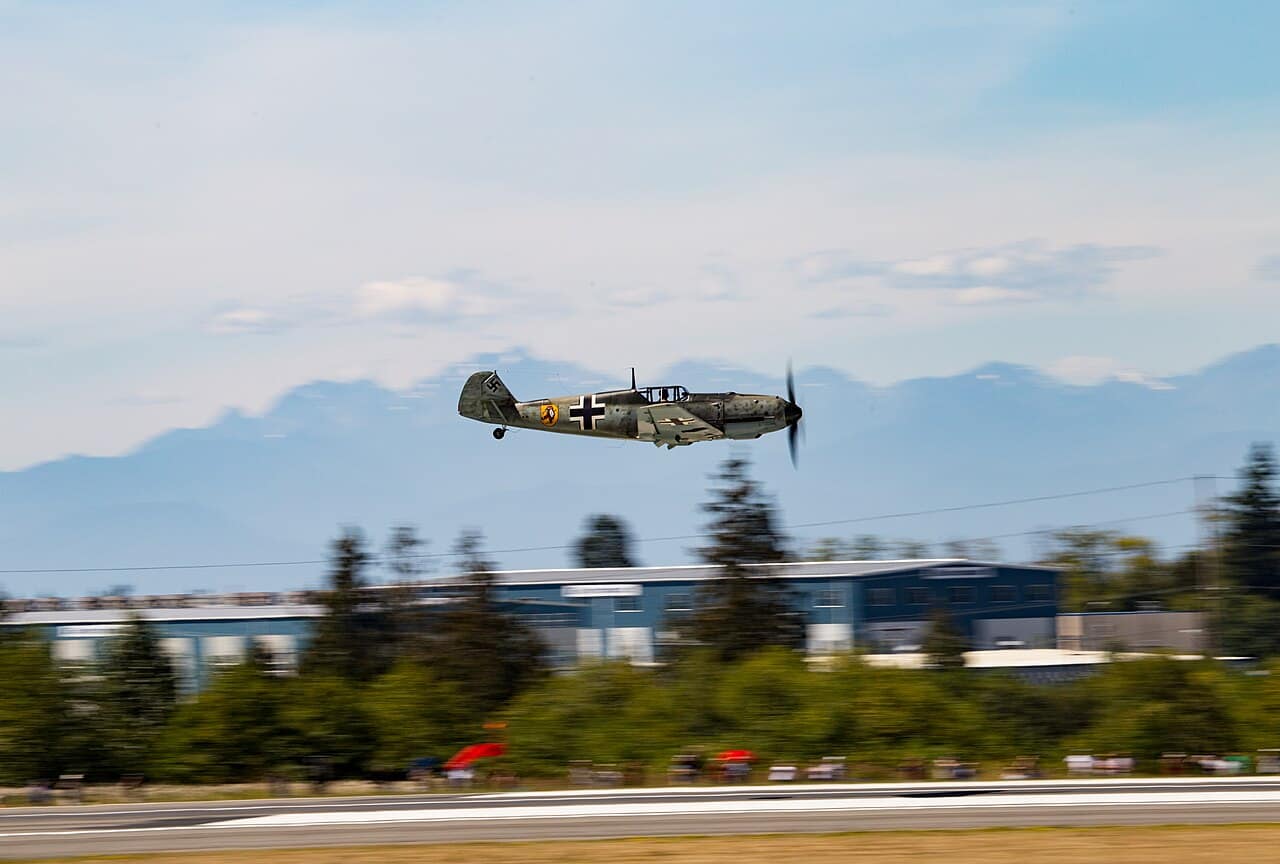
On 23 May 1943, a German fighter ace named Adolf Galland climbed into an aircraft with no propeller. He opened the throttles, felt a shove of thrust unlike anything a piston engine had ever given him, and afterwards reached for the only words that fit: it was, he said, “as though angels were pushing.” The machine was the Messerschmitt Io 262, the world’s first operational jet fighter.
Here is the strange part. Within a decade, the very same company — Messerschmitt — would be building a tiny three-wheeled bubble car that you steered with a handlebar and climbed into through a fighter-style canopy. From the fastest fighter in the sky to a runabout for a broke, defeated Germany, the story of Messerschmitt is one of the great reinventions in aviation.
| Origins | 1916, Bavaria (as Bayerische Flugzeugwerke) |
| Famous for | Bf 109 — the most-produced fighter in history |
| First jet fighter | Me 262 Schwalbe |
| The twist | The Kabinenroller bubble car (1950s) |
| Oggi | Absorbed, via MBB and EADS, into Airbus |
From a Bavarian workshop
The company began in 1916 as Bayerische Flugzeugwerke — the Bavarian Aircraft Works — and became inseparable from one man: Willy Messerschmitt. His obsession was weight. He championed a philosophy of “lightweight construction,” merging load-bearing parts to shed every possible kilogram, and proved it first on the elegant little Bf 108 Taifun. When the Luftwaffe held a fighter contest in 1935, Messerschmitt entered a design built on the same principles and won. That aircraft was the Bf 109. The firm was formally renamed Messerschmitt AG in 1938.
The fighter that defined a war
The Bf 109 became the most-produced fighter aircraft in history — roughly 34,000 were built, more than any other fighter before or since — and for the first half of the Second World War it, together with the twin-engined Bf 110, formed the backbone of German fighter strength. It fought in every theatre the Luftwaffe touched, from the Battle of Britain to the Eastern Front. Whatever one thinks of the cause it served, as an engineering achievement it was staggering in scale.
Angels and jets
By the war’s later years Messerschmitt had leapt a generation ahead, into jet propulsion. The Me 262 Schwalbe (“Swallow”) was the first jet fighter to reach operational service anywhere in the world, faster than any Allied fighter that could be sent against it — though it arrived too late, and in too few numbers, to change the outcome. We told the full story of that doomed revolution in Pushed by Angels.
Banned from the sky
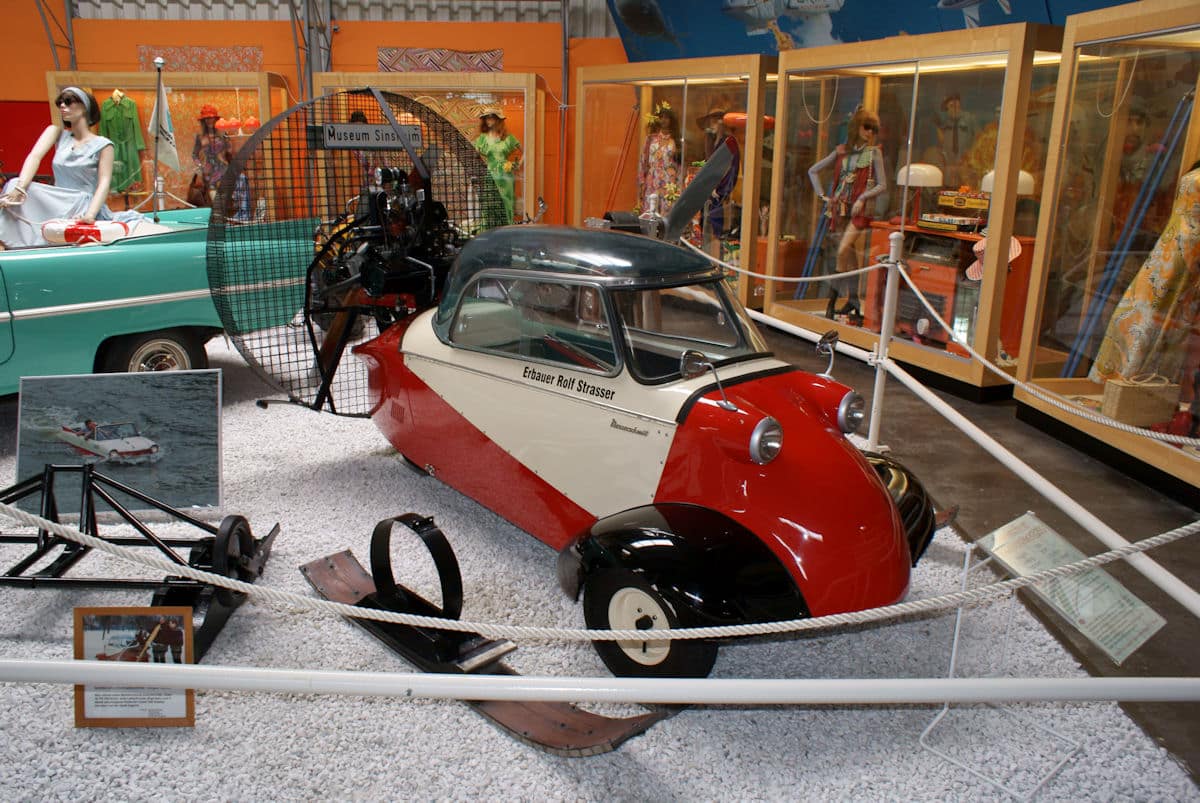
Then came the fall. For ten years after 1945, Messerschmitt was forbidden from building aircraft at all. A company that had produced the fastest fighters in the world had to find something — anything — to make. It turned out sewing machines and prefabricated houses. And it lent its name to one of the strangest vehicles of the age: the Kabinenroller, or “cabin scooter.”
Designed by the aircraft engineer Fritz Fend and built in the Messerschmitt works at Regensburg, the KR175 and KR200 were tiny three-wheeled bubble cars. Driver and passenger sat in tandem, one behind the other, beneath a hinged plexiglass dome, steering not with a wheel but with a handlebar. It looked exactly like what it was: a fighter cockpit that had been separated from its wings and set down on three wheels. For thousands of Germans in the 1950s, it was cheap, weatherproof mobility — with an unmistakable whiff of the flight line.
The many mergers
The ban eventually lifted, and Messerschmitt returned to aircraft — but the age of the lone national manufacturer was ending. In 1968 the company merged with Bölkow, and the following year absorbed Hamburger Flugzeugbau to become Messerschmitt-Bölkow-Blohm, or MBB, a pillar of West German aerospace. In 1989 MBB itself was taken over by Deutsche Aerospace (DASA), which in turn was folded into EADS — the European giant now known simply as Airbus.
So the name faded from the fuselage, but the company never truly died. Its people, factories and expertise flowed into MBB, into DASA, into Airbus and its share of the Eurofighter Typhoon that guards German skies today.
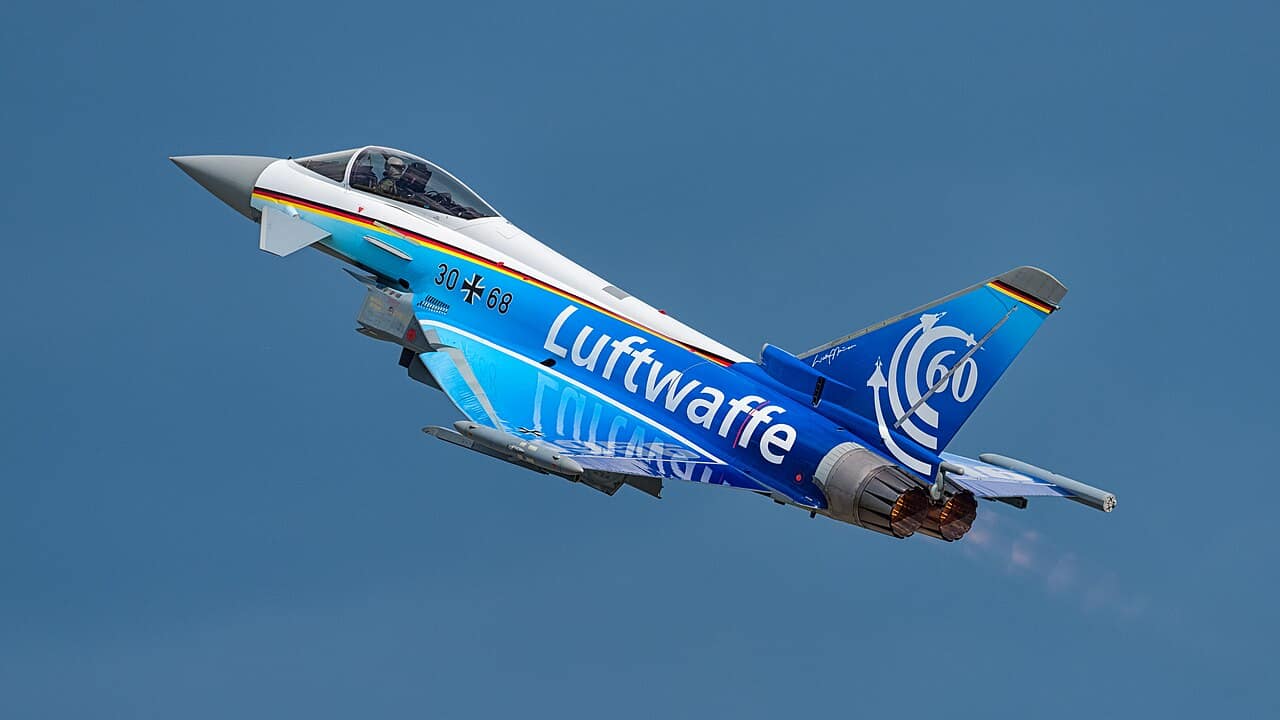
From the Bf 109 to a jet that felt like angels pushing, from a defeated firm building bubble cars to a cornerstone of modern Airbus — few names in aviation have died and been reborn so many times. The badge is gone, but Willy Messerschmitt’s obsession with doing more with less is still up there, flying.
Sources: Deutsches Museum; Airbus corporate history; Simple Flying; Wikipedia.
Domande correlate
What is Messerschmitt known for?
Messerschmitt was a German aircraft manufacturer founded in 1916 in Bavaria as Bayerische Flugzeugwerke. It is famous for the Bf 109 — the most-produced fighter in history — and the Me 262, the world's first operational jet fighter. After the war it even built a tiny three-wheeled bubble car.
What was the Messerschmitt Bf 109?
The Bf 109 was a German single-seat fighter that became the backbone of the Luftwaffe in the Second World War. Roughly 34,000 were built — more than any other fighter before or since. Designed under Willy Messerschmitt's philosophy of lightweight construction, it won a 1935 Luftwaffe fighter contest and defined German air power.
Cos'era il Messerschmitt Me 262?
The Me 262 Schwalbe was the world's first operational jet fighter, introduced by Germany late in the Second World War. When ace Adolf Galland flew it on 23 May 1943, he described the jet thrust as though "angels were pushing." Germany also fielded other radical designs, including the rocket-powered Me 163.
Who was Willy Messerschmitt?
Willy Messerschmitt was the German aircraft designer whose name became inseparable from the company. His obsession was weight: he championed lightweight construction, merging load-bearing parts to save every kilogram, first proven on the elegant Bf 108 Taifun. The firm was formally renamed Messerschmitt AG in 1938.
Did Messerschmitt really make a bubble car?
Yes. In the 1950s, in a defeated and impoverished Germany, Messerschmitt produced the Kabinenroller — a tiny three-wheeled "bubble car" steered with a handlebar and entered through a fighter-style canopy. It was one of the most striking reinventions in aviation history, turning a fighter maker into a builder of economy runabouts.
What happened to the Messerschmitt company?
Messerschmitt eventually merged into larger enterprises, becoming part of MBB and then EADS, and today its lineage lives on within Airbus. The company that built the first operational jet fighter also fielded desperate late-war designs like the Heinkel He 162 Volksjäger, before becoming a founding thread of Europe's largest aerospace group.
0 Commenti