
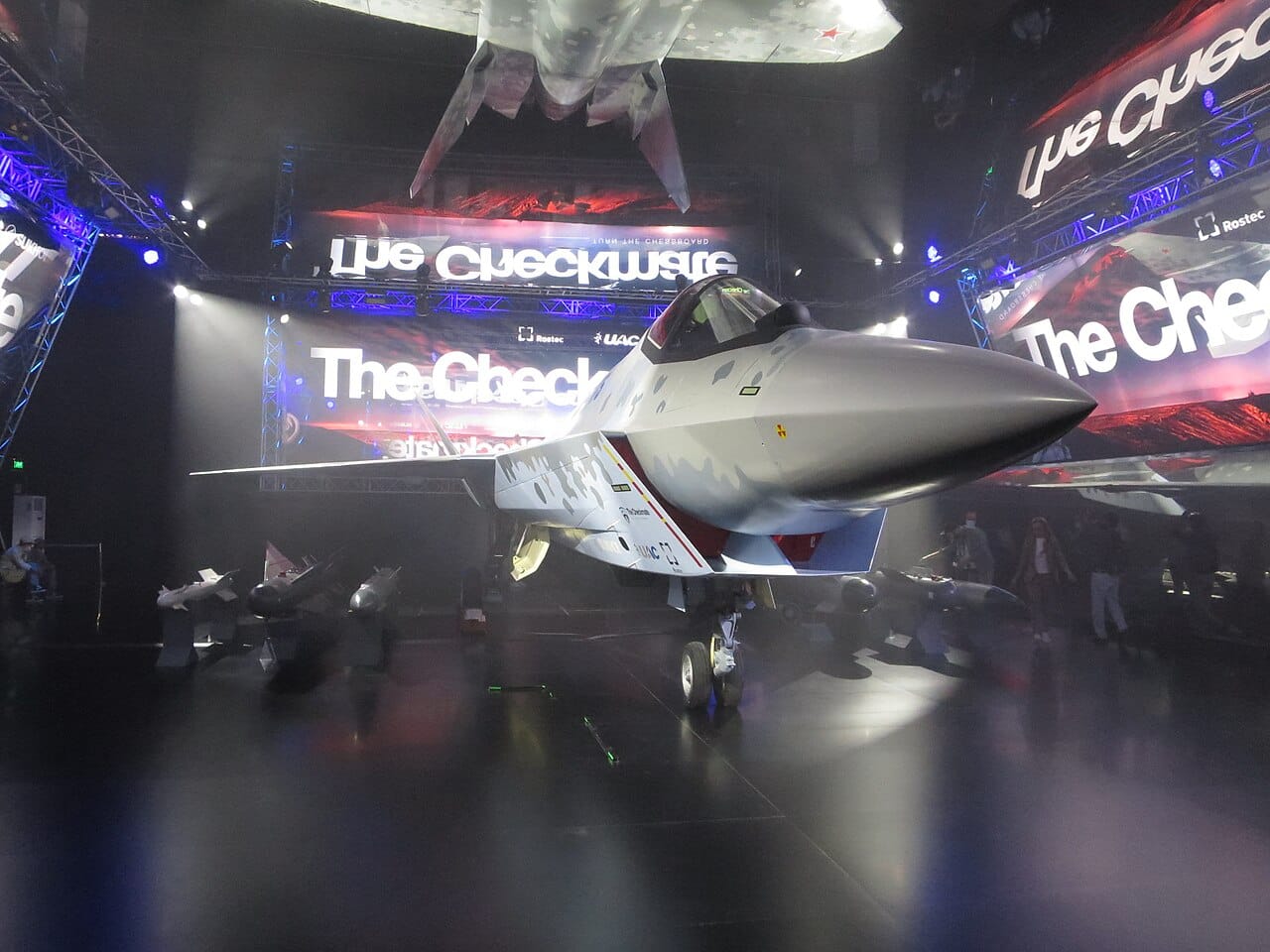
Quando la Russia ha fatto atterrare un elegante caccia stealth monomotore sulla pista del salone aeronautico MAKS del 2021, completo di un'aggressiva campagna di marketing e di un profumo distintivo, il Su-75 Checkmate sembrava la risposta di Mosca al F-35. Cinque anni dopo, non ha effettuato nemmeno un volo. Ciò che ha, finalmente, è un prototipo che sta prendendo forma in uno stabilimento di produzione.
Nel giugno 2026, la United Aircraft Corporation ha confermato che l'assemblaggio di un prototipo volante è in corso presso lo stabilimento KnAAZ di Komsomolsk-on-Amur. Si tratta di un vero progresso per un programma che molti avevano dato per spacciato. Ma la domanda più interessante non è più se Checkmate esista o meno, bensì dove un caccia stealth monomotore a basso costo potrebbe inserirsi in un mondo in cui Stati Uniti e Cina ne fanno già volare centinaia.
Per giudicare Checkmate in modo equo, bisogna metterlo accanto alla compagnia che afferma di mantenere: la Russia stessa Su-57, l'F-35 americano e la coppia di aerei stealth emergenti della Cina.
Informazioni rapide
| Aeromobili | Sukhoi Su-75 Checkmate (aereo tattico leggero, LTS) |
| Pietra miliare | Primo prototipo volante in fase di costruzione (UAC, giugno 2026) |
| Configurazione | Aereo multiruolo monomotore, monoposto e a bassa osservabilità |
| Suggerimenti di design | Presa d'aria ventrale senza deflettore; coda a V in stile YF-23; vano armi interno |
| Prestazioni dichiarate | Mach 1.8, raggio d'azione >1.500 km, carico utile fino a ~7.400 kg (dati di progetto) |
| Motore | Un turboventola Saturn di classe AL-51, condiviso con il Su-57M aggiornato. |
| Obiettivo del primo volo | Fine 2026 — dopo i ritardi del 2023, 2024 e 2025 |
| Unità operative costruite | Zero, a partire da metà 2026 |
Dal prototipo al metallo
La conferma è arrivata dai vertici. Vadim Badekha, direttore generale dell'UAC, ha dichiarato all'agenzia russa TASS che il programma ha superato la fase di progettazione.
Il capo collaudatore della Sukhoi, Sergei Bogdan, si è mostrato più espansivo alla televisione russa, insistendo sul fatto che il jet era prossimo a uscire dalla linea di produzione.
La scommessa del motore singolo
Il design del Checkmate è l'aspetto più interessante. Mentre tutti gli altri aerei da combattimento russi dell'era moderna sono dotati di due motori, il Su-75 scommette su uno solo: una scelta che consente di ridurre i costi di acquisto e di gestione, seguendo la stessa logica impiegata dalla Lockheed per l'F-35. L'aria viene alimentata a questo singolo motore attraverso una presa d'aria insolita, priva di deflettori e posizionata sotto il muso, e la coda rinuncia alle derive separate in favore di una configurazione a V i cui timoni a geometria variabile controllano sia il beccheggio che l'imbardata, una soluzione che non si vedeva dai tempi del progetto YF-23 della Northrop, mai realizzato.
Sulla carta, i numeri sono ambiziosi. I progettisti dichiarano una velocità massima di Mach 1,8, un raggio d'azione di oltre 1.500 km e un carico utile di circa 7.400 kg trasportato in una stiva interna dimensionata per cinque missili più un cannone automatico, alimentato da un turbofan della stessa famiglia Saturn AL-51 del Su-57M aggiornato. Si tratta di dichiarazioni del produttore per un velivolo che non ha mai volato e dovrebbero essere considerate aspirazioni piuttosto che dati misurabili.

Scacco matto contro il Su-57
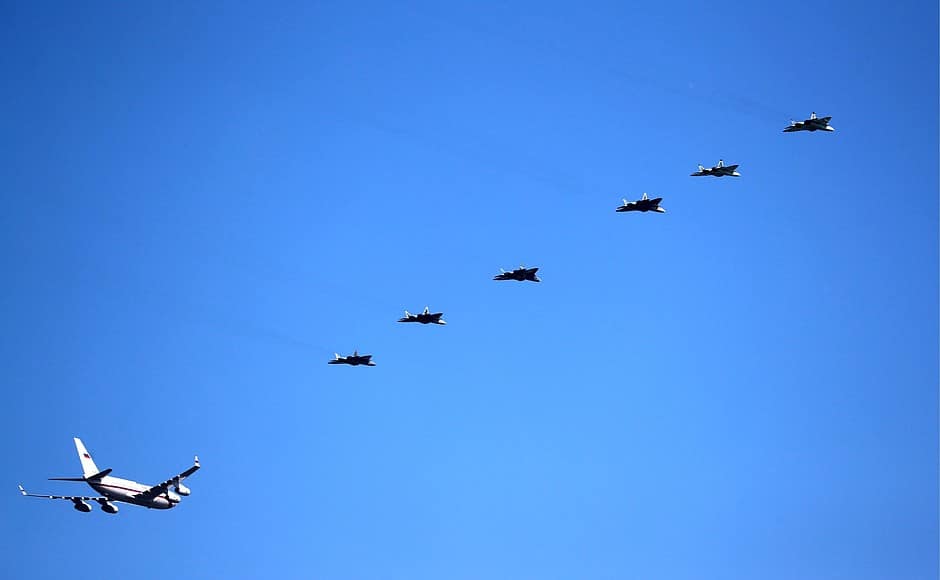
Il modo più chiaro per capire Checkmate è come la metà leggera di una coppia alto-basso con il Su-57, la stessa relazione che F-22 ha con l'F-35. Il Su-57 è il caccia pesante bimotore per la superiorità aerea; il Su-75 è concepito come il cavallo di battaglia monomotore economico, acquistato in grandi quantità e venduto all'estero.
C'è un problema con questa teoria: la Russia ha faticato a schierare anche la costosa metà del velivolo. Il Su-57 è in servizio dal 2020 circa, ma esiste solo in piccoli numeri e la sua produzione è stata ripetutamente limitata. Un Paese che non è in grado di produrre in serie il suo caccia stealth di punta si trova ovviamente a dover rispondere a domande sulla sua capacità di costruirne un secondo a basso costo e in quantità sufficienti.
Rispetto al parametro di riferimento americano
L'aereo che il Checkmate è stato esplicitamente progettato per competere con l'F-35 è proprio quest'ultimo, e il contrasto è netto. Il caccia stealth monomotore della Lockheed ha già superato quota 1.000 esemplari consegnati, è in servizio con oltre una dozzina di forze aeree e, a prescindere dalle controversie sui costi, offre una consolidata tecnologia di fusione dei sensori e un vasto ecosistema di supporto. Il Checkmate propone un prezzo pubblicizzato inferiore, inizialmente stimato tra i 25 e i 30 milioni di dollari, ma un prezzo ha poco significato senza una linea di produzione, una suite di sensori collaudata e clienti disposti ad aspettare.
Al di sopra dell'F-35 si colloca l'F-22 bimotore, un aereo specificamente progettato per il dominio aereo, ora fuori produzione. Insieme, gli Stati Uniti schierano la combinazione di velivoli di alto e basso raggio che la Russia sta ancora cercando di assemblare, e lo fanno in numeri a cui Checkmate può solo aspirare.
E contro i due della Cina
Il paragone più scomodo per Mosca è Pechino. La Cina gestisce già il pesante aereo bimotore J-20 in numero crescente e sta mettendo in servizio il bimotore J-35 sia in versione terrestre che imbarcata su portaerei. In altre parole, la Cina ha fatto esattamente ciò che la Russia intendeva fare: schierare una coppia di caccia stealth ad alta e bassa quota, e lo ha fatto mentre Checkmate rimaneva un prototipo.
Questo cambia anche le carte in tavola per quanto riguarda le esportazioni. Un'aeronautica militare attenta al budget, alla ricerca di un jet di quinta generazione al di fuori dell'orbita americana, ora ha un'opzione cinese che vola effettivamente ed è in fase di produzione in serie. Checkmate arriverebbe in ritardo in un mercato già servito da qualcun altro.
Perché lo scetticismo è giustificato
I dubbi non riguardano solo l'ingegneria. Le sanzioni internazionali hanno complicato l'accesso della Russia a componenti avanzati, la guerra in Ucraina assorbe gli aerei e i fondi che il settore aerospaziale avrebbe altrimenti investito, e la linea Su-57 è già in competizione per le stesse risorse. L'interesse iniziale da parte di potenziali finanziatori come gli Emirati Arabi Uniti si è raffreddato; l'analista Maya Carlin del Center for Security Policy ha osservato che gli investitori mediorientali si sono ritirati e si sono concentrati sull'acquisizione dell'F-35. Nessun ordine di esportazione definitivo è stato confermato pubblicamente e, a metà del 2026, non esiste un singolo Checkmate operativo.
Il volo inaugurale, nel frattempo, è stato promesso per il 2023, il 2024, il 2025 e ora per la fine del 2026. Ogni rinvio rende più facile dubitare della promessa successiva.
Dove si colloca lo scacco matto
Per ora, il verdetto onesto è circoscritto ma reale: il Su-75 è passato dalla fase di marketing a quella di produzione, il che rappresenta un passo avanti rispetto a un anno fa. Se diventerà il caccia stealth economico che la Russia ha pubblicizzato, o se si unirà alla lunga lista di eleganti prototipi russi che non sono mai entrati in servizio attivo, dipenderà dal primo volo, che deve effettivamente avvenire, e da un sistema di produzione sottoposto a una pressione senza precedenti dall'inizio del programma.
Il progetto è davvero ingegnoso. Il contesto è davvero brutale. Il problema di Checkmate non è mai stata la forma dell'aereo, ma tutto ciò che lo circondava: mentre la Russia discuteva sulle proprie tempistiche, il resto del mondo continuava a volare.
La presentazione originale di Checkmate da parte di Rostec nel 2021: la campagna che ha promosso il concept anni prima che esistesse un prototipo.
Fonti: TASS; United Aircraft Corporation; The War Zone; Breaking Defense; The National Interest; 19FortyFive; Wikipedia.
0 Commenti