
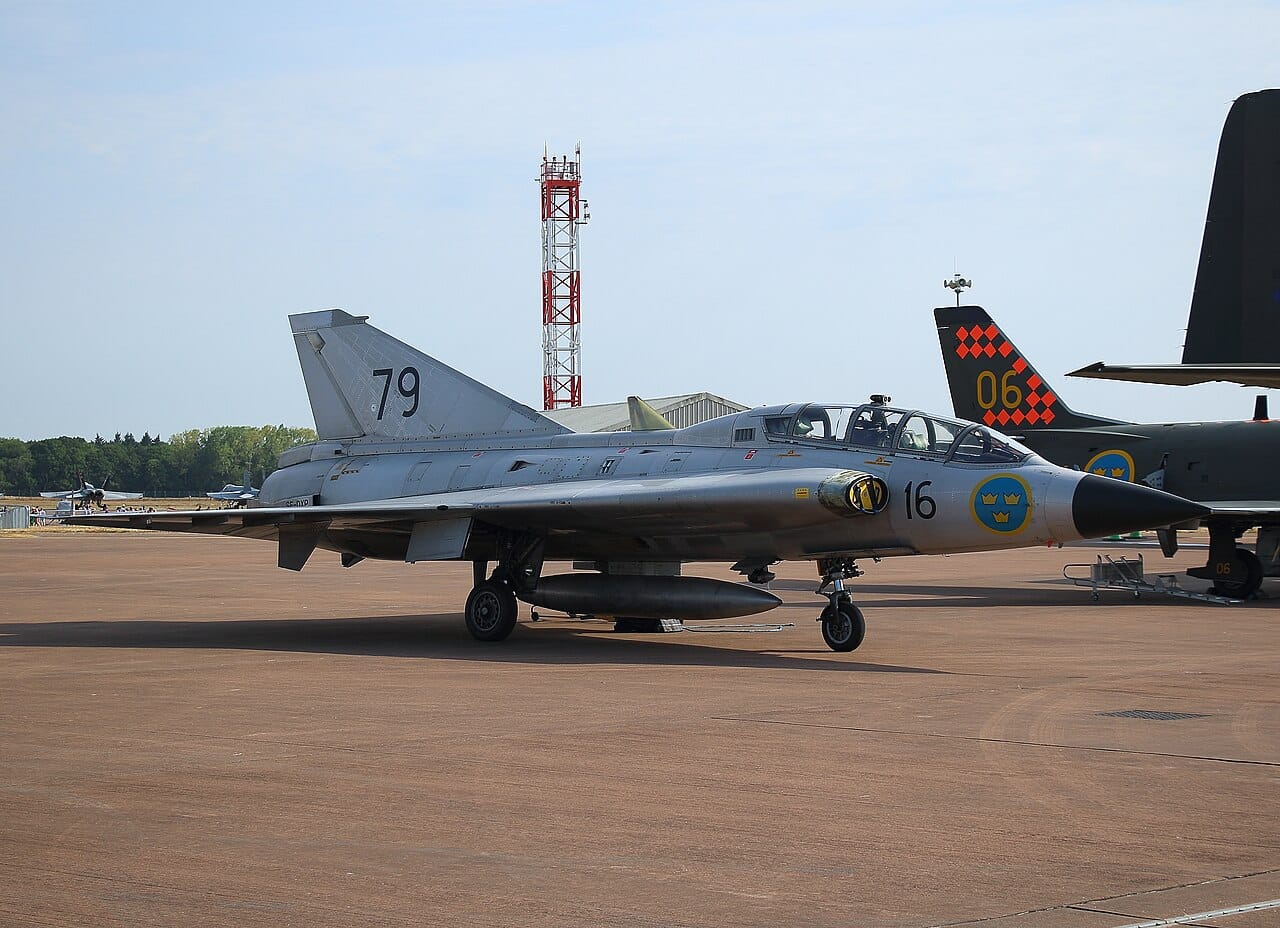
Nei primi anni '50, un paese neutrale di sette milioni di abitanti si propose di costruire un intercettore supersonico in grado di mimetizzarsi nella foresta, decollare da una strada pubblica e salire a una velocità sufficiente per intercettare un bombardiere nucleare sovietico sul Mar Baltico. Il risultato non assomigliava a nient'altro nel cielo.
IL Saab 35 Draken — Il nome Draken, che in svedese significa "aquilone", sebbene tutti sentissero "drago", indicava una forma alare mai vista prima: il doppio delta. Questo rese il Draken uno dei caccia più caratteristici della Guerra Fredda e uno dei più geniali e discreti.
INFORMAZIONI RAPIDE
| Tipo | Intercettore supersonico monoposto |
| Origine | Svezia (Saab), capo progettista Erik Bratt |
| Primo volo | 25 ottobre 1955 (prototipo) |
| Ala | Doppio delta: 80° interno, 60° esterno |
| Velocità massima | Mach 2 (dal 1960) |
| Trucco | Primo aereo noto per aver eseguito la manovra "Cobra". |
| Operatori | Svezia, Finlandia, Danimarca, Austria (ultima ad andare in pensione, 2005) |
Un'ala che nessuno aveva mai fatto volare
Il problema della Svezia alla fine degli anni '40 era una questione di geografia e matematica. Aveva bisogno di un aereo a reazione in grado di intercettare i bombardieri sovietici ad alta quota, ma anche di disperdersi sul territorio nazionale e decollare da strade ordinarie nel caso in cui i suoi aeroporti fossero stati bombardati. Il team di Erik Bratt scommise su una soluzione radicale: due delta in uno. Un'ala interna a freccia ripida ospitava carburante, carrello d'atterraggio, prese d'aria e mitragliatrici; un'ala esterna meno inclinata forniva portanza per le operazioni di decollo e atterraggio su piste corte e lente, senza compromettere la velocità supersonica.
Non essendo stato testato a fondo, Saab costruì un modello volante in scala ridotta, il piccolo Saab 210 "Lilldraken", che effettuò il suo primo volo nel 1952 e dimostrò la validità della forma. Tre anni dopo, il 25 ottobre 1955, il Draken a grandezza naturale si alzò in volo. Nel giro di pochi mesi raggiunse la velocità supersonica in volo orizzontale; nel 1960 arrivò a Mach 2, diventando il primo aereo di progettazione europea occidentale a raggiungere tale velocità.

L'ingegneria alla base del drago a doppio delta.
Costruito per una guerra combattuta dalle strade
Il Draken fu progettato secondo la dottrina svedese di dispersione BAS: nessun caccia sarebbe stato stazionato in un'unica grande base aerea facilmente bersagliabile. Al contrario, gli aerei si nascondevano nelle campagne e operavano da tratti di autostrada rinforzati, riforniti di carburante e riarmati in meno di dieci minuti da squadre di giovani reclute. Si trattava di un'intera forza aerea costruita per sopravvivere a un primo attacco e continuare a volare.
Aveva motivo di essere sorpreso. Il Draken ha attraversato generazioni di aggiornamenti – intercettore, caccia, ricognitore, addestratore biposto – e si è semplicemente rifiutato di diventare obsoleto. La Svezia ha fatto volare i suoi ultimi esemplari fino al 1998; l'ultimo volo svedese ha avuto luogo nel gennaio del 1999.

Il superstall e il Cobra
Quel doppio delta aveva un lato oscuro. A bassa velocità, l'ala poteva entrare in uno stallo "superstallo" stabile e con il muso alto, che intrappolava i piloti incauti; ma un pilota esperto poteva usarlo deliberatamente, sollevando il muso altissimo e riducendo la velocità in un batter d'occhio. Decenni prima che un Sukhoi lo facesse a Parigi, il Draken volava su quella che il mondo avrebbe poi chiamato Cobra.
Breve storia del drago svedese della Guerra Fredda.
Un drago sopravvissuto alla Guerra Fredda
Il Draken volò ben oltre i confini della Svezia. La Finlandia ne assemblò alcuni su licenza; Danimarca e Austria li acquistarono; e la piccola flotta austriaca continuò a volare fino al 2005, mezzo secolo dopo il primo decollo del prototipo. Alcuni esemplari furono persino impiegati dai piloti collaudatori americani nel deserto del Mojave fino al 2009.
Per un paese che si era rifiutato di aderire a entrambi i blocchi della Guerra Fredda, il Draken rappresentava la prova che la neutralità non significava essere di serie B. La Svezia aveva osservato i jet più veloci e costosi che le superpotenze potessero costruire e aveva risposto con un drago di produzione nazionale, capace di decollare da una strada forestale e di catturare qualsiasi cosa in cielo.
Il Draken in aria: il doppio delta in azione.
Fonti: Saab; storia dell'aeronautica militare svedese; interviste ai piloti del kit di protezione antiaerea; Vintage Aviation News.
0 Commenti