
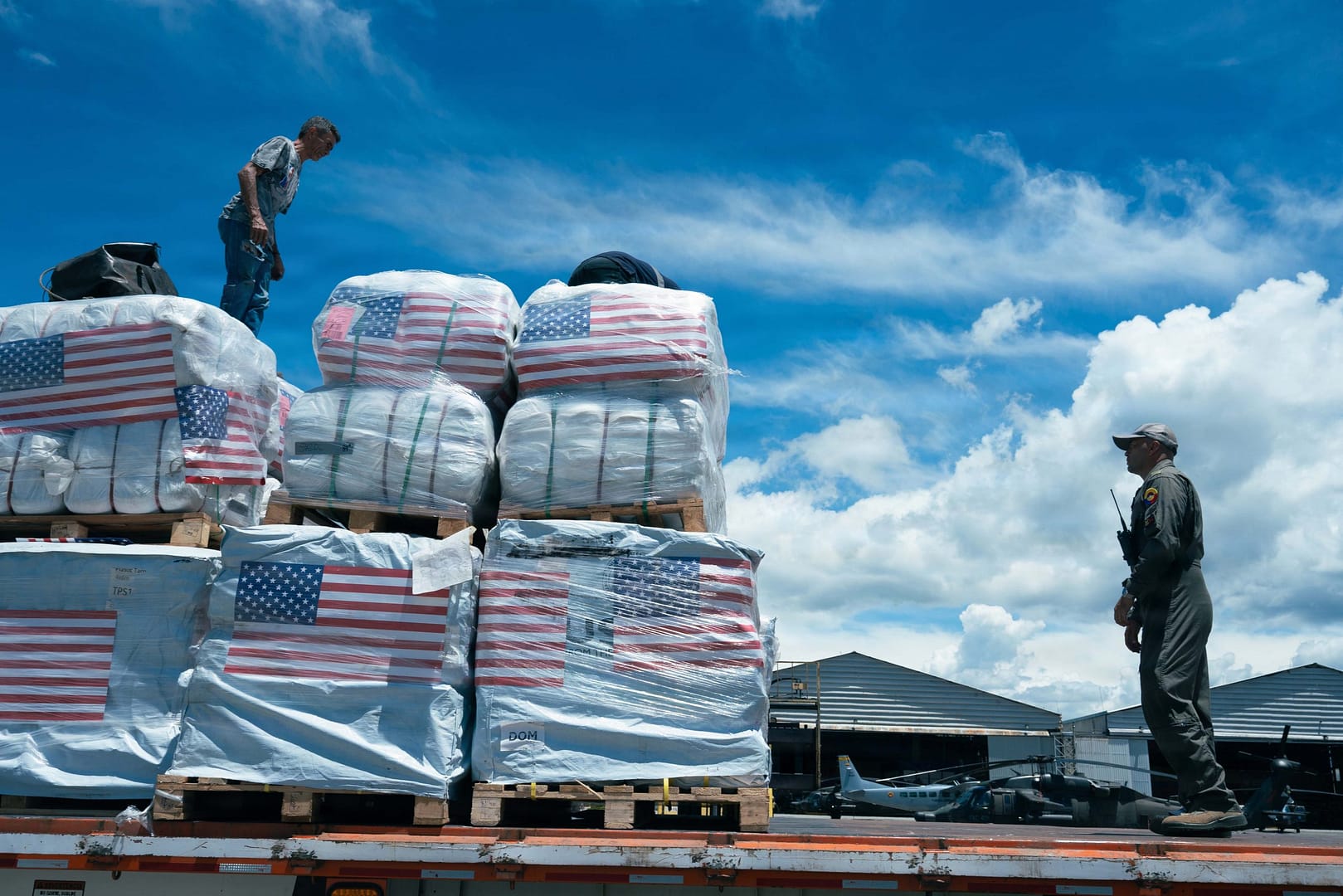
When a magnitude-7.4 earthquake tore through western Colombia on Aug. 10, 2026, the American response arrived on four jet engines. Within days, U.S. Air Force C-17 Globemaster III transports were touching down in Bogotá and Medellín, their cargo holds packed not with troops or weapons but with water, shelter and even Starlink kits.
It is the kind of mission the C-17 was built for but rarely gets headlines: a strategic airlifter turned lifeline, flying disaster relief into a country reeling from one of its worst quakes in years.
Quick Facts: Colombia Earthquake Airlift
- Earthquake: Magnitude 7.4, western Colombia, Aug. 10, 2026
- Responder: U.S. Southern Command and U.S. Transportation Command
- Aeromobili: U.S. Air Force C-17 Globemaster III
- First arrival: Bogotá, overnight Aug. 14; Medellín on Aug. 16
- Cargo: About 220,000 lb of water, shelter, hygiene supplies and Starlink kits
- Total US aid: Around $26.5 million, including $11 million in new assistance
The airlift
The first C-17 landed in Bogotá overnight on Aug. 14, and a second set down in Medellín on Aug. 16, where airmen offloaded pallets of relief cargo. The supplies came from the U.S. Department of State’s disaster-response warehouse in Miami, a pre-positioned stockpile meant for exactly this kind of rapid deployment. The first plane carried water, hygiene and shelter materials; a follow-on flight brought Starlink terminals to help restore internet access knocked out by the quake.
All told, SOUTHCOM and U.S. Transportation Command mobilized nearly 220,000 pounds of shelter materials, water, sanitation and hygiene supplies from Miami to Colombia, while two urban search-and-rescue teams flew in to help local first responders hunt for survivors.
Why the C-17
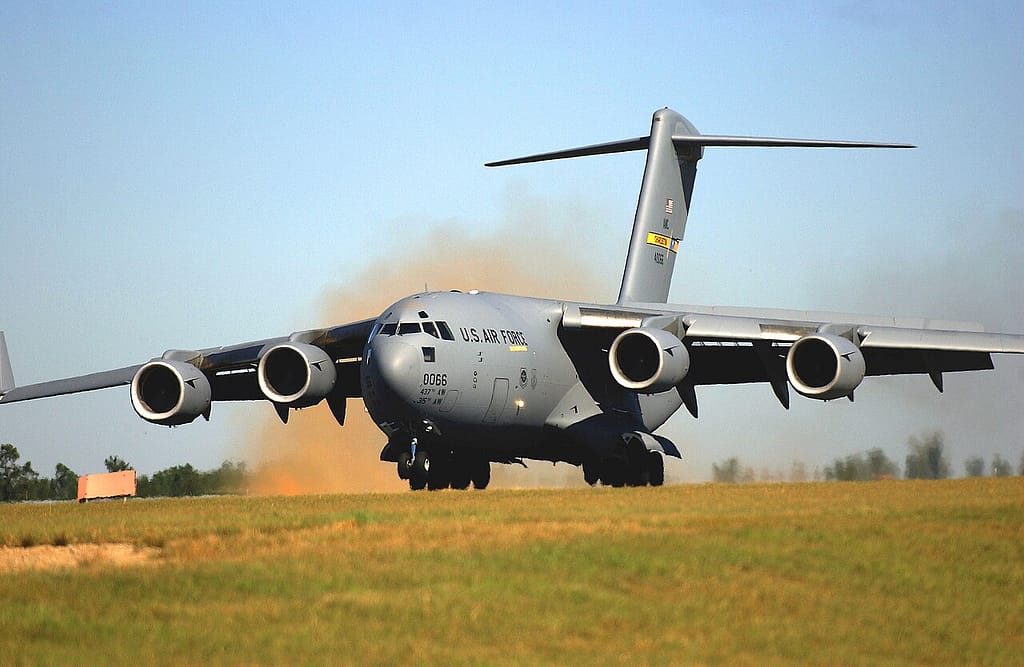
The Globemaster III is the aircraft the U.S. reaches for when a lot of cargo has to reach a broken place fast. It can haul outsized loads over intercontinental distances and still put down on relatively short, rough runways, which is why it has become a fixture of American disaster response from Haiti to the Pacific. Alongside the airlift, the State Department announced $11 million in additional humanitarian assistance, bringing the total U.S. contribution to roughly $26.5 million.
A second career
For a jet designed to move tanks and paratroopers into a war zone, delivering bottled water and Starlink dishes to earthquake survivors is a very different mission, and arguably just as important. In Colombia this month, the loudest thing in the sky was not a threat. It was help arriving.
Sources: U.S. Southern Command, Stars and Stripes, Task & Purpose, U.S. Department of State.
0 Commenti