
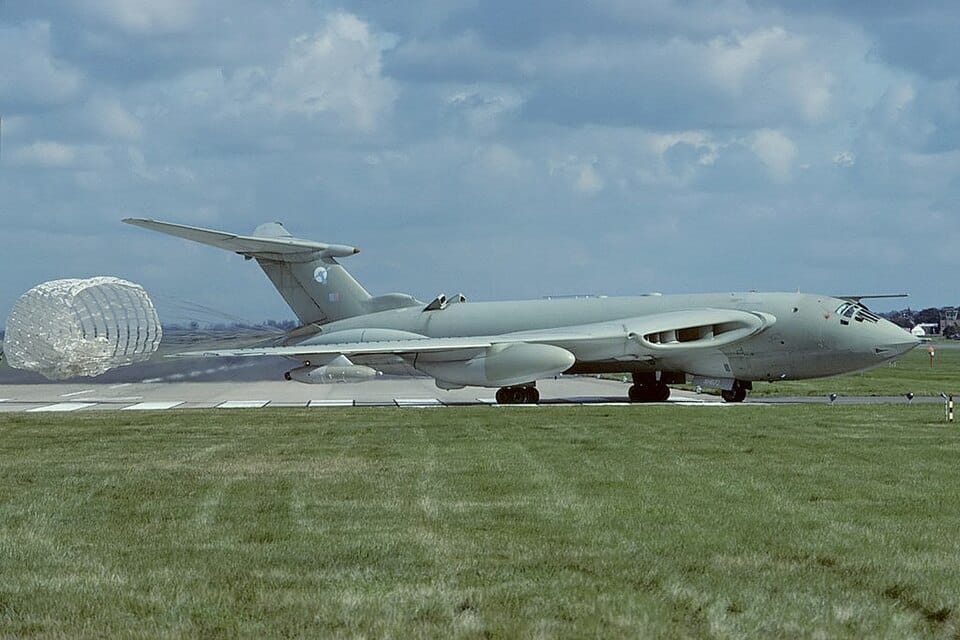
L'Handley Page Victor fu l'ultimo e il più avanzato dei tre bombardieri V britannici, nonché quello con la carriera più lunga. Progettato per trasportare armi nucleari a Mosca ad alta quota, sopravvisse per decenni alla sua missione originaria, reinventandosi come il più importante aereo cisterna della Royal Air Force. Il suo momento di gloria non arrivò sopra l'Unione Sovietica, bensì 8.000 miglia più a sud, quando rifornì in volo i bombardieri Vulcan durante le più lunghe incursioni aeree della storia, nel corso della guerra delle Falkland.
- Primo volo: 24 dicembre 1952
- Designazione: HP.80 Victor
- Ruolo: Bombardiere strategico, in seguito aerocisterna per il rifornimento in volo.
- Produttore: Handley Page Ltd
- Motori: 4 × Armstrong Siddeley Sapphire (B.1) / 4 × Rolls-Royce Conway (B.2/K.2)
- Velocità massima: Mach 0,96 (630 mph / 1.014 km/h)
- Equipaggio: 5
- Totale costruito: 86
- Servizio: 1958–1993
L'ala a mezzaluna
La caratteristica più distintiva del Victor era la sua ala a forma di mezzaluna: un design a freccia composta che variava l'angolo di freccia dalla radice all'estremità, aumentando da circa 52 gradi alla radice a circa 35 gradi all'estremità alare. Ciò conferiva all'aereo prestazioni eccezionali ad alta quota e un volo straordinariamente fluido in quota. Il capo progettista Godfrey Lee aveva ideato la forma per ritardare l'insorgere della resistenza di compressibilità, consentendo al Victor di volare a velocità di crociera più vicine a quella del suono rispetto a qualsiasi altro bombardiere della sua generazione.
L'ala ospitava anche i quattro motori, incassati profondamente nelle radici, conferendo al Victor un profilo insolitamente pulito ed elegante. Con la sua alta coda a T e la fusoliera slanciata, il Victor era ampiamente considerato il più bello dei tre bombardieri V, oltre ad essere il più veloce, capace di raggiungere Mach 0,96 in volo orizzontale.
deterrenza nucleare
Il Victor entrò in servizio con la RAF nel 1958 come terzo e ultimo bombardiere della serie V, affiancando il Vickers Valiant e l'Avro Vulcan. Insieme, i tre modelli costituirono il deterrente nucleare britannico durante gli anni più pericolosi della Guerra Fredda. Gli squadroni di Victor erano in stato di allerta rapida nelle basi della RAF nell'Inghilterra orientale, con equipaggi pronti a decollare entro quattro minuti e a sganciare missili nucleari a lungo raggio Blue Steel o armi a caduta libera contro obiettivi sovietici.
La variante B.2, alimentata da quattro turbofan Rolls-Royce Conway, poteva operare ad altitudini superiori a 60.000 piedi, più in alto di quanto qualsiasi intercettore sovietico potesse raggiungere con affidabilità. Ma con il miglioramento dei missili terra-aria sovietici, la missione ad alta quota divenne impraticabile. Verso la metà degli anni '60, tutti e tre i tipi di bombardieri V erano passati a profili di penetrazione a bassa quota, un ruolo per il quale la delicata ala a mezzaluna del Victor non era l'ideale.
Da bombardiere a petroliera.
Quando il ruolo di deterrenza nucleare passò ai sottomarini Polaris della Royal Navy nel 1969, la storia del Victor avrebbe potuto concludersi. Invece, l'aereo trovò una seconda carriera che si sarebbe rivelata ancora più preziosa della prima. A partire dagli anni '70, i Victor B.2 in eccedenza furono convertiti nella configurazione di aerocisterne K.2, equipaggiati con pod di rifornimento in volo sotto ciascuna ala e un'unità centrale nella stiva bombe.
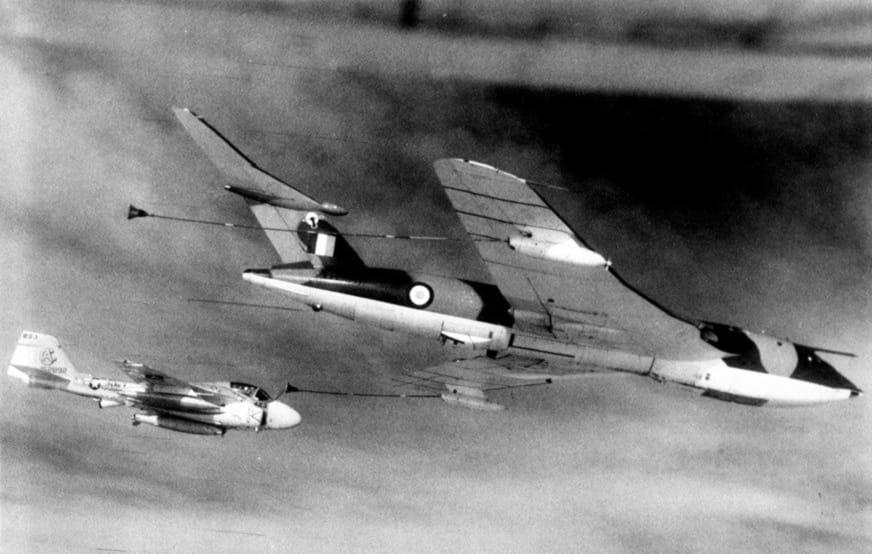
Il K.2 era in grado di trasportare e trasferire enormi quantità di carburante, fino a 34.000 chilogrammi, il che lo rendeva l'aereo cisterna più efficiente in dotazione alla RAF. Divenne indispensabile per il dispiegamento dei caccia britannici su lunghe distanze, sia per le esercitazioni negli Stati Uniti che per le zone di crisi in tutto il mondo.
Black Buck: il raid aereo più lungo della storia
Il momento decisivo per il Victor arrivò nell'aprile del 1982, durante la guerra delle Falkland. Quando l'Argentina invase le Isole Falkland, la RAF aveva bisogno di colpire l'aeroporto di Port Stanley, ma la base più vicina disponibile era l'isola di Ascensione, a quasi 6.400 chilometri di distanza. La soluzione fu l'Operazione Black Buck: un bombardiere Vulcan avrebbe effettuato il viaggio di andata e ritorno con bombe convenzionali, supportato da una catena di aerei cisterna Victor.
Ogni missione del Black Buck richiedeva 11 aerocisterne Victor che volavano in formazione, rifornendosi a vicenda e rifornendo il Vulcan in una complessa coreografia aerea che si estendeva per migliaia di chilometri di oceano aperto. Alcune aerocisterne rifornivano altre aerocisterne, che a loro volta rifornivano il Vulcan più a sud, con l'ultima Victor che trasferiva il suo carburante al limite assoluto della propria autonomia. Si trattava della più elaborata operazione di rifornimento in volo mai tentata, e funzionò. Il Vulcan bombardò la pista di Stanley, impedendo all'Argentina di utilizzare l'aeroporto per i suoi aerei da combattimento e dimostrando che la Gran Bretagna poteva colpire a qualsiasi distanza.
Domande correlate
Cos'era la Handley Page Victor?
La Handley Page Victor fu l'ultima e la più avanzata delle tre navi britanniche Bombardieri V, Il primo volo ebbe luogo il 24 dicembre 1952. Progettato per trasportare armi nucleari a Mosca ad alta quota, divenne in seguito il più importante aereo cisterna per il rifornimento in volo della Royal Air Force e rimase in servizio dal 1958 al 1993, il più lungo dei tre.
Che cosa c'era di speciale nell'ala a mezzaluna della Victor?
La caratteristica più distintiva del Victor era la sua ala a forma di mezzaluna, il cui angolo di freccia variava lungo l'apertura alare: circa 52 gradi alla radice e si riduceva verso l'estremità. Progettata da Godfrey Lee per ritardare l'insorgere della resistenza di compressibilità, conferiva al Victor prestazioni eccezionali ad alta quota e gli permetteva di volare a una velocità prossima a quella del suono, più di qualsiasi altro bombardiere della sua generazione, raggiungendo Mach 0,96.
Qual era il ruolo della portaerei Victor nel deterrente nucleare?
Entrato in servizio con la RAF nel 1958 come terzo e ultimo bombardiere V, il Victor era in stato di allerta rapida nelle basi dell'Inghilterra orientale, pronto a decollare entro quattro minuti e a sganciare missili nucleari a lungo raggio Blue Steel ad alta quota, più in alto di quanto i missili intercettori sovietici potessero raggiungere con certezza.
Perché la Victor è stata trasformata in una petroliera?
Quando il ruolo nucleare passò ai sottomarini Polaris nel 1969, i Victor B.2 in eccedenza furono convertiti in aerocisterne K.2 dotate di pod per il rifornimento in volo. Un K.2 poteva trasferire fino a 34.000 kg di carburante, diventando così la spina dorsale delle operazioni a lungo raggio della RAF per due decenni, comprese le famose incursioni "Black Buck" nelle Falkland.
Quanto era veloce la Handley Page Victor?
Il Victor era il più veloce dei tre bombardieri V, capace di Mach 0,96 in volo orizzontale, notevolmente vicino alla velocità del suono per un grande bombardiere, e una testimonianza del suo pulito design ad ala a mezzaluna con motori nascosti nelle radici alari, a differenza dei progetti supersonici come il Convair B-58 Hustler.
Perché la Victor era considerata bella?
Con la sua alta coda a T, la fusoliera slanciata e l'elegante ala a mezzaluna che celava quattro motori alla radice, il Victor era ampiamente considerato il più bello dei tre bombardieri V, in quanto combinava linee aggraziate con autentiche prestazioni ad alta velocità e alta quota.
Ultimi anni
Il Victor K.2 continuò a servire come principale aereo cisterna della RAF per tutti gli anni '80, supportando le operazioni durante la Guerra del Golfo nel 1991, il suo ultimo impiego operativo. Il modello fu definitivamente ritirato dal servizio il 15 ottobre 1993, ponendo fine a 35 anni di servizio ininterrotto. L'ultimo Victor ancora in grado di volare, il velivolo gemello dell'XH558, l'XL231, è conservato presso lo Yorkshire Air Museum e occasionalmente effettua rullaggi veloci, con i suoi quattro motori Conway che ruggiscono ancora una volta.
0 Commenti