
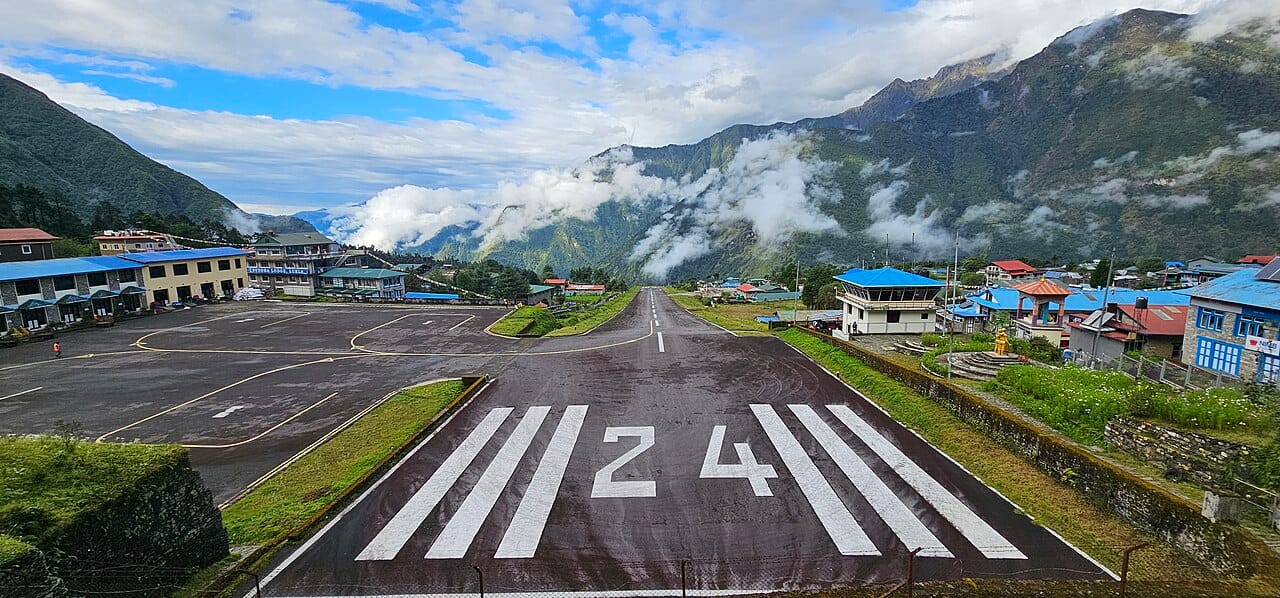
Lukla, Nepal Pista di atterraggio di 527 metri con pendenza di 11,7%, scogliera a un'estremità, montagna all'altra.
Kai Tak, Hong Kong La leggendaria curva a scacchiera a 650 piedi (circa 198 metri) — chiusa nel 1998, mai dimenticata
Paro, Bhutan Valle circondata da cime di 5.500 metri, solo circa 24 piloti certificati in tutto il mondo
Courchevel, Francia Pista di 537 metri con pendenza di 18,61 TP3T, più ripida di qualsiasi autostrada statunitense.
Principessa Giuliana, St. Maarten I jet sorvolano Maho Beach a soli 9 metri di altezza, il luogo più famoso al mondo per l'osservazione degli aerei.
Gibilterra Una strada pubblica attraversa la pista: le barriere si chiudono più di 15 volte al giorno.
Innsbruck, Austria L'avvicinamento alla valle alpina richiede una certificazione speciale per il capitano.
Madeira, Portogallo Pista di atterraggio costruita su palafitte sull'Oceano Atlantico.
Lukla: la porta d'accesso all'Everest
L'aeroporto Tenzing-Hillary si trova a 2.845 metri di altitudine nell'Himalaya nepalese, e ogni suo dettaglio è studiato per incutere timore. La pista è lunga 527 metri, circa un sesto della lunghezza di una tipica pista commerciale, e si innalza con una pendenza dell'11,7%. All'estremità meridionale, l'asfalto precipita a picco nella valle del Dudh Koshi. All'estremità settentrionale, una parete montuosa si erge verticale. Non sono ammesse riattaccate. Se si decide di atterrare, si atterra: il terreno all'estremità opposta della pista rende impossibile una risalita. I piloti devono completare almeno 100 missioni STOL e un minimo di un anno di esperienza STOL in Nepal prima di poter tentare l'atterraggio a Lukla, oltre a 10 voli di addestramento con un istruttore certificato. La pendenza è al tempo stesso la maledizione e la salvezza. Atterrare in salita rallenta l'aereo in modo più efficace dei soli freni. Decollando in discesa, con il bordo della scogliera che funge da rampa di lancio naturale, i piloti guadagnano qualche secondo di velocità prima di dover iniziare a volare. È un'elegante soluzione ingegneristica nata da una geografia impossibile.Kai Tak: La svolta a scacchiera
Il vecchio aeroporto di Hong Kong ha chiuso il 6 luglio 1998, e i piloti ne parlano ancora. La pista 13 di Kai Tak richiedeva quello che probabilmente è l'avvicinamento a vista più impegnativo mai utilizzato nell'aviazione commerciale.
Paro: L'approccio proibito
L'aeroporto internazionale di Paro, in Bhutan, si trova a 2.235 metri di altitudine, in una valle circondata da cime che raggiungono i 5.500 metri. La pista è lunga 2.000 metri, sufficiente per la maggior parte delle condizioni, ma è l'avvicinamento a rendere Paro leggendario. Solo circa 24 piloti al mondo sono abilitati ad atterrare a Paro. L'avvicinamento richiede di destreggiarsi tra le montagne con una serie di virate che nessun sistema di avvicinamento strumentale può automatizzare in sicurezza. I voli sono consentiti solo durante le ore diurne e in condizioni meteorologiche visive. Non è permesso volare di notte. Non esiste l'avvicinamento strumentale. O vedi la pista, o non ci sei. Il processo di certificazione è estenuante: voli simulati, briefing tecnici, valutazioni multiple e atterraggi osservati dal sedile di riserva prima che un pilota venga autorizzato a effettuare l'avvicinamento in prima persona. L'esclusività non è elitarismo, è sopravvivenza. Il terreno esige la perfezione e non c'è rete di sicurezza.Courchevel: più ripido di un'autostrada
L'altiporto di Courchevel, nelle Alpi francesi, vanta una caratteristica che nessun aeroporto desidera: una pendenza della pista del 18,6%. Per fare un paragone, nessuna strada pubblica negli Stati Uniti supera il 9%. La pista, lunga 537 metri, presenta un dislivello di 60 metri da un'estremità all'altra, e le montagne circostanti eliminano qualsiasi possibilità di mancato avvicinamento. La pendenza funge da sistema frenante della pista. Gli aerei che atterrano in salita decelerano più rapidamente rispetto a quelli che atterrano in pianura, compensando la distanza incredibilmente breve a disposizione. I decolli, invece, avvengono in discesa, sacrificando l'altitudine per l'accelerazione. Funziona, ma solo per velivoli con elevate prestazioni su piste corte: Cessna Caravan, Pilatus PC-12 ed elicotteri.Principessa Juliana: L'approccio in spiaggia
L'aeroporto internazionale Princess Juliana di Sint Maarten non è tecnicamente pericoloso: la pista è lunga 2.300 metri, sufficiente per i grandi jet. Ciò che lo rende famoso è Maho Beach, dove i bagnanti si sdraiano sulla sabbia a soli 850 metri dalla soglia della pista 10 e gli aerei in arrivo sorvolano la zona a una distanza che sembra minima.
Gibilterra: dove la strada incrocia la pista di atterraggio
L'aeroporto internazionale di Gibilterra vanta forse la particolarità più insolita nel mondo dell'aviazione: Winston Churchill Avenue, la strada principale del territorio, attraversa la pista. Le barriere si chiudono 15 o più volte al giorno, in occasione degli atterraggi e dei decolli degli aerei, e fino al 2023 pedoni, automobili e biciclette attendevano semplicemente sulla pista il via libera.
Innsbruck: la sfida alpina
La pista di Innsbruck si trova a 581 metri di altitudine, fiancheggiata da cime che raggiungono i 3.500 metri entro un raggio di 24 chilometri. L'avvicinamento si snoda attraverso una stretta valle con terreno su entrambi i lati, il localizzatore spostato di 5 gradi e venti alpini impetuosi che possono cambiare direzione e intensità senza preavviso. Innsbruck è classificato come aeroporto di categoria C, il che richiede ai comandanti di completare un addestramento speciale, che include l'osservazione in cabina di pilotaggio di decolli e atterraggi reali, prima di essere certificati per effettuare l'avvicinamento. I primi ufficiali non possono condurre l'avvicinamento, indipendentemente dalla loro esperienza. È un'operazione riservata esclusivamente al comandante, e la certificazione è necessaria perché la valle non tollera imprecisioni.Madeira: una pista di atterraggio su palafitte
L'aeroporto di Funchal, sull'isola di Madeira, fu originariamente costruito con una pista così corta da poter a malapena accogliere aerei turboelica regionali. In 36 anni, è stata allungata da 1.500 metri a 2.780 metri, ma l'ampliamento ha richiesto la costruzione di una piattaforma sull'Oceano Atlantico, sorretta da 180 colonne di cemento che si ergono per 70 metri dal fondale marino. L'avvicinamento alla pista 05 è bloccato da scogliere, costringendo i piloti a una virata visiva di 180 gradi intorno all'aeroporto per un atterraggio finale breve. I comandanti devono avere almeno 200 ore di esperienza e la combinazione di vento, terreno e la vertiginosa sensazione di atterrare su quello che è essenzialmente un ponte sull'oceano rendono Madeira sinonimo di atterraggi impegnativi.Dove la geografia vince
L'aviazione moderna ha domato gran parte del cielo. Gli avvicinamenti GPS, i sistemi avanzati di allerta per la prossimità al suolo e i sistemi di atterraggio automatico hanno reso il volo strumentale più sicuro che mai. Ma la geografia non si cura della tecnologia. Le montagne non si muovono. Le valli non si allargano. Le piste costruite su scogliere e palafitte rimangono impervie come il giorno in cui sono state scavate. I piloti che effettuano questi avvicinamenti non si considerano coraggiosi. Si considerano preparati. Ogni atterraggio a Lukla, Paro o Innsbruck è preceduto da uno studio dettagliato, da un addestramento specifico e dalla tacita consapevolezza che il margine di errore è più piccolo qui che in qualsiasi altro luogo dell'aviazione. Noi altri possiamo ritenerci fortunati che il nostro prossimo volo probabilmente atterrerà in un posto pianeggiante. Probabilmente. Fonti: Access Nepal Tour, Simple Flying, Aeroporto di Gibilterra, Dati aeroportuali ICAO, Aviation Safety NetworkDomande correlate
Qual è l'aeroporto più pericoloso del mondo?
L'aeroporto Tenzing-Hillary di Lukla, in Nepal, è spesso definito il più pericoloso del mondo. Situato a 2.845 metri di altitudine sull'Himalaya, vanta una pista di 527 metri con una pendenza di 11,71°, una scogliera a un'estremità e una montagna all'altra, il che non lascia ai piloti alcuna possibilità di interrompere la manovra una volta che si sono impegnati nell'atterraggio.
Perché l'aeroporto di Kai Tak a Hong Kong era così pericoloso?
Kai Tak era famoso per la sua virata a scacchiera, una brusca inclinazione visiva a soli 650 piedi (circa 200 metri) in fase di avvicinamento finale, che si snodava tra i palazzi prima dell'atterraggio. Chiuso nel 1998, rimane leggendario tra piloti e appassionati di aviazione come uno degli avvicinamenti più impegnativi e spettacolari del mondo aeronautico.
Quali aeroporti richiedono una certificazione speciale per i piloti?
Diversi aeroporti richiedono una certificazione speciale per i comandanti a causa del terreno. Paro, in Bhutan, circondato da cime di 5.500 metri, ha solo circa 24 piloti certificati in tutto il mondo, e anche Innsbruck, in Austria, richiede una qualifica speciale per l'avvicinamento alla valle alpina. Questi si classificano tra gli avvicinamenti aeroportuali più terrificanti del mondo.
Qual è la pista di atterraggio più ripida del mondo?
Courchevel, nelle Alpi francesi, ha una delle piste più ripide al mondo, lunga appena 537 metri con una pendenza di 18,61 TP3T, superiore a quella di qualsiasi autostrada statunitense. I piloti atterrano in salita e decollano in discesa, senza possibilità di riattaccata una volta effettuato l'atterraggio, il che rende un avvicinamento stabilizzato assolutamente fondamentale.
Perché gli aerei volano così bassi sopra Maho Beach?
All'aeroporto Princess Juliana di St. Maarten, i jet in arrivo sorvolano Maho Beach a soli 9 metri di distanza perché la pista inizia immediatamente dopo la sabbia, rendendolo il luogo più famoso al mondo per l'osservazione degli aerei. Avvicinamenti così ravvicinati non lasciano margine di errore, richiedendo una precisione impeccabile. disciplina di aggiramento se qualcosa non vi sembra a posto.
Quale aeroporto ha una strada che attraversa la pista?
L'aeroporto internazionale di Gibilterra è attraversato direttamente dalla pista da una strada pubblica, Winston Churchill Avenue. Le barriere si chiudono più di 15 volte al giorno per bloccare il traffico durante gli atterraggi e i decolli. È uno dei pochi posti al mondo in cui auto e aerei condividono la stessa striscia di marciapiede.
Perché l'aeroporto di Madeira è così pericoloso?
L'aeroporto di Madeira, in Portogallo, è costruito in parte su palafitte sull'Oceano Atlantico, con una pista che si estende su alti pilastri di cemento. La combinazione con i venti vorticosi che soffiano dalle scogliere circostanti richiede una manovrabilità precisa, rendendolo uno dei luoghi più impegnativi e spettacolari d'Europa per l'atterraggio di un aereo di linea.
0 Commenti