
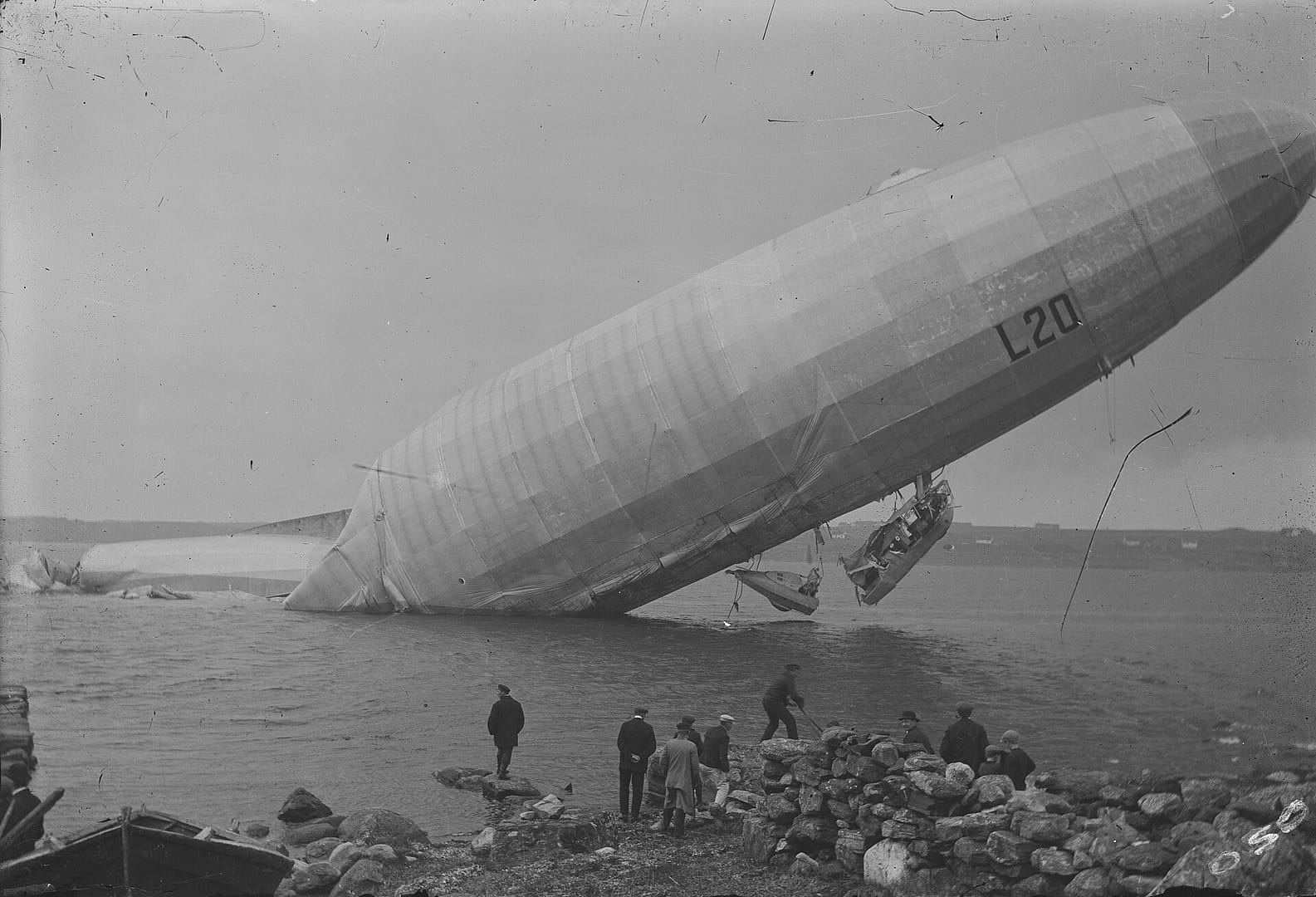
Parte di Ali di guerra: dagli Zeppelin alla sesta generazione, la nostra serie sui grandi punti di svolta dell'aviazione militare.
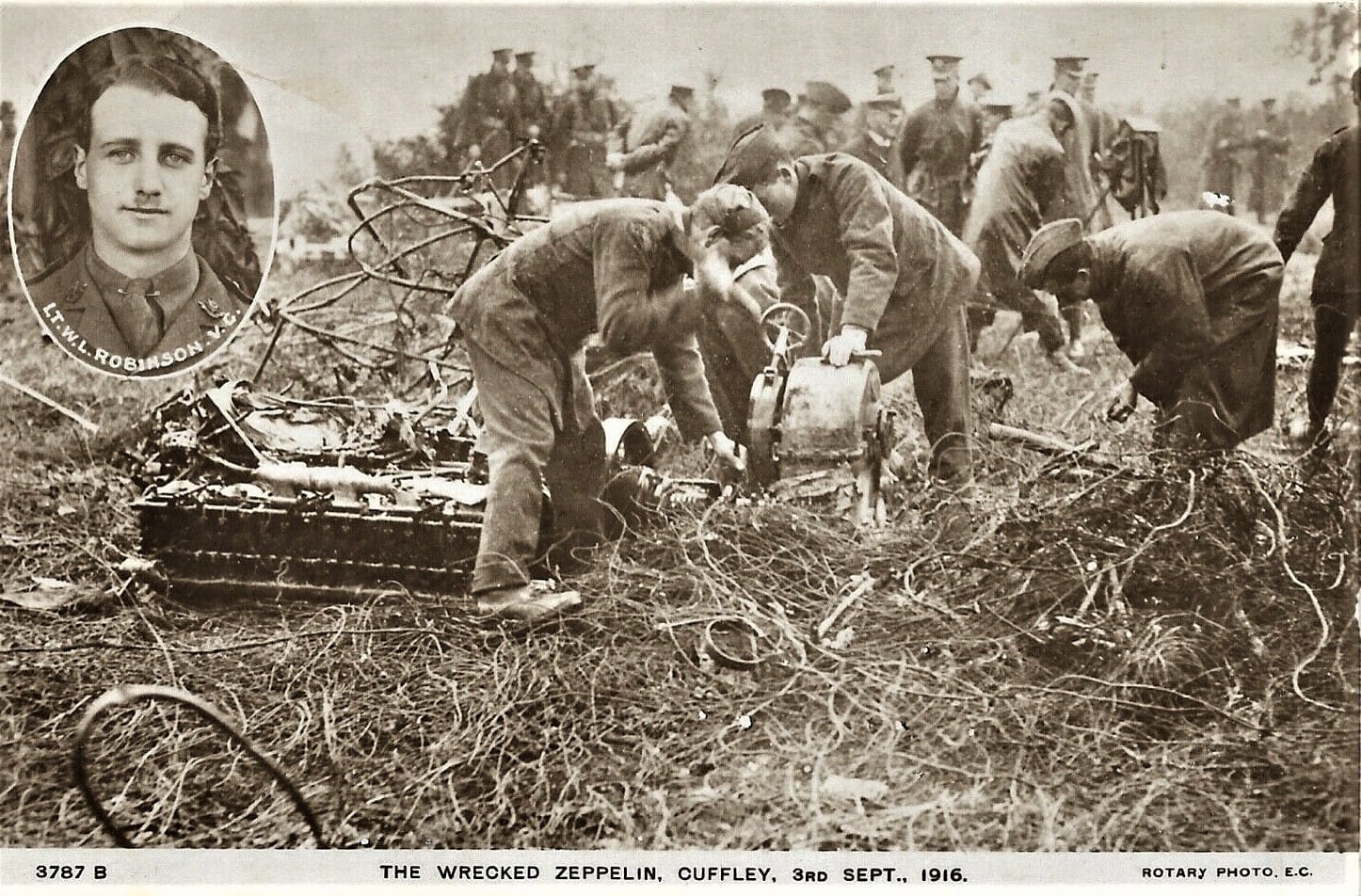
Sono da poco passate le due del mattino del 3 settembre 1916 e il cielo notturno sopra i campi a nord di Londra è in fiamme. Migliaia di persone, svegliate dai colpi di cannone, in piedi nei loro giardini e sui tetti in pigiama, osservano un'enorme sagoma infuocata che emerge lentamente dall'oscurità, illuminando le nuvole di arancione per ottanta chilometri. E acclamano.
Quello a cui stanno assistendo è la distruzione di un dirigibile tedesco, abbattuto in fiamme sopra il villaggio di Cuffley da un pilota di 21 anni di nome William Leefe Robinson. Era salito a 3.500 metri con il suo fragile biplano, aveva svuotato il caricatore delle sue mitragliatrici sul fianco del mostro con un nuovo tipo di proiettile incendiario e lo aveva visto prendere fuoco. Fu il primo dirigibile tedesco mai distrutto sopra la Gran Bretagna e, nel giro di 48 ore, Robinson ricevette la Victoria Cross, la più rapida onorificenza mai conferita. Per i civili terrorizzati sottostanti, fu la notte in cui l'uomo nero finalmente sanguinò.
INFORMAZIONI RAPIDE
| Che cosa | Il dirigibile rigido militare: la prima arma per bombardare le città dall'aria. |
| Pioniere | Conte Ferdinand von Zeppelin (primo volo del suo LZ 1, 1900) |
| Prima incursione in Gran Bretagna | 19 gennaio 1915, sulle città del Norfolk di Great Yarmouth e King's Lynn |
| Debolezza fatale | Idrogeno: una volta che i difensori ebbero proiettili incendiari, i dirigibili bruciarono |
| Punto di svolta | La vittoria di Leefe Robinson su Cuffley, 2-3 settembre 1916 |
| Sostituito da | Il bombardiere aereo Gotha dal 1917 in poi |
La macchina impossibile del conte
Il dirigibile era l'ossessione di un solo uomo: il conte Ferdinand von Zeppelin, un ufficiale di cavalleria tedesco in pensione, convinto che il futuro del volo appartenesse a velivoli rigidi più leggeri dell'aria. Il suo primo velivolo, l'LZ 1, si sollevò in cielo sopra il Lago di Costanza nel 1900: un cilindro di 128 metri (420 piedi) fatto di travi di alluminio e sacche di gas idrogeno. Era fragile, poco potente e difficilmente controllabile, e la maggior parte degli esperti lo considerava un eccentrico.
La sua ossessione lo rovinò quasi. La svolta arrivò nell'agosto del 1908, quando il suo dirigibile LZ 4 fu distrutto da un incendio dopo un atterraggio di emergenza a Echterdingen, davanti a decine di migliaia di spettatori. Avrebbe dovuto essere la fine. Invece, una straordinaria ondata di sentimento nazionale travolse la Germania: la gente comune, commossa dalla tenacia del vecchio conte, inviò donazioni spontanee – l'"offerta Zeppelin del popolo tedesco" – che in un solo giorno coprirono il costo di un nuovo dirigibile e finirono per superare i sei milioni di marchi. Il disastro, ricordato come il "Miracolo di Echterdingen", trasformò lo Zeppelin in un simbolo di orgoglio nazionale e fornì al conte la fortuna necessaria per costruire una flotta.
Non lo era. Nel decennio successivo, lo Zeppelin si trasformò in una delle meraviglie ingegneristiche dell'epoca: dirigibili lunghi più di 180 metri, spinti da più motori, capaci di percorrere centinaia di chilometri e trasportare tonnellate di carico. Quando scoppiò la guerra nel 1914, la Germania possedeva qualcosa che nessun'altra nazione aveva: una flotta di aerei giganti in grado di volare fino in Inghilterra.
Terrore dall'invisibile
Il primo raid aereo sulla Gran Bretagna avvenne nella notte del 19 gennaio 1915, quando gli Zeppelin bombardarono le città del Norfolk di Great Yarmouth e King's Lynn. Fu la prima volta nella storia che dei civili, lontani da qualsiasi campo di battaglia, vennero uccisi dall'aria nelle proprie case, e questo provocò un orrore particolare. I raid avvenivano di notte. I dirigibili erano invisibili sopra le nuvole. Non si potevano vedere, si potevano solo sentire i motori e attendere. La stampa britannica, furiosa, definì gli equipaggi "assassini di bambini".“
Tra il 1915 e il 1916 gli Zeppelin tornarono ripetutamente, raggiungendo persino Londra. Nel corso della guerra, i dirigibili effettuarono circa cinquantuno incursioni contro la Gran Bretagna, uccidendo circa 557 persone e ferendone ben oltre un migliaio: un bilancio modesto rispetto alla carneficina che sarebbe seguita, ma l'effetto psicologico fu enorme. Intere città venivano oscurate notte dopo notte; la gente imparò a temere le serate limpide e tranquille, considerandole "tempo da Zeppelin". Per la prima volta, anche il fronte interno di una nazione divenne un bersaglio. La guerra aveva oltrepassato i suoi vecchi confini e si era librata in cielo.
La trappola mortale dell'idrogeno
Nonostante la loro aura minacciosa, i dirigibili portavano al loro interno la propria rovina: migliaia di metri cubi di idrogeno, il gas più infiammabile che esista. All'inizio della guerra, i caccia britannici potevano svuotare un intero caricatore di proiettili ordinari contro uno Zeppelin e osservarlo volare serenamente, con i fori troppo piccoli per causare danni. La svolta arrivò con le munizioni progettate per incendiare il gas in fuga: proiettili incendiari ed esplosivi. Nel momento in cui un pilota riuscì ad incendiare l'idrogeno in modo affidabile, come fece Leefe Robinson sopra Cuffley, lo Zeppelin cessò di essere un'arma del terrore e si trasformò in una pira funeraria volante.
I tedeschi reagirono alleggerendo i loro dirigibili per farli volare sempre più in alto: i cosiddetti "alpinisti" che raggiungevano oltre i 20.000 piedi, nell'aria rarefatta e gelida che tormentava i loro equipaggi. Ma era una battaglia persa. Con l'aumentare delle perdite, la campagna di dirigibili contro la Gran Bretagna si affievolì e i tedeschi affidarono il compito di bombardare l'Inghilterra a una nuova macchina: il bombardiere Gotha, più pesante dell'aria, il cui primo devastante raid si abbatté sulla città costiera di Folkestone nel maggio del 1917. L'era dei dirigibili da guerra stava già volgendo al termine.
La strana vita ultraterrena del dirigibile
Il dirigibile militare non morì del tutto con la Prima Guerra Mondiale. Negli anni '30 la Marina degli Stati Uniti costruì due dei più grandi velivoli mai volati, il USS Akron e USS Macon — dirigibili rigidi così grandi da fungere da portaerei volanti, capaci di lanciare e recuperare in volo i propri minuscoli aerei da caccia. Entrambi andarono perduti in tempeste nel giro di pochi anni, e l'idea morì con loro.
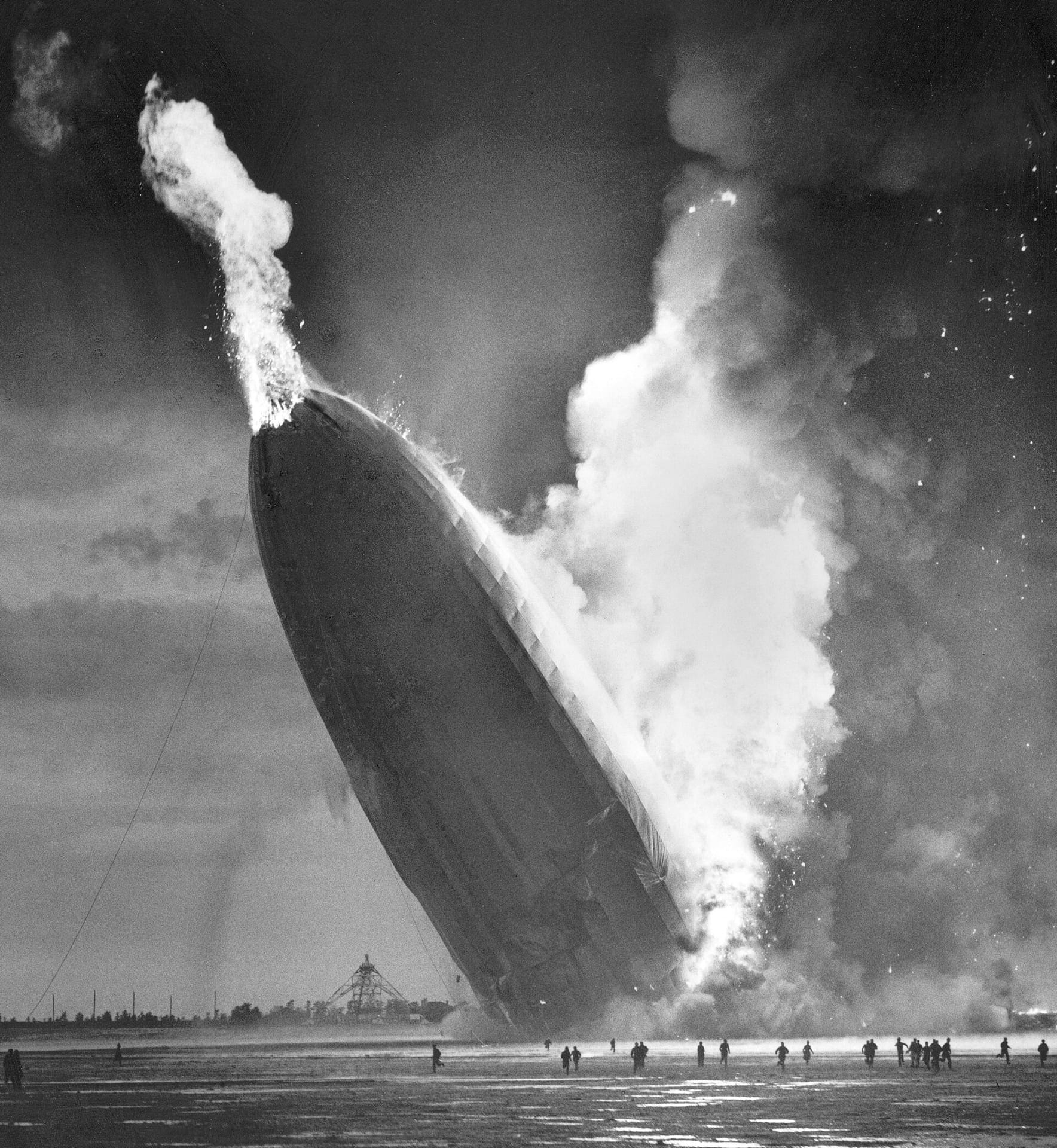
E poi c'era l'Hindenburg, il più grande aereo mai costruito, un transatlantico volante che attraversava l'Atlantico nel lusso. Quando prese fuoco al suo ormeggio nel New Jersey nel 1937, in diretta radiofonica e nei cinegiornali, 34 secondi della sua distruzione Ciò pose fine per sempre alla fiducia del pubblico nei dirigibili. Il futuro, ormai era chiaro a tutti, apparteneva all'aeroplano.
Come la Gran Bretagna ha imparato a ucciderli
Fermare i dirigibili richiese anni. Inizialmente la Gran Bretagna non aveva quasi nulla in grado di raggiungerli: i piloti della difesa territoriale si arrampicavano nel buio gelido a bordo di fragili biplani, spesso incapaci di salire abbastanza in alto, e quando si avvicinavano i loro proiettili ordinari si limitavano a perforare innocui fori nelle sacche di gas. La soluzione fu costruita da zero: un anello di proiettori e cannoni antiaerei intorno a Londra, una vera e propria rete di squadroni di difesa territoriale e, soprattutto, nuove munizioni. Gli ingegneri britannici produssero tre diversi proiettili speciali – l'esplosivo Pomeroy, il Brock e il Buckingham, riempito di fosforo – e li caricarono in miscele alternate in modo che una singola esplosione potesse sia squarciare le sacche di gas sia incendiare l'idrogeno che fuoriusciva. Fu proprio quella miscela che permise a Leefe Robinson di abbattere l'SL 11 sopra Cuffley.
Nemmeno allora i dirigibili si arresero facilmente. I tedeschi spinsero le loro flotte sempre più in alto e nell'ottobre del 1917 una formazione di dirigibili d'attacco fu colta da una violenta burrasca in quota e dispersa per tutta la Francia, molti dei quali persi in una sola notte, sbalzati fuori rotta in modo inesorabile in quello che divenne noto come il "raid silenzioso". Quanto a Leefe Robinson, l'eroe di Cuffley, la sua guerra si concluse male: abbattuto e catturato nel 1917, subì un trattamento brutale come prigioniero, tornò a casa debilitato e morì durante la pandemia influenzale l'ultimo giorno del 1918, a soli 23 anni.
POTENZE A CONFRONTO — I DIRIGIERI NELLA PRIMA GUERRA MONDIALE
| I contendenti | La flotta di dirigibili tedesca contro le difese territoriali britanniche |
| Chi l'ha inventato? | La Germania è l'unica potenza a possedere una vera flotta di dirigibili strategici, costruita secondo i progetti del conte von Zeppelin. |
| Chi ha risposto meglio? | Gran Bretagna — con riflettori, cannoni, squadroni di difesa territoriale e, soprattutto, munizioni incendiarie |
| Il verdetto | Lo Zeppelin dimostrò che le città potevano essere bombardate dall'aria, ma poi si dimostrò troppo infiammabile per continuare a farlo. |
Ciò che lo Zeppelin si è lasciato alle spalle
Il dirigibile si rivelò un'arma fallimentare. Ma l'idea che veicolava non lo fu. In pochi anni, sorvolando le città inglesi, lo Zeppelin stabilì il principio più importante del potere aereo del XX secolo: la guerra poteva essere condotta, deliberatamente, contro i civili nemici, ben oltre il fronte, nelle loro case. Tutto ciò che seguì – la Gotha, il Blitz, le flotte di bombardieri della Seconda Guerra Mondiale – si basò su questo principio.
La folla esultante a Cuffley pensava di assistere alla fine di qualcosa. In realtà, stava assistendo a una sua trasformazione.
Fonti: Imperial War Museum; RAF Museum; Royal Aeronautical Society; storie standard dei raid aerei della Prima Guerra Mondiale sulla Gran Bretagna.
| 1. | Il dirigibile in guerra | Come lo Zeppelin portò per la prima volta la guerra nei cieli |
| 2. | Il primo incarico: la ricognizione. | Gli occhi che vinsero la Marna e salirono in orbita |
| 3. | Il combattente | La centenaria ricerca del controllo dell'aria |
| 4. | Folkestone, 1917 | Il giorno in cui nacque il bombardamento strategico |
| 5. | La rivoluzione della precisione | Quando bombe e missili impararono a puntare da soli |
| 6. | La guerra dei maghi | Come la guerra elettronica ha imparato ad accecare il nemico |
| 7. | Occhi in orbita | Come lo spionaggio si è spostato nello spazio |
| 8. | furtività | Come gli aerei hanno imparato a scomparire dai radar |
| 9. | L'ascesa dei droni | Guerra senza pilota nella cabina di pilotaggio |
| 10. | La sesta generazione | Quando il caccia imparò a volare da solo |
LETTURE CORRELATE
Wings of War: dagli Zeppelin alla sesta generazione (panoramica della serie)Folkestone, 1917: Il giorno in cui la guerra arrivò nei negoziLa Marina degli Stati Uniti costruì due vere portaerei volanti, ma poi le perse entrambe.Oh, l'umanità: 34 secondi che hanno posto fine all'era dei dirigibili
0 Commenti