
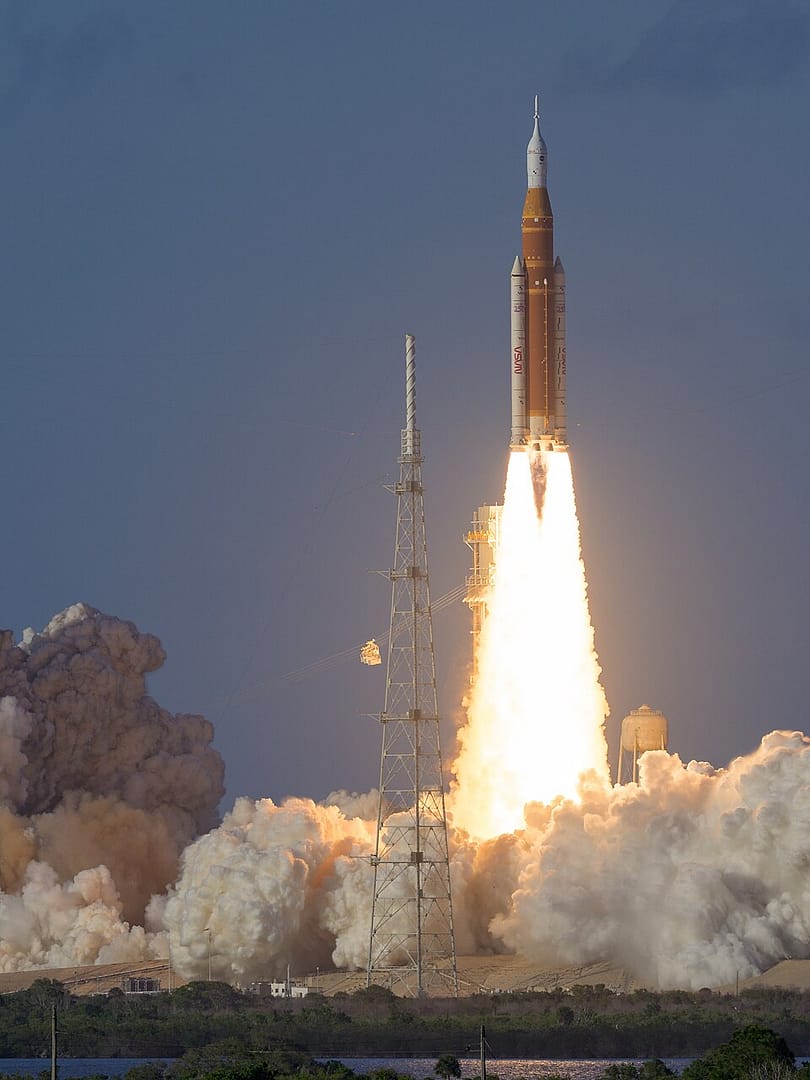
Related: Countdown to the Moon: Artemis II Launches Today
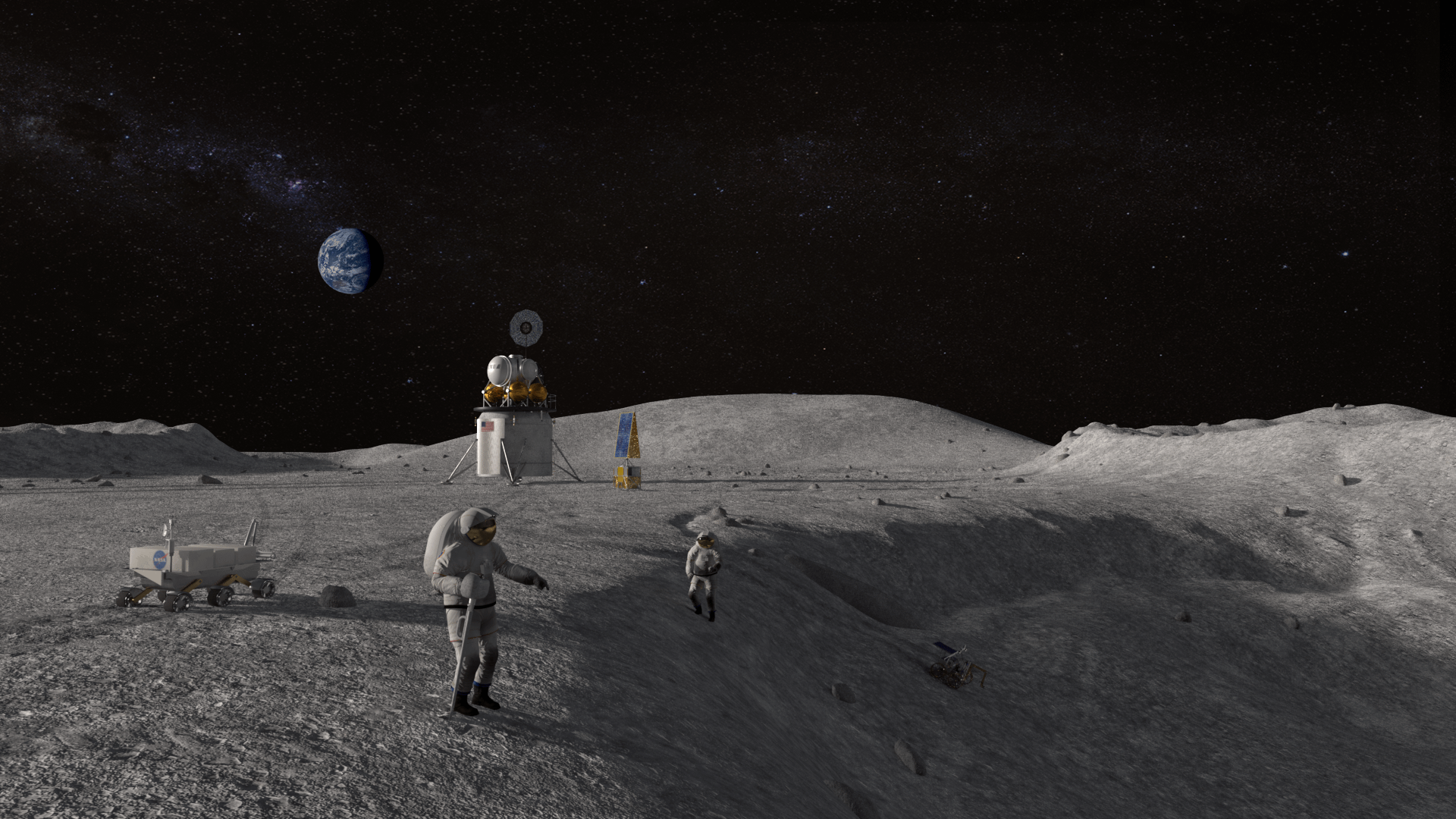
On April 1, 2026, NASA lit a rocket that sent two former Navy fighter pilots toward the Moon. Fifty years after Apollo, the first crewed orbit of the lunar surface since 1972 will be piloted by men who spent their careers landing jets on aircraft carriers—the hardest skill in military aviation. Reload Wiseman and Victor Glover have logged thousands of hours in the F/A-18 Hornet, handled 300-knot carrier approaches, and survived combat missions. Now they’re about to experience something no fighter pilot has done since Apollo 17: leave Earth orbit.
The Fighter Pilot Advantage
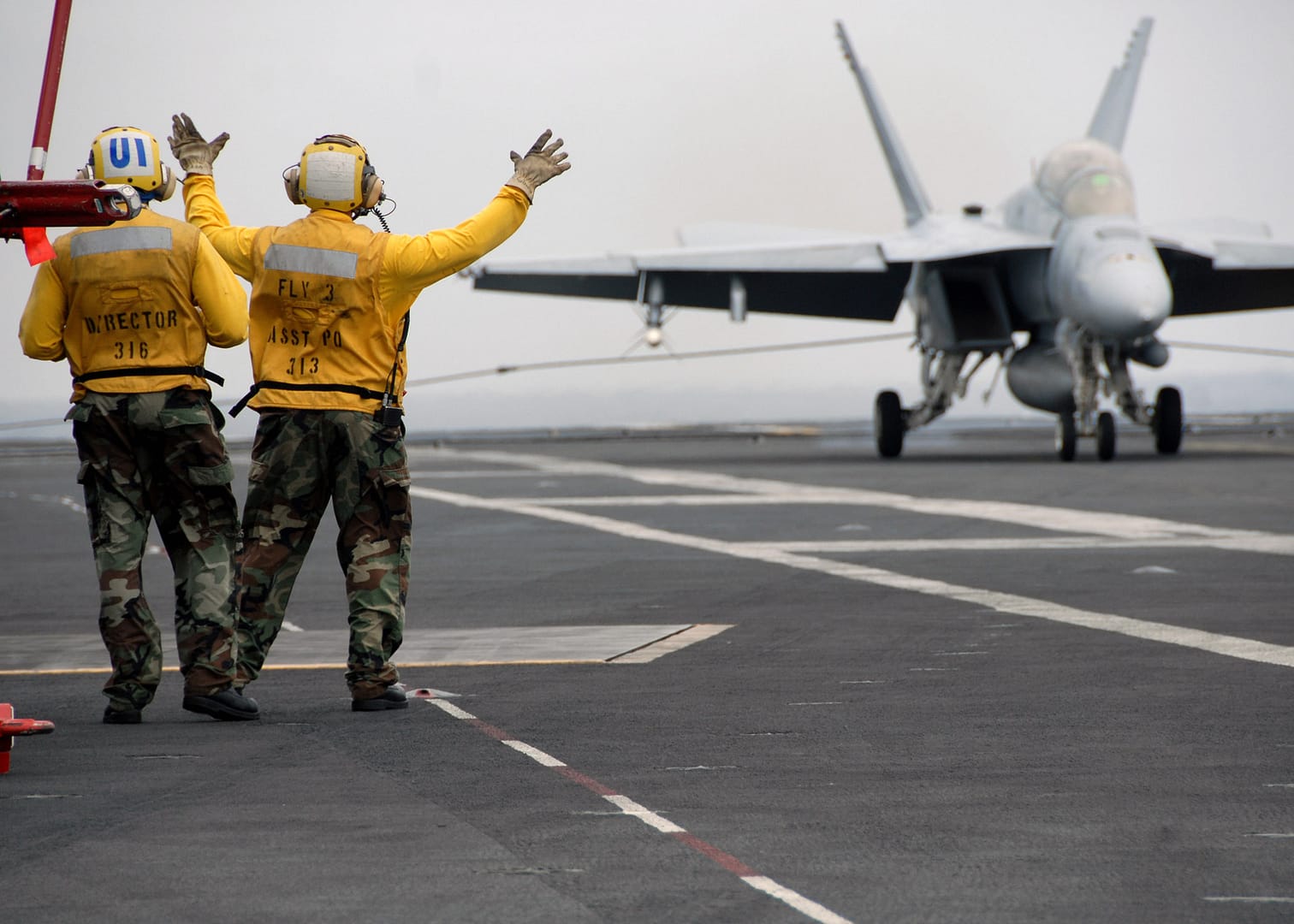
Commander Reid Wiseman learned to fly in the F/A-18F Super Hornet with Strike Fighter Squadron 103 at Naval Air Station Oceana. His Navy career spanned two Middle East deployments supporting Operations Southern Watch, Enduring Freedom, and Iraqi Freedom. He completed carrier landings in some of the most challenging conditions on Earth—pitching decks at night, salt spray, crosswinds, and the kind of situational awareness that comes from knowing one mistake means ditching in the ocean.
That same training—the ability to manage systems under extreme stress, read instruments with perfect precision, adjust constantly to external forces—translates directly to commanding a spacecraft. The difference is scale. A carrier deck is 4.5 acres moving at 30 knots. The Moon is 240,000 miles away. But the fundamental skill is identical: manage energy, read the environment, make split-second calls, and trust your instruments absolutely.
A pilot who can land an F/A-18 on a pitching carrier deck in a crosswind understands the one thing spaceflight demands: precision under conditions you can’t fully control.
Victor Glover: 400 Carrier Landings
Captain Victor Glover’s résumé reads like a masterclass in fighter pilot achievement. He earned his naval aviator wings in 2001 and was assigned to VFA-34—the famous \"Black Aces\" squadron—in 2003. His first combat deployment was the final cruise of the USS John F. Kennedy in support of Operation Iraqi Freedom. He flew the F/A-18 Hornet over Iraq.
By the time he applied to NASA, Glover had logged 3,500 hours of flight time across more than 40 different aircraft. He’d completed more than 400 carrier landings. He’d flown 24 combat missions. And on April 1, 2026, he became the first person of color to journey beyond low Earth orbit.
Glover’s mission is historic for reasons beyond his background: he’s proving that the fighter pilot pipeline is now the pipeline for deep space exploration. Not astronomers. Not physicists. But men trained to merge with machines, adapt to failure, and maintain perfect situational awareness for hours at a time.
Training for the Untrainable
NASA’s training for Artemis II mirrors military fighter training in structure but not in intensity. Wiseman and Glover spent 18 months in underwater weightlessness simulations, procedures drills, and systems training. They flew T-38 trainer jets to maintain their pilot skills. They ran thousands of simulations. But none of that is as demanding as what they’ve already done.
A carrier landing at night with one engine damaged teaches something a simulator can’t: the psychology of commitment under uncertainty. You’re committed to the landing the moment your wheels leave the catapult. If something goes wrong, you eject or you ditch. There’s no abort. That’s the mental framework fighter pilots bring to spaceflight. Anything else looks manageable by comparison.
The military has been training astronauts since Shepard and Glenn. But something shifted in the post-Space Shuttle era: NASA started taking more fighter test pilots than ever before. Wiseman and Glover are the logical endpoint of that trend—men who understand how to fly experimental vehicles, manage complex systems, and stay calm when everything depends on perfect execution.
From Carrier Decks to History
What makes Artemis II different from Apollo is the timeline and the consequence. Apollo missions flew once. Artemis is designed as the infrastructure for sustained lunar exploration. Wiseman and Glover aren’t just visiting the Moon—they’re the advance guard for a permanent return. And they’re doing it with the training and mindset of men who’ve already mastered the single hardest flying achievement: landing a fighter jet on a carrier in the dark.
Fifty years after Apollo, the fighter pilot remains the best-trained human available for the impossible task. Same jets, different destination. Same skills, higher stakes.
Sources: USNI News, Smithsonian National Air and Space Museum, NBC News, CBS News, ABC News
Related Questions
What is Artemis II?
Artemis II is NASA's crewed mission to fly astronauts around the Moon for the first time since Apollo 17 in 1972. According to the article it launched on April 1, 2026, carrying a crew that includes former U.S. Navy fighter pilots. Read more in our Artemis II mission feature.
Who are the Artemis II astronauts?
The Artemis II crew includes Reid Wiseman and Victor Glover, both former U.S. Navy fighter pilots with thousands of hours in the F/A-18 Hornet. Wiseman flew the F/A-18F Super Hornet with Strike Fighter Squadron 103 and deployed several times to the Middle East before becoming a NASA astronaut.
Why do so many astronauts start as fighter pilots?
Fighter pilots, especially carrier aviators, develop skills that transfer directly to spaceflight: managing complex systems under extreme stress, reading instruments precisely, and making split-second decisions. Landing an F/A-18 on a pitching carrier deck demands the same precision under pressure that commanding a spacecraft requires - a tradition reaching back to the test pilots who first flew to the Moon.
How far away is the Moon?
The Moon orbits roughly 240,000 miles (about 384,000 km) from Earth. By comparison, an aircraft carrier deck is only about 4.5 acres. The article notes that while the scale is vastly different, the core piloting skill - managing energy, reading the environment and trusting your instruments - is the same.
How did NASA transport Apollo hardware?
NASA used outsized cargo aircraft to move Apollo rocket sections - the so-called flying whales that built Apollo. These bulbous transports carried components too large for normal aircraft, a logistics feat that underpinned the original Moon program just as new solutions support Artemis today.
0 Comments