
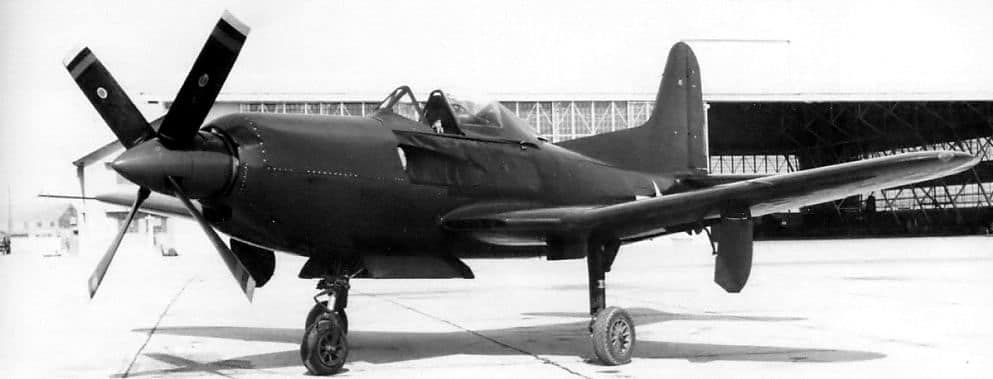
In 1946, the U.S. Navy flew a fighter that couldn't decide whether it belonged to the propeller age or the jet age — so it used both at once.
The Ryan XF2R Dark Shark had a turboprop in the nose spinning a four-bladed propeller, and a turbojet buried in the tail for an extra kick of thrust. It flew well. The Navy cancelled it anyway, because by the time it took to the air, the future had already chosen pure jets.
Quick Facts
- Aircraft: Ryan XF2R-1 Dark Shark
- Configuration: turboprop (nose) + turbojet (tail) — mixed power
- Based on: the earlier Ryan FR Fireball
- First flight: 1946
- Built: a single prototype
- Fate: cancelled as the Navy committed to all-jet fighters
The Logic of Two Engines in One Aircraft
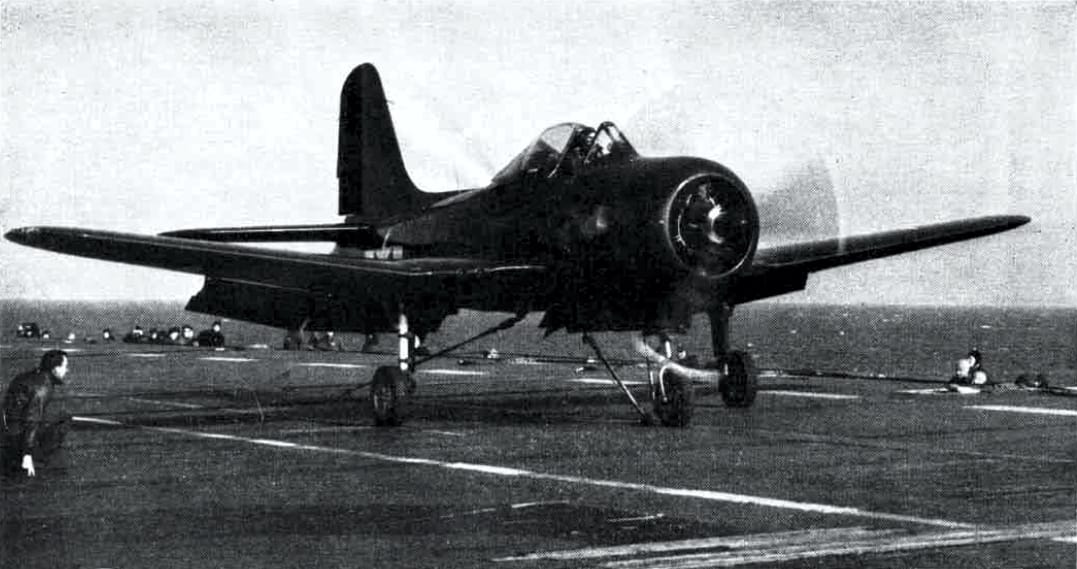
Early jet engines were thirsty and slow to respond, a dangerous combination around an aircraft carrier where a botched throttle call could mean a crash. Mixed-power designs like the Dark Shark hedged the bet: a fuel-efficient turboprop for cruising and carrier approaches, plus a turbojet for dash speed and combat. The Ryan FR Fireball had pioneered the idea with a piston engine; the Dark Shark upgraded the front to a General Electric turboprop, sharply improving performance.
Overtaken by Its Own Era
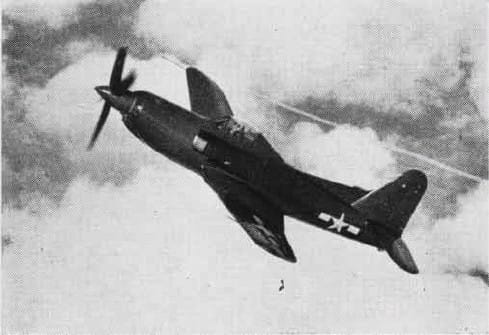
The Dark Shark's problem wasn't that it flew badly — it flew rather well. The problem was timing. Jet engines were improving so fast that the compromise of a mixed-power fighter no longer made sense; a pure jet would soon do everything better. The Navy abandoned the combination-fighter concept, and the XF2R became a one-off curiosity — a glimpse of a path aviation briefly considered and then left behind.
Sources: National Naval Aviation Museum; Ryan Aeronautical historical records.
Related Questions
Was there ever a fighter with both a propeller and a jet?
Yes. The Ryan XF2R-1 Dark Shark, flown in 1946, combined a turboprop in the nose with a turbojet in the tail. This mixed-power layout aimed to blend the fuel efficiency of a propeller with the speed of a jet in one carrier fighter.
What was the Ryan XF2R Dark Shark?
The Dark Shark was an experimental U.S. Navy fighter prototype of 1946 with mixed propulsion — a nose-mounted turboprop plus a tail turbojet. Based on the earlier Ryan FR Fireball, only a single prototype was built before the design was cancelled.
Why combine a propeller and a jet in one aircraft?
Early jet engines were thirsty and slow to respond — dangerous around a carrier, where a mistimed throttle could cause a crash. A turboprop gave responsive, economical power for takeoff and cruise while the jet added speed, so mixed-power fighters like the Dark Shark tried to get the best of both.
Why was the Dark Shark never produced?
It was cancelled as the U.S. Navy committed to pure-jet fighters. As jet engines rapidly improved in fuel economy and throttle response, the complexity of carrying two different engine types no longer made sense, and only one Dark Shark prototype was built.

0 Comments