
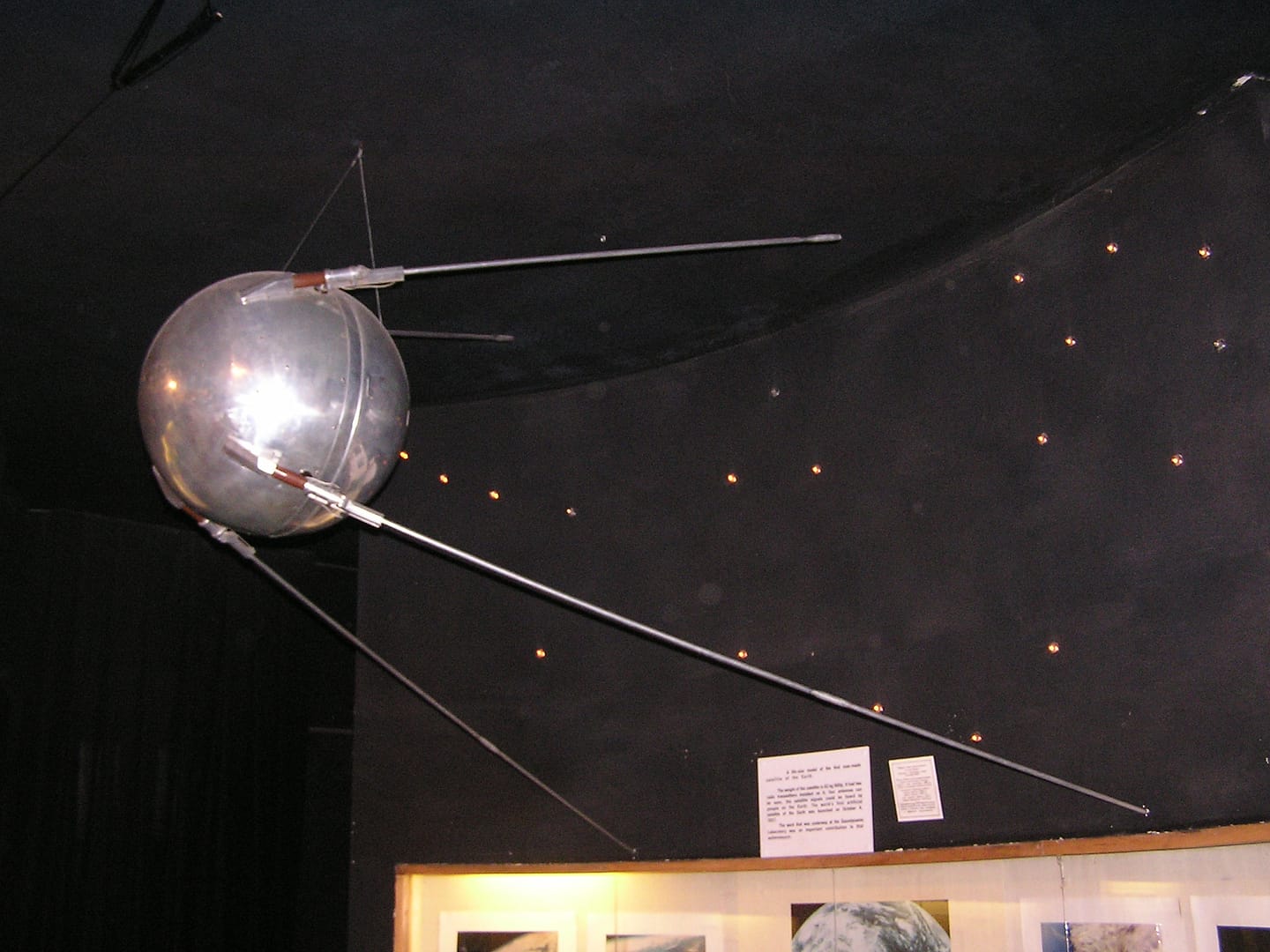
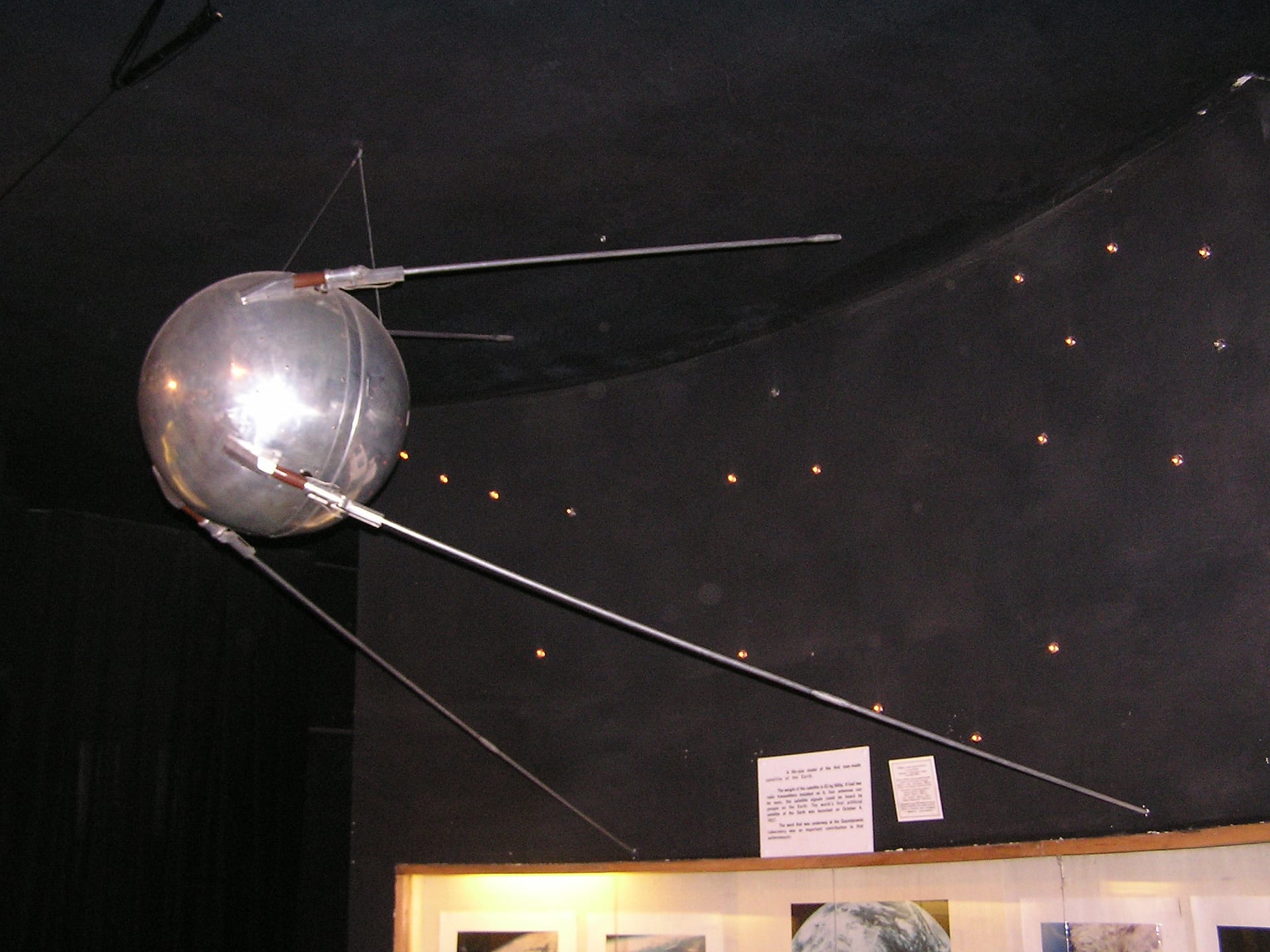
On 4 October 1957, at 22:28 Moscow time, the R-7 rocket on Pad 1 at Tyuratam — the Kazakh launch facility the world would later know as Baikonur — lifted off carrying a 58.4 cm aluminium sphere with four trailing radio antennas and a 1 watt transmitter inside. The first artificial satellite of Earth. The satellite was named Sputnik — Спутник, “fellow traveller.” Its single technical job was to circle the planet, beeping at 20 and 40 MHz, for as long as its silver-zinc batteries held out.
It held out for 22 days. In that time, the Soviet propaganda apparatus produced the single most successful piece of communist publicity material since the storming of the Winter Palace. Every Western government, every Western newsroom, every Western schoolchild now had to acknowledge a fact no amount of denial could dismiss: the Soviet Union had got to space first. The 1950s were the decade Soviet aviation propaganda graduated, organically, into Soviet space propaganda.
Quick Facts
MiG-15 Korean War debut: 1 November 1950
Tu-104 first jet airliner service: 15 September 1956, Moscow–Irkutsk
Sputnik 1 launch: 4 October 1957, 22:28 Moscow time, Tyuratam (Baikonur), Kazakh SSR
Sputnik 1 transmission: 20.005 MHz and 40.002 MHz, 1 watt each
Sputnik 2: 3 November 1957 — carried Laika the dog into orbit
Khrushchev quote: “We will bury you” (Moscow, 18 November 1956)
Korea, the MiG-15 and the propaganda shift
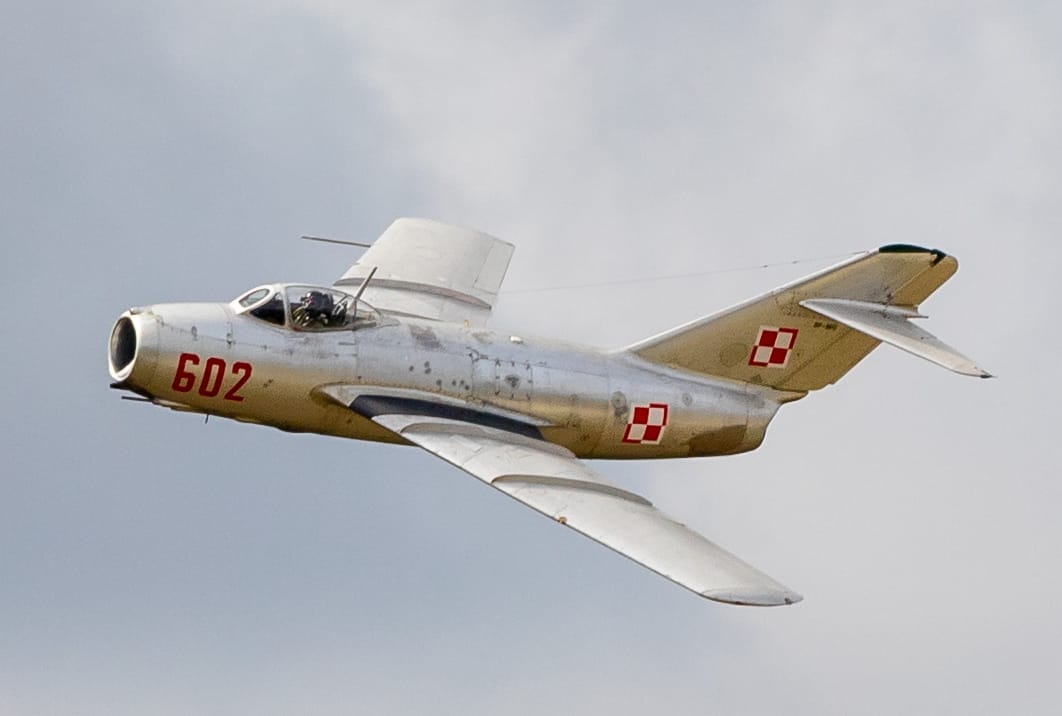
The decade did not start in space. It started over the Yalu River. On 1 November 1950, eight Soviet-built MiG-15 jet fighters of the 64th Independent Fighter Aviation Corps — flown by Soviet Air Force pilots in Chinese markings, a secret the Soviet Union officially denied for forty years — engaged American F-80 Shooting Stars over North Korea. Russian histories credit Lieutenant Semyon Khominich with shooting one down — history’s first jet-versus-jet kill, if true. American records attribute that F-80’s loss to ground fire, and credit F-80 pilot Russell Brown with the first jet-on-jet victory on 8 November.
The Soviet propaganda apparatus could not, for political reasons, say openly that Soviet pilots had won the air war over MiG Alley. To admit it would have been to admit direct Soviet combat involvement in Korea, which Stalin was determined to deny. So the propaganda apparatus said almost nothing about MiG Alley at all. The MiG-15 was instead celebrated as a Soviet engineering achievement — fastest single-engine fighter in the world in 1950, swept-wing, transonic, designed by Artem Mikoyan, the brother of a Politburo member.
By 1953 the MiG-15 was visible at every Soviet air parade. By the mid-1950s it was in service with air forces across the Warsaw Pact and the non-aligned world. It became the most-produced jet fighter in history, with some 18,000 built across all variants. The propaganda dropped its silence about Korea once the war ended and started celebrating the type as the equal of the American F-86 Sabre — which, in straight aerodynamic terms, it was.
Civil aviation: the Tu-104
The second decade-defining Soviet aviation propaganda moment was civilian. On 15 September 1956 — two years before the British Comet 4 and the Boeing 707 entered service — an Aeroflot Tu-104 took off from Moscow Vnukovo on the world’s second sustained commercial jet airliner service. (The first, the de Havilland Comet 1, had begun in 1952 but was withdrawn after its fatigue-failure accidents in 1954.)
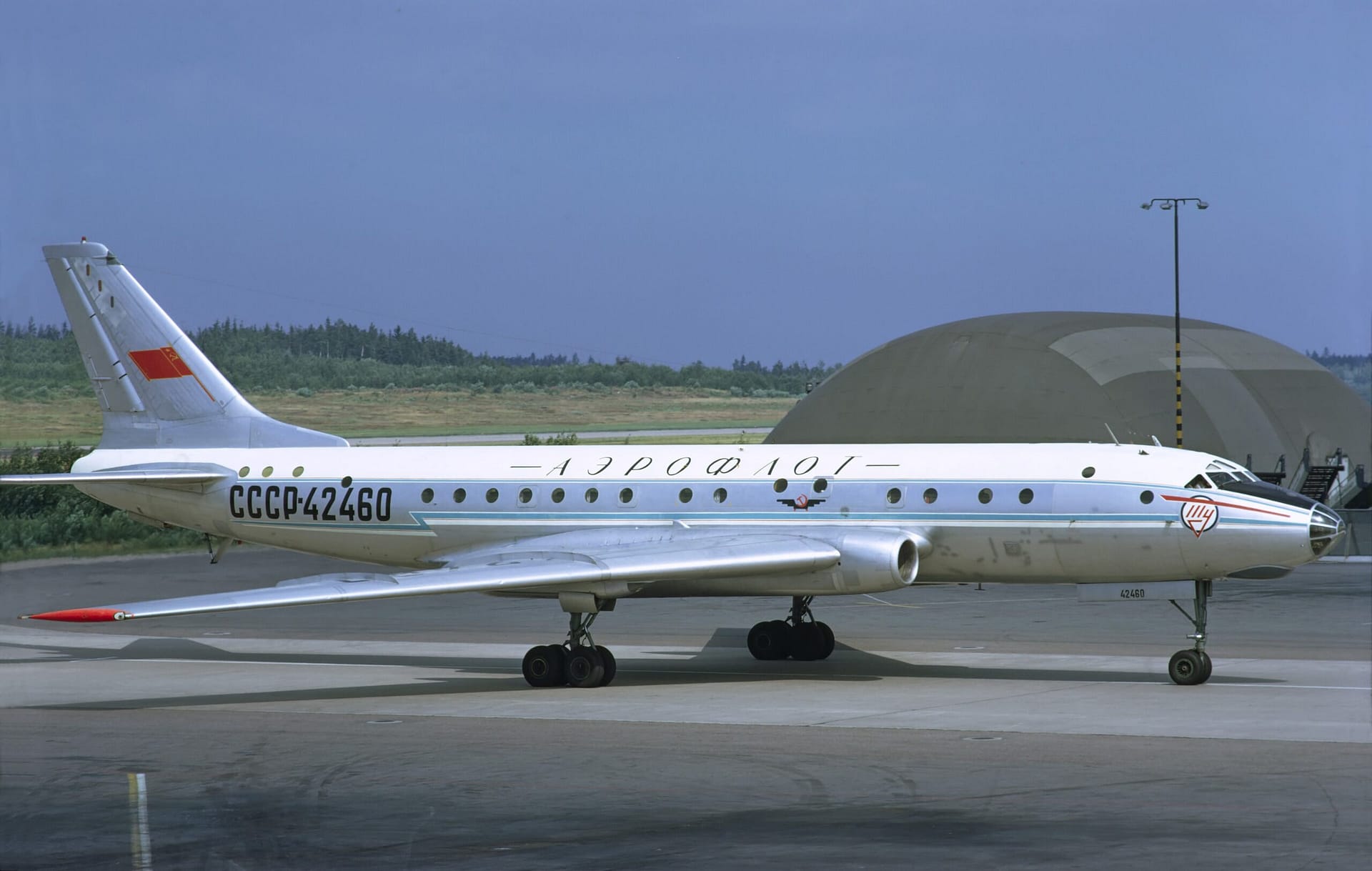
The propaganda use of the Tu-104 was extensive. When the prototype had flown Soviet officials into London that spring, the sight of a Soviet jet airliner on a Western tarmac caused a sensation in the British press — exactly the effect Moscow wanted.
By the time the Tu-104 ended Aeroflot service in 1979 it had carried roughly 100 million passengers — and accumulated a poor safety record (37 hull losses out of 201 built) that the Soviet propaganda apparatus did not advertise. But that is not what the 1950s Tu-104 was for. It was for being a Soviet-built jet airliner, flying Soviet passengers between Soviet cities, photographed against the open Soviet sky as a symbol of what the country could now do.
October 4, 1957
And then, on a Friday evening at the end of September, the propaganda apparatus got the gift of the century.
Sputnik 1 had been hastily assembled, by Sergei Korolev’s design bureau OKB-1, as a backup payload in case the more sophisticated “Object D” — the planned 1.4-tonne scientific satellite — was not ready in time for the International Geophysical Year. Korolev’s bureau had built the simple 83.6 kg aluminium sphere in roughly six months. When the R-7 launcher was ready to fly on 4 October, Korolev’s team rolled it out.
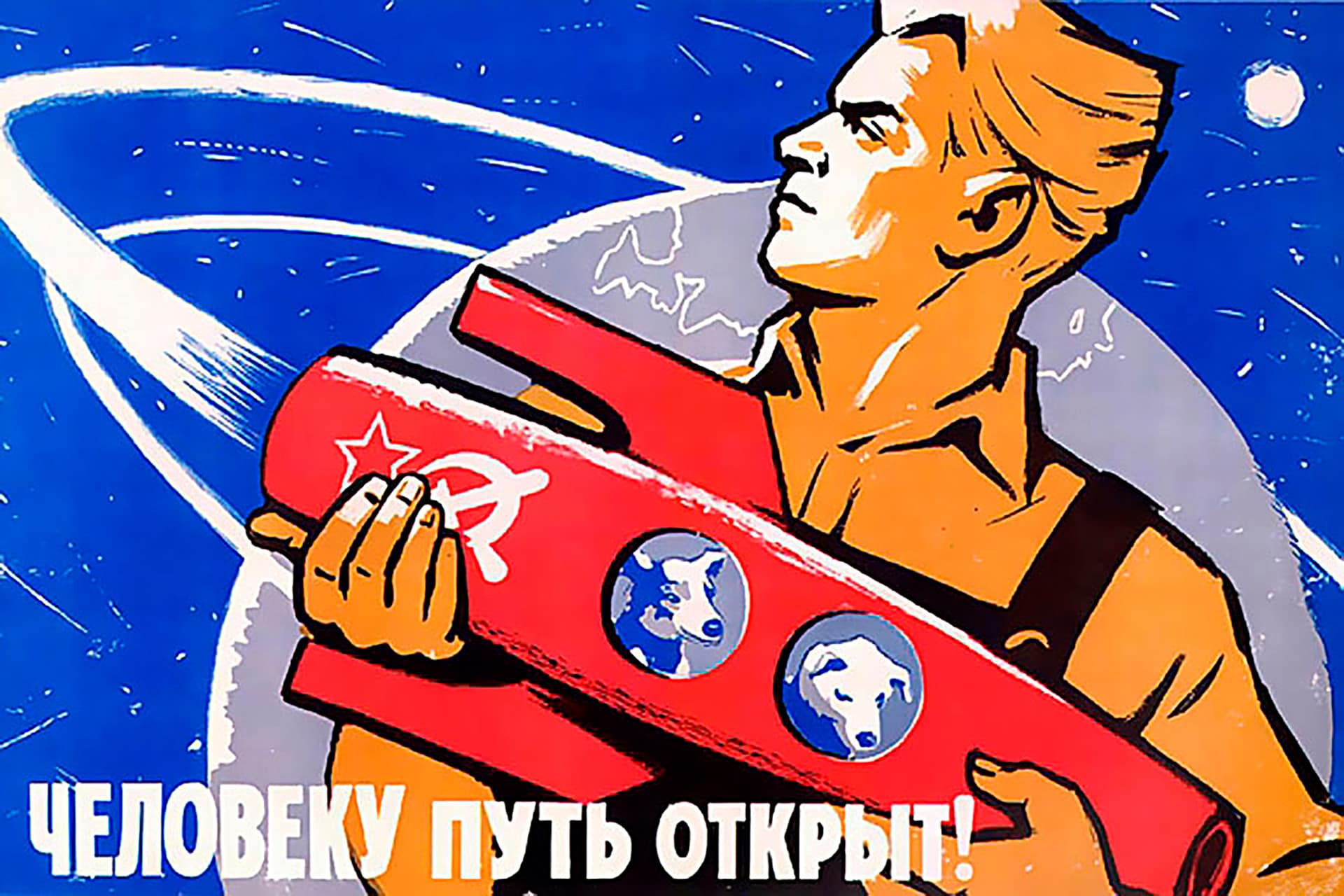
Korolev is said to have told his exhausted launch team that night that the road to the stars now stood open.
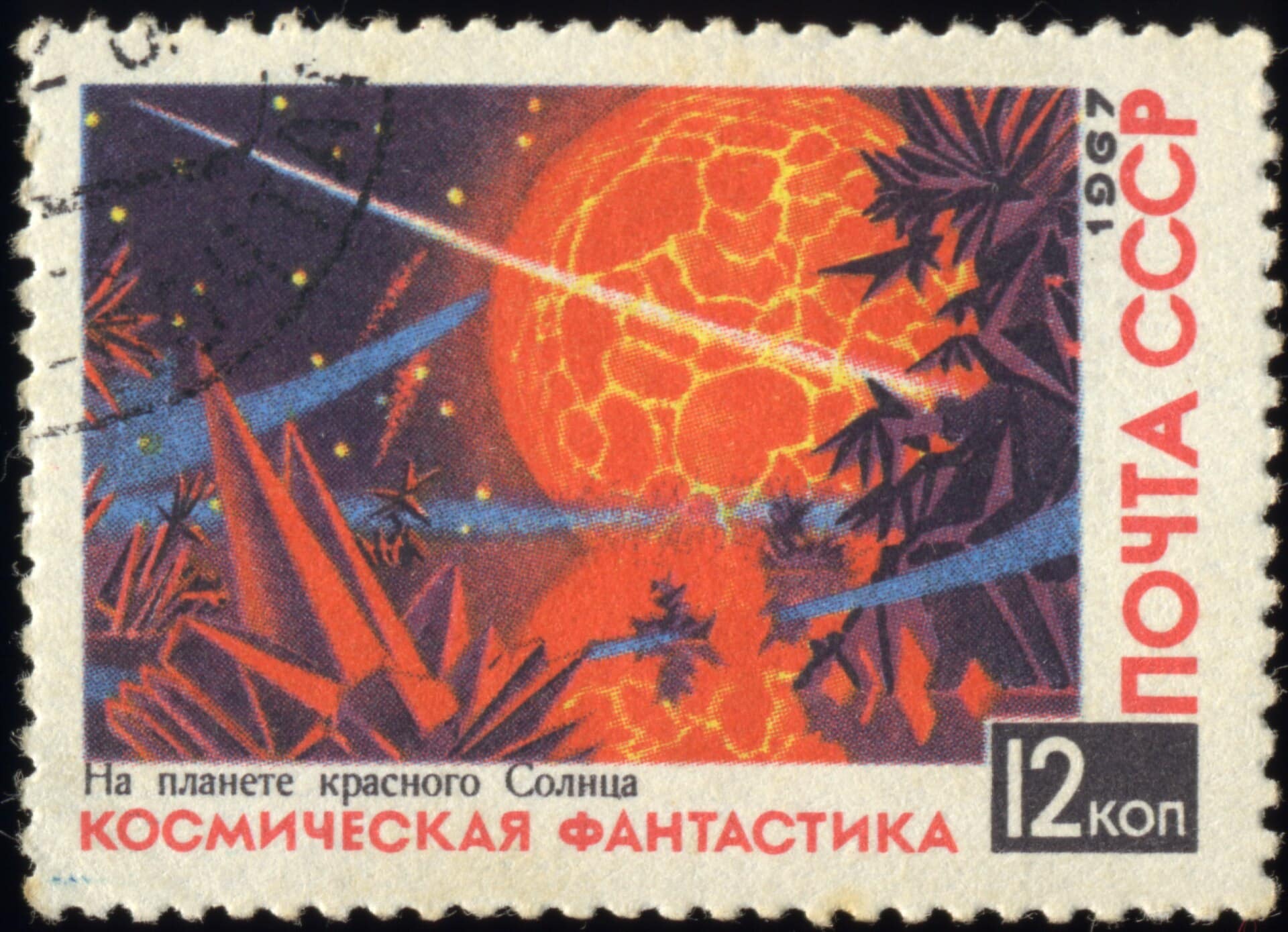
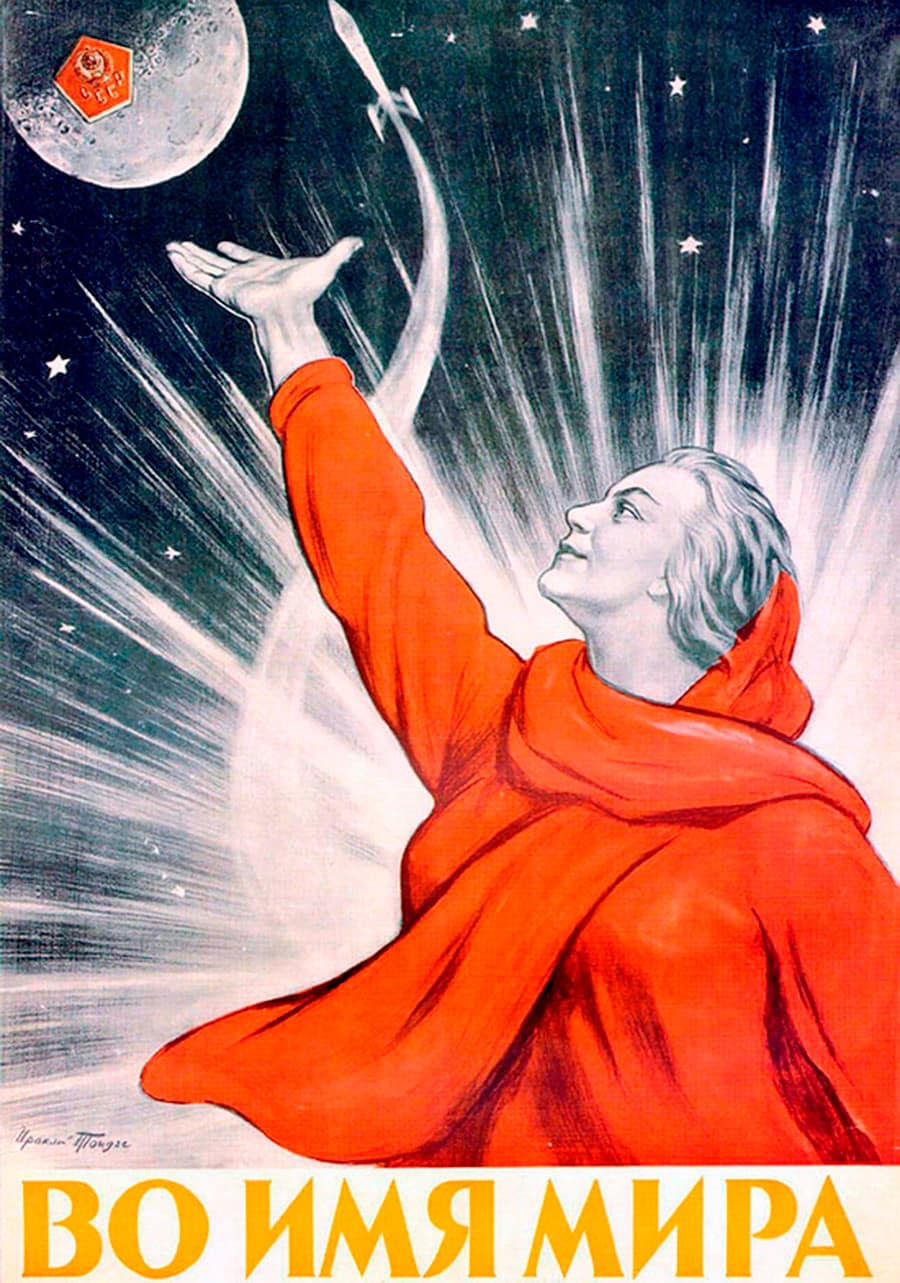
The propaganda response famously took a beat to get started. Pravda’s first report, on 5 October 1957, was a sober TASS communiqué placed modestly on the front page; only when the scale of the world’s reaction became clear did the paper clear its entire front page for the satellite. (Korolev himself remained an official state secret until his death in 1966.) The Soviet pavilion at the Brussels World’s Fair in 1958 displayed a full-size Sputnik 1 model.
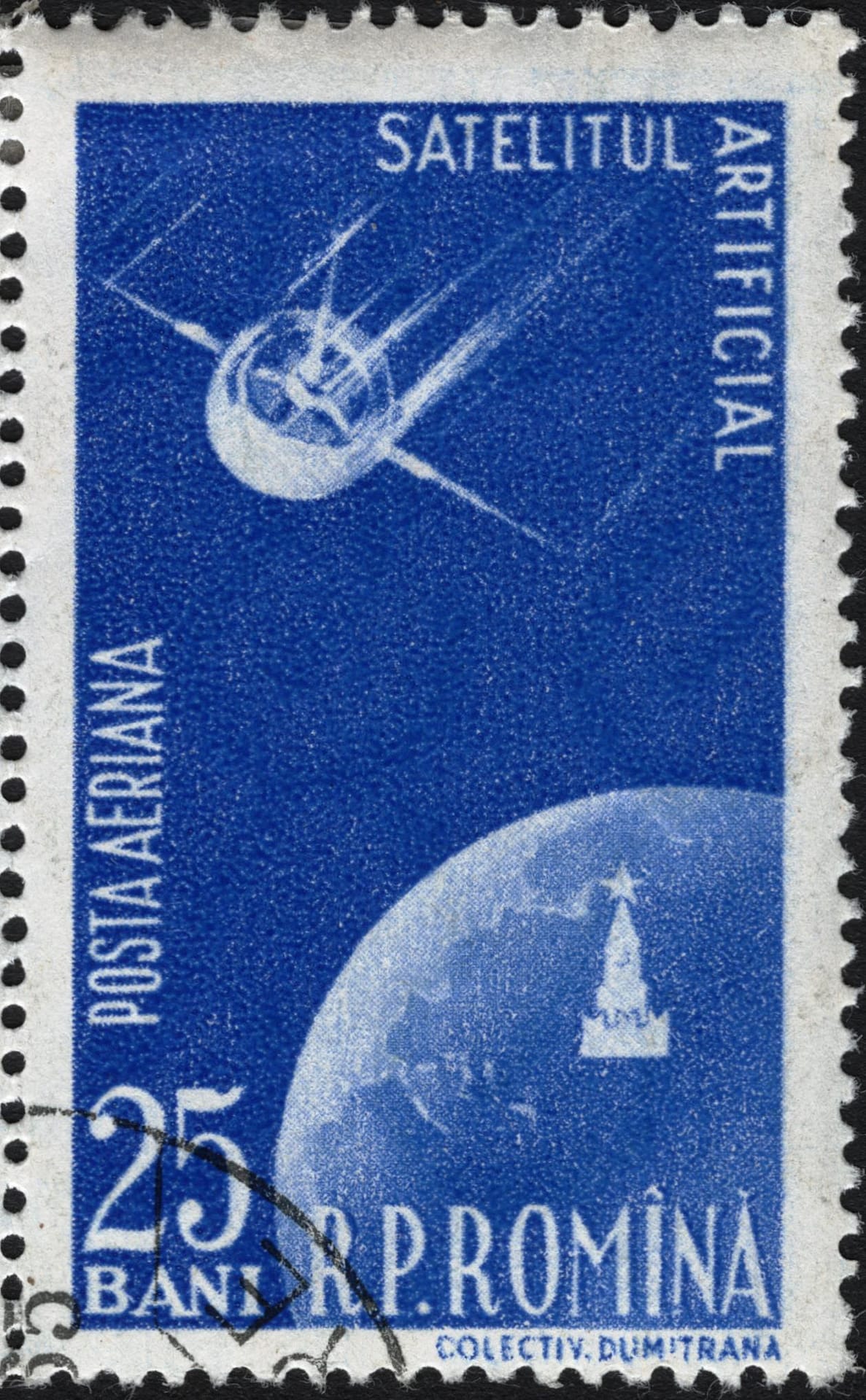
The propaganda achievement was, by every measurable metric, total. Time magazine made Khrushchev Man of the Year for 1957 on the strength of Sputnik alone. The United States panicked into NASA and the National Defense Education Act. Eisenhower’s approval rating slid sharply over the months that followed. Every American newspaper carried the satellite’s orbital schedule so suburban families could watch the Soviet sphere pass overhead at dusk. The Soviet propaganda apparatus had, in twenty-two days of beeping batteries, accomplished what twenty years of aviation propaganda before it had been trying to do.

Laika and what came next
Sputnik 2 launched 3 November 1957, exactly one month after Sputnik 1, carrying a Moscow stray dog named Laika who became the first living creature in orbit. Laika died of overheating within five hours of launch — a fact the Soviet propaganda apparatus did not publicly confirm for forty-five years. The propaganda framing was instead: Soviet science had proven a living creature could survive launch. The next step was a human cosmonaut.
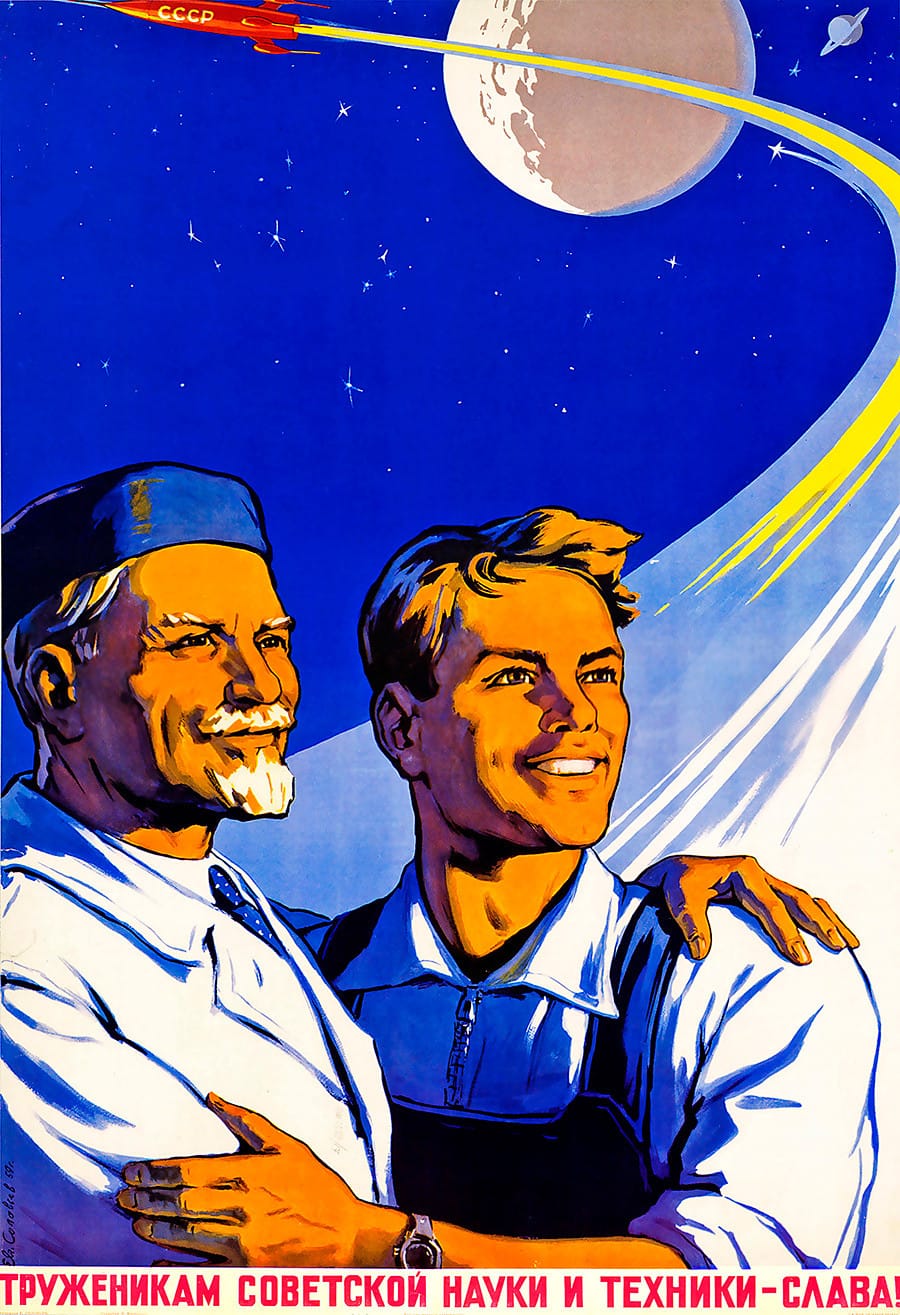
The 1950s ended with the apparatus that built the 1930s pilot cult and the 1940s ace cult sharpening every tool it had ever owned for a new task: turning the first human into space into a Soviet citizen. Korolev’s bureau was already designing the Vostok capsule. Yuri Gagarin had, by March 1960, been selected as one of the original twenty cosmonaut candidates. The propaganda machine was ready.
The next decade — the 1960s — was the decade Soviet aviation propaganda peaked. The 1950s had got it into space. The 1960s would put a human there, and the propaganda image of that human’s smiling face — on every Soviet wall, in every Soviet schoolbook, on every Soviet stamp — would become the single most reproduced visual artefact in the country’s history.
Sources: Asif Siddiqi, “Challenge to Apollo: The Soviet Union and the Space Race, 1945–1974” (NASA SP-2000-4408); Scott W. Palmer, “Dictatorship of the Air”; Walter A. McDougall, “The Heavens and the Earth: A Political History of the Space Age” (Basic Books, 1985); Wikipedia entries on the MiG-15, Tu-104 and Sputnik 1.
Aviation in Soviet Propaganda — Series Index
→ The 1940s: The Great Patriotic War
→ The 1950s: Jets and Sputnik (you are here)
→ The 1960s: The Cult of the Cosmonaut

 English
0 Comments