
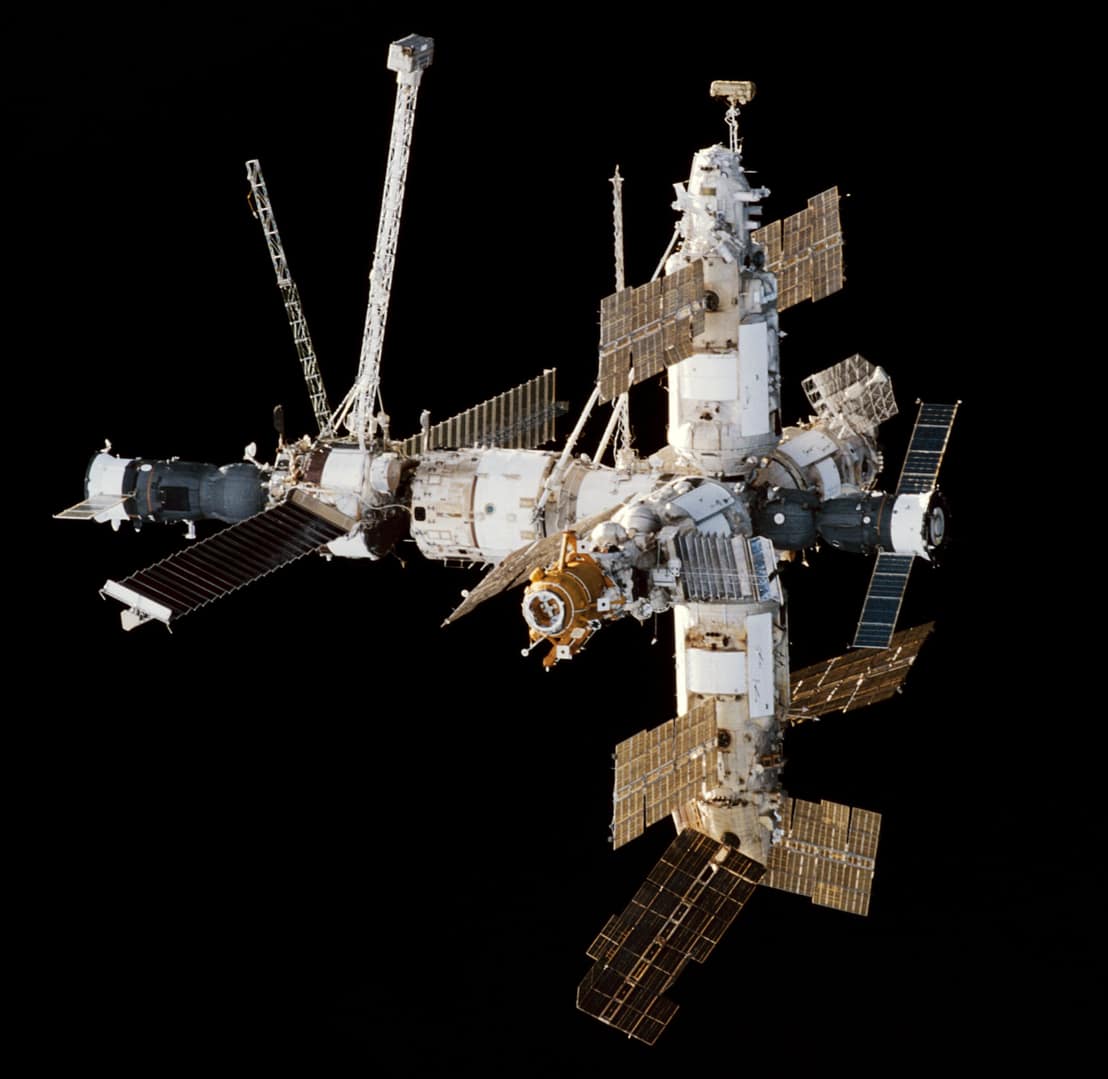
On 18 May 1991 a Soyuz TM-12 capsule lifted off from Baikonur carrying flight engineer Sergei Krikalev to Mir for a six-month mission. He was 32. He was a Soviet citizen.
When Krikalev returned to Earth on 25 March 1992 — more than ten months after launch, twice his original mission duration, with 311 days in orbit and 5,000 Earth orbits behind him — the country he had left did not exist. The Soviet Union had dissolved while he was in space. The Soyuz capsule that brought him down landed in a now-independent Republic of Kazakhstan. Krikalev’s passport, the propaganda apparatus that had launched him, and the flag he had carried into orbit had all become artefacts of a historical state.
The 1990s were the decade Soviet aviation propaganda became Soviet aviation nostalgia. The apparatus did not so much shut down as get inherited by a state that had different priorities.
Quick Facts
Soviet Union dissolution: 26 December 1991
Krikalev mission: 18 May 1991 – 25 March 1992 (311 days)
First Shuttle–Mir docking: 29 June 1995, STS-71 Atlantis
Mir total occupancy: 15 years; 104 crew from 12 countries
Mir deorbit: 23 March 2001, South Pacific reentry
Aviamarsh status today: Ceremonial anthem of the Russian Aerospace Forces (adopted by the Soviet Air Force in 1933)

“The Last Soviet Citizen”
Krikalev’s mission was meant to last six months. It lasted more than ten because the country that was supposed to bring him home stopped existing in the middle of his mission. The Soviet rouble collapsed. The Baikonur Cosmodrome, on which his return depended, was now in a foreign country. The cosmonaut training centre at Star City was nearly bankrupt. The crews that were supposed to relieve him on Mir were delayed because the next Soyuz launch had been postponed for budget reasons.
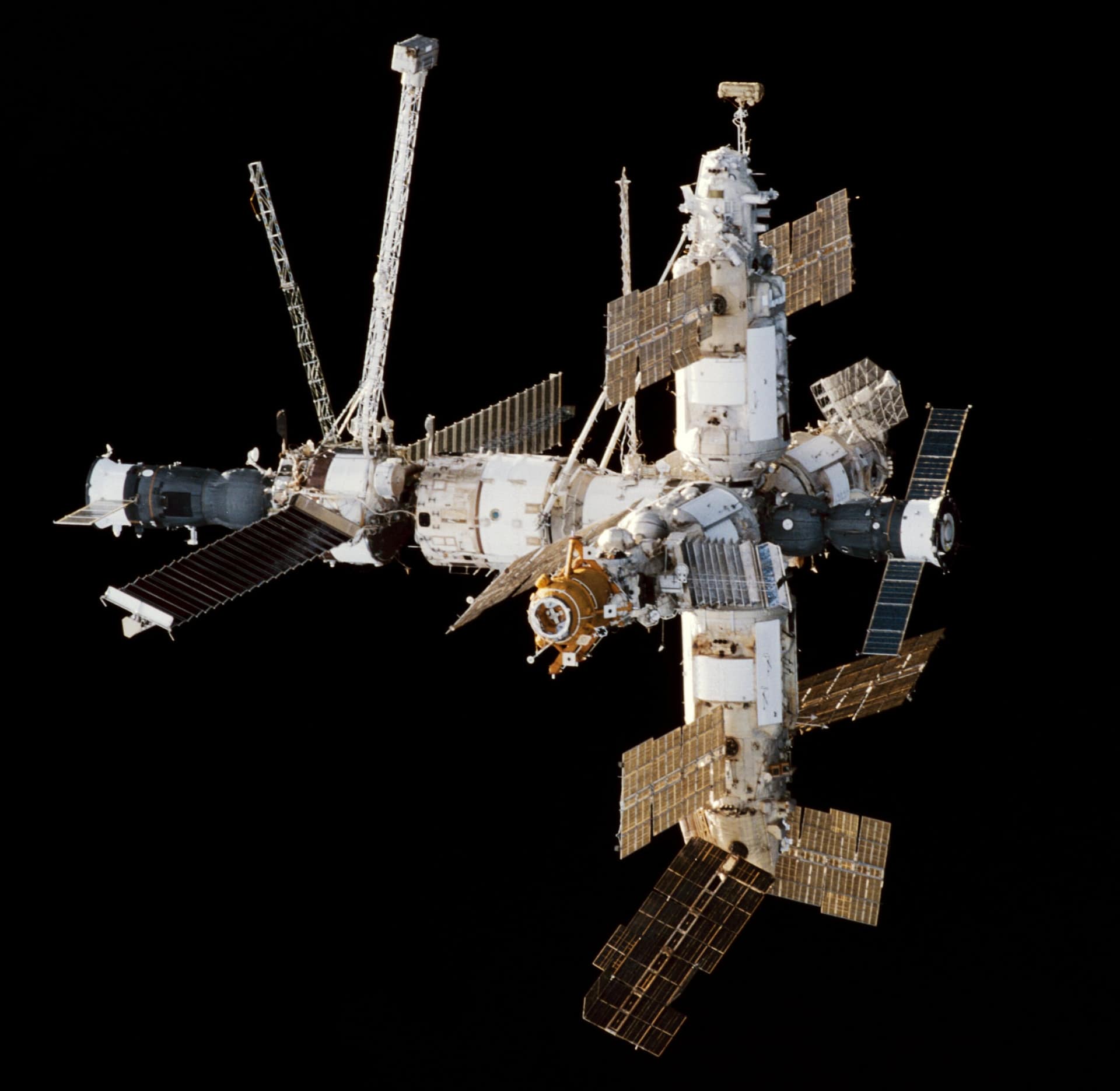
Krikalev kept working. He performed seven spacewalks, conducted dozens of experiments, replaced solar arrays, repaired equipment. He stayed in orbit while the propaganda apparatus that had launched him was being dismantled below him. When he finally landed in March 1992 the new Russian Federation — Boris Yeltsin’s government, three months old — gave him the title “Hero of the Russian Federation,” the first person ever to receive it. Krikalev was both a Hero of the Soviet Union — awarded for his first flight in 1989 — and the first Hero of the Russian Federation. The propaganda apparatus had handed him from one state to the next without skipping a beat.
Pravda kept running aviation features through 1992 and into 1993, on a steeply declining circulation. By 1994 the newspaper was essentially gone. The Aviamarsh kept being played, but on military parades that no longer had the Soviet Union to celebrate. The cosmonaut posters stayed on Soviet primary-school walls because nobody had the budget to print replacement classroom decorations. Some are still there in 2026, faded but recognisable.
Mir, sold
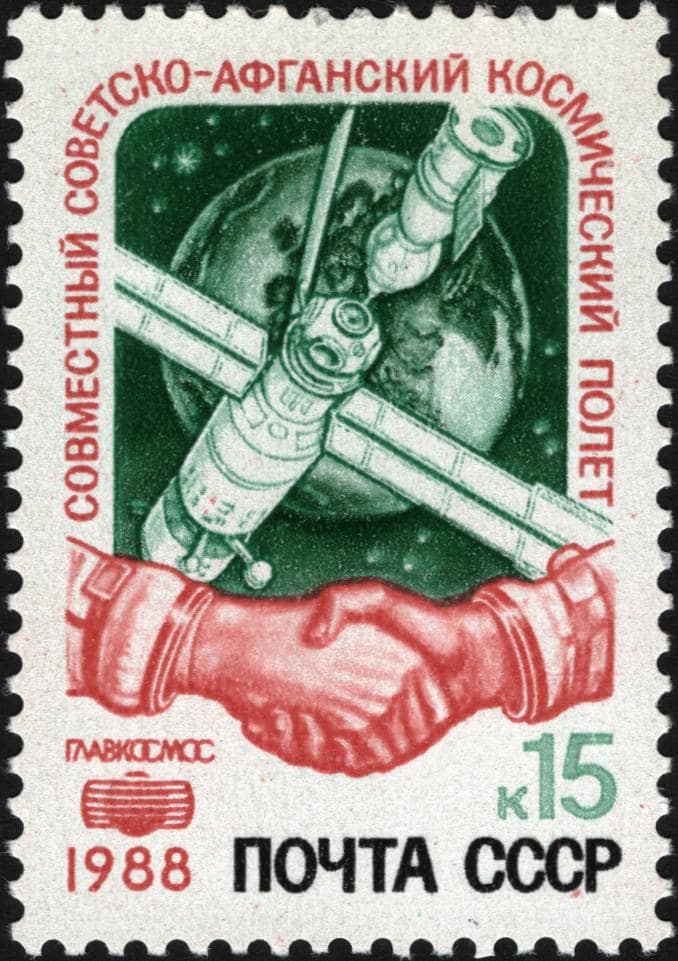
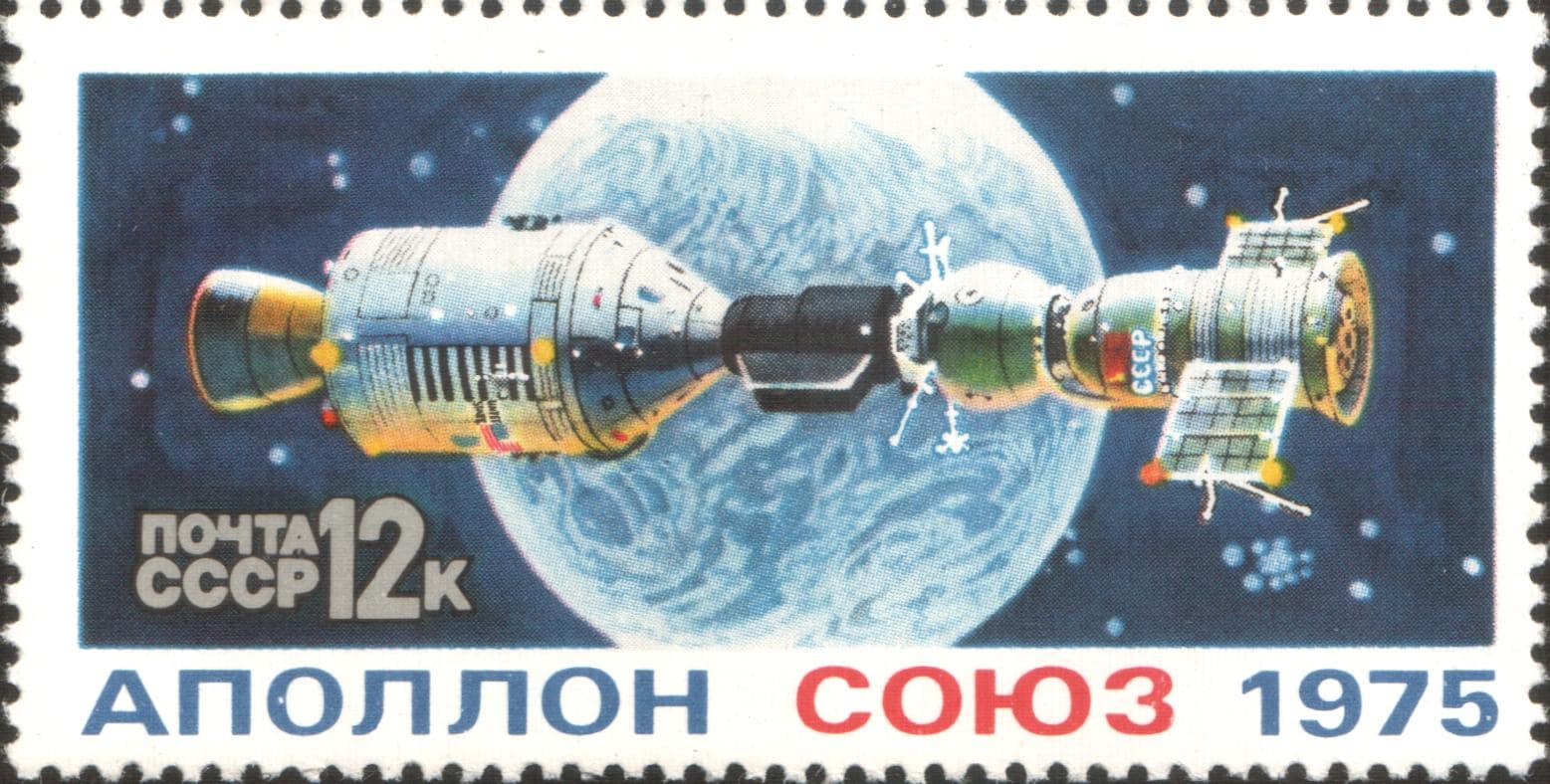
The biggest single fact of 1990s Soviet aviation propaganda is that the propaganda apparatus did not so much disappear as get sold to the West. Mir, the post-Soviet jewel, became — between 1995 and 1998 — the platform for a US-paid Shuttle–Mir programme that put seven American astronauts on the Russian station for long-duration stays. NASA paid the Russian space agency roughly $400 million for the visits. The propaganda use of Mir flipped, almost overnight, from celebrating Soviet space superiority to celebrating Russian–American cooperation.
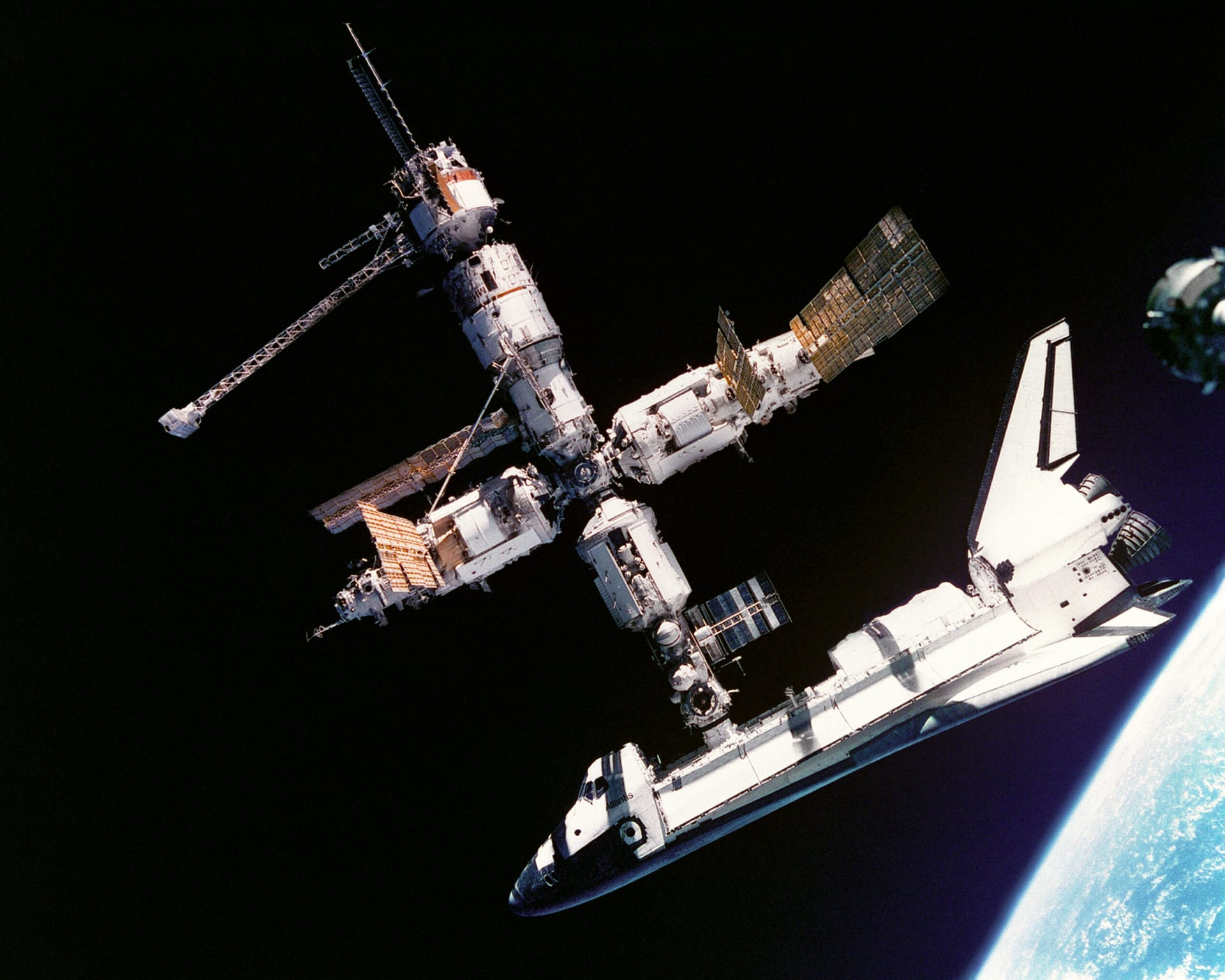
The propaganda machinery, which had spent seventy years framing the United States as the rival, had to relearn how to frame it as the customer. Russian state television and the few surviving propaganda publications did the work. The Aviamarsh kept playing during Shuttle–Mir docking broadcasts. The cosmonaut cult continued, with the names just slightly altered — Volkov, Polyakov, Avdeyev, Krikalev again — but the propaganda subtext had changed completely.
The end of Mir, the start of the ISS
By the late 1990s the post-Soviet propaganda apparatus had also pivoted to the new International Space Station. The first ISS module — Zarya — was a Russian-built Functional Cargo Block launched on a Russian Proton rocket on 20 November 1998. The second module — Zvezda, the Russian Service Module — launched on 12 July 2000. The Aviamarsh was played during both launches. The Russian state-television commentary used the same vocabulary the Soviet propaganda apparatus had used for Salyut 6 in 1977: “scientific progress,” “international brotherhood,” “the road to the stars.”
Krikalev landed exhausted after more than ten months in orbit, returning to a country with a new name, a new flag, and a new government — his home city of Leningrad had become Saint Petersburg while he was away. The state that launched him was gone; the family he came home to was still there.
Mir itself was deorbited on 23 March 2001. The station — by then 15 years old, leaking coolant, struggling on a reduced budget — was sent into a controlled re-entry over the South Pacific. Fragments fell into the ocean east of Fiji. Russian state television covered the deorbit with the same gravitas the Soviet propaganda apparatus had once used for the funerals of Soyuz 11 and Yuri Gagarin. Some commentators played the Aviamarsh under the broadcast. Most did not.

What remained
Three things from the Soviet aviation propaganda apparatus outlived the state that built them.
The first is the Aviamarsh itself. Yuli Khayt’s 1923 march tune, with Pavel Herman’s “higher, higher and higher” lyrics, was declared the official march of the Soviet Air Force in 1933 and remains the ceremonial anthem of Russia’s Aerospace Forces today. It is still heard at Russian military aviation parades in 2026. Its lyrics — written for a Soviet state that no longer exists — are still printed on official ceremony programmes.
The second is the cosmonaut iconography. Yuri Gagarin’s face is still printed on Russian schoolbook covers. His statue in Moscow’s Gagarin Square — a 40-metre titanium figure on a fluted pedestal, raised in 1980 — is still maintained. April 12 is still Cosmonautics Day in Russia, an officially recognised state holiday.
The third is Krikalev’s career. After his 1991–92 mission Krikalev flew four more spaceflights, including the first Space Shuttle mission to carry a Russian cosmonaut (STS-60, 1994) and ISS Expedition 11 as commander (2005). At his retirement in 2009 he held the world record for most cumulative time in space — 803 days — and was the director of the Yuri Gagarin Cosmonaut Training Centre. The propaganda figurehead of the dissolved state had become the institutional leader of its successor.
The Aviamarsh at the end
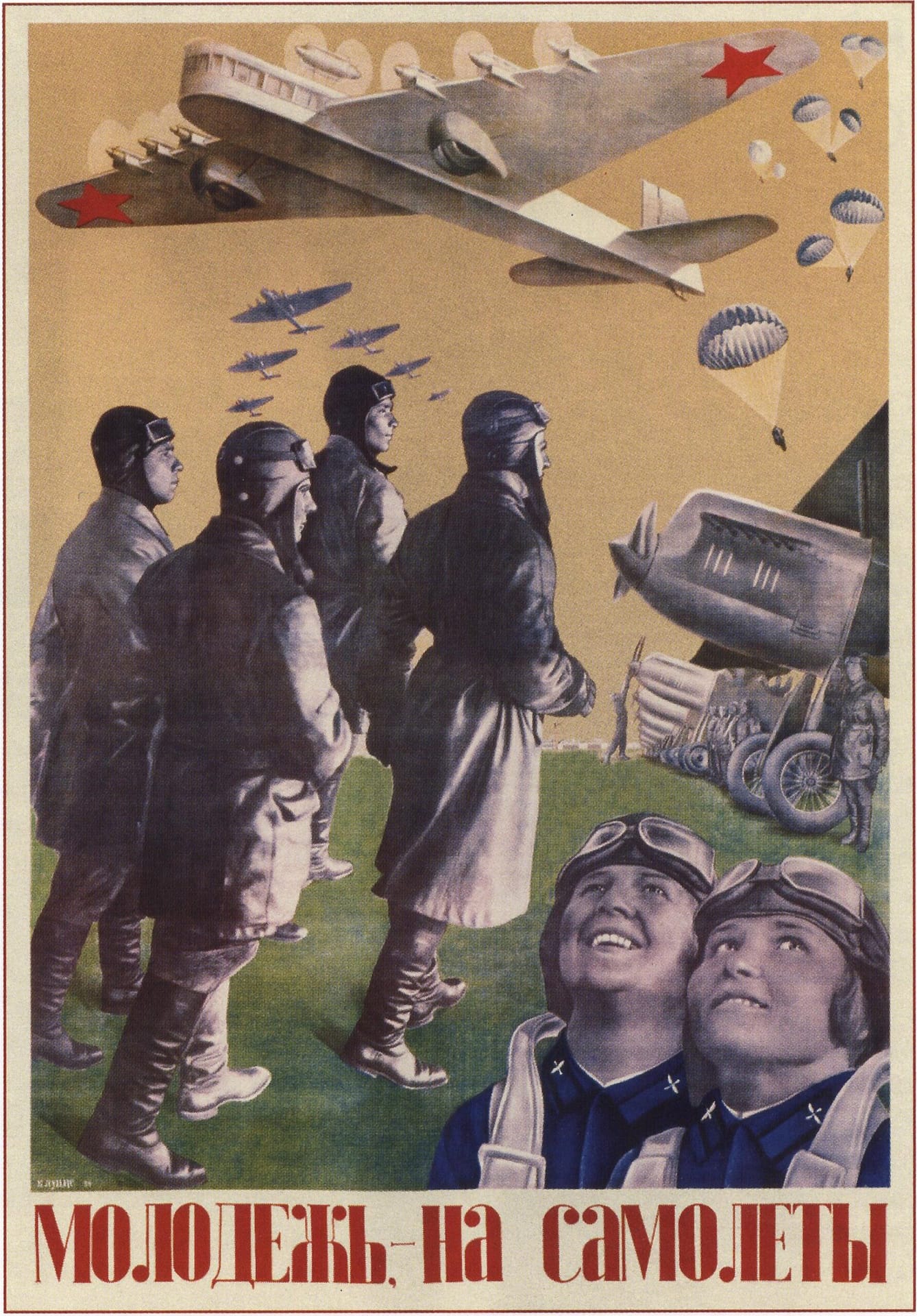
The story of Soviet aviation propaganda begins and ends with the same song. Yuli Khayt’s 1923 tune, with its three-chord rising bridge and its single-line chorus “higher, and higher, and higher,” outlived everyone who had used it. Stalin’s funeral played it. Gagarin’s parade played it. Krikalev’s homecoming played it. The Buran landing in 1988 was scored to it. The deorbit of Mir in 2001 was — depending on the broadcaster — scored to it again.
The country the song was written for no longer exists. The aviation industry it celebrated no longer exists in the same form. The propaganda apparatus that built and maintained the cult of the pilot, the cult of the cosmonaut, the cult of the flying truck, the cult of the supersonic airliner, the cult of the auto-landing space shuttle — that apparatus is now historical. What remains is the airframes preserved in museums, the cosmonaut portraits on classroom walls, the Aviamarsh on official parade-ground loudspeakers, and a substantial body of state-sponsored visual culture that art historians are still cataloguing in 2026.
It is not nothing. It is, in fact, the largest body of single-themed state propaganda produced by any government in any era of human history. Aviation gave the Soviet Union the visual language it needed to sell itself to itself. The Soviet Union returned the favour by producing seventy years of the most ambitious, sustained, and visually disciplined aviation propaganda anyone has ever made.
The Aviamarsh is, in 2026, a piece of recorded music. The state it accompanied is, in 2026, a piece of history. The aircraft are still flying. Several of them are still flying with paint schemes that the Soviet propaganda apparatus designed. The chorus is still vyshe, i vyshe, i vyshe. Higher, and higher, and higher.
Sources: Asif Siddiqi, “The Soviet Space Race with Apollo”; David Hoffman, “The Dead Hand”; Andrew Jenks, “The Cosmonaut Who Couldn’t Stop Smiling”; Sergei Krikalev oral-history interview, NASA Johnson Space Center (2004).
Aviation in Soviet Propaganda — Series Index
→ The 1940s: The Great Patriotic War
→ The 1960s: The Cult of the Cosmonaut
→ The 1970s: The Routine Cosmonaut
→ The 1990s: The Last Soviet Cosmonaut (you are here)

 English
0 Comments