

Dewoitine D.520
France’s best fighter of 1940 — fast, agile and cannon-armed. It arrived too late and in too few numbers to save the country, yet its pilots proved it could stand toe-to-toe with the Messerschmitt Bf 109.
Key facts
Dewoitine D.520: the numbers at a glance
The story
The Dewoitine D.520: the fighter that was good enough — and late enough to prove it
By the spring of 1940 the French Armée de l’Air had a fighter that could genuinely trade blows with the Luftwaffe’s Bf 109. The problem was simple and unforgiving: there were almost none of them, and they had arrived almost too late to matter.
The Dewoitine D.520 grew out of the same hard lesson every air force learned in the mid-1930s — that the biplane era was over and that the future belonged to fast, all-metal, cannon-armed monoplanes. France’s front-line fighter in 1939, the Morane-Saulnier MS.406, was rugged and available in numbers but simply too slow and too lightly built to live with the latest German designs. Émile Dewoitine’s design bureau set out to fix that with a private venture: a compact, low-drag interceptor built around the excellent Hispano-Suiza 12Y engine and, crucially, around a cannon that fired through the propeller hub.
The result first flew on 2 October 1938. Early testing was troubled — the prototype was underpowered and its cooling was marginal — but as the engine matured and the airframe was refined, the D.520 turned into something special. It was roughly 100 km/h faster than the MS.406, it climbed and dived hard, and above all it was pleasant and honest to fly, forgiving enough that ordinary squadron pilots — not just test pilots — could fight in it effectively.
Here honesty matters more than legend. The D.520 was not a war-winner and it did not “nearly beat” the Luftwaffe. When the German offensive opened on 10 May 1940, only a single groupe de chasse, GC I/3, was fully equipped and operational. Production had barely begun to flow; hundreds of airframes existed on paper or in various states of completion, but only a trickle had reached front-line units. The Battle of France was decided by numbers, doctrine and the collapse of the ground campaign — not by the qualities of one late-arriving fighter.
What the D.520 did do was prove a point. In the six weeks of fighting its handful of squadrons claimed on the order of a hundred confirmed victories, including Bf 109s and Bf 110s, for a comparable number of their own aircraft lost. Those figures are wartime claims and should be read with the usual caution — air-combat claims across all air forces of the period were routinely optimistic — but the trend is clear enough: in the right hands the D.520 was competitive, and German pilots who met it took it seriously.
It is worth being concrete about what “competitive” meant in practice, because the word can flatter or damn depending on how it is used. The D.520 could not simply be bounced and shot down at will the way the older French and Belgian fighters often were; a German pilot who engaged one carelessly could find himself out-turned and facing an accurate cannon. Equally, the D.520 could not dictate the fight to a well-flown Bf 109E climbing and diving on its own terms. It sat, in other words, in the narrow band where the outcome genuinely depended on the pilots — and for a French fighter in 1940, arriving in that band at all was an achievement, even if the war around it left little room to enjoy it.
Then came the part of the story that is genuinely uncomfortable. After the June 1940 armistice, production of the D.520 did not stop — it continued under German oversight, and the type became the principal fighter of Vichy France. In that service it was turned, at times, against the Allies: over Syria in 1941 and over North Africa in 1942, French pilots in French fighters fought British and American aircraft. The same aeroplane was later flown by the Luftwaffe as a trainer, by Italy, and by Bulgaria against American bombers. It is a tangled, awkward legacy, and it is part of why the D.520 is remembered more as a “what if” than as a hero.
None of this was the aircraft’s doing, of course — machines have no politics — but it shapes how the D.520 is remembered, and it should. A responsible museum does not airbrush the awkward parts. The same fighter that briefly gave France a fighting chance in the air also became, through the accidents of defeat and occupation, a tool of Vichy and then of the Axis. Holding both truths together is the only honest way to tell its story, and it is the way we tell it here.
Strip away the might-have-beens and a fair verdict remains. The D.520 was the most capable fighter France fielded in 1940: quick, agile, well-armed and well-liked by its pilots. It supplemented and outclassed the MS.406 it was meant to replace, and it gave France’s fighter arm a machine that could, aircraft for aircraft, meet the Bf 109E on something close to even terms. It simply came too late, in numbers too small, to change history — a first-rate fighter handed a losing hand.
It is worth pausing on that phrase, because it is the whole argument in miniature. The D.520 was not undone by a design flaw, a fatal vice or a failure of courage. It was undone by the calendar and the production line. Had the same aircraft, in the same quality, existed in the numbers France reached only in 1941 and 1942 — by which point it was building D.520s for its conquerors — the air fighting of May 1940 would have looked very different, even if the campaign on the ground had still been lost. That is the peculiar melancholy of the type: everything about the machine was right except the two things a machine cannot control, which are how many of it exist and when.
For a museum, that makes the D.520 unusually instructive. It is easy to celebrate the war-winners — the Spitfire, the Mustang, the Bf 109 in its pomp. It is more useful, and more honest, to sit with an aircraft that did almost everything right and still could not alter the outcome, because it reveals how much of air power lives outside the cockpit: in factories, in timetables, in the slow business of turning a good drawing into a squadron ready to fight.
01The Dewoitine D.520’s origins: how France answered the Bf 109+
The D.520 was the end of a family line. Dewoitine’s earlier D.500 series of open-cockpit monoplane fighters had modernised French fighter thinking in the early 1930s, and the D.510 introduced the engine-mounted cannon that would define French fighter armament. But those aircraft were fixed-gear and already obsolescent when the Bf 109 and Hawker Hurricane appeared. The MS.406 that entered service in 1938 was a stopgap: France’s most numerous fighter in 1940, but with a top speed under 490 km/h it was outclassed.
Dewoitine’s team — by then absorbed into the nationalised SNCAM — pitched an all-new interceptor to a demanding 1936 requirement calling for 500 km/h. The first D.520 fell short and needed extensive rework: a bigger tail, a refined wing, better cooling and a more powerful engine. Only after those changes did the aircraft meet, then exceed, the specification, clearing the way for large production orders placed in 1938–39. The irony of the programme is that the redesign that made the D.520 good also delayed it — which is exactly why so few were ready when the storm broke.
02The Dewoitine D.520’s production catastrophe: why the factories couldn’t keep up+
Numbers tell the story better than adjectives. France ordered the D.520 in quantity — successive contracts eventually ran to well over a thousand aircraft — but ordering and delivering are very different things. The first production machine did not fly until late 1939, and through the winter of 1939–40 the trickle out of the factories was agonisingly slow: a handful a month, then a few dozen, against a Luftwaffe that already counted its Bf 109s in the thousands.
Several things conspired against the programme. The airframe’s redesign had eaten most of 1939. The Hispano-Suiza engine and its hub cannon were in demand for several aircraft at once. French aircraft production was fragmented across newly nationalised firms still learning to mass-produce. And crucially, even completed airframes needed acceptance flights, gun harmonisation and delivery to units that then had to convert their pilots — weeks of work for each aeroplane before it could fight.
The result was the cruel arithmetic of 1940: by the time Germany attacked, perhaps a few hundred D.520s had been built but only a single groupe was genuinely combat-ready, with others still converting on a mix of types. Production actually peaked after the armistice, under Vichy and German direction — which is the bitterest fact of all. France finally built the D.520 in numbers only once it had lost the war in which those numbers might have counted.
Design & engineering
How the Dewoitine D.520 was built to fight
A small, clean airframe wrapped around a proven engine and a hub-firing cannon — the D.520’s design choices were conservative, sensible and, for France in 1940, exactly right.
There was nothing revolutionary about the D.520, and that was its strength. Where some contemporaries chased novelty, Dewoitine’s team took proven ingredients — a mature engine, a well-understood cannon, orthodox stressed-metal construction — and integrated them cleanly into a small, low-drag airframe. The genius, such as it was, lay not in any single breakthrough but in balance: enough speed, enough agility, enough firepower and enough toughness, with no glaring weakness beyond the modest power of the engine. In a fighter meant to be built in quantity and flown by ordinary squadron pilots, that balance mattered far more than any clever gimmick.
The moteur-canon: a cannon through the hub
The D.520’s signature weapon was a single 20 mm Hispano-Suiza HS.404 cannon mounted between the engine cylinder banks and firing through the hollow propeller shaft. Firing along the aircraft’s centreline, above the propeller disc, meant no synchronisation losses and pinpoint aim — a heavy, accurate punch that most contemporaries lacked.
A clean airframe around the Hispano-Suiza 12Y
Power came from a liquid-cooled Hispano-Suiza 12Y V-12 of roughly 850–920 hp. It was not the most powerful engine of its generation, so Dewoitine’s team chased speed through low drag: a compact, well-faired fuselage, a thin wing and a tightly cowled radiator under the belly.
Agile, honest and pilot-friendly
Pilots consistently praised the D.520’s handling. It turned well, dived hard and warned the pilot before it stalled — forgiving qualities that let squadron pilots, not just aces, use it aggressively. That temperament, as much as its speed, is why it earned its reputation.
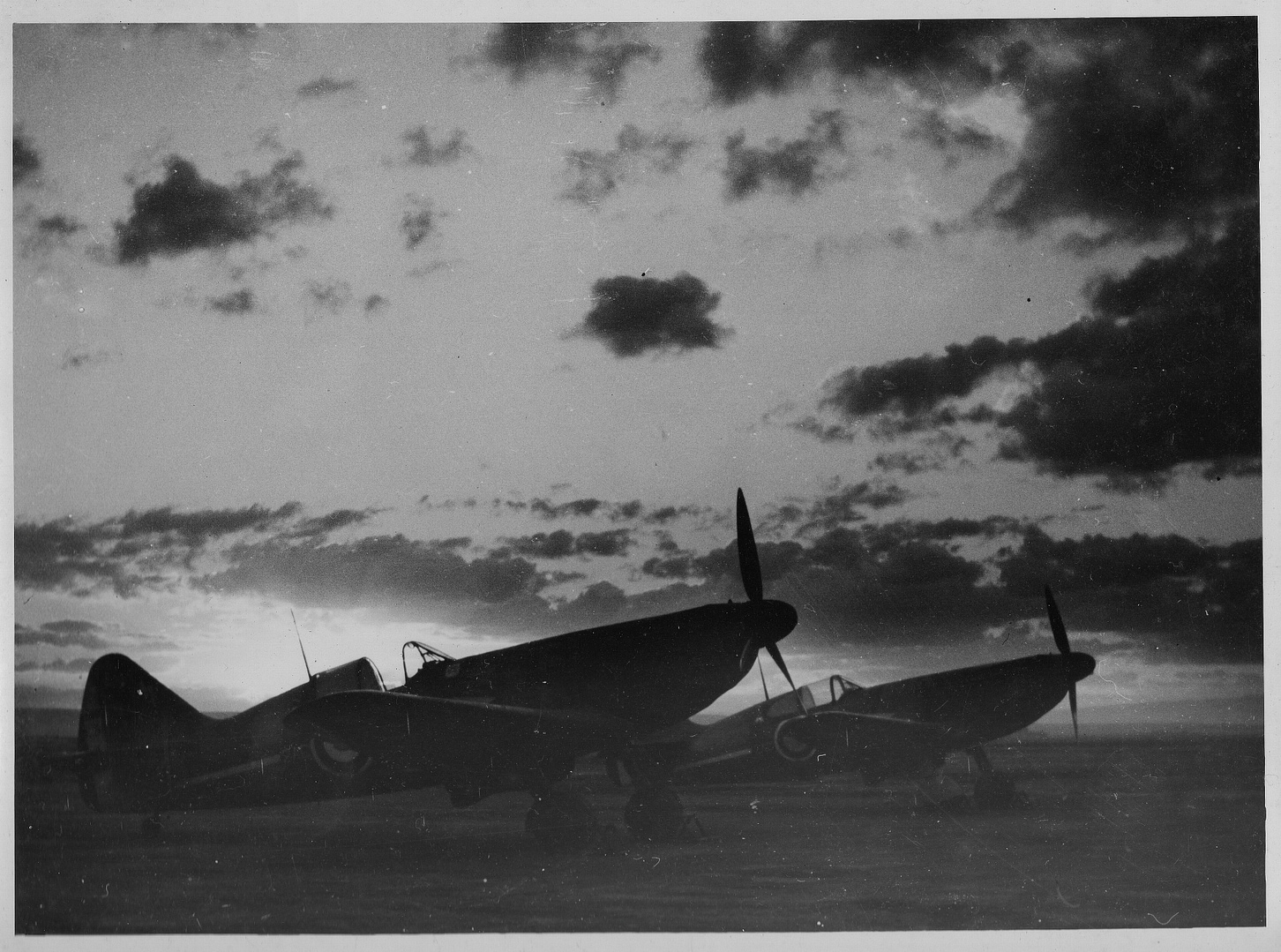
03The Dewoitine D.520’s engine: the Hispano-Suiza 12Y that made it possible+
Everything about the D.520 was shaped by its engine. The Hispano-Suiza 12Y was a liquid-cooled, 36-litre V-12 that had been developed through the 1930s and licensed around the world — versions powered Soviet, Swiss and other fighters. In the D.520 it appeared as the 12Y-45 and, later, the more powerful 12Y-49, giving somewhere in the region of 850 to 920 horsepower depending on variant and boost.
That was less power than the Rolls-Royce Merlin or the Daimler-Benz DB 601 that drove the Spitfire and Bf 109, and it is the single biggest reason the D.520 could not simply outclass its rivals. Dewoitine’s engineers compensated with drag reduction and light weight, wringing a competitive top speed out of a modest engine. But the 12Y had one priceless feature the others could match only awkwardly: it was designed from the outset to carry a cannon in the vee between its cylinder banks, firing through a hollow propeller shaft. That single design choice defined French fighter firepower for a decade.
The engine was not without vices — the early cooling problems that plagued the prototype were a constant preoccupation, and the 12Y was reaching the end of its development potential by 1940. The much more powerful engines that might have kept the airframe competitive arrived only late in the war, long after events had overtaken the D.520.
The engine also explains one of the aircraft’s quieter virtues: reliability. The 12Y was a known quantity, in service and in licence production for years, with its foibles well understood by the mechanics who maintained it. For a fighter thrown into a chaotic campaign and operated from improvised fields, that maturity mattered — a brilliant but temperamental powerplant would have been worse than a merely adequate one that started every morning and got its pilot home. In choosing the 12Y, Dewoitine’s team traded ultimate performance for dependability, and in the circumstances of 1940 it was very likely the right trade.
04The Dewoitine D.520’s guns: the moteur-canon and four rifle-calibre MGs+
The D.520’s armament was a deliberate French speciality. Its main weapon was a single 20 mm Hispano-Suiza HS.404 automatic cannon — one of the finest aircraft guns of the war, later adopted by the British and Americans — mounted as a moteur-canon between the cylinder banks and firing through the propeller hub. Because it sat on the aircraft’s centreline and needed no interrupter gear, it was both accurate and free of synchronisation losses, and a single 20 mm hit could be decisive.
Backing it were four 7.5 mm MAC 1934 machine guns buried in the wings, two per side. Here the design showed its age: rifle-calibre machine guns were already marginal against armoured, self-sealing opponents, and the D.520’s four were fewer and lighter than the eight .303s of a Hurricane or Spitfire. The cannon carried the punch; the machine guns were there to help the pilot walk his fire onto the target.
The trade-off was ammunition. The hub cannon carried only about sixty rounds — a few seconds of fire — so D.520 pilots had to shoot with discipline, holding until the shot was certain. In practice the combination worked well: an accurate centreline cannon suited the fast, fleeting firing passes that fighter combat in 1940 demanded.
The HS.404 itself deserves a mention beyond its role in the D.520, because it was one of the great weapons of the war. Reliable, hard-hitting and adaptable, it was taken up by the British as the Hispano cannon and by the Americans in turn, arming Spitfires, Typhoons, Mosquitoes and countless others through 1945 and long after. In that sense the D.520 shared its gun with the very Allies it would later, under Vichy, be turned against — a small irony to set beside the larger ones, and a reminder that the D.520 was assembled from some of the best components its generation had to offer.
05The Dewoitine D.520’s structure and systems: metal, guns and fuel+
The D.520 was an all-metal, stressed-skin monoplane with a low cantilever wing and a wide-track, inward-retracting undercarriage that made it steady on rough grass airfields. The wing housed four 7.5 mm MAC 1934 machine guns — two in each side — supplementing the hub cannon, along with self-sealing fuel tanks that gave it useful combat endurance and a measure of battle-damage tolerance that many earlier French fighters lacked.
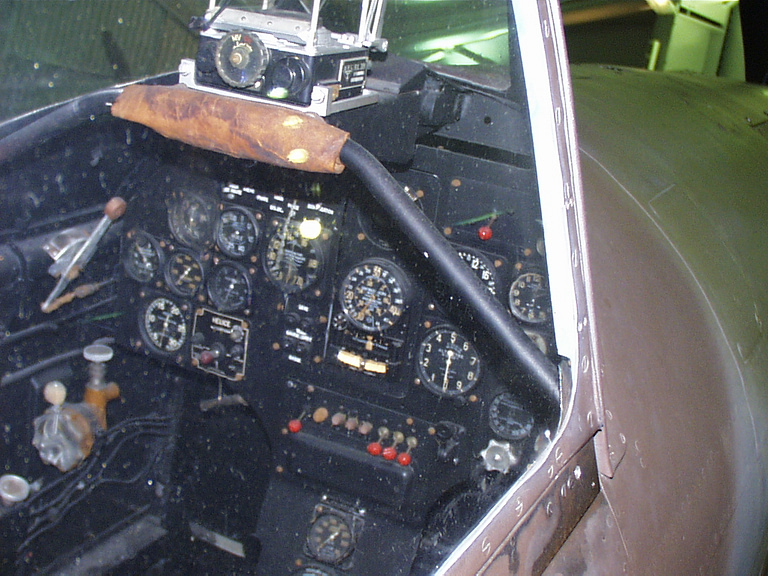
The cockpit sat well aft under a framed sliding canopy, giving a reasonable view for the era. Armour behind the pilot’s seat and a bullet-resistant windscreen reflected the hard lessons of Spain and the expectation of a cannon-versus-cannon war. None of this was revolutionary — but it was competent, modern and, importantly, robust enough to survive contact with the enemy.
That robustness had a practical dividend that rarely reaches the specification sheets. The D.520 could be flown hard, belly-landed, patched up and sent out again — qualities that kept squadrons in the fight as their airfields were bombed and their maintenance disrupted by the German advance. An elegant fighter that shatters at the first rough landing is little use in a rout; the D.520’s sturdy, wide-track undercarriage and honest structure made it a survivor in the most literal sense, and helped it soldier on into a second and third career long after 1940.
06The Dewoitine D.520 versus the Bf 109E: an honest comparison+
Against the Messerschmitt Bf 109E — the Luftwaffe’s front-line fighter in 1940 — the D.520 gave away a little in level and climbing speed but answered with a tighter turn and, many pilots felt, friendlier handling near the limit. Its centreline cannon was accurate; the Bf 109E’s wing- or hub-mounted cannon and cowl guns hit harder in a snap burst but demanded good deflection shooting.
The fair summary is parity, not superiority: a well-flown D.520 could meet a well-flown Bf 109E on close to even terms, with the outcome usually decided by numbers, height and tactics rather than by the machines. That is a genuine compliment to a French fighter of 1940 — and a reminder that being “as good as” the enemy is not the same as being able to beat an air force several times your size.
07The Dewoitine D.520 versus the MS.406: France’s own generational leap+
To understand why the D.520 mattered, compare it not with its enemies but with the fighter it was meant to replace. The Morane-Saulnier MS.406 was France’s most numerous fighter in 1940 — sturdy, docile and available in real numbers — but it was already a generation behind. Its top speed struggled to reach 490 km/h, its construction was partly of bonded plywood and light alloy, and its single 20 mm cannon was fed from a small drum. Against the Bf 109E it was simply outmatched, and its squadrons suffered for it.
The D.520 fixed almost every one of the MS.406’s shortcomings. It was around 45 to 50 km/h faster, all-metal and more robust, better armed and fed, and it climbed and dived far more convincingly. Pilots who converted from the Morane to the Dewoitine described it as moving up a weight class — the difference between hanging on and fighting back.
That is the fairest frame for the whole D.520 story. It was not a miracle weapon that could beat the Luftwaffe single-handed; it was the aircraft that finally brought French fighter design level with the best in the world. The tragedy is only that France completed that leap a year or two too late to matter.
Specificaties
Dewoitine D.520 — full specifications
Figures are for the main production D.520 and are rounded; where wartime sources disagree, the common range is given. Treat all performance and production numbers as period estimates.
| Type | Single-seat monoplane fighter-interceptor |
|---|---|
| Bemanning | 1 |
| Designer | Émile Dewoitine’s bureau (SNCAM / SNCASE) |
| First flight | 2 October 1938 (prototype D.520-01) |
| Service entry | Early 1940; operational May 1940 |
| Powerplant | 1 × Hispano-Suiza 12Y-45 / 12Y-49 liquid-cooled V-12 |
| Power | ~850–920 hp (variant-dependent) |
| Propeller | 3-blade constant-speed (Chauvière / Ratier) |
| Number built | ~900 total — sources vary (see note) |
| Unit cost | Not reliably recorded (WWII state production) |
| Cost per flight hour | Not reliably recorded (WWII-era) |
| Maximale snelheid | ~530–540 km/h (~330 mph) at ~5,500 m — commonly cited ~535 km/h |
|---|---|
| Serviceplafond | ~10,500–11,200 m (~34,500–36,700 ft) |
| Bereik | ~1,000–1,250 km (~620–780 mi) |
| Klimsnelheid | ~14 m/s (~2,760 ft/min) |
| Spanwijdte | 10.20 m (33 ft 5.5 in) |
| Lengte | 8.60 m (28 ft 2 in) |
| Hoogte | 2.57 m (8 ft 5 in) |
| Leeggewicht | ~2,090 kg (4,610 lb) |
| Loaded weight | ~2,680 kg (5,900 lb) |
| Bewapening | 1 × 20 mm HS.404 hub cannon (60 rds) + 4 × 7.5 mm MAC 1934 wing MGs |
08Every major Dewoitine D.520 variant explained+
D.520-01 / -02 / -03 — the three prototypes (1938–39) that evolved the type from an underpowered disappointment into a front-line fighter through tail, wing, cooling and engine changes.
D.520 (production) — the standard 1940 fighter with the 12Y-45 or 12Y-49 engine, the HS.404 hub cannon and four MAC 1934 wing guns. The vast majority of the ~900 airframes were this model.
D.520 Vichy / continuation batches — aircraft completed after the armistice under German oversight from 1941, mechanically similar to the 1940 machines and used to re-equip Vichy and later Axis units.
D.521 / D.524 — experimental re-engined offshoots (including a Rolls-Royce Merlin trial) that never entered production.
D.520Z / DZ — a much more powerful late development around a ~1,200–1,600 hp engine, conceived to keep the design competitive; it came far too late, first flying only after the war.
The proliferation of sub-types and one-off conversions is itself part of the story. Because the D.520 was built and rebuilt under three different regimes — the pre-war Republic, Vichy, and the post-war Armée de l’Air — individual airframes accumulated modifications, re-engining trials and role changes that make a clean “mark by mark” account difficult. For the purposes of this museum the essentials are simple: the overwhelming majority of D.520s were the standard 1940 fighter described above, and the exotic variants, however interesting, were footnotes that never influenced the type’s combat career.
09The Dewoitine D.520’s operating costs: what a 1940 fighter really cost+
Honestly, there is no reliable per-hour operating figure for the D.520, and any precise number you see quoted should be treated with suspicion. It was built by a nationalised, wartime aircraft industry whose accounting was disrupted first by mobilisation and then by defeat and occupation; unit prices were expressed in 1939–40 francs under a command economy, and no consistent “cost per flight hour” series survives.
What can be said is qualitative. The D.520 was a single-engine, single-seat fighter of modest size, so its fuel burn, crew requirement and maintenance load were broadly in line with contemporaries like the Bf 109E, Hurricane and Spitfire rather than with heavy twins. Its real “cost” to France in 1940 was not financial at all — it was time. Every month of redesign that made the aircraft good was a month France could not spare, and that is the price that mattered.
If a modern comparison helps, think of the D.520 as a sound, mid-market fighter rather than a gold-plated one — closer in philosophy to the Hurricane than to some of the more exotic and expensive projects of the era. It used a proven engine, orthodox construction and existing weapons precisely so that it could, in theory, be built quickly and cheaply in large numbers. The cruel joke of 1940 is that this sensible, affordable design was defeated not by cost but by time and circumstance: France got the economics right and the calendar catastrophically wrong. When we eventually fold the D.520 into the museum’s cost-comparison tool, that is the honest place to put it — an inexpensive fighter whose true price was paid in the currency no budget can show.
In the cockpit
Flying the Dewoitine D.520: handling, cockpit and the pilot’s view
The D.520’s reputation rests heavily on the way it flew. Pilots did not just respect it — they liked it, and that affection tells us as much about the aircraft as any data sheet.
Honest at the limit
The D.520 gave clear warning before it stalled and remained controllable when pushed, so pilots could fly it hard in a turning fight without fear of a sudden, fatal departure. In combat that confidence was worth as much as raw performance.
A steady gun platform
With its wide-track undercarriage on the ground and its smooth handling in the air, the D.520 was stable enough to make the most of its accurate hub cannon — and forgiving enough of rough front-line airfields to keep operating as the front collapsed.
Fast, but not a rocket
The modest Hispano-Suiza engine meant the D.520 accelerated and climbed respectably rather than spectacularly. Pilots learned to fight it on its strengths — the turn, the dive and the gun — rather than trying to out-sprint a Bf 109 in level flight.
Climb into a D.520 and the layout is conventional for its era: a framed sliding canopy, a reasonable view over a long nose, and a cockpit that placed the essentials to hand without fuss. Armour behind the seat and a protected windscreen reflected the expectation of a hard, cannon-armed war, and the self-sealing tanks gave the pilot a fighting chance of getting home after taking hits — a real advance over earlier French fighters that had tended to burn.
In the air the aircraft rewarded a thinking pilot. It could turn tightly enough to trouble a Bf 109E, dived willingly, and recovered cleanly from the sort of violent manoeuvring that combat demanded. Its weaknesses were the ones dictated by its engine: it could be out-climbed and, in a sustained level chase, out-run by the best German fighters, so its pilots had to fight on their own terms, using height, surprise and the hard punch of the centreline cannon.
Perhaps the highest praise is the simplest: pilots trusted it. Men who had gone to war in the outclassed MS.406 spoke of the D.520 with something close to relief, as an aircraft that finally gave them a fair fight. In the disaster of 1940, that mattered — and it is a large part of why the D.520 is remembered so fondly for a campaign that ended in defeat.
There is a subtlety here that the raw numbers miss. A fighter that pilots trust is a fighter they fly more aggressively, closer to its limits, more often — and aggression, in fighter combat, is frequently the difference between the hunter and the hunted. The D.520’s benign manners were therefore not a mere comfort but a force multiplier: they let ordinary squadron pilots, freshly converted from the docile Morane, extract performance that a twitchier, less forgiving design might have kept locked away behind fear. In the frantic, improvised air battles of 1940, that psychological edge counted for a great deal.
None of this made the D.520 easy to fly well, only honest about it. Like any thoroughbred fighter it demanded skill, judgement and constant attention to its modest fuel and ammunition. But it did not booby-trap its pilots, and in an air force being thrown into battle before it was ready, an aircraft that behaved predictably under stress was worth almost as much as one that was simply fast.
In context
The Dewoitine D.520 among its 1940 contemporaries
Set beside the fighters it fought with and against, the D.520 was neither the fastest nor the best-armed of its generation — but it was solidly in the game, which is exactly the point.
| Dewoitine D.520 | ~535 km/h; 1 × 20 mm hub cannon + 4 × 7.5 mm MGs; ~900 hp |
|---|---|
| Messerschmitt Bf 109E | ~560 km/h; 2 × 20 mm + 2 × 7.9 mm (typical); ~1,100 hp |
| Supermarine Spitfire Mk I | ~580 km/h; 8 × 7.7 mm MGs; ~1,030 hp |
| Hawker Hurricane Mk I | ~520 km/h; 8 × 7.7 mm MGs; ~1,030 hp |
| Morane-Saulnier MS.406 | ~486 km/h; 1 × 20 mm + 2 × 7.5 mm MGs; ~860 hp |
| Macchi C.200 Saetta | ~500 km/h; 2 × 12.7 mm MGs; ~870 hp |
| Snelheid | Mid-table: faster than the MS.406, Hurricane and C.200, a little slower than the Bf 109E and Spitfire. |
|---|---|
| Firepower | Excellent hitting power for its weight thanks to the accurate hub cannon; heavier single-shot punch than the rifle-calibre British eight-gun batteries, if a lower volume of fire. |
| Power | The weakest engine of the front-line group — the root cause of its speed and climb deficit. |
| Verdict | Competitive across the board, dominant in none — a genuinely modern fighter of the 1940 class. |
The honest reading of this comparison is not that the D.520 was the best fighter of 1940 — it was not — but that it belonged in the same conversation, which no previous French fighter had. Against the Bf 109E it conceded speed and climb but answered with agility and an accurate cannon; against the British eight-gun fighters it was slower than the Spitfire but broadly a match for the Hurricane, with heavier single-shot punch. Its one clear inferiority was engine power, and almost every one of its shortcomings traces back to that.
What the table cannot show is availability, and that is where the D.520’s real weakness lay. Britain had hundreds of Spitfires and Hurricanes in service by mid-1940; Germany counted its Bf 109s in thousands. France had one operational groupe of D.520s when the blow fell. A fighter that is competitive on paper but almost absent from the flight line cannot influence a battle — and that, far more than any performance figure, is why the D.520’s 1940 is remembered as a tragedy rather than a triumph.
One further point of context deserves making, because it is often lost. The D.520 fought its war against the first-line fighters of 1940 — the Bf 109E and the Italian biplanes and early monoplanes — and against those opponents it was genuinely competitive. It never had to face the far deadlier fighters that appeared later: the Bf 109F and G, the Focke-Wulf 190, the late-model Spitfires. Judged against the aircraft it actually met, in the year it actually fought, the D.520 stands up well. Judged against the whole sweep of the war it would soon have been obsolete — which is simply to say that it was a fighter of 1940, neither ahead of its time nor behind it, but squarely and honourably of it.
Place the D.520 in this museum’s wider collection and the comparison sharpens further. Set against a first-generation jet, a Cold War interceptor or a modern multirole fighter it is, of course, an antique — but that is the wrong yardstick. The right one is the aircraft in the cases beside it: the Hurricanes and Spitfires, the Bf 109s and Zeros and Macchis, the piston-engined fighters that decided the great air battles of 1939 to 1945. Among those peers the D.520 holds its place without apology, distinguished less by any single number than by the poignancy of its timing. It is the “so close” of the 1940 fighter generation, and that is exactly why it repays a longer look.
Timeline
The Dewoitine D.520: a service record in dates
Stories & eyewitnesses
The Dewoitine D.520 in twelve stories
Pierre Le Gloan’s five-in-one afternoon
On 15 June 1940, over Provence, one French pilot turned a bad day into legend.
Read the story
Sous-lieutenant Pierre Le Gloan of GC III/6 was scrambled against an Italian raid as France was collapsing around him. In a single sortie he shot down a string of Italian aircraft — most accounts credit four Fiat CR.42 biplane fighters and a BR.20 bomber — becoming an ace several times over in one afternoon.
Le Gloan finished the war among France’s top-scoring pilots, most of his victories won on the D.520. His story captures both the aircraft’s real capability and the tragedy of 1940: brilliance in the cockpit could not offset catastrophe on the ground.
GC I/3 opens the account
The only fully-ready D.520 unit wasted no time proving the design.
Read the story
On 13 May 1940, three days into the German offensive, pilots of GC I/3 claimed the type’s first victories — a Heinkel He 111 and several Henschel Hs 126 observation aircraft. Over the following weeks the groupe would become the highest-scoring D.520 unit of the campaign.
Their success was real, but it was also lonely. With only one groupe operational at the start of the battle, GC I/3 could be in only one place at a time while the front burned everywhere at once.
The squadrons that never got their aircraft
On paper France had hundreds of D.520s. On the flight line, it had a fraction.
Read the story
The gap between production and delivery is the heart of the D.520 story. Airframes were rolling out of the factories, but acceptance, arming, testing and unit conversion all took time that France did not have in May 1940. Several groupes were still converting — flying a mix of MS.406s and new D.520s — when the fighting overtook them.
It is why the honest verdict is always the same: a good fighter, available in the wrong quantity at the wrong moment.
One shell where it counts
The hub-mounted 20 mm gave the D.520 a heavyweight’s punch.
Read the story
Firing along the centreline through the propeller shaft, the HS.404 cannon needed no synchronisation and put its rounds exactly where the pilot pointed the nose. A short, accurate burst could be lethal to a bomber or fighter alike.
The trade-off was capacity: sixty rounds demanded discipline. Pilots learned to hold fire until the shot was certain — a habit that suited the D.520’s accurate gun platform.
The prototype that had to be rescued
The first D.520 was not good enough. The fix is why it was late.
Read the story
The 1938 prototype was underpowered, its cooling marginal and its handling unsatisfactory. Rather than force it into service, the design bureau reworked the tail, wing and radiator and waited for a better engine.
The gamble paid off in quality and cost in time. The aeroplane that emerged was genuinely competitive — but the months spent perfecting it were months stolen from the production run France desperately needed.
A fighter that kept being built after defeat
Surrender did not end the D.520’s story — it redirected it.
Read the story
When France signed the armistice in June 1940, the D.520 might have simply stopped. Instead, the Germans permitted — and later demanded — continued production, and the type became the mainstay of the Vichy fighter arm.
Hundreds more were completed after the fall of France, a strange afterlife in which a symbol of French resistance in the air became an instrument of a collaborationist state.
French fighters against the RAF
In 1941 the D.520 fought the very allies it had defended France beside.
Read the story
During the Syria–Lebanon campaign of June–July 1941, Vichy D.520 units fought British and Commonwealth aircraft — Hurricanes, Gladiators and Fleet Air Arm types — over the Levant. French pilots scored against the RAF; the RAF scored against them.
It is an episode most histories handle carefully, and rightly so: skilled airmen on both sides, killing each other in a war neither the men nor the machines had chosen.
Oran, November 1942
The Vichy D.520’s last major fight was against the Americans.
Read the story
When Allied forces landed in French North Africa during Operation Torch, Vichy D.520s at Oran rose to oppose the invasion, tangling with US and British carrier aircraft before the local ceasefire. Within days, Germany responded by occupying the Vichy zone and seizing France’s remaining fighters.
The bitterness of that moment is hard to overstate. The pilots at Oran were ordered to die, if necessary, resisting an Allied landing whose ultimate aim was the liberation of their own country — and their reward for obeying was to watch, days later, as the Germans they had been told to trust swept south to strip them of their aircraft. Some flew their D.520s to North African fields still in French hands; others saw them impounded on the spot. It was the definitive proof, if any were needed, that Vichy’s “armed neutrality” had always been a fiction, and that the D.520 had been defending a position that could not be held.
The aircraft that had defended France in 1940 ended its French front-line career fighting the liberators — then was carried off by the occupier.
The D.520 in German markings
Germany’s response to a captured fleet: put it to work.
Read the story
After seizing hundreds of D.520s in late 1942, the Luftwaffe pressed the type into service as an advanced trainer with fighter-training wings such as JG 101, 103, 105 and 107. It was a sensible use of a modern, pleasant-handling fighter in a role that freed front-line types for combat.
A number of German pilots were killed or injured in D.520 accidents during training — a quiet reminder that even a “friendly” fighter demands respect.
Chasing B-17s over the Balkans
The D.520’s most unexpected combat was against American heavy bombers.
Read the story
From 1943 Bulgaria received around ninety-six D.520s and equipped its 6th Fighter Regiment. When USAAF heavy bombers raided the Balkans, Bulgarian D.520 pilots went up against B-17s, B-24s and their P-38 escorts — obsolescent lightweights against four-engine bombers and modern American fighters.
They claimed a handful of victories at heavy cost, and by 1944 the surviving aircraft were relegated to training. It was the D.520’s final combat chapter.
The pilots who flew to freedom
Not every D.520 stayed with Vichy.
Read the story
In the chaos of June 1940 a small number of D.520s were flown out of France — some to Britain, others later pressed into Free-French service. A pair even took part in the Dakar operation of September 1940, and captured examples in Syria were used by Free-French pilots.
These were footnotes in numbers, but they mattered: proof that the aircraft, and some of its pilots, chose the other side of the war.
From frontline fighter to flying memorial
The D.520 soldiered on quietly into the 1950s.
Read the story
Liberated France gathered surviving D.520s into improvised units in 1944–45 and then used the type for training. The last flight in French military hands came on 30 September 1953 — thirteen years after the aircraft’s brief, brilliant, doomed debut.
Today a few survivors keep the story alive, one of them painted as Le Gloan’s aircraft, standing for a fighter that deserved a better war.
Émile Dewoitine’s long shadow
The man whose name is on the fighter had already left France before it fought.
Read the story
Émile Dewoitine was one of the great figures of French aviation, his fighters spanning the biplane era to the eve of the jet age. Nationalisation in the 1930s stripped him of his own company, and the D.520 was built by the state combine SNCAM that absorbed his design bureau.
His post-war path was troubled — he faced accusations of collaboration and spent years abroad, later working on aircraft projects in Argentina. The fighter that carries his name outlived the controversy, remembered now for its design rather than its designer’s politics.
What the Regia Aeronautica thought
Italy captured D.520s and tested them against its own fighters.
Read the story
Having taken around thirty D.520s in 1940 and more later, Italian evaluators formed a mixed view. They admired the hard-hitting centreline cannon — heavier and more accurate than the armament of their own nimble but lightly-gunned fighters — but were less impressed by the overall performance, which by 1942 was no longer competitive.
It was a fair judgement. The D.520 of 1940 had been a match for the best; the same aircraft two years later was simply an aging design, valuable mainly for training and home defence.
The many flags of one fighter
Few aircraft wore so many national markings in so few years.
Read the story
In the space of about five years the D.520 carried the roundels of the French Republic, the markings of Vichy France with their distinctive red-and-yellow striping, the crosses of the Luftwaffe, the fasces of Italy and the markings of Bulgaria — and finally the roundel of a liberated France again.
That restless procession of markings is the D.520’s story in miniature: a fine aircraft swept up and used by whoever held the airfields, its allegiance decided by defeat and occupation rather than by design.
The fighter that came a year early — and too late
Imagine the D.520 in the numbers of 1941, in the France of 1940.
Read the story
The enduring fascination of the D.520 is the counterfactual. Had the redesign gone faster, had the factories delivered in 1939 instead of 1940, France might have met the German offensive with several hundred modern fighters instead of one ready groupe. Whether that would have changed the outcome is doubtful — the battle was lost on the ground — but it would certainly have made the air fighting far bloodier for the Luftwaffe.
That “what if” is why the D.520 is remembered at all. It is the rare case of a genuinely good weapon that arrived just too late to prove what it might have done.
A winter spent waiting for aircraft
Through the quiet months of 1939–40, French fighter squadrons waited for a fighter that dribbled out of the factories.
Read the story
The “phoney war” that followed the declaration of hostilities in September 1939 should have been the D.520’s golden opportunity — months of relative calm in which to build up strength. Instead, slow production meant units converted piecemeal, often flying a mix of old Moranes and new Dewoitines, never quite reaching full strength before the real fighting began.
By the time the Germans attacked in May, the head start had been squandered — not through any fault of the pilots, but through an industrial machine that simply could not turn orders into aircraft fast enough.
The 12Y’s many nationalities
The D.520’s engine had a life far beyond France.
Read the story
The Hispano-Suiza 12Y was one of the most widely licensed engines of its era. Versions or derivatives powered Soviet fighters, equipped Swiss and other air forces, and inspired designs around the world. In a sense the D.520 shared its heart with aircraft on several sides of the coming war.
That ubiquity is a reminder that the D.520 was built from sound, mainstream 1930s technology — not exotic, but proven — which is part of why it worked as well as it did.
The tanks that brought pilots home
A detail that saved lives: fuel tanks that did not explode at the first hit.
Read the story
Earlier French fighters had a grim tendency to burn when hit. The D.520’s self-sealing fuel tanks, along with cockpit armour and a protected windscreen, reflected the hard lessons of the Spanish Civil War and gave its pilots a real chance of surviving battle damage.
It is an unglamorous kind of progress, but in the brutal air fighting of 1940 it was exactly the sort of detail that decided whether a pilot flew again the next morning.
The survivor at Le Bourget
One aircraft carries the whole story into the present.
Read the story
The D.520 displayed at the Musée de l’Air et de l’Espace, serial number 862, is painted in the markings of GC III/6 as the mount of Pierre Le Gloan. It stands today among the landmarks of French aviation, small and businesslike beside the giants around it.
To see it is to grasp the D.520’s paradox in an instant: a modest, well-made little fighter, wearing the colours of a hero, standing for a battle it could not win and a legacy still argued over eighty years later.
In action
The Dewoitine D.520, campaign by campaign
Six weeks of desperate fighting in 1940, then a long, divided second life across half a dozen air forces. This is where the D.520 actually fought.
The Battle of France (May–June 1940). This was the D.520’s real war, and it lasted barely six weeks. Starting with a single operational groupe and building up as fast as deliveries allowed, the type’s squadrons fought a fighting retreat across northern and eastern France. They claimed roughly a hundred confirmed victories — a meaningful tally against the Luftwaffe’s Bf 109s, Bf 110s and bombers — while losing a similar number of their own to combat, bombing and the destruction of overrun airfields. The aircraft did well; the campaign was lost regardless, on the ground and by sheer weight of numbers.
The attrition is worth dwelling on, because it shows both the aircraft’s quality and the hopelessness of its situation. D.520 units lost heavily — but a large share of those losses came not in air combat, where the type held its own, but on the ground: aircraft caught by bombing, abandoned on overrun airfields, or destroyed to prevent capture as the front dissolved. In the air, against the Luftwaffe’s fighters, the exchange was far closer to even than the overall German victory would suggest. That gap between air-combat performance and battlefield outcome is the D.520 story in a single statistic.
The geography of the campaign compounded the problem. As the German breakthrough drove deep into France, D.520 units were forced into a near-constant retreat, abandoning one airfield after another, flying from improvised strips, and losing serviceable aircraft simply because there was no time to recover or repair them. Fighting while retreating is the hardest thing an air force can be asked to do, and the fact that the D.520 groupes kept scoring at all under those conditions says a great deal about both the aircraft and the men flying it. But no amount of tactical success in the air could slow an armoured breakthrough on the ground, and by mid-June the surviving units were being pulled south and, ultimately, out of the fight altogether.
The Italian front (June 1940). When Italy declared war on a already-beaten France, D.520 units in the south briefly had the better of the Regia Aeronautica. Pierre Le Gloan’s famous multiple-kill sortie of 15 June belongs to this short, one-sided chapter — a rare bright spot in a black month.
Syria and Lebanon (1941). Under Vichy, the D.520 became the fighter of a defeated France defending its empire — and in the Levant that meant fighting the British. Over roughly five weeks in mid-1941, Vichy D.520s dueled RAF and Commonwealth aircraft, scoring and being scored upon in a campaign that ended with the Allies in control of Syria and Lebanon. The fighting was fierce and personal: reinforcements were flown in from France across the Mediterranean, and the D.520 units gave a genuinely stubborn account of themselves before being ground down by Allied numbers and the hopelessness of their strategic position.
North Africa and Operation Torch (1942). The last significant Vichy resistance in the air came at Oran in November 1942, when D.520s contested the Allied landings before the local armistice. It closed the aircraft’s French combat career on the wrong side of history and triggered the German seizure of the fleet. For the pilots who flew those sorties, it was a wrenching business — ordered to resist an Allied landing that many of them privately welcomed, then, within days, watching the Germans they had nominally served pour across the demarcation line to strip Vichy of its aircraft. Few episodes capture the moral wreckage of a defeated, divided nation quite so sharply.
Axis and Bulgarian service (1942–44). As a Luftwaffe trainer the D.520 fired few shots in anger, but in Bulgarian hands it fought a genuine defensive campaign against USAAF bomber raids over the Balkans in 1943–44 — its final taste of combat, and a losing one against overwhelming American strength.
Taken together, these scattered campaigns add up to one of the strangest combat records of the war. The same fighter fought Germans in the skies of France, Italians over the Riviera, the British over the Levant, the Americans over Algeria, and the Americans again — in different hands — over the Balkans. It was, by turns, a defender of the Republic, a weapon of Vichy and a tool of the Axis. No propaganda could make a tidy story out of that, and none should try. What the record really shows is an aircraft swept helplessly through the shifting fronts and allegiances of a continent at war — present at an extraordinary range of battles, decisive in none of them.
The pilots
The men who flew the Dewoitine D.520
An aircraft is only as good as the people in it. In 1940 the D.520 was flown by some of the finest pilots France had — and its reputation rests as much on their skill as on the airframe.
Pierre Le Gloan
The type’s most famous ace. Le Gloan scored heavily on the D.520 in 1940 — including his celebrated multiple-kill sortie against the Italians on 15 June — and became one of France’s leading fighter pilots. His aircraft’s markings adorn the survivor at Le Bourget.
The aces of GC I/3
The only fully operational D.520 groupe in May 1940 was also its highest-scoring. Its pilots opened the type’s account on 13 May and fought a running battle across France, proving in six desperate weeks that the aircraft could do everything asked of it.
The converts from the Morane
Most D.520 pilots came to it from the slower MS.406. Their verdict was near-unanimous: the Dewoitine was faster, harder-hitting and more competitive, a machine in which a good pilot finally had a fair chance against the Bf 109E.
France’s fighter arm in 1940 was not short of talent. Its leading aces of the campaign — men like Edmond Marin la Meslée, who scored heavily on the American-built Curtiss H-75, and the D.520 specialists of GC I/3 and GC III/6 — showed that French pilots, given a competitive aircraft, could match anyone. The tragedy was that this generation of airmen reached its peak just as the nation around them collapsed, so that their skill bought local victories inside a national defeat.
The pilots’ testimony is the best evidence we have for how good the D.520 really was, precisely because it is so consistent. Men who had flown the MS.406 into combat and lived described the D.520 as a transformation — an aircraft that let them turn, climb and shoot with the enemy instead of merely surviving him. That is a more reliable measure than any single performance figure, because it came from people whose lives depended on getting the judgement right.
It is worth remembering, too, that many of these pilots flew on into the aircraft’s divided second life. Some escaped to continue the fight with the Allies; others served, willingly or not, under Vichy and found themselves flying against former friends. The same skill that made the D.520 dangerous in 1940 was later turned, tragically, against the British over Syria and the Americans over North Africa.
It would be wrong, though, to reduce these men to their worst moment. Most were professional airmen caught in an impossible situation, obeying a chain of command that had itself been shattered by defeat. Some deserted to fight on with the Free French; some flew for Vichy out of duty, discipline or simple inertia; a few later crossed back to the Allied side and died in Allied cockpits. Their choices were as tangled as the aircraft’s own career, and they deserve to be remembered as individuals rather than as a verdict — skilled pilots handed a terrible hand, doing what they judged they had to.
It is striking, too, how young and how professional this generation was. The core of France’s fighter arm in 1940 were long-service NCOs and junior officers — men who had spent the 1930s learning their trade on biplanes and early monoplanes, and who were, on the eve of the war, as well trained as any fighter pilots in Europe. What they lacked was not skill but modern aircraft in quantity and a coherent doctrine to use them. The D.520 finally gave a fraction of them the first; nothing could give them the second in time. The result was pockets of brilliant flying inside a collapsing system — exactly the pattern the aircraft’s own history would repeat.
10The Dewoitine D.520 and Pierre Le Gloan: the type’s defining pilot+
No single airman is more bound up with the D.520 than Pierre Le Gloan. A pre-war non-commissioned pilot of exceptional gunnery, he flew the D.520 with GC III/6 and, on 15 June 1940, destroyed a string of Italian aircraft in one sortie — most accounts credit four Fiat CR.42 fighters and a BR.20 bomber — a feat that made him a national hero at the very moment France was collapsing.
His later career mirrors the aircraft’s own moral complexity. Serving under Vichy, he fought the British in Syria in 1941, adding RAF aircraft to a victory list that eventually numbered well into the teens, most of them scored on the D.520. He died in 1943, after France had returned to the Allied side, when his aircraft — by then an American type — was lost to an engine fire. The museum at Le Bourget honours him by painting its surviving D.520 in his GC III/6 markings, so that the type’s finest pilot and its most complicated legacy are remembered together.
A divided air force
Vichy France and the Dewoitine D.520’s divided war
After June 1940 the D.520 stopped being simply “France’s fighter” and became something far more troubling: the front-line weapon of a defeated, divided nation, flown on every side of the war.
The armistice of June 1940 split France in two. The unoccupied south and the empire came under the Vichy government, which was permitted to keep armed forces — including fighter squadrons — nominally to defend French territory and neutrality. The D.520, as the best fighter available, naturally equipped many of them. On paper this was self-defence; in practice it meant that when the Allies moved against Vichy-held territory, French pilots in French fighters opened fire on the British and, later, the Americans.
That happened twice in earnest. Over Syria and Lebanon in the summer of 1941, Vichy D.520s fought a bitter little air campaign against the RAF, the Commonwealth and the Fleet Air Arm. Over North Africa in November 1942, during Operation Torch, they contested the Allied landings around Oran before a local ceasefire. In both cases skilled French airmen were killed by, and killed, the very allies they had stood beside in 1940 — the kind of fratricide that only a national catastrophe produces.
Then the aircraft changed sides again. When Germany occupied the Vichy zone in late 1942 it seized the surviving D.520s wholesale, and the fighter that had defended France, then served Vichy, now wore Luftwaffe grey as a trainer — and Bulgarian and Italian markings in combat. Few aircraft of the war carried so many different roundels in so short a time. It is why any honest account of the D.520 has to hold two ideas at once: genuine pride in a fine French design, and clear-eyed discomfort about much of what was done with it.
It helps to remember how little of this was foreseeable in 1938. When Dewoitine’s team drew the D.520 they were designing a fighter to defend the French Republic against Germany — and for six weeks in 1940 that is exactly what it did. Everything that came afterwards — Vichy, Syria, the Luftwaffe grey, the Bulgarian roundels — flowed not from the drawing board but from the catastrophe of defeat, which handed a perfectly ordinary national fighter to a succession of masters its makers never intended. The D.520’s tangled service is a history of France’s misfortune written in one airframe, not a verdict on the aircraft or the people who first flew it.
11The Dewoitine D.520 under occupation: from Vichy fighter to Axis trainer+
When German forces executed Case Anton and moved into the unoccupied zone in November 1942, they captured the bulk of the Vichy air force’s D.520s — on the order of 250 aircraft — and put roughly sixty more into production or completion under occupation. The Luftwaffe had little use for an obsolescent fighter at the front, but it made excellent sense as an advanced trainer, and D.520s duly equipped fighter-training wings such as JG 101, 103, 105 and 107, where German fledglings learned to handle a fast, cannon-armed monoplane.
Surplus airframes were passed to Germany’s allies. Italy had already taken captured D.520s in 1940 and used them for home defence and training; Bulgaria received close to a hundred from 1943 and flew them in combat against American bombers over the Balkans. By the time the war ended, the D.520 had served — in one role or another — the air arms of France, Vichy France, Germany, Italy and Bulgaria, an extraordinary spread for an aircraft built in such modest numbers and remembered, above all, for a battle it could not win.
Legacy
The Dewoitine D.520: tactics, reputation and what it left behind
Why a fighter that changed nothing strategically is still remembered as France’s best of 1940 — and what it teaches about procurement, timing and the limits of quality.
The enduring lesson of the D.520 is that a good weapon delivered late is not the same as a good weapon. France did many things right with this design: it chose a sensible layout, a proven engine and a genuinely effective armament, and it refused to rush an unsatisfactory prototype into service. Every one of those correct decisions cost time — and time was the one resource France could not replace in 1939–40. By the time the aircraft was truly ready, the strategic situation had already made its qualities almost irrelevant.
Tactically, the D.520 taught French pilots to fight the war that was actually coming: fast passes, deflection gunnery with a hard-hitting centreline cannon, and the disciplined use of a limited ammunition load. Those who mastered it — Le Gloan and the aces of GC I/3 among them — showed that the machine, in skilled hands, could hold its own against the best the Luftwaffe had.
Its reputation has been shaped as much by its afterlife as by 1940. The awkward Vichy service, the fratricidal fights against the Allies in Syria and North Africa, and the sight of the aircraft in German and Bulgarian markings all complicate any simple “hero” narrative. That complexity is precisely why the D.520 is worth remembering honestly: it is a reminder that aeroplanes serve whoever holds them, and that the same airframe can be flown for a free nation, a collaborationist state and an enemy air force within the space of three years.
In the longer view, the D.520 was the last of France’s independent pre-war fighter line and a bridge to nothing — the French aircraft industry that would emerge after 1945 built jets under very different conditions. What survives is the aircraft’s stubborn reputation as the one that could have mattered, and the handful of preserved machines that let us judge that claim with our own eyes.
There is a broader lesson in the D.520 for anyone interested in how nations arm themselves. France did not lack talent, ideas or even, on paper, industrial capacity; what it lacked was time and the ability to convert designs into delivered, worked-up squadrons quickly enough. A weapon that is excellent but late, or excellent but rare, buys very little on the day of battle. The Spitfire and Hurricane were not obviously better aircraft than the D.520 — but they existed in numbers, in trained hands, when they were needed, and that made all the difference. The D.520 is the counter-example that proves the rule.
It is also a reminder to judge aircraft in their context rather than by legend. Stripped of the “France’s best fighter” branding and the “what if” romance, the D.520 was a competent, likeable, well-armed interceptor of the 1940 generation — no more a war-winner than any single type could be, but a genuine credit to the people who designed and flew it. Remembered honestly, on those terms, it needs no exaggeration to earn its place in this museum.
12The Dewoitine D.520’s victory claims: how to read the numbers+
You will see the D.520 credited with figures like “108 confirmed and 39 probable” victories in the Battle of France, and unit-by-unit tallies for GC I/3, II/3, II/7, III/3 and III/6. These come from French squadron records and are the best figures available, but they are wartime claims — and every air force of the era over-counted, because two pilots firing at the same aircraft, or a “kill” that limped home, both produced optimistic paperwork.
The responsible way to present the D.520’s record is therefore as a range and a trend rather than a scoreboard: on the order of a hundred confirmed claims against the Luftwaffe for a broadly comparable number of D.520s lost, in a campaign that France lost anyway. That is genuinely creditable for so small a force — and it is a very different, and more honest, statement than “the D.520 dominated the Bf 109.”
13The Dewoitine D.520 after 1945: quiet retirement and preservation+
Liberation did not immediately end the D.520’s story. In the confused, improvised months of 1944 the French Forces of the Interior gathered up airworthy survivors — many of them German trainers abandoned or captured on French soil — and formed scratch units that flew the type against retreating German pockets and in the training role. It was a strange homecoming: a French fighter, taken by the occupier, handed back by circumstance to the France it had been built to defend.
Through the late 1940s the surviving aircraft settled into service as advanced trainers with the reborn Armée de l’Air, gradually worn out and replaced by newer types and, soon, by jets. The last flight of a D.520 in French military hands came on 30 September 1953 — a full fifteen years after the prototype first flew, and a fitting quiet end for a design that had been overtaken by history almost as soon as it appeared.
What remains is a handful of preserved airframes and an outsized reputation. Restorers, museums and enthusiasts have kept the type’s memory alive far out of proportion to the few weeks it spent as France’s front-line fighter — testament to the enduring appeal of the aircraft that, in another timeline, might have been remembered very differently.
That enthusiasm is not mere nostalgia. Restoring a D.520 is painstaking, expensive work, undertaken by people who could spend their time on more famous or more numerous types, and the fact that they choose the Dewoitine says something about the hold it has on the French aviation imagination in particular. It is the fighter of a proud tradition’s most painful hour — and preserving it, flying it, arguing about it, is a way of refusing to let that hour be either forgotten or falsified. In that sense the D.520’s afterlife is more active, and more thoughtful, than that of many aircraft with far grander combat records.
Photographs
The Dewoitine D.520 in photographs
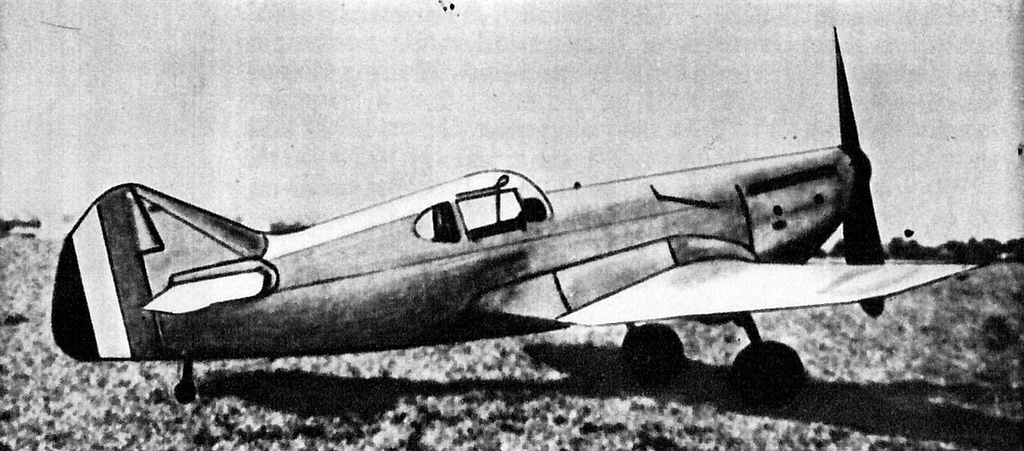
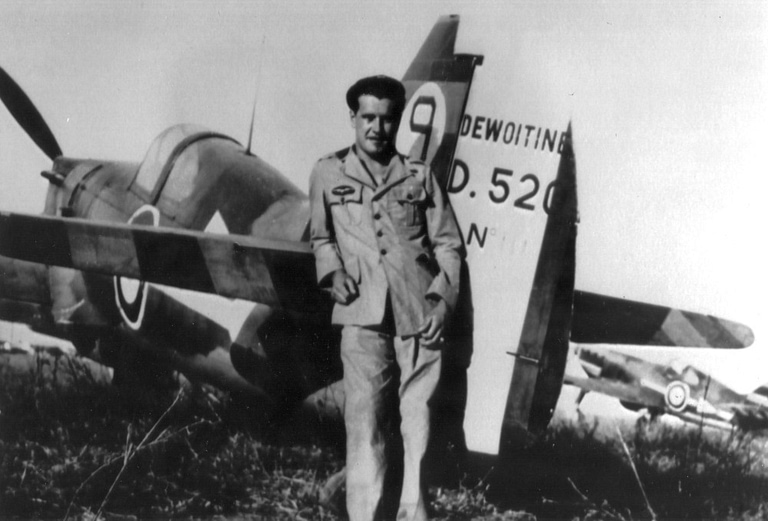
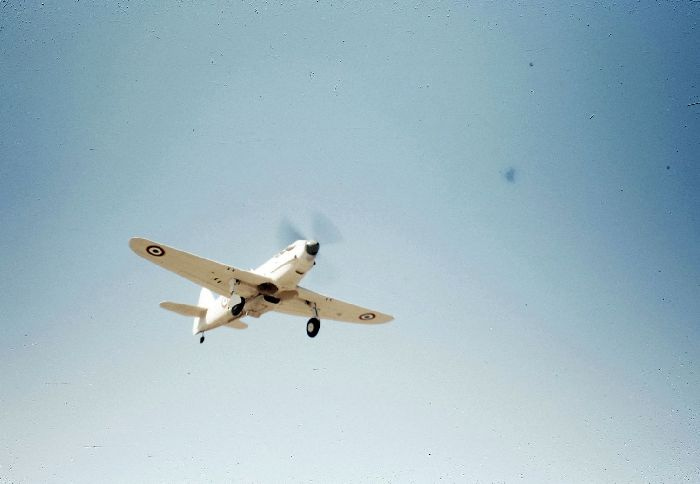
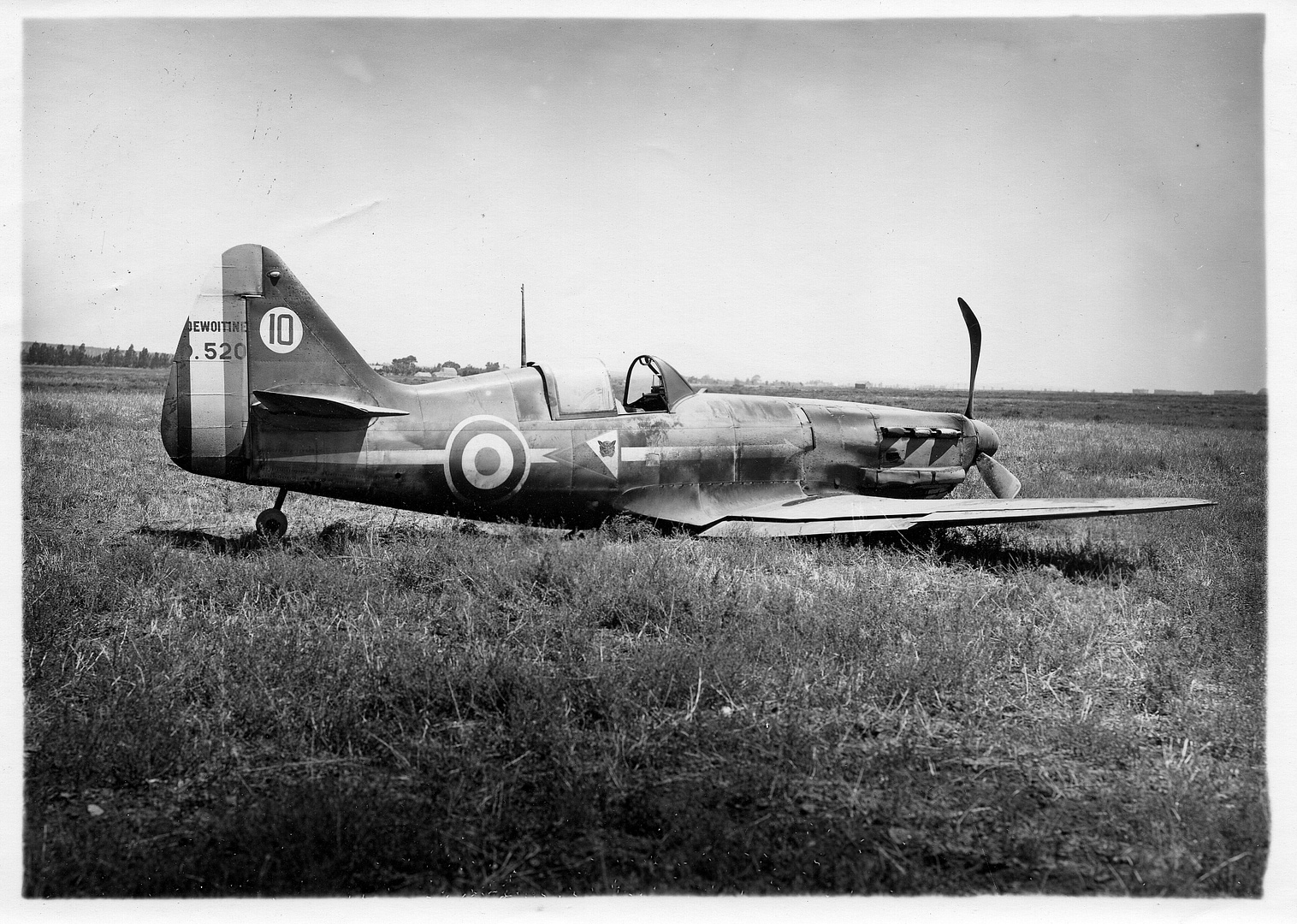
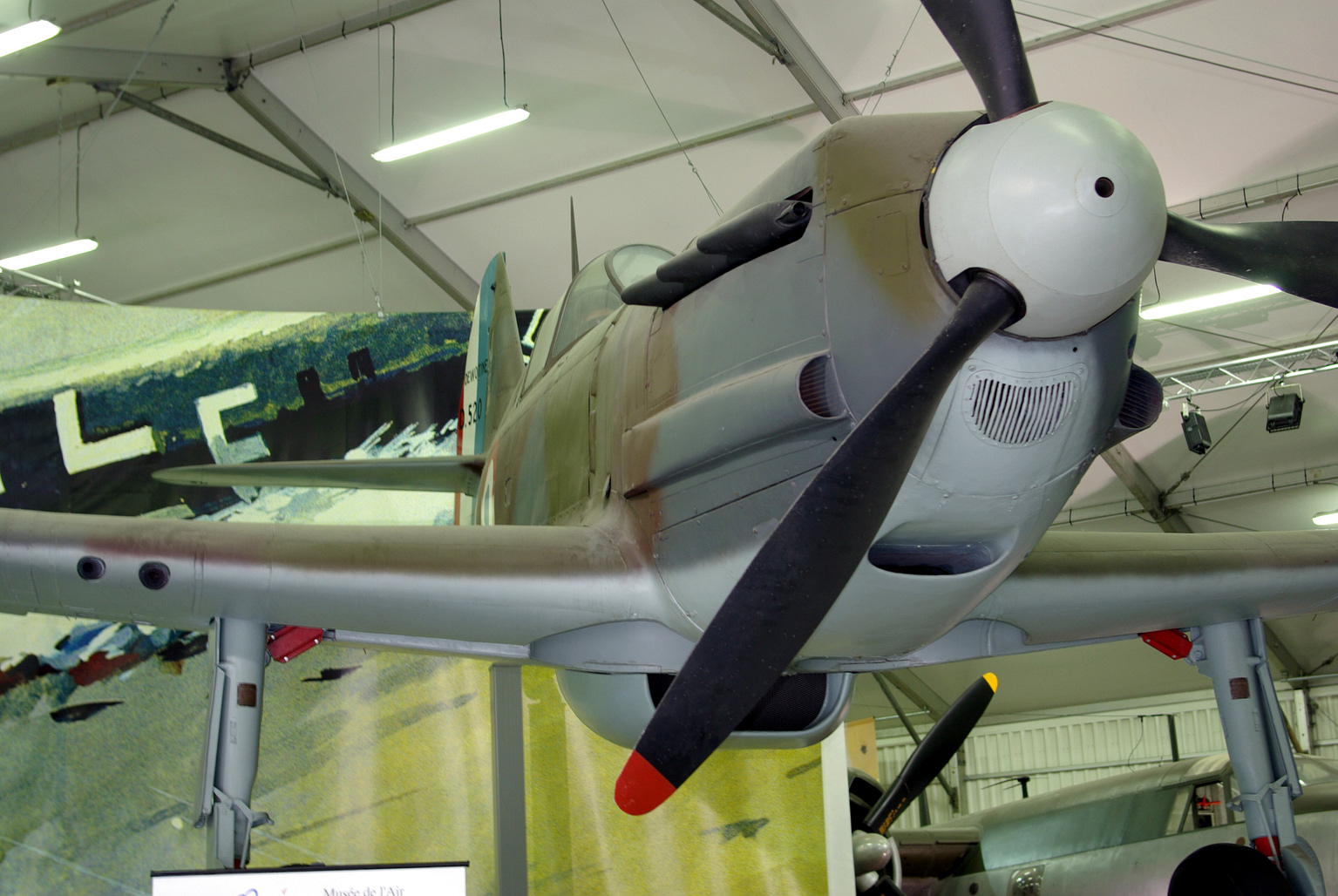
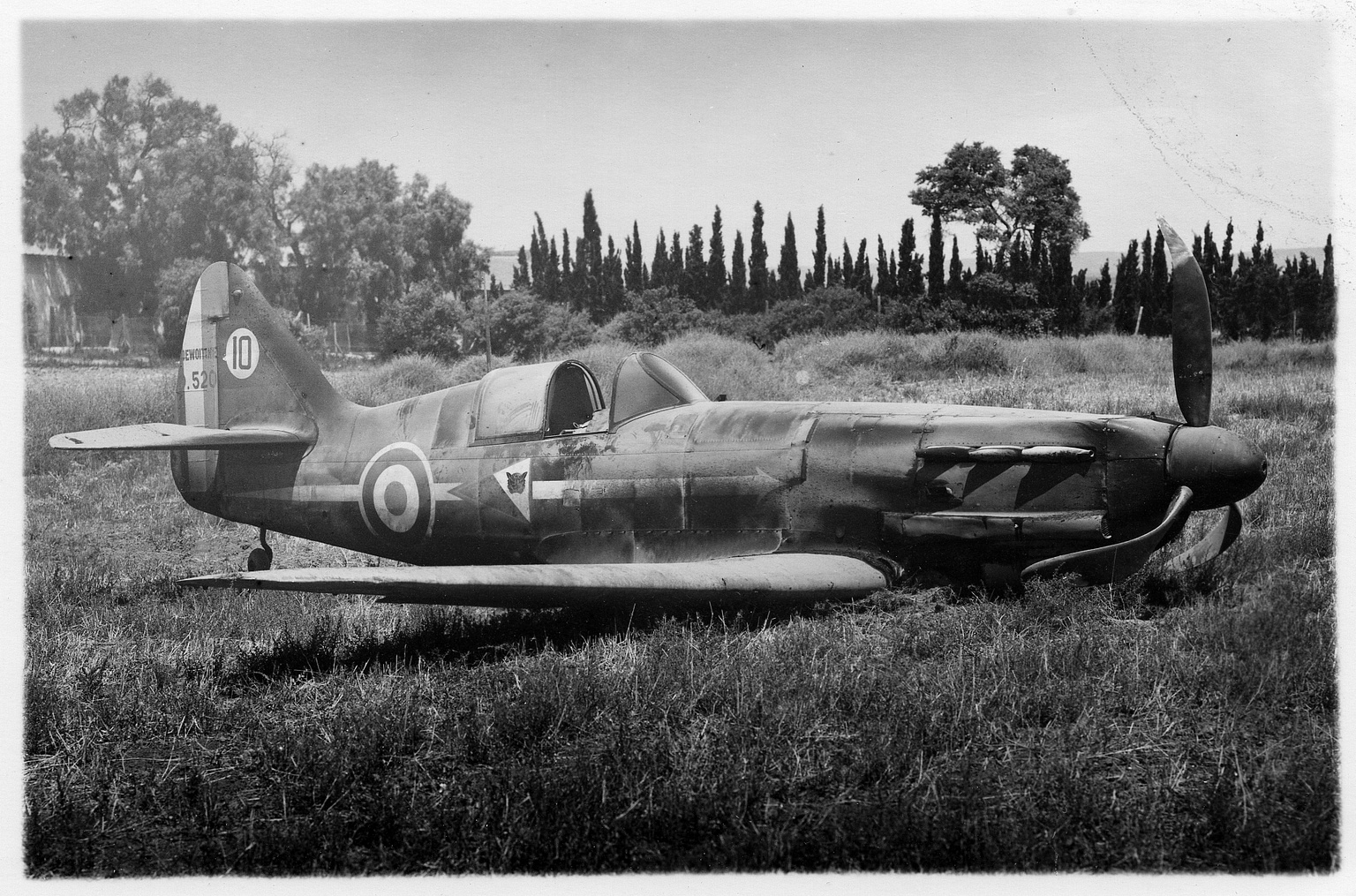
Photographs via Wikimedia Commons under the licences noted in each caption. Period images are in the public domain or released without restrictions; museum photographs are used under Creative Commons with attribution to their authors.
On film
The Dewoitine D.520 on film
A concise, well-sourced English-language history of the aircraft, its design and its complicated career.
“France’s Only Fighter That Could Rival Germany’s: Dewoitine D.520” by the aviation-history channel IHYLS (~54,000 subscribers; roughly 86,000 views as of 2026). Chosen as a clear, accurate English overview; figures in the film should be cross-checked against the sources listed below.
Global footprint
Where the Dewoitine D.520 flew and fought
France designed and built it; France flew it in 1940 and, as Vichy, across the Mediterranean; and after the fall of France it turned up in German, Italian and Bulgarian markings before ending its days in French museums. Toggle the categories to see the type’s small but tangled global footprint.
Combat record
The Dewoitine D.520 by the numbers
All figures are period estimates and wartime claims; scholarly sources differ, and totals should be read as ranges rather than exact counts.
Survivors
Surviving Dewoitine D.520s on display
Only a handful of D.520s exist today, all in France — enough to judge the aircraft in the metal, but nowhere near enough to see one as a common sight.
The best-known survivor is at the Musée de l’Air et de l’Espace at Le Bourget, north of Paris. Its aircraft, serial number 862, is displayed in the markings of GC III/6 as the mount of the ace Pierre Le Gloan — a fitting choice given how closely his story is bound to the type. A second airframe has been the subject of a long restoration by the Conservatoire de l’Air et de l’Espace d’Aquitaine near Bordeaux, which returned a D.520 to airworthy condition in the mid-2000s, and further examples survive in French collections in varying states.
That airworthy restoration is worth being precise about. A D.520 has flown in the modern era, which makes the type one of the very few 1940 French fighters ever to take to the air again — but there is no continuously flying D.520, and there is certainly no bookable ride in one anywhere in the world. Any future flights would be rare heritage events, not a passenger experience.
Why so few? The answer is the same story of numbers and misfortune that shaped the aircraft’s whole career. Relatively few D.520s were built compared with the great production runs of the Spitfire or Bf 109; many were destroyed in 1940, worn out as trainers under three different air forces, or scrapped in the years after the war when a defeated France had little appetite for preserving the machines of its darkest hour. The handful that survived did so almost by accident, and their preservation today is a deliberate act of remembrance — a way of keeping honest company with a fighter whose record is proud, painful and complicated in equal measure.
For anyone wanting to see one, the Musée de l’Air et de l’Espace at Le Bourget is the place to start: its GC III/6 machine sits among the giants of French aviation history, small and purposeful, exactly as it would have looked dispersed at the edge of a grass airfield in the terrible spring of 1940.
Standing in front of it, the numbers that fill this page resolve into something human-sized. This is not a strategic bomber or a supersonic interceptor; it is a compact, single-seat fighter a person could push by the tail, built to be flung into the sky by young men against overwhelming odds, its nose filled by an engine and a single cannon, its wings hiding four rifle-calibre guns. That modesty is the point. The D.520 asks to be judged not as a war-winner it never was, but as what it truly was — a fine, brave, unlucky little aeroplane, and the best France had when it mattered most.
Q&A
Dewoitine D.520: your questions answered
Can I fly in a Dewoitine D.520?
No. Only a few D.520s survive, all of them in French museums, and while one example was restored to airworthy condition in the 2000s, there is no bookable flight in a Dewoitine D.520 anywhere — and MiGFlug does not offer one. It is a rare 1940 fighter, not a passenger ride.
The good news is that you genuinely can fly in real fighter jets today. MiGFlug arranges flights in aircraft such as the L-39 Albatros, the Hawker Hunter and the MiG-29 — check availability and prices at migflug.com/flights-prices.
Was the Dewoitine D.520 a good fighter?
Yes — it was the best fighter France fielded in 1940 and could meet the Messerschmitt Bf 109E on roughly even terms: fast for its engine power, agile, well-armed with a hub-firing 20 mm cannon, and well-liked by its pilots. Its weakness was not the aircraft but the situation — it arrived late and in tiny numbers, so it could not influence the outcome of the Battle of France.
Why did the D.520 fail to save France in 1940?
Because there were almost none of them when it mattered. Only a single groupe was fully operational on 10 May 1940, and production had barely begun to flow. The Battle of France was decided by numbers, doctrine and the collapse of the ground campaign — no single fighter type, however good, could have reversed that. The D.520’s story is about timing, not quality.
Why did the Germans, Italians and Bulgarians fly the D.520?
Because it was a modern fighter that fell into their hands. After the 1940 armistice, production continued under German oversight and the type equipped Vichy France. When Germany occupied the Vichy zone in late 1942 it seized around 250 aircraft and used them as advanced trainers; Italy operated captured examples; and Bulgaria received around 96 from 1943, flying them against American bombers. It is an awkward legacy in which a French fighter served several Axis air forces.
Did French pilots really fight the Allies in the D.520?
Yes, and it is an uncomfortable but important part of the story. Under Vichy, D.520 units fought British and Commonwealth aircraft over Syria and Lebanon in 1941, and US and British aircraft over North Africa during Operation Torch in 1942. Skilled pilots on both sides were killed in these clashes between former allies — a consequence of France’s defeat and division, not of any choice made by the aircraft.
How many Dewoitine D.520s were built?
Roughly 900 in total, though sources vary and the number should be treated as an estimate. Around 400–440 were completed before the June 1940 armistice, with the remainder built afterward under Vichy and German oversight into the war years. The Musée de l’Air cites 403 before the fall of France and 488 more thereafter, for about 891.
How fast was the Dewoitine D.520?
Around 530–540 km/h (roughly 330 mph) at about 5,500 m, with sources commonly citing figures near 535 km/h — the Musée de l’Air quotes 540 km/h. That made it roughly 45–50 km/h faster than the MS.406 it supplemented and fast enough to trade blows with the Bf 109E, though it gave away a little top-end speed to the German fighter. Treat any single figure as an approximation of a wartime aircraft.
What engine and armament did the D.520 have?
A single liquid-cooled Hispano-Suiza 12Y V-12 of roughly 850–920 hp drove it. Its armament was a 20 mm HS.404 cannon mounted in the engine and firing through the propeller hub — accurate and hard-hitting, with about 60 rounds — backed by four 7.5 mm MAC 1934 machine guns in the wings. The hub cannon was the aircraft’s defining feature and a French speciality of the period.
Are there any Dewoitine D.520s left today?
Yes, but only a handful, and all in France. The best-known is at the Musée de l’Air et de l’Espace at Le Bourget, displayed in GC III/6 markings as Pierre Le Gloan’s aircraft. Another was restored to airworthy condition by the Conservatoire de l’Air et de l’Espace d’Aquitaine in the mid-2000s, and further examples survive in French collections. None is available for flights, and MiGFlug does not offer a D.520.
Did the Dewoitine D.520 fight the Messerschmitt Bf 109?
Yes — that was its main opponent. During the Battle of France in May–June 1940, D.520 squadrons repeatedly engaged Luftwaffe Bf 109Es and Bf 110s, and their claimed victories include a number of Bf 109s. The two fighters were closely matched: the Bf 109E was a little faster and climbed better, while the D.520 turned more tightly and carried an accurate hub cannon. Outcomes usually came down to numbers, height and tactics rather than the machines.
How does the D.520 compare to the Spitfire?
The Spitfire Mk I was faster (around 580 km/h versus roughly 535) and carried eight machine guns, but the D.520 answered with a hard-hitting 20 mm hub cannon and tight, honest handling. The bigger difference was numbers: Britain fielded hundreds of Spitfires and Hurricanes in 1940, while France had only a single fully operational D.520 groupe. The aircraft were comparable; the fleets were not. You can compare both in this museum — see our Supermarine Spitfire page.
Who designed the Dewoitine D.520?
It came from the design bureau of Émile Dewoitine, one of the great figures of French aviation, whose fighters ran from the biplane era to the eve of the jet age. By the time the D.520 was built his own company had been nationalised, so the aircraft was produced by the state combine that absorbed his team. Dewoitine’s post-war career was clouded by collaboration accusations, but the fighter bearing his name is remembered for its design.
You can’t fly the Dewoitine D.520. These, you can.
The D.520 lives on only in museums — but a genuine fighter flight is not a fantasy. MiGFlug puts you in the cockpit of real, flying military jets, from Cold War trainers to supersonic interceptors.
Fighter Jet Flights
Take the controls of a real ex-military jet with an experienced fighter pilot.
L-39 Albatros
The classic jet trainer — aerobatics and low-level fun, in several countries.
MiG-29 Fulcrum
Ride a genuine air-superiority fighter toward the edge of space.
More from the museum
More WWII fighters to explore
Sources
Dewoitine D.520: sources & further reading