
Hawker Siddeley Nimrod
The world’s first jet-powered maritime patrol aircraft — a sub-hunter built from a jet airliner, the RAF’s tireless ocean sentinel for over forty years, and the centre of one of British defence’s most bitter procurement stories.
Het verhaal
The Hawker Siddeley Nimrod: a jet airliner turned sub-hunter
Few aircraft have carried so unlikely a pedigree into so demanding a role as the Hawker Siddeley Nimrod. It was built from the de Havilland Comet — the world’s first jet airliner — and turned into the world’s first jet-powered maritime patrol aircraft, a long-legged ocean sentinel that hunted submarines, patrolled the sea lanes and eavesdropped on foreign signals for the Royal Air Force for more than four decades. It was elegant, capable and much loved by those who flew it, and its story runs from the dawn of the jet age to one of the most bitter procurement controversies in modern British defence.
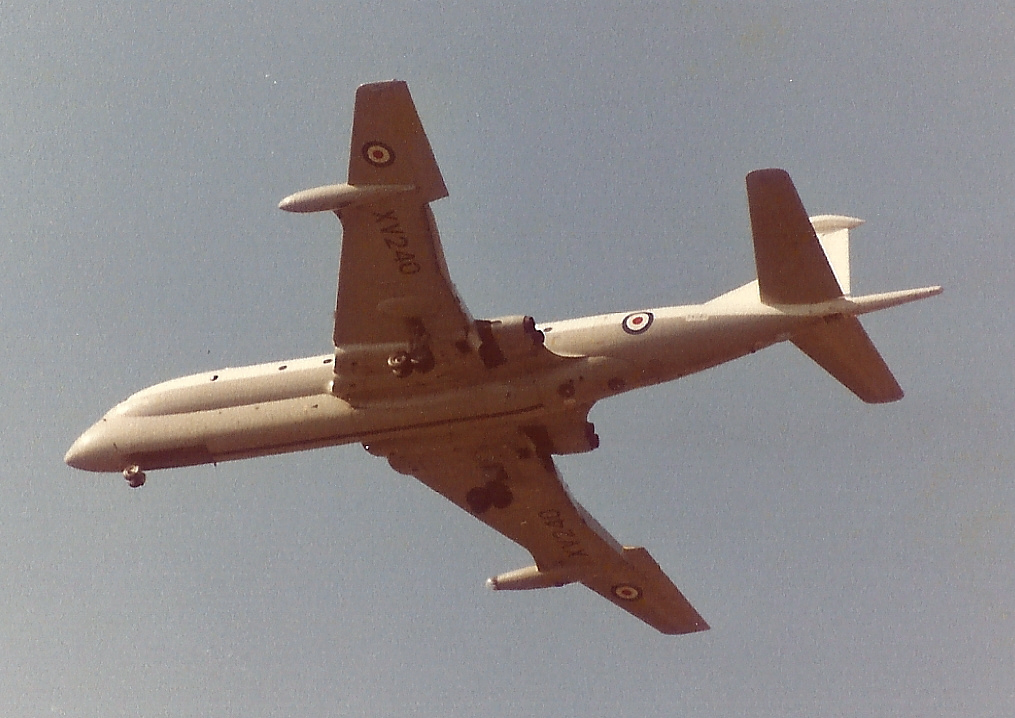
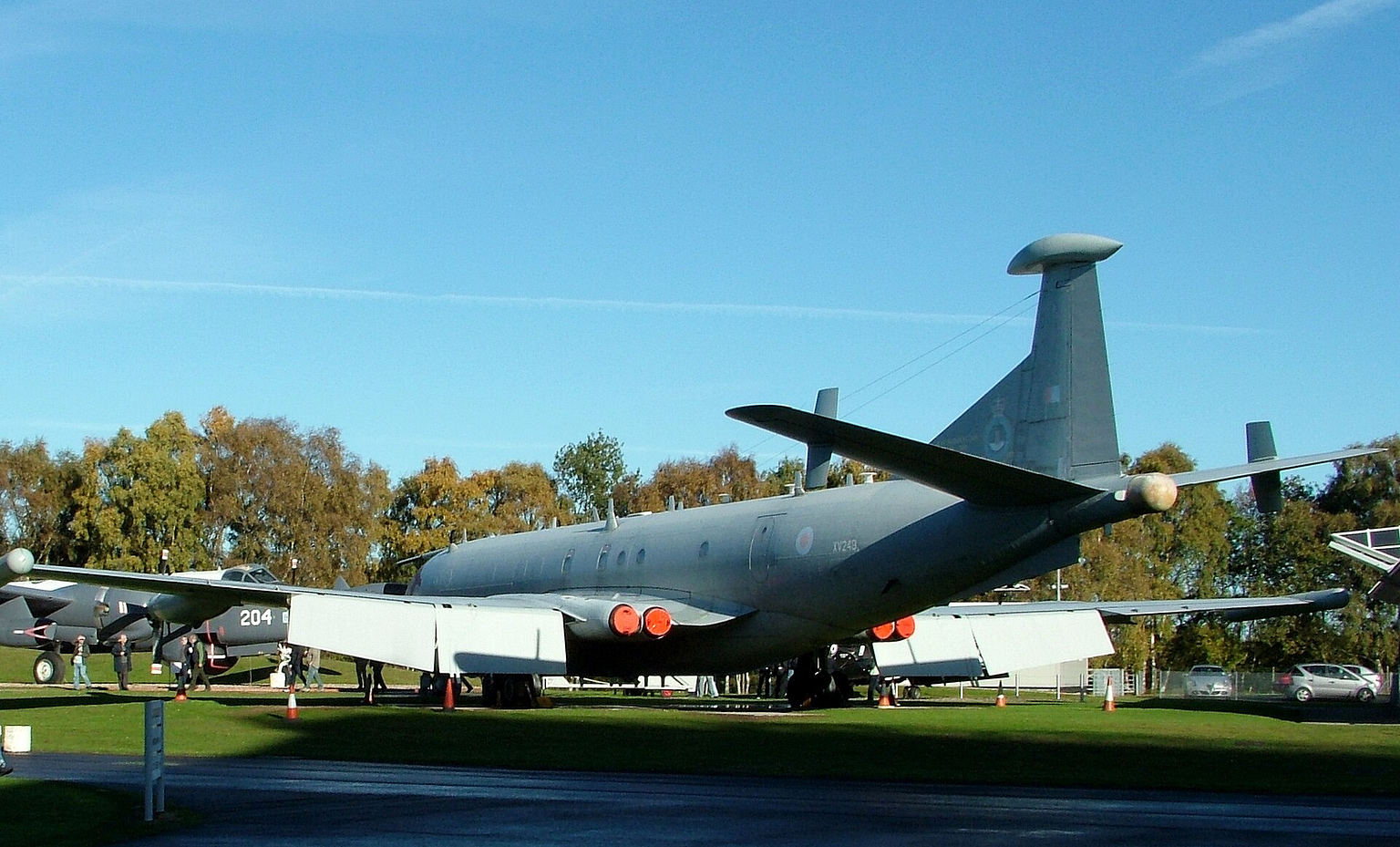
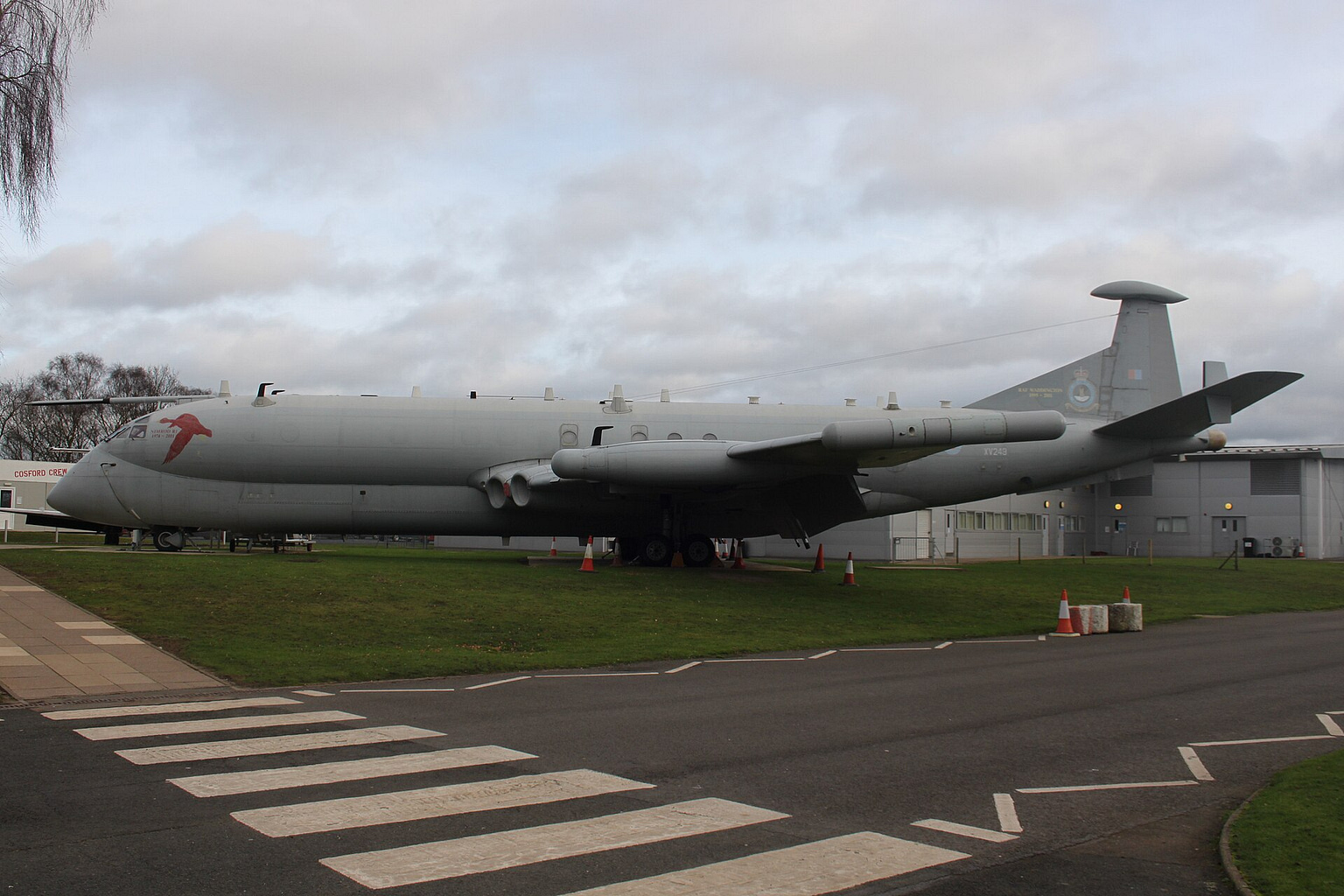
The Nimrod’s ancestry lies in the graceful Comet airliner of the 1950s. When the RAF needed a replacement for its ageing, piston-engined Avro Shackletons in the maritime patrol role, Hawker Siddeley proposed a bold idea: rather than design a wholly new aircraft, take the proven Comet 4C jet airframe and rebuild it for the hunt. The result, which first flew in prototype form in 1967, kept the Comet’s clean wing and its four engines buried in the wing roots, but added a long lower fuselage — a “double-bubble” pannier grafted beneath the original tube — to house a capacious, unpressurised weapons bay. That distinctive bulged belly, together with a magnetic-anomaly-detector boom projecting from the tail, gave the Nimrod its unmistakable silhouette.
For most of its life the maritime force flew from a small number of coastal bases — RAF Kinloss in the north of Scotland chief among them, with St Mawgan in Cornwall covering the south-western approaches. From these it ranged out over the North Atlantic, and in particular the so-called GIUK gap between Greenland, Iceland and the United Kingdom, the chokepoint through which Soviet submarines had to pass to reach the open ocean. Watching that gap, tracking the boats that slipped through it and being ready to hunt them in war was the Nimrod force’s central Cold War task, flown day and night, year after year.
“The world’s first jet maritime patrol aircraft — a Comet airliner rebuilt to hunt submarines, and it did the job for forty years.”— the Nimrod’s place in history, in a sentence
Power came from four Rolls-Royce Spey turbofans, and it was these that made the Nimrod genuinely new. Every maritime patrol aircraft before it had relied on propellers; the jet-powered Nimrod could dash to a distant search area far faster than a Shackleton, then throttle back — often shutting down two of its four engines to save fuel — and loiter for hours on patrol. It combined the speed of a jet with the endurance a sub-hunt demanded, and no other maritime aircraft in the world had done that before.
Inside, the Nimrod was a flying operations room. It carried a large mission crew working radar, acoustic and electronic sensors: a search radar to detect ships and surfaced submarines, racks of sonobuoys to drop into the sea and listen for submerged boats, the tail-mounted magnetic anomaly detector to sense the steel of a hull, and electronic support measures to pick up hostile radar and radio emissions. In its weapons bay it could carry torpedoes, depth charges and mines, and later anti-ship missiles. It was, in effect, a self-contained anti-submarine warfare system that could search tens of thousands of square miles of ocean in a single sortie.
The work itself mixed long tedium with sudden intensity. A patrol could mean many hours of methodical searching over empty grey sea, followed by a burst of concentrated effort when a contact appeared — laying a pattern of sonobuoys, working the acoustics, running in for a magnetic-anomaly pass. The Nimrod carried a large, close-knit crew to share that load, and the maritime force, known affectionately within the RAF as the ‘kipper fleet’, built a strong identity of its own around the aircraft and its demanding, unglamorous mission.
The Nimrod MR1 entered RAF service in 1969, replacing the Shackleton and taking up the Cold War task of tracking Soviet submarines in the North Atlantic and the waters around the British Isles. Through the 1970s it became the backbone of British maritime air power. From the end of that decade a comprehensive upgrade produced the Nimrod MR2, with far more capable radar and acoustic-processing systems, and it was the MR2 that would serve, in various updated forms, right through to the end.
A small, secretive branch of the family did very different work. Three aircraft were completed as the Nimrod R1, stripped of their submarine-hunting gear and packed instead with sensitive receivers for signals intelligence — listening to foreign radars and communications. Flown by a single specialist squadron, the R1s were among the RAF’s most closely guarded assets, their missions rarely acknowledged, and they served quietly for four decades until 2011.
For all the seriousness of its work, the Nimrod was also, by the accounts of those who flew it, a thoroughly pleasant aircraft to handle — a big, powerful jet with the smooth manners inherited from its airliner origins, yet capable of being flown with surprising agility for its size. At air displays its low, fast passes on full power, and the wailing note of its four Speys, made it a firm favourite with crowds. That affection, built up over more than forty years, helps explain why the manner of its ending was felt so keenly.
Not every Nimrod venture succeeded. In the 1970s and 1980s the RAF tried to turn the airframe into an airborne early warning platform, the Nimrod AEW3, fitting large radar radomes in a bulbous nose and tail. The programme became a byword for failure: the mission electronics could never be made to work reliably, costs spiralled, and in 1986 the project was cancelled and the RAF bought the American Boeing E-3 Sentry instead. It was an early warning of the troubles that would later engulf the whole Nimrod story.
As a maritime patrol aircraft, though, the Nimrod earned its keep many times over. In the 1982 Falklands War, MR2s were hurriedly fitted with in-flight refuelling probes, and later with air-to-air and anti-ship missiles, to fly extraordinarily long patrols from Ascension Island deep into the South Atlantic — some of the longest operational sorties the RAF had ever flown, watching for Argentine ships and submarines and supporting the task force. In later years the Nimrod’s sensors and endurance found a new use over land, and the aircraft flew reconnaissance and surveillance missions in support of operations in Iraq and Afghanistan, far from the oceans it was built to patrol.
Beyond the sub-hunt, the Nimrod also turned its endurance and searching sensors to saving lives, routinely coordinating search-and-rescue operations far out over the sea — acting as an airborne command post above stricken ships and ditched aircraft, directing rescue helicopters and vessels to survivors. It was this same combination of range, sensors and cabin space that made the aircraft adaptable to overland work in later years, a flexibility that kept the design useful across a far wider range of tasks than its designers can have imagined.
It was over Afghanistan that the Nimrod suffered its darkest day. On 2 September 2006, Nimrod MR2 XV230 caught fire and was lost shortly after air-to-air refuelling, killing all fourteen personnel on board — the largest single loss of British service lives in one incident since the Falklands. The subsequent independent review was deeply critical of failings in the aircraft’s airworthiness arrangements, and its findings drove lasting changes in how British military aircraft safety is managed. The loss is remembered with great sadness, and the fourteen who died are honoured to this day.
The Nimrod’s ending was drawn out and controversial. To replace the ageing MR2s, the RAF had ordered a deeply rebuilt version, the Nimrod MRA4, with new wings, new engines and modern mission systems. The programme ran vastly over budget and years behind schedule; the MR2 fleet was withdrawn in 2010 before the MRA4 was ready, and then, in the 2010 defence review, the MRA4 itself was cancelled and the nearly complete aircraft were broken up in 2011. Britain was left without a maritime patrol aircraft at all for the best part of a decade, until the Boeing P-8 Poseidon entered service. For an aircraft so widely admired, and for the industrial effort poured into its successor, it was a painful and much-mourned end — but it did not erase the record of a genuine pioneer that had guarded Britain’s waters, in one form or another, for more than forty years.
01From jet airliner to sub-hunter: the Comet ancestry+
The Nimrod is one of very few combat aircraft descended directly from a passenger jet. Its ancestor was the de Havilland Comet, the world’s first jet airliner, and specifically the Comet 4C. When the RAF sought a modern replacement for the piston-engined Avro Shackleton, Hawker Siddeley proposed adapting the proven Comet airframe rather than starting from scratch — a faster, cheaper route to a jet maritime patrol aircraft.
The Comet gave the Nimrod its clean, efficient wing and its four engines buried in the wing roots. Onto that airliner heritage the designers grafted everything a sub-hunter needed. The unlikely marriage worked: the airliner’s aerodynamic refinement and the jet’s speed proved a fine basis for a maritime patrol aircraft, and the Nimrod would outlast the Comet in service by decades.
02The double-bubble fuselage and the weapons bay+
The most visible change from airliner to warplane was the fuselage. Beneath the Comet’s original pressurised tube, the designers added a second, lower section running much of the length of the aircraft — the “double-bubble” profile that gives the Nimrod its distinctive pot-bellied look. This lower pannier housed a long, unpressurised internal weapons bay.
That bay let the Nimrod carry its offensive load — torpedoes, depth charges, mines and later missiles — internally, without the drag of external stores, preserving the clean lines and long range inherited from the Comet. Combined with the tail boom and wing pods, the bulged belly made the Nimrod instantly recognisable, an airliner reshaped for war.
03Four Spey turbofans: the world’s first jet MPA+
The Nimrod was powered by four Rolls-Royce Spey turbofans, buried in the wing roots in the Comet fashion. This made it the first jet-powered maritime patrol aircraft to enter operational service anywhere in the world — every predecessor, including the Shackleton it replaced and the American aircraft of the day, relied on propellers.
Jet power transformed the mission. The Nimrod could sprint to a distant search area far faster than a piston or turboprop aircraft, cutting the time to reach a submarine contact. Once on station it could throttle right back, often shutting down two engines to conserve fuel, and loiter for many hours. Speed to the fight and endurance over it — the combination that made the jet MPA idea so compelling.
04The sensor suite: radar, sonobuoys, MAD and ESM+
Inside, the Nimrod was a flying anti-submarine system. It carried a search radar to detect ships and surfaced or snorkelling submarines; large numbers of sonobuoys, dropped into the sea to listen acoustically for submerged boats and relay what they heard back to the aircraft; a magnetic anomaly detector in the tail boom, sensing the disturbance a submarine’s steel hull makes in the Earth’s magnetic field; and electronic support measures to detect and locate hostile radar and radio emissions.
A large mission crew worked these sensors at consoles in the cabin, building a picture of what lay on and beneath the sea. The MR2 upgrade brought much-improved radar and acoustic-processing equipment, keeping the Nimrod a credible sub-hunter into the twenty-first century. It could search vast areas of ocean in a single long sortie.
05Entering service in 1969: replacing the Shackleton+
The Nimrod MR1 entered RAF service in 1969, replacing the Avro Shackleton — itself a descendant of the wartime Lancaster — in the maritime patrol and anti-submarine role. The change from a piston-engined, propeller-driven aircraft to a sleek four-jet was a generational leap, and it gave Britain one of the most advanced maritime patrol capabilities in the world.
The timing mattered. The Cold War was at its height, and the Soviet submarine fleet, including growing numbers of nuclear boats, was a central threat to the sea lanes on which Britain and NATO depended. From 1969 the Nimrod took up the task of tracking those submarines across the North Atlantic and around the British Isles, a mission it would carry for the rest of the Cold War and beyond.
06MR1 to MR2: the mid-life sensor upgrade+
By the late 1970s the electronics that made the Nimrod effective were ageing, even though the airframe had plenty of life left. Rather than replace the aircraft, the RAF upgraded it. The Nimrod MR2 programme rebuilt the mission systems around a new search radar and a far more capable acoustic-processing system for handling sonobuoy data, along with improved communications and navigation.
The MR2, entering service from around 1979, was effectively a new aircraft inside the same familiar shell, and it was in this form that the Nimrod did most of its long service. Further updates followed over the years — refuelling probes, defensive systems, new equipment for overland work — but the MR2 remained the definitive maritime version until the fleet’s retirement.
07The Nimrod R1: silent signals intelligence+
Alongside the maritime patrol aircraft, three Nimrods were completed to a wholly different standard as the Nimrod R1. In place of the submarine-hunting gear they carried an extensive, highly classified suite of receivers and recorders for signals intelligence — intercepting and analysing foreign radar and communications emissions.
Operated by a single specialist Royal Air Force squadron, the R1s were among Britain’s most secret aircraft. Their sorties were rarely acknowledged and their equipment almost never described in public, but they provided the country with a vital electronic intelligence capability throughout the later Cold War and the conflicts that followed. The R1 served on until 2011, when its role passed to a new aircraft.
08The AEW3 disaster: the airborne early warning failure+
One Nimrod venture became a notorious failure. In the 1970s the RAF sought an airborne early warning aircraft — a flying radar picket to detect low-level attackers — and chose to develop it on the Nimrod airframe as the Nimrod AEW3, with big radar radomes bulging from the nose and tail. It promised a home-grown alternative to buying American.
It did not work. The complex mission electronics could never be made to perform reliably; the radar struggled to do what was needed, costs escalated enormously and the schedule slipped for years. In 1986 the government cancelled the AEW3 programme and bought the proven Boeing E-3 Sentry instead. The episode was a costly embarrassment — and, in hindsight, a warning about the risks of ambitious Nimrod modification programmes.
09The Falklands: ultra-long patrols from Ascension+
The 1982 Falklands War found the Nimrod far from home and needing more reach than it had. MR2s were rapidly modified with in-flight refuelling probes so they could fly from Ascension Island deep into the South Atlantic, and some were fitted with air-to-air Sidewinder missiles for self-defence and Harpoon anti-ship missiles for offence.
The resulting sorties were among the longest the RAF had ever flown — single missions lasting many hours over vast stretches of ocean, patrolling for Argentine surface ships and submarines, and helping to screen the British task force. The rapid fitting of refuelling probes and weapons showed how adaptable the airframe was, and the Falklands patrols became one of the Nimrod’s proudest operational chapters.
10Over land: reconnaissance in Iraq and Afghanistan+
Late in its career the Nimrod found work far from the sea. Its long endurance, powerful sensors and roomy cabin made it a useful overland reconnaissance and surveillance platform, and MR2s were adapted to support coalition operations over Iraq and Afghanistan in the 2000s, watching the ground below and relaying information to forces on it.
It was demanding, unglamorous work in a harsh environment, a long way from the North Atlantic sub-hunt the aircraft had been designed for. That the Nimrod could take on this role at all is testament to the flexibility of the design — but the punishing operational tempo, on an ageing airframe, also formed the backdrop to the tragedy that struck the fleet over Afghanistan in 2006.
11The loss of XV230, and the Nimrod Review+
On 2 September 2006, Nimrod MR2 XV230 was lost over Afghanistan, catching fire and breaking up shortly after air-to-air refuelling. All fourteen service personnel aboard were killed. It was the largest single loss of British military lives in one incident since the Falklands War, and it is remembered with deep sorrow; the fourteen who died are honoured to this day.
An independent review of the loss, published in 2009, examined the aircraft’s safety and airworthiness arrangements and was strongly critical of failings it identified in how these had been managed. Its conclusions led to significant and lasting reforms in the way British military aircraft airworthiness is overseen. Out of a grievous loss came changes intended to protect other crews in the future.
12The MRA4 cancellation and the end of the fleet+
To replace the ageing MR2, the RAF ordered the Nimrod MRA4 — a deep rebuild with new wings, new BR710 engines and a modern mission system. In practice it amounted almost to a new aircraft, and the programme ran hugely over budget and years late, with each airframe effectively hand-fitted. Delays mounted while costs climbed.
The MR2 fleet was retired in 2010, before the MRA4 was ready to take over, and then in the 2010 Strategic Defence and Security Review the MRA4 itself was cancelled outright. The nearly complete aircraft were broken up in 2011. The decision was highly controversial and much lamented, and it left the United Kingdom without any maritime patrol aircraft until the Boeing P-8 Poseidon entered service years later. It was a sad and bitter end to the Nimrod story.
13Surviving Nimrods+
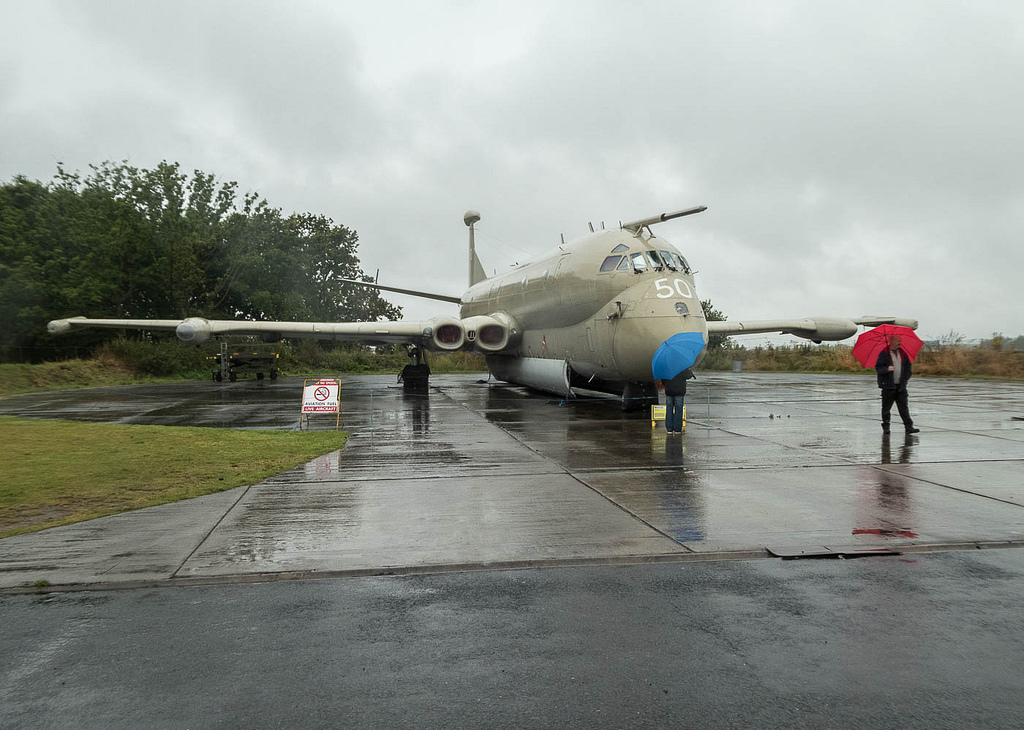
Although the MRA4s were scrapped, a number of earlier Nimrods survive, all in the United Kingdom — fitting for an aircraft flown only by the Royal Air Force. Complete examples are preserved at British aviation museums and heritage sites, and at least one is kept in taxiable condition, still able to run its engines and move under its own power for enthusiasts.
These survivors preserve the memory of a remarkable aircraft: the world’s first jet maritime patrol aircraft, a Comet airliner reborn as a sub-hunter, and a machine that served the RAF for over four decades. For a type whose service ended in such controversy, the preserved Nimrods are a reminder of everything the aircraft achieved in its long career.
Design & Engineering
How the Nimrod was built: an airliner reshaped for the hunt
The Nimrod took the aerodynamic refinement of the Comet jet airliner and rebuilt it around a weapons bay, a sensor suite and the endurance a sub-hunt demands — the first jet maritime patrol aircraft in the world.
Comet airframe, four Speys
A de Havilland Comet 4C airliner rebuilt for war, with four Rolls-Royce Spey turbofans in the wing roots — speed to the search area, endurance over it.
Double-bubble belly
A long lower fuselage pannier grafted beneath the airliner tube, housing an unpressurised weapons bay for torpedoes, depth charges, mines and missiles.
A flying ops room
Radar, racks of sonobuoys, a tail magnetic-anomaly detector and electronic support measures, worked by a large mission crew — a self-contained ASW system.
Specificaties
Hawker Siddeley Nimrod specifications: dimensions, performance and cost
| Type | Four-engined maritime patrol / anti-submarine / SIGINT aircraft |
| Bemanning | ~13 (two pilots, flight engineer and a mission crew; varied by role) |
| Lengte | ~38.6 m (126 ft 9 in) — MR2, approx. |
| Spanwijdte | ~35 m (114 ft 10 in) — approx. |
| Hoogte | ~9.1 m (29 ft 8 in) — approx. |
| Max takeoff weight | ~87,000 kg (~192,000 lb) — approx. |
| Engines | 4 × Rolls-Royce Spey Mk 250 turbofans (~12,000 lbf each) |
| Bewapening | Torpedoes, depth charges, mines; later Harpoon anti-ship & Sidewinder air-to-air missiles |
| Max speed | ~925 km/h (~575 mph / ~500 kn) — approx. |
| Typical endurance | ~10–12 hours; far longer with air-to-air refuelling — approx. |
| Serviceplafond | ~12,800 m (~42,000 ft) — approx. |
| First flight | 1967 (Nimrod prototype) |
| Introduced | 1969 (Nimrod MR1, RAF) |
| Retired | 2010 (MR2); 2011 (R1) |
| Number built | ~49 (all versions, incl. 3 R1) |
| Main variants | MR1, MR2 (maritime); R1 (SIGINT); AEW3 (cancelled); MRA4 (cancelled) |
| Operators | United Kingdom (Royal Air Force) — only operator |
| Unit / programme cost | not reliably comparable; the MRA4 rebuild is widely reported as running to billions of pounds |
| Cost per flight hour | not reliably recorded |
14The Nimrod’s variants, from MR1 to MRA4+
The Nimrod family was small but varied. The original maritime version was the MR1, upgraded into the much more capable MR2. Three aircraft were built as the R1 for signals intelligence. The AEW3 airborne early warning version was developed but cancelled in 1986, and the deeply rebuilt MRA4 maritime aircraft was cancelled in 2010 before entering service.
Only around forty-nine Comet-derived Nimrods were built in total, a modest number reflecting the RAF as the single customer. There was no export success and no foreign operator; the whole story of the type plays out within the Royal Air Force, from the first MR1 of 1969 to the last R1 in 2011.
15The Hawker Siddeley Nimrod’s costs: what the records show+
Reliable, directly comparable cost figures for the Nimrod are hard to state cleanly. The original aircraft were procured decades ago, and much of the type’s notoriety attaches not to the MR1/MR2 but to the MRA4 rebuild programme, whose costs became the subject of intense public and parliamentary scrutiny. That programme is widely reported to have run to billions of pounds for a handful of aircraft that never entered service.
Rather than quote a single misleading number, we list the cost fields here with caution. What is well documented is that the MRA4’s escalating cost was central to the decision to cancel it in 2010 — a case study, often cited, in how a modification programme can grow until it becomes unaffordable.
16Why the Nimrod endured so long+
The Nimrod served for over forty years — a remarkable span for any combat aircraft. Part of the reason was the soundness of the basic airframe, with the Comet’s efficient wing and roomy fuselage giving the range, endurance and internal volume a maritime patrol aircraft needs. Part was the mid-life MR2 upgrade, which renewed the sensors and kept the aircraft effective long after its original electronics were obsolete.
And part, frankly, was the difficulty of replacing it. The AEW3 and then the MRA4 programmes both faltered, and the P-8 Poseidon lay years in the future, so the elderly MR2 soldiered on well beyond its intended life. Longevity was thus a mark both of a good design and of the troubles that dogged every attempt to succeed it.
17Surviving Nimrods and where to see them+
Because the type was flown only by the RAF and retired relatively recently, a fair number of Nimrods survive, all in the United Kingdom. Complete aircraft are preserved at aviation museums and heritage sites around Britain, and at least one is maintained in taxiable condition, able to run its engines for enthusiasts at events.
The scrapping of the nearly complete MRA4s in 2011 means those aircraft are gone, which makes the preserved MR1s, MR2s and the few surviving airframes all the more valuable as reminders of the type. For anyone wanting to see the world’s first jet maritime patrol aircraft in the metal, Britain’s museums are the place.
Timeline
The Hawker Siddeley Nimrod through the years
The de Havilland Comet, the world’s first jet airliner, first flies — the ancestor from which the Nimrod would be built.
The first Nimrod, rebuilt from a Comet airframe, takes to the air — the world’s first jet-powered maritime patrol aircraft.
The Nimrod MR1 enters service, replacing the piston-engined Avro Shackleton in the maritime patrol and anti-submarine role.
The dedicated signals-intelligence Nimrod R1 enters secret service with a specialist RAF squadron.
The much-improved Nimrod MR2, with new radar and acoustic-processing systems, begins to enter service.
MR2s are fitted with refuelling probes and missiles and fly ultra-long-range patrols from Ascension Island into the South Atlantic.
The troubled Nimrod AEW3 airborne early warning programme is cancelled; the RAF buys the Boeing E-3 Sentry instead.
Nimrod MR2 XV230 is lost over Afghanistan with all fourteen aboard — a tragedy that drove far-reaching airworthiness reforms.
The MR2 fleet is withdrawn and the deeply over-budget Nimrod MRA4 rebuild is cancelled in the defence review; the airframes are later scrapped.
The Nimrod R1 SIGINT aircraft are retired, ending over four decades of Nimrod service with the RAF.
Stories & Eyewitnesses
The Hawker Siddeley Nimrod in stories: the moments that defined it
A jet airliner turned sub-hunter, the world’s first jet MPA, secret spy flights, Falklands endurance, a costly failure and a bitter end — the Nimrod’s history told through the moments that stuck.
Comet Ancestry
Airliner turned warplane
The Nimrod was built from a jet airliner.
The Nimrod was rebuilt from the de Havilland Comet, the world’s first jet airliner — a rare case of a passenger jet becoming a front-line combat aircraft.
The Comet gave it a clean wing and four wing-root engines; the designers added everything a sub-hunter needed.
World First
The first jet sub-hunter
No jet maritime patrol aircraft had served before it.
With four Rolls-Royce Spey turbofans, the Nimrod became the world’s first jet-powered maritime patrol aircraft — every predecessor used propellers.
Jet speed to the search area, then hours of loiter on patrol, often with two engines shut down.
Double Bubble
The pot-bellied profile
A long lower fuselage held the weapons bay.
Beneath the Comet tube, the designers added a second lower section — the double-bubble belly — housing a long unpressurised weapons bay.
Torpedoes, depth charges and mines rode inside, keeping the airliner’s clean lines and long range.
Flying Ops Room
Radar, sonobuoys and MAD
A cabin full of sensors and operators.
The Nimrod carried search radar, racks of sonobuoys, a tail magnetic-anomaly detector and electronic support measures, worked by a large mission crew.
It was a self-contained anti-submarine system that could search vast areas of ocean in one sortie.
Cold War Sentinel
Hunting Soviet submarines
The Nimrod tracked Soviet boats for decades.
From 1969 the Nimrod took up the Cold War task of tracking Soviet submarines across the North Atlantic and around the British Isles.
It was the backbone of British maritime air power through the height of the Cold War.
The R1
Britain’s secret listeners
Three Nimrods flew secret SIGINT missions.
Three aircraft were built as the Nimrod R1, packed with receivers for signals intelligence and flown by a single, secretive RAF squadron.
Among Britain’s most closely guarded aircraft, they served quietly until 2011.
AEW3
The radar that never worked
The early-warning Nimrod was a costly failure.
The Nimrod AEW3, an airborne early warning version with big nose and tail radomes, could never be made to work reliably.
Cancelled in 1986 after huge cost, it was replaced by the American E-3 Sentry — an early warning of Nimrod modification risk.
Falklands
The longest patrols
MR2s flew vast sorties from Ascension.
In 1982 MR2s were fitted with refuelling probes and missiles and flew ultra-long patrols from Ascension Island into the South Atlantic.
They were among the longest operational sorties the RAF had ever flown.
Over Land
Afghanistan and Iraq
The sub-hunter found work over the desert.
Late in its life the Nimrod used its endurance and sensors for overland reconnaissance in Iraq and Afghanistan, far from the oceans it was built for.
Demanding work on an ageing airframe, a long way from the North Atlantic.
XV230
Remembering the fourteen
The 2006 loss over Afghanistan.
On 2 September 2006, Nimrod XV230 was lost over Afghanistan, killing all fourteen aboard — the largest single loss of British service lives since the Falklands.
The independent review that followed drove lasting reforms in military airworthiness. The fourteen are honoured to this day.
MRA4
The rebuild that was scrapped
A costly successor cancelled before service.
The deeply rebuilt Nimrod MRA4, meant to replace the MR2, ran vastly over budget and was cancelled in 2010; the near-complete aircraft were scrapped in 2011.
It left the UK without a maritime patrol aircraft for years — a bitter, much-mourned end.
RAF Only
Flown by one air force
Only Britain operated the Nimrod.
Around forty-nine Nimrods were built and every one served the Royal Air Force alone — there was no export customer and no foreign operator.
The whole story of the type plays out within the RAF, from 1969 to 2011.
The Survivors
Preserved in Britain
Several Nimrods survive in UK museums.
A number of Nimrods are preserved across the United Kingdom, at museums and heritage sites, with at least one kept in taxiable condition.
They are the last reminders of the world’s first jet maritime patrol aircraft.
Photo Gallery
The Hawker Siddeley Nimrod in photographs
Royal Air Force and museum photographs of the Nimrod and its variants, each credited to its source and licence. Click any photo to enlarge.
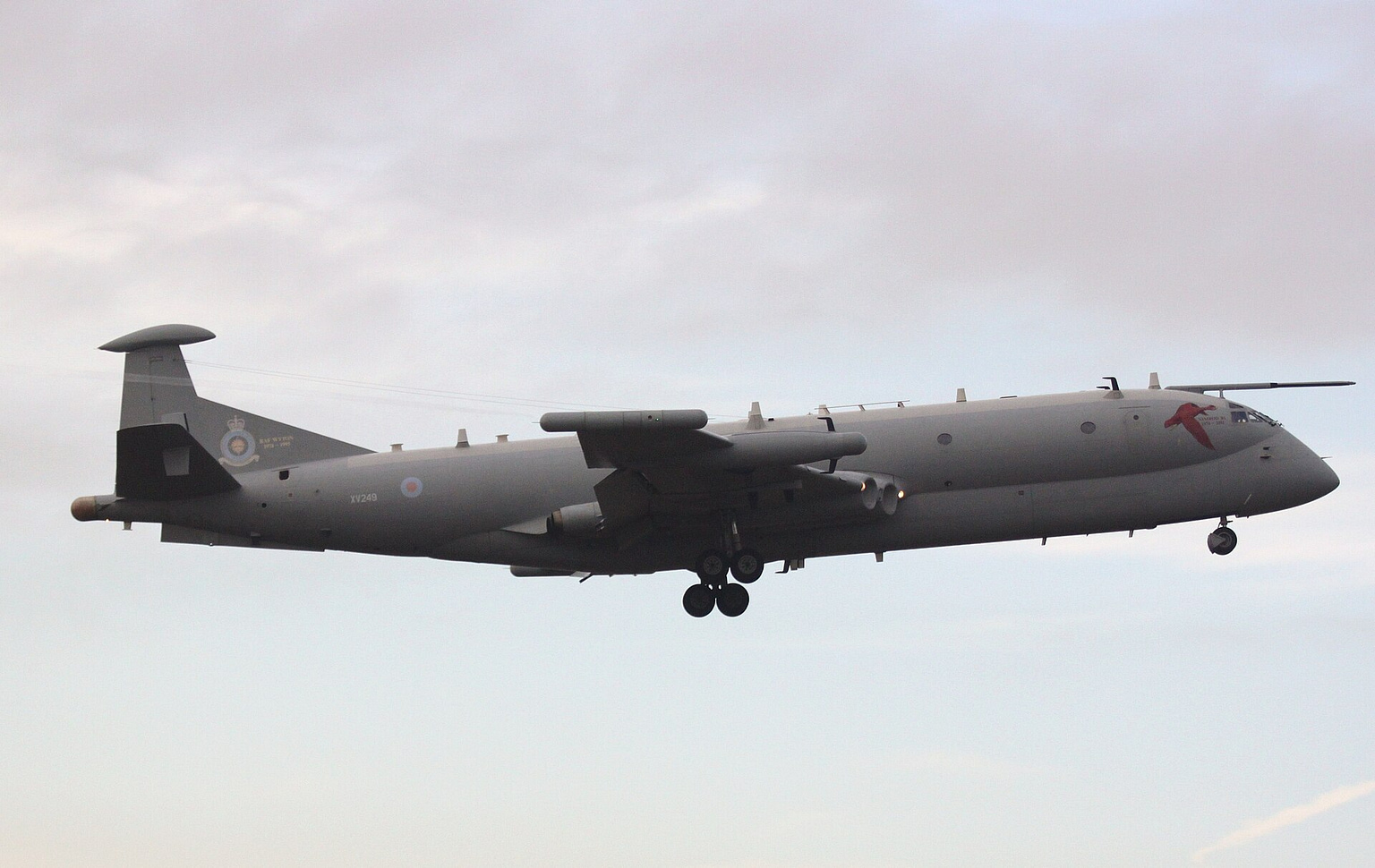
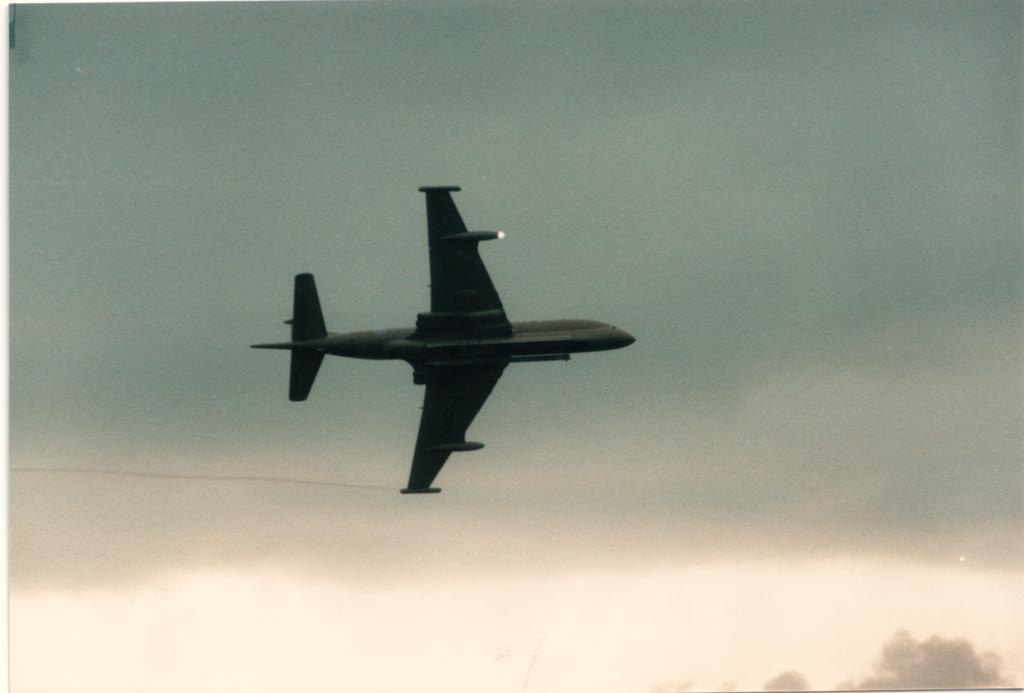
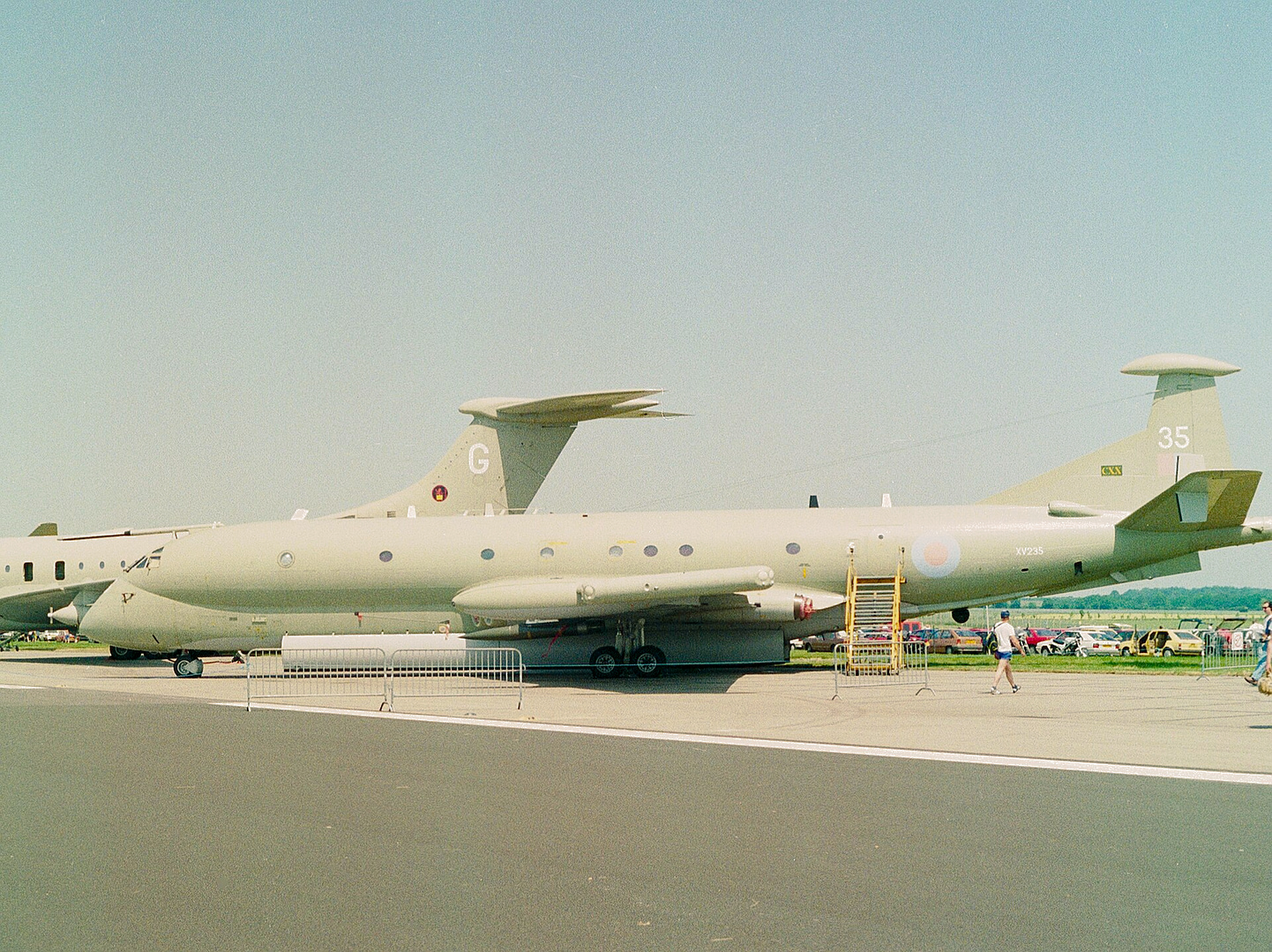
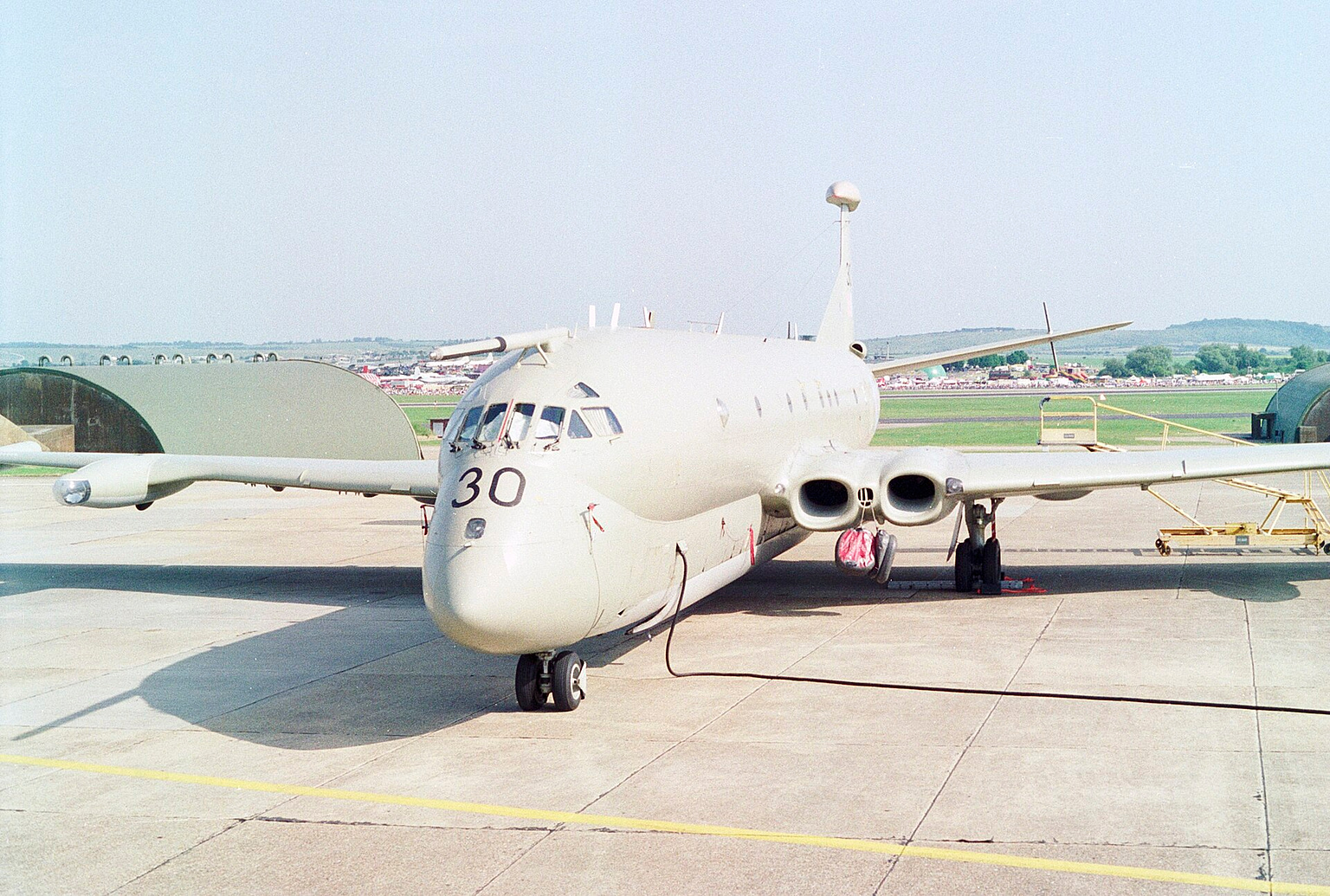
On Film
The Hawker Siddeley Nimrod on video: a documentary history
A documentary on the Nimrod — the Comet-derived jet sub-hunter, its long RAF service, and the controversy that surrounded its end.
“Hawker Siddeley Nimrod: The Phoenix With Clipped Wings” by Megaprojects (approx. 238,000 views at time of writing; running time ~22 minutes) — a documentary on the Nimrod, its Comet origins, its long RAF service and its troubled end.
Operations Overview
Where the Hawker Siddeley Nimrod flew: an operator map
Designed, built and flown by the United Kingdom alone. The Nimrod had no export customer and no foreign operator — every aircraft served the Royal Air Force, so this is a single-nation map. Hover or tap for detail.
Categories: Design, Manufacture & RAF Service (United Kingdom) · Surviving Airframes (United Kingdom). The Nimrod was operated only by the RAF, so both categories fall on a single country.
Service Record
The Nimrod’s record: four decades on watch
The Nimrod’s significance lies in its longevity, its pioneering role and the breadth of missions it took on — from the North Atlantic sub-hunt to secret intelligence flights.
Questions & Answers
Hawker Siddeley Nimrod: your questions answered
Can I fly in a Hawker Siddeley Nimrod?
No — there is no bookable Nimrod flight experience, and MiGFlug does not offer one. The fleet was retired in 2010–11 and the survivors are museum exhibits, one or two of which can taxi under their own power but none of which fly. If what you actually want is the real thing — strapping into a genuine military jet and flying it — you very much can do that today in other types. MiGFlug arranges flights in real fighter jets and warbirds around the world. Start here: migflug.com/flights-prices.
Why is the Hawker Siddeley Nimrod historically important?
The Nimrod was the world’s first jet-powered maritime patrol aircraft, and one of very few combat aircraft built from a jet airliner — the de Havilland Comet. It gave the RAF an advanced submarine-hunting and maritime patrol capability for over forty years, from 1969 to 2011, and served in roles from Cold War anti-submarine warfare to secret signals intelligence and overland reconnaissance.
How was the Nimrod related to the Comet airliner?
The Nimrod was directly derived from the de Havilland Comet 4C, the world’s first jet airliner. Hawker Siddeley took the Comet airframe, kept its clean wing and four wing-root engines, and rebuilt it for war — most obviously by adding a long lower fuselage “double-bubble” pannier to house an internal weapons bay, plus a tail magnetic-anomaly-detector boom and a full suite of maritime sensors. The airliner’s efficiency and range made it a fine basis for a patrol aircraft.
What was the Nimrod R1?
The Nimrod R1 was a dedicated signals-intelligence version. Just three were built, stripped of the submarine-hunting equipment and fitted instead with sensitive receivers for intercepting foreign radar and communications. Flown by a single specialist RAF squadron, they were among Britain’s most secret aircraft, and they served from the early 1970s until 2011, when the role passed to a new type.
What happened with the Nimrod MRA4?
The MRA4 was a deep rebuild of the Nimrod — new wings, new engines and modern mission systems — intended to replace the ageing MR2. The programme ran hugely over budget and years late. The MR2 fleet was retired in 2010 before the MRA4 was ready, and then the MRA4 itself was cancelled in the 2010 defence review, with the nearly complete aircraft scrapped in 2011. The decision was highly controversial and left the UK without a maritime patrol aircraft until the P-8 Poseidon arrived years later.
What was the Nimrod XV230 accident?
On 2 September 2006, Nimrod MR2 XV230 caught fire and was lost shortly after air-to-air refuelling over Afghanistan, killing all fourteen service personnel on board. It was the largest single loss of British military lives in one incident since the Falklands War. An independent review published in 2009 was critical of failings it found in the aircraft’s airworthiness arrangements, and its findings led to significant reforms in how British military aircraft safety is managed. The loss is remembered with great respect.
Who operated the Nimrod?
The Nimrod was operated only by the United Kingdom’s Royal Air Force. Around forty-nine were built, and there was no export customer or foreign operator. It served in the maritime patrol and anti-submarine role (MR1/MR2), the signals-intelligence role (R1), and, late in life, overland reconnaissance, before the fleet was retired in 2010–11.
Was the Hawker Siddeley Nimrod a good aircraft?
As a maritime patrol aircraft, yes — it was capable, well liked by its crews, and served effectively for over four decades, which is a strong record. Its basic design, inherited from the Comet, was sound and adaptable, taking on everything from Cold War sub-hunting to Falklands patrols to overland surveillance. Its reputation is clouded by the failures of the AEW3 and MRA4 programmes and by the tragedy of XV230, but the core aircraft itself was a genuine and long-serving success.
Fly For Real
You can’t fly the Nimrod — but these, you can
No Nimrod is a bookable ride today. The urge behind it — to strap into a real military aircraft and actually fly — is very much still bookable. MiGFlug puts you in genuine fighters and warbirds around the world.
Fighter Jet Flights
Take the controls of a real ex-military jet with an experienced pilot.
All flights are operated by MiGFlug’s vetted partners with professional pilots. Browse every option and current pricing at migflug.com/flights-prices. MiGFlug does not operate Hawker Siddeley Nimrod flights — no bookable example exists.
Related Aircraft
If the Hawker Siddeley Nimrod interests you, explore these
Sources & Further Reading
Where this Hawker Siddeley Nimrod history comes from
Note on figures: dimensions, performance and production numbers for the Nimrod vary between sources and by variant, and are hedged here as approximate. Cost fields are given with caution because directly comparable figures are not consistently available; the MRA4 programme’s cost is widely reported to have run to billions of pounds. The loss of XV230 and the findings of the subsequent review are summarised here respectfully and factually; readers seeking the full account should consult the published review. A number of Nimrods are preserved in UK museums.