
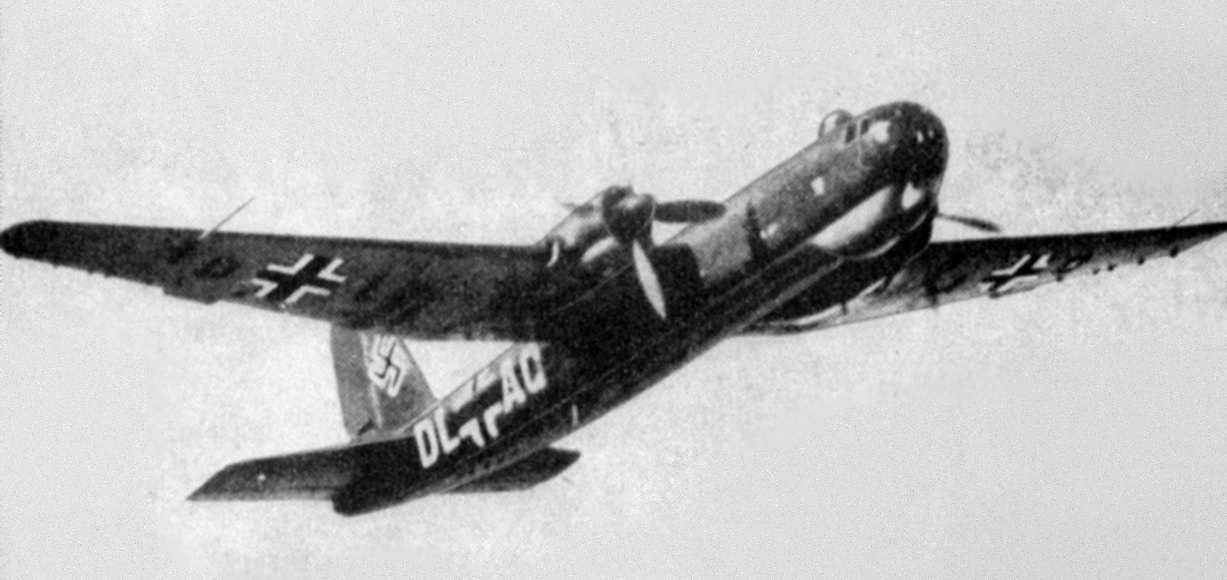
Heinkel He 177 Greif
Germany’s only heavy bomber to reach operational service in WWII — advanced, long-ranged, and so prone to engine fires that its own crews called it the “Luftwaffe’s cigarette lighter.”
The Heinkel He 177 Greif: Germany’s brilliant, burning heavy bomber
On paper, the Heinkel He 177 Greif (“Griffin”) should have been one of the most formidable aircraft of the Second World War. It was big, aerodynamically clean, and could carry a heavy bomb load farther than almost anything in the Luftwaffe. In practice it became a byword for how a promising design can be strangled by a single flawed idea — and by the shifting demands of the men who ordered it.
Germany entered the war without a true four-engine strategic bomber. The Luftwaffe had been built around fast, medium, twin-engine machines meant to support the army, and the visionary who had championed a long-range “Ural bomber,” General Walther Wever, died in a 1936 flying accident. When the air ministry (the RLM) finally issued a requirement for a long-range heavy bomber in 1936, it handed the job to Heinkel — and then loaded the specification with contradictions.
The most fateful of these was drag. To hit the demanded speed and range, the design team under Siegfried and Walter Günter chose to bury four engines behind just two propellers. Each propeller was driven not by one engine but by a “power system” that bolted two Daimler-Benz V12s together side by side into a single unit — the DB 606, and later the more powerful DB 610. The result looked, from the front, like a twin-engine aircraft. It flew like nothing anyone had built before, and it caught fire with terrible regularity.
“The engines were mounted so close together, and ran so hot, that oil pooling in the bottom of the cowling could ignite in flight. Crews learned to watch the nacelles as closely as they watched the sky.”— Summary of accounts collected by wartime and post-war aviation historians
Worse still, in 1937–38 the head of Luftwaffe development, Ernst Udet, insisted that even this enormous bomber must be able to perform medium-angle dive-bombing — a tactic that made sense for a Stuka, not a 30-tonne aircraft. Meeting that demand forced Heinkel to strengthen the entire airframe, adding weight, complexity, and delay. The requirement was eventually relaxed, but the damage to the timetable and the structure was done.
The Greif finally reached front-line units in 1942–43 and saw action on several fronts: night raids on Britain during the “Baby Blitz” of early 1944, bomber and improvised transport work on the Eastern Front (including the doomed Stalingrad airlift), and — arguably its most effective role — long-range maritime strikes launching Hs 293 radio-guided anti-ship missiles at Allied convoys. But chronic unreliability, a punishing training burden, and Germany’s collapsing fuel supply meant many He 177s never flew a combat mission at all. Large numbers were destroyed on the ground or left grounded for lack of aviation fuel.
By the end of the war the Greif was effectively finished. Around 1,169 were built — a huge industrial effort for an aircraft that rarely delivered on its promise. Today, uniquely among the major bombers of the war, not a single complete He 177 survives anywhere in the world.
What makes the story so poignant is that the failure was not really the aircraft’s fault. Strip away the coupled engines and the dive-bombing demand, and the underlying design was excellent: clean, fast, long-legged and heavily armed, with modern remotely sighted defensive positions and, in the maritime role, a guided missile that pointed straight at the future of naval warfare. Ernst Heinkel and his engineers had built a good aeroplane around a bad idea, and then been ordered to make the bad idea worse. Every serious attempt to fix it — most obviously by fitting four separate engines — ran aground on official indecision and, later, on the simple exhaustion of German resources.
That is why the He 177 occupies such a peculiar place in aviation history. It is not remembered as a triumph like the Lancaster, nor as an honest workhorse like its own smaller cousin the He 111. It is remembered as a cautionary tale: proof that raw engineering talent and industrial muscle count for little when the requirement itself is flawed, when priorities keep shifting, and when the strategic thinking behind a weapon never quite catches up with the weapon itself.
01Why Germany had no heavy bomber: the He 177’s origins and the “Ural bomber” that never was+
The Luftwaffe of 1939 was a tactical air force. Its doctrine, shaped by the needs of a fast-moving army, favoured twin-engine medium bombers such as the He 111 and Do 17 that could strike battlefield and near-rear targets. A small group of officers, led by the Luftwaffe’s first Chief of Staff Walther Wever, had argued for a genuine long-range strategic bomber — the so-called “Ural bomber” that could reach industry deep inside the Soviet Union. Wever’s death in a 1936 crash removed the concept’s most powerful advocate, and the early four-engine prototypes (the Dornier Do 19 and Junkers Ju 89) were cancelled.
The He 177 grew out of the requirement that replaced them, issued by the RLM as “Bomber A” in 1936. It called for a bomber able to carry a substantial load over very long range at high speed — but the ministry’s insistence on a low-drag, effectively twin-nacelle layout, combined with later demands for dive-bombing capability, set the programme on a collision course with the laws of engineering. The Greif was, in a sense, Germany’s belated attempt to build the strategic bomber it had talked itself out of building years earlier.
02The He 177’s coupled engines explained: how four engines drove only two propellers+
This is the single most important thing to understand about the Greif. To reduce drag, Heinkel did not hang four separate engines under the wings. Instead it created two “power systems,” each formed by coupling two Daimler-Benz inverted-V12 engines together side by side so they drove a common gearbox and a single large propeller. Early aircraft used the DB 606 (two DB 601s); later production used the DB 610 (two DB 605s), each unit producing roughly 2,900 hp.
The idea was elegant on the drawing board: the aircraft would have the power of four engines but the frontal area and drag closer to a twin, and only two large propellers to maintain. The reality was a nightmare of packaging. The paired engines were crammed into a tight nacelle with poor airflow. Fuel and oil lines ran through a cramped, hot space; oil tended to collect where it could be sprayed onto hot exhaust manifolds; and the engine bearings were overstressed. Fires broke out in flight so often that ground and air crews gave the aircraft a string of grim nicknames — “Luftwaffenfeuerzeug” (the Luftwaffe’s cigarette lighter), “Reichsfeuerzeug,” and the “flaming coffin.” Heinkel and Daimler-Benz chased the problem for years with revised oil systems, better cowlings and firewalls, and the redesigned DB 610; the later A-5 was considerably safer, but the Greif never fully shed its reputation.
03The dive-bombing folly: how one RLM demand crippled a strategic bomber+
Perhaps the most self-defeating decision in the whole programme was the requirement — pushed by the technical office under Ernst Udet in the late 1930s — that the He 177 be stressed for medium-angle dive-bombing. Dive-bombing had delivered spectacular results with the small, purpose-built Ju 87 Stuka, and it briefly became an obsession in the RLM: even large bombers were expected to be able to do it.
For a heavy bomber this was close to absurd. To survive dive-recovery loads, the airframe had to be strengthened throughout, driving up empty weight and eating into range and payload. Dive brakes and associated systems added complexity. The requirement contributed to delays and to the aircraft’s chronic overweight problems, and it was quietly abandoned as impractical — but only after it had shaped the structure. It is one of the clearest examples in aviation history of a specification demanding two incompatible things at once and getting a compromised aircraft as a result.
How the He 177 Greif was built — and why it kept catching fire
Two propellers, four engines
The defining feature: coupled DB 606/DB 610 “power systems” gave four-engine power with near-twin drag — and packed two hot V12s into one cramped, fire-prone nacelle.
Clean, modern airframe
A slim fuselage, high-aspect-ratio wing, evaporative-then-conventional cooling and remotely controlled defensive barbettes made the Greif aerodynamically advanced for its day.
Missile carrier
The A-5 could launch Hs 293 guided anti-ship missiles and carry Fritz X (FX 1400) and torpedoes — making it one of the war’s most capable stand-off maritime strike platforms on paper.
04The He 177’s structure and systems: wing, defensive barbettes and remote turrets+
The Greif was a genuinely modern aeroplane. It used a stressed-skin, all-metal structure with a long, slender fuselage and a high-aspect-ratio wing that gave it good range. Early prototypes experimented with surface evaporative cooling to cut drag further; this proved unworkable and production aircraft reverted to conventional annular radiators around the coupled engines, which is part of why the nacelles ran so hot.
Defensive armament evolved through the variants and typically combined 7.92 mm MG 81 machine guns, 13 mm MG 131 heavy machine guns and 20 mm MG 151 cannon distributed across nose, dorsal, ventral and tail positions — some in manned stations and some in remotely sighted barbettes. A crew of six operated the aircraft. For all its troubles, a healthy He 177 handled well and was fast for its size, which is exactly why the Luftwaffe kept trying to make it work.
05The He 177’s engine fires: causes, nicknames and the fixes that came too late+
The fires had several overlapping causes. The DB 606/610 installation placed the two inner exhaust manifolds close together in a poorly ventilated space; oil and fuel unions in that hot zone could leak; oil collected in the lower cowling and could be flung onto hot metal; and the engine mounting left little room for the oil lines, encouraging chafing and failure. Prolonged high-power running — exactly what a heavily loaded bomber demanded on take-off and climb — made things worse. Bearing failures could throw connecting rods, and a thrown rod in a tank full of hot oil was a fire waiting to happen.
Heinkel and Daimler-Benz worked the problem hard. Revised oil systems, additional firewalls, better cowling ventilation, shortened fuel lines and the redesigned DB 610 all reduced the fire rate, and the definitive A-5 was markedly safer than the early A-1/A-3 aircraft. But the reputation stuck, and the underlying compromise — two engines feeding one propeller through one cramped nacelle — could never be fully engineered away. The nicknames “Luftwaffenfeuerzeug” and “flaming coffin” outlived every fix. It is worth stressing the honest nuance here: by 1944 the Greif was nowhere near as lethal to its own crews as the legend suggests, and thousands of sorties were flown without incident. But reputations, once earned in blood, are hard to unmake — and the early fires had done their damage to the aircraft’s standing long before the engineers caught up.
06Variants of the He 177: from the A-1 to the four-propeller He 177 B / He 277+
Main production centred on the A-series: the early A-1 and A-3, and the definitive A-5, which had a strengthened structure, revised engine installation and full provision for the Hs 293 guided missile and other stand-off weapons. Specialised sub-variants were fitted for anti-shipping work, high-altitude reconnaissance and other roles.
Heinkel and its engineers repeatedly proposed the obvious cure — abandoning the coupled engines for four conventional ones. This led to the He 177 B / He 277, a true four-propeller derivative, and to other paper and prototype schemes. But by the time these matured, Germany lacked the fuel, resources and time to put a new heavy bomber into mass production, and they never entered meaningful service. The coupled-engine A-5 remained the Greif that actually went to war.
Heinkel He 177 A-5 specifications and cost
Figures below are for the definitive He 177 A-5 and are drawn from established reference works; wartime German figures vary between sources, so contested values are flagged as estimates.
| Type | Heavy bomber / long-range maritime strike |
|---|---|
| Bemanning | 6 |
| Lengte | 22.0 m (72 ft 2 in) |
| Spanwijdte | 31.44 m (103 ft 2 in) |
| Hoogte | 6.4 m (21 ft) |
| Max speed | ~565 km/h (351 mph) at altitude estimate — sources give ~488–565 km/h |
| Bereik | ~5,500 km (3,400 mi) with reduced load varies by load |
| Serviceplafond | ~8,000 m (26,200 ft) |
| Leeggewicht | ~16,800 kg (37,000 lb) estimate |
| Maximaal startgewicht | ~31,000 kg (68,300 lb) |
| First flight | 19 November 1939 (He 177 V1) |
| Number built | ~1,169 (all variants) sources vary ~1,137–1,169 |
| Engines | 2 × Daimler-Benz DB 610 “power systems,” each coupling two DB 605 inverted-V12s (four engines, two propellers) |
|---|---|
| Power | ~2,900 hp (2,950 PS) per coupled unit at take-off estimate |
| Defensive armament | Mix of 7.92 mm MG 81, 13 mm MG 131 and 20 mm MG 151 in nose, dorsal, ventral & tail positions varies by variant |
| Bomb / weapon load | Up to ~7,000 kg; carried Hs 293 guided anti-ship missiles, Fritz X (FX 1400), torpedoes or conventional bombs max, rarely lifted |
| Unit cost | Not reliably recorded (WWII) |
| Cost per flight hour | Not applicable — no surviving / airworthy example |
| Programme cost | Not reliably recorded (WWII) |
| Surviving airworthy aircraft | None — the type is one of WWII’s notable “no complete survivor” aircraft |
07The He 177 Greif’s operating costs: why no cost-per-hour figure exists today+
Unlike post-war jets, wartime German aircraft were not costed in a way that translates into a modern cost-per-flight-hour number, and reliable programme accounting for the He 177 has not survived in any comparable form. Reichsmark unit prices quoted for other Luftwaffe types are of limited use and are not consistently recorded for the Greif.
More fundamentally, there is no He 177 flying anywhere in the world, and no complete airframe exists to restore. That means there is quite literally no operator, no maintenance programme and no fuel bill to measure — so any “cost per hour” figure would be fiction. We record it honestly here as not applicable. If you want to know what flying a genuine historic military jet actually costs today, MiGFlug’s live pricing is the place to look.
08He 177 numbers built and losses: how many Greifs were made, and how many were wasted+
Production totals for the He 177 are usually given as roughly 1,169 aircraft across all variants, though sources differ (figures in the ~1,137–1,169 range are common). That represents an enormous diversion of German industrial capacity into an aircraft that, for much of its career, could not be used to full effect.
A striking share of that output was effectively wasted. Chronic engine unreliability grounded aircraft for maintenance; the training burden of the complex machine kept crews and airframes out of action; and from 1944 the collapse of Germany’s aviation-fuel supply left whole units unable to fly. Many He 177s were destroyed on the ground, dispersed and abandoned, or captured intact and unused at war’s end — a bomber built in the hundreds that flew relatively few effective missions.
The He 177 versus the Allied heavy bombers
Germany fielded exactly one operational heavy bomber. The Allies fielded several, in their thousands. The comparison shows both how capable the Greif was on paper and how isolated it was as a type. Figures are representative and rounded; wartime sources vary.
| Vliegtuig | Origin | Engines | Max speed | Bomb load | Built |
|---|---|---|---|---|---|
| Heinkel He 177 A-5 | Duitsland | 4 (coupled, 2 props) | ~565 km/h | up to ~7,000 kg | ~1,169 |
| Avro Lancaster | VK | 4 | ~450 km/h | up to ~6,350 kg | ~7,377 |
| Boeing B-17 Flying Fortress | VS | 4 | ~460 km/h | ~2,000–3,600 kg | ~12,731 |
| Consolidated B-24 Liberator | VS | 4 | ~490 km/h | ~3,600 kg | ~18,480 |
The Greif was fast and could, in theory, lift a very heavy load a long way. What it could not do was be built in the numbers, or flown with the reliability, that made the Allied heavies decisive. Where Britain and America turned out tens of thousands of dependable four-engine bombers, Germany produced barely more than a thousand troublesome ones — and could rarely fuel or maintain even those.
The Heinkel He 177 Greif: a development and service timeline
Requirement issued
The RLM issues the “Bomber A” specification for a long-range heavy bomber; Heinkel receives the contract that becomes the He 177.
Dive-bombing demanded
Ernst Udet’s technical office insists the heavy bomber be capable of medium-angle dive-bombing, forcing structural strengthening and delay.
First flight
The He 177 V1 prototype flies on 19 November 1939. Overheating and engine trouble appear almost immediately and dog the test programme.
Crashes and fires
Prototype and early aircraft are lost to structural failures and engine fires; the coupled DB 606 installation earns its deadly reputation.
Into service
The Greif reaches operational units. Early A-1/A-3 aircraft remain troublesome; some are pressed into the Stalingrad airlift as heavy transports.
Maritime strike and the A-5
KG 40 uses He 177s to launch Hs 293 guided missiles against Allied convoys. The improved A-5 enters production with a safer engine installation.
The “Baby Blitz”
He 177s take part in Operation Steinbock, the night raids on Britain, and in massed Eastern Front bomber raids — but fuel shortages soon bite.
Grounded and abandoned
With aviation fuel exhausted, most He 177s are grounded, dispersed or destroyed. Many are captured intact and unused as the war ends.
No survivor
Every complete He 177 was eventually scrapped. Only fragments and wreck-site relics remain — the Greif is one of WWII’s great “no survivor” types.
The He 177 Greif in the words of those who flew and fought it
Twelve short stories that capture the Greif’s strange, troubled career — from its burning engines to its guided-missile strikes. Expand each card to read more.
“The Luftwaffe’s cigarette lighter”
Ground crews had a black-humoured name for the Greif. So many caught fire that they called it the “Luftwaffenfeuerzeug.”
Lees meer
The prototype that overheated on day one
When the He 177 V1 first flew in November 1939, engine temperatures climbed alarmingly and the flight was cut short.
Lees meer
A heavy bomber turned reluctant freighter
During the Stalingrad airlift, some He 177s were pressed into service hauling supplies rather than bombs.
Lees meer
Launching the Hs 293 at Allied convoys
In its most effective role, the He 177 stood off from convoys and fired radio-guided Hs 293 missiles.
Lees meer
High-speed dives over London
In Operation Steinbock, He 177 crews often dived at speed across southern England to release their bombs and escape.
Lees meer
Four engines hiding behind two propellers
To visitors, the He 177 looked like a twin. In fact each propeller was driven by two coupled V12s.
Lees meer
The A-5: safer, but too late
The definitive He 177 A-5 addressed many of the fire risks — arriving as Germany was already losing the air war.
Lees meer
The dive-bombing demand no one could meet
Ordering a 30-tonne bomber to dive-bomb was, engineers knew, close to impossible — but the RLM insisted.
Lees meer
Destroyed without ever fighting
By late 1944 many He 177s sat useless on their airfields, grounded for want of fuel.
Lees meer
Flown and tested by the Allies
After the war, captured He 177s were evaluated by British and American teams.
Lees meer
Germany’s only operational heavy bomber
For all its faults, the He 177 was the only German heavy bomber to reach real operational service.
Lees meer
Why the Greif has no survivor
Alone among the war’s major bombers, no complete He 177 exists anywhere today.
Lees meer
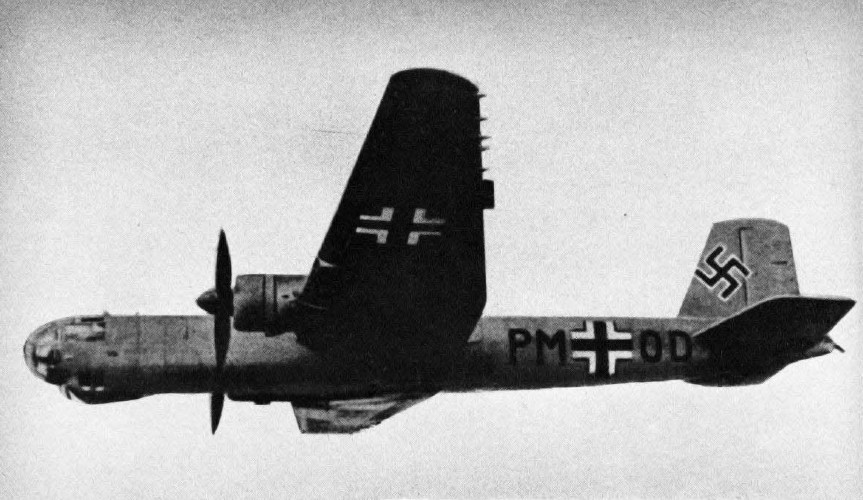
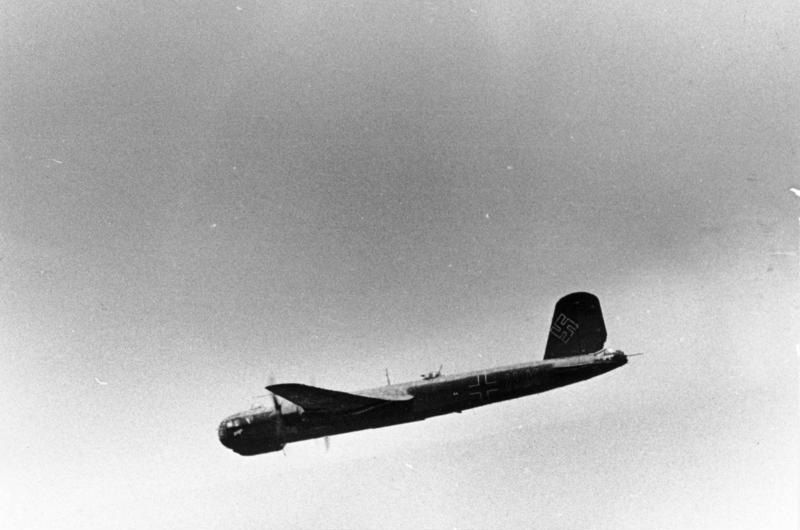
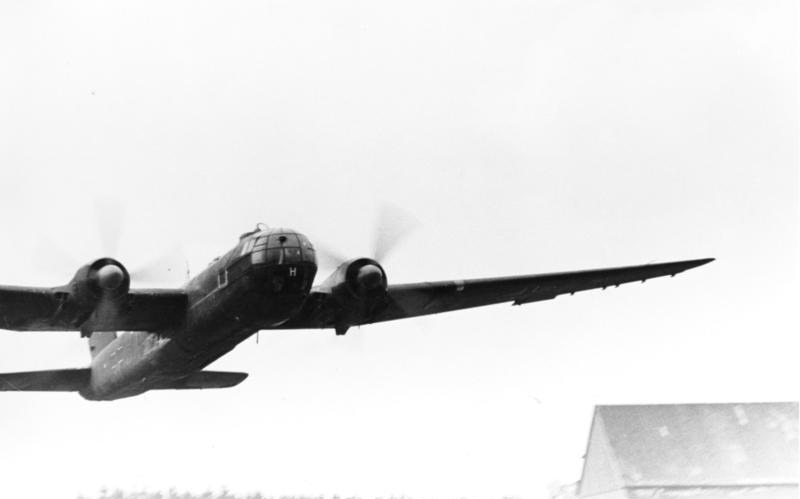
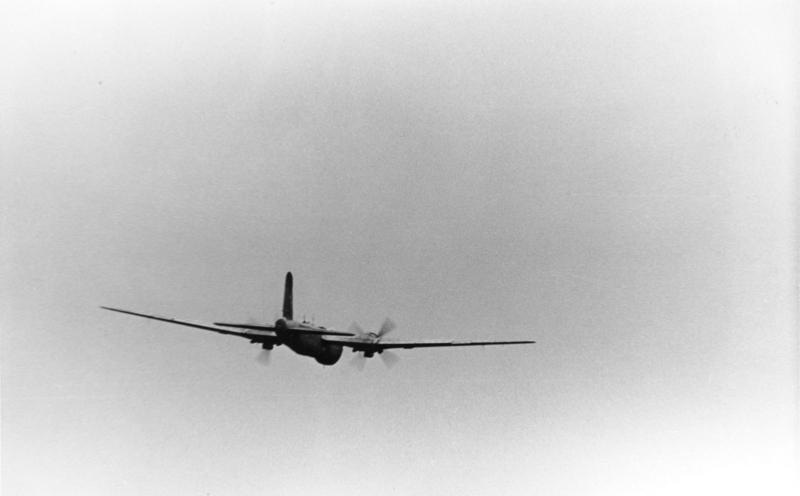
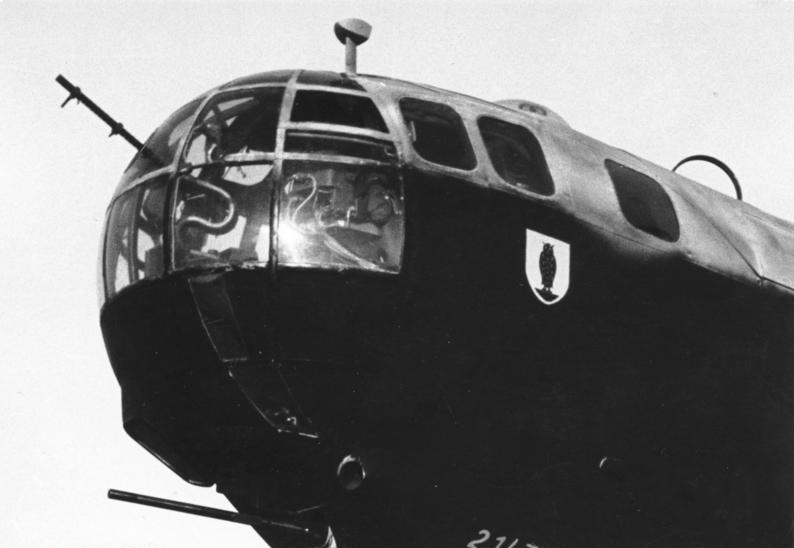
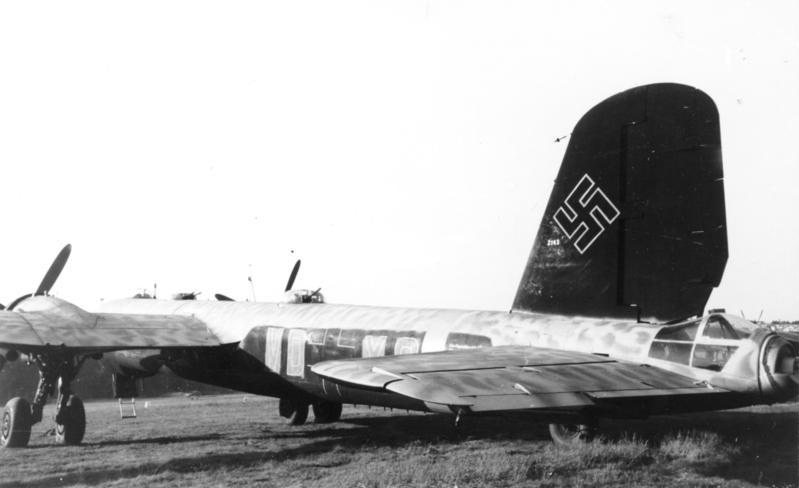
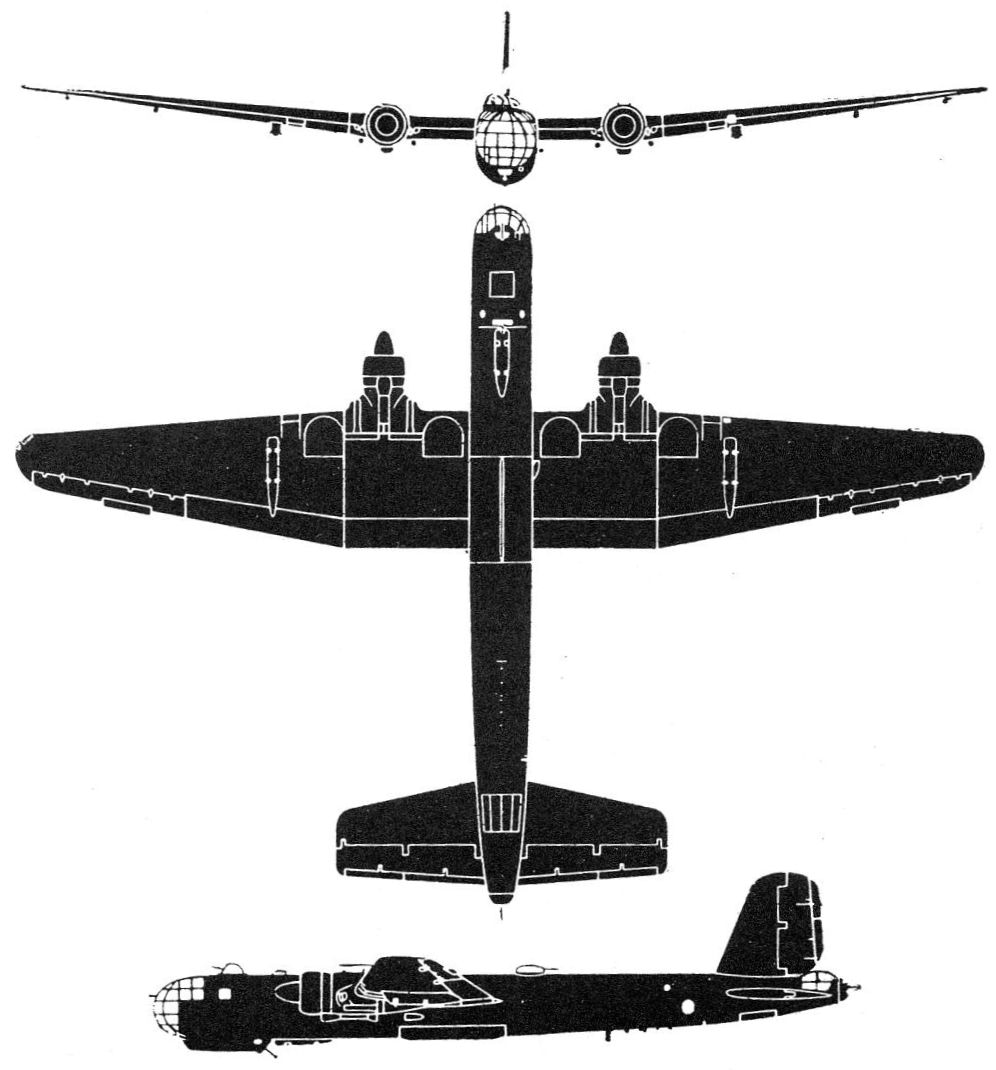
Heinkel He 177 Greif photographs
Genuine wartime and archival images of the Greif. Click any photo to enlarge. All images via Wikimedia Commons — credits below each frame.
Watch: the He 177 Greif, the “flaming coffin”
“The Flaming Coffin – Heinkel He 177 Greif” by Dark Skies (695k subscribers) — 1.1 million views. An accessible documentary on the Greif’s troubled engines and career. Verified on YouTube.
Where the Heinkel He 177 flew — origin, theatres and survivors
The Greif was a German aircraft used almost exclusively by the Luftwaffe. This map shows its country of origin, the wartime theatres where it operated, the nations that captured and evaluated it after the war — and, tellingly, an empty “Surviving airframes” category, because no complete He 177 exists anywhere today. Hover (or tap) a country for detail.
The He 177 Greif by the numbers
The Heinkel He 177 Greif: six deeper questions
09The He 177 and the Hs 293: how the Greif became a guided-missile bomber+
The most genuinely advanced thing the He 177 did was carry and launch the Henschel Hs 293, one of the first operational air-launched guided anti-ship missiles. The Hs 293 was a small rocket-boosted glide bomb with a radio-command guidance link: after release, a bombardier in the parent aircraft steered it onto a ship by watching a flare in its tail and correcting with a joystick.
For a maritime-strike bomber this was a leap forward. It let the He 177 attack from outside the range of a convoy’s close-in defences, standing off while the missile did the dangerous work. KG 40, flying from occupied France, used He 177s in exactly this role against Atlantic convoys, and He 177s also carried the heavier, armour-piercing Fritz X (FX 1400) against harder targets. The concept pointed directly at the anti-ship missiles that dominate naval warfare today — but in 1943–44 it was undercut by the Greif’s unreliability, by Allied electronic countermeasures against the radio link, and by Germany’s inability to sustain the effort. When it did work, the effect could be dramatic — Allied sailors dreaded the sight of a distant bomber loitering just out of gun range — but the moments of success were too few and too costly to change the course of the war at sea.
10Operation Steinbock: the He 177 in Germany’s last blitz on Britain+
By early 1944 the Luftwaffe mounted one final concentrated bombing campaign against Britain, code-named Operation Steinbock and nicknamed the “Baby Blitz” by Londoners who remembered the far heavier raids of 1940–41. The He 177 was one of the aircraft committed to it.
Greif crews typically approached at altitude and then made shallow, high-speed diving runs across their targets to cut the time spent in the killing zone of British night-fighters and anti-aircraft guns. The campaign achieved little of strategic value: bomb loads were often dropped inaccurately, losses to the increasingly effective RAF night defences were heavy, and the effort drained aircraft and crews Germany could not spare. For the He 177 it was a rare chance to act as the strategic bomber it had been designed to be — and a demonstration of how little difference even that could now make.
11The He 177 on the Eastern Front: bomber, tank-buster and desperate transport+
On the Eastern Front the Greif was used in a jumble of roles that reflected the Luftwaffe’s shifting fortunes. Early in its service, a handful were drawn into the Stalingrad airlift of the winter of 1942–43, pressed into service as heavy freighters to supply the encircled Sixth Army — a task for which the temperamental bomber was poorly suited and in which it achieved little.
Later, He 177 units flew conventional bombing raids, including rare massed heavy-bomber attacks on Soviet rail junctions and industrial targets in 1944, and some aircraft were fitted with heavy anti-tank cannon for ground attack. As always, two forces worked against the Greif: its own mechanical fragility, and the deepening fuel crisis that from mid-1944 left much of the fleet grounded. The Eastern Front showed both the aircraft’s flexibility and the futility of deploying a scarce, unreliable heavy bomber piecemeal across an enormous front.
12The He 277 and He 274: the four-engine Greifs that came too late+
Heinkel’s engineers understood the real cure for the He 177’s troubles from early on: replace the coupled engines with four separate, conventional ones. This logic led to the He 277 (essentially a four-propeller Greif) and the high-altitude He 274, along with a series of related proposals designated He 177 B and beyond.
On paper these promised the reliability the Greif lacked. In practice they were repeatedly delayed by official indecision — the air ministry blew hot and cold on whether it even wanted a strategic bomber — and then overtaken by events. By the time a four-engine derivative could have entered production, Germany had neither the fuel, the raw materials, the factory capacity nor the time to build one in numbers. Only a handful of prototypes flew. The coupled-engine A-5 remained the only He 177 to see real service, and the “obvious fix” never reached the front.
13Flying the Greif: what it was like for the six-man crew+
A healthy He 177 was, by the accounts of those who flew it, a surprisingly pleasant aircraft — fast, reasonably manoeuvrable for its size, and well equipped. The catch was the word “healthy.” Crews had to nurse the coupled engines carefully, avoiding the prolonged high-power settings that invited fires, and they kept a constant watch on the nacelles for the first wisp of smoke.
The six-man crew — pilot, co-pilot, and gunners/operators manning the nose, dorsal, ventral and tail positions, some of them remotely sighted — worked a complex machine that demanded far more training than a simple medium bomber. That training burden, combined with poor serviceability, meant that even when aircraft were available, fully worked-up crews often were not. The Greif asked a great deal of the men who flew it, and gave back a nagging awareness that the aircraft might betray them before the enemy did.
14Why no He 177 survives: the story of a bomber with no museum+
Almost every major bomber of the Second World War has at least one preserved survivor — a Lancaster, a B-17, a B-24, even the Greif’s smaller stablemate the He 111 (in the form of Spanish-built airframes). The He 177 is the great exception. Not one complete example exists anywhere in the world.
The reasons are a mix of history and reputation. Many He 177s were destroyed in the war or scrapped in its immediate aftermath; the examples captured and evaluated by the Allies were tested and then broken up rather than kept, at a time when a defeated enemy’s troublesome bomber had little appeal as a museum piece. By the time historic preservation became a priority, the airframes were long gone. Today only fragments and crash-site relics remain, which is why the Greif is so often called a “ghost” aircraft — one you can study in photographs, drawings and wreckage, but never walk around intact. Occasionally, recovered components — a propeller boss, a section of engine, a data plate — surface in private collections or specialist museums, and enthusiasts have long dreamed of one day assembling enough relics to reconstruct a representative airframe. For now, though, the Greif remains the great absentee of Second World War bomber preservation.
Heinkel He 177 Greif: your questions answered
Can I fly in a Heinkel He 177?
No. Not a single complete Heinkel He 177 survives anywhere in the world — the type is one of WWII’s notable “no complete survivor” aircraft, so there is no airworthy, static or bookable He 177 of any kind. MiGFlug does not offer He 177 flights, and no one else can either.
Jij can, however, fly in several genuine historic military jets today. MiGFlug arranges real flights in aircraft such as the L-39 Albatros, Hawker Hunter, MiG-15, de Havilland Vampire and others. See what is currently bookable at migflug.com/flights-prices.
Why did the He 177 keep catching fire?
To cut drag, Heinkel coupled two engines together to drive each propeller (the DB 606, later DB 610). This crammed two hot V12s into one tight nacelle where oil and fuel lines ran through a poorly ventilated space, oil could pool and be sprayed onto hot exhausts, and bearings were overstressed. In-flight fires were common enough to earn the aircraft nicknames such as the “Luftwaffe’s cigarette lighter” and “flaming coffin.” The later A-5 was much safer, but the reputation stuck.
Why did a four-engine bomber have only two propellers?
Because the four engines were paired. Each of the He 177’s two propellers was driven by a “power system” formed from two Daimler-Benz V12 engines coupled side by side. The goal was four-engine power with the low drag of a twin — an elegant idea that turned into a persistent reliability and fire problem.
Did the RLM really order a heavy bomber to dive-bomb?
Yes. In the late 1930s the technical office under Ernst Udet insisted the He 177 be able to perform medium-angle dive-bombing — a tactic suited to the small Ju 87 Stuka, not a 30-tonne bomber. Meeting the demand forced heavy structural strengthening that added weight and delay. It was eventually dropped as impractical, but only after it had compromised the design.
What was the He 177 used for in combat?
Three main roles. It flew night raids on Britain during the early-1944 “Baby Blitz” (Operation Steinbock); it operated as a bomber and improvised transport on the Eastern Front, including the Stalingrad airlift; and — most effectively — it launched Hs 293 radio-guided anti-ship missiles at Allied convoys from bases in occupied France and against shipping in the Mediterranean. Unreliability and fuel shortages limited its overall impact.
How many He 177s were built and how fast was it?
Roughly 1,169 were built across all variants, though sources vary (about 1,137–1,169). The definitive A-5 had a top speed commonly cited at around 565 km/h (351 mph) at altitude — some references give lower figures nearer 488 km/h with a full load — a range of roughly 5,500 km, a crew of six, and a maximum weapon load of up to about 7,000 kg.
Are there any surviving He 177s in museums?
No complete example survives. Unlike the Lancaster, B-17 or He 111, every He 177 was eventually scrapped — including the aircraft captured and evaluated by the Allies after the war. Only fragments and crash-site relics remain, which makes the Greif a “ghost” type studied from photographs, drawings and wreckage rather than a preserved airframe.
What does “Greif” mean, and why was it nicknamed a lighter?
“Greif” is German for “Griffin,” the mythical eagle-lion — a suitably fierce name for a heavy bomber. In service, though, crews coined far less flattering names because of the aircraft’s frequent engine fires: “Luftwaffenfeuerzeug” (the Luftwaffe’s cigarette lighter), “Reichsfeuerzeug” (the Reich’s lighter) and the “flaming coffin.” The gap between the official name and the crews’ nicknames says almost everything about the Greif’s reputation.
Was the He 177 Germany’s only heavy bomber?
It was the only German heavy bomber to reach real operational service in the Second World War. Earlier four-engine designs such as the Dornier Do 19 and Junkers Ju 89 “Ural bombers” were cancelled in the 1930s, and later four-engine derivatives like the He 277 never entered meaningful production. So while Germany studied and prototyped several heavy bombers, the He 177 was the one it actually fielded — which is a large part of why its shortcomings mattered so much.
How does the He 177 compare to the Fw 200 Condor?
Both were long-range German aircraft used against Atlantic shipping, but they were very different machines. The Focke-Wulf Fw 200 Condor was a converted airliner — elegant but structurally weak — that shadowed and bombed convoys. The He 177 was a purpose-built heavy bomber, much faster and better armed, and could launch Hs 293 guided missiles. On paper the Greif was the far more formidable maritime striker; in practice its unreliability meant the older Condor often did more actual damage.
Was the Heinkel He 177 a failure — or a good aircraft ruined by bad decisions?
It is tempting to file the He 177 under “German wonder-weapon that didn’t work,” but that misses the more interesting truth. The Greif was not a bad design. Aerodynamically it was ahead of its Allied contemporaries; it was faster than a Lancaster or a B-17, carried a heavier maximum load, and pioneered stand-off guided-missile attack years before anyone else made it work. In the hands of a well-trained crew, a healthy A-5 was a genuinely capable and even pleasant aircraft to fly.
What ruined it was a chain of decisions taken before a single bolt was cut. The insistence on burying four engines behind two propellers, to shave drag, created a fire-prone powerplant that no amount of later engineering could fully tame. The demand that a 30-tonne bomber also dive-bomb loaded the airframe with weight and delay for a capability it never needed. And the air ministry’s chronic indecision about whether Germany even wanted a strategic bomber meant the obvious cure — four separate engines, as in the He 277 — was never pursued in time. Layered on top came the strategic realities that doomed the whole Luftwaffe: too few aircraft, too little fuel, too many fronts.
The result is one of aviation history’s great “what ifs.” Give the He 177 four conventional engines from the start, drop the dive-bombing nonsense, build it in quantity a year earlier, and Germany might have had a heavy bomber worth the name. Instead it got a brilliant airframe strapped to a self-inflicted flaw, built in the hundreds, and largely wasted. That is why the Greif fascinates: not because it was hopeless, but because it was so nearly great.
No Greif survives. But you can strap into a real fighter jet.
The He 177 exists only in photographs today. If you want the genuine experience of flying in a historic military aircraft — the g-forces, the noise, the view from a fighter cockpit — MiGFlug makes it real. Here are some of the aircraft you can actually book.
Explore more from the Aircraft Museum
Sources & further reading