
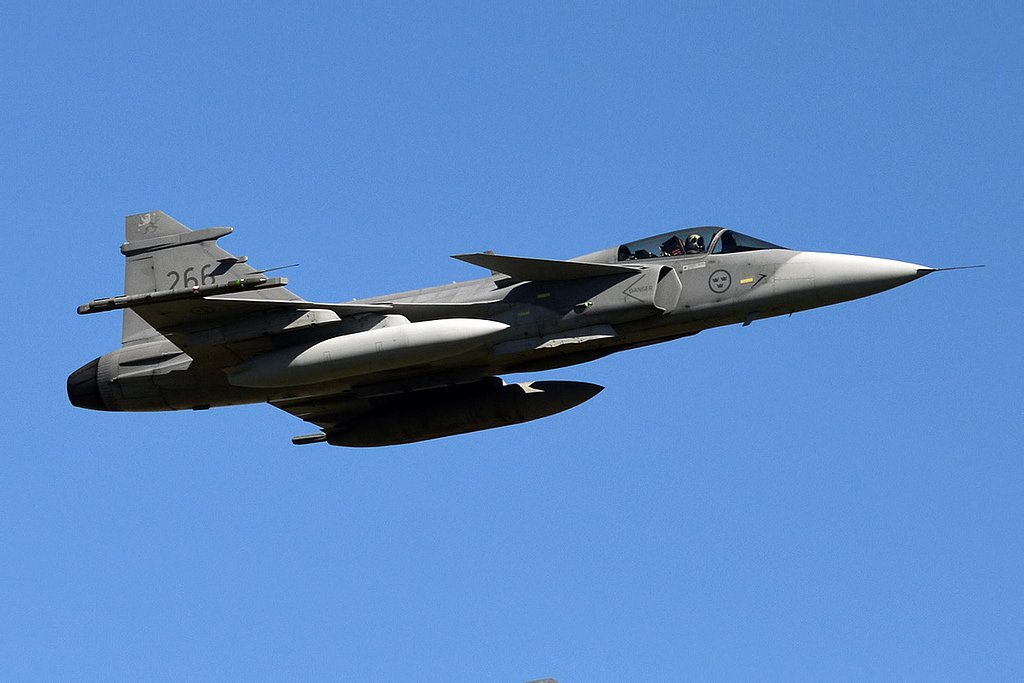
Saab JAS 39 Gripen
“Griffin”
The smart, affordable Swedish canard-delta that keeps embarrassing fighters three times its price — purpose-built to fly from public roads, turn around in ten minutes, and cost less per hour than anything else in the modern Western fleet.
The bargain fighter that punches above its weight
Sweden could never match superpower defence budgets, so Saab built cleverness instead of bulk. Development began under a 1982 contract to replace the Viggen and Draken, and the prototype first flew on 9 December 1988. After a long test programme, the Gripen entered Swedish service in the mid-1990s as a small, agile canard-delta designed around two uniquely Swedish demands: dispersed operations from public roads, and the lowest possible cost per flight hour.
The name “JAS” encodes the concept — Jakt (air-to-air), Attack (air-to-ground) and Spaning (reconnaissance) — one airframe for all three roles. The family grew from the initial A/B versions through the NATO-interoperable C/D export standard to the clean-sheet, AESA-radar Gripen E/F, with roughly 270+ aircraft built across all variants and production of the E ramping up.
A five-or-six-person conscript ground crew can refuel and rearm a Gripen in about ten minutes on a stretch of highway. It was a networked-datalink pioneer, sharing sensor and target data between aircraft decades before “data-centric warfare” became a buzzword. Independent studies have repeatedly rated it the cheapest modern fighter to operate — famously around $4,700 per flight hour — and in 2026 it was chosen by Ukraine for exactly the kind of war it was designed to fight.
01The Gripen’s design philosophy: how a small nation built a fighter that outvalues giants
Everything about the Gripen flows from a single constraint: Sweden had to defend a large country on a modest budget, against a superpower next door. The answer was not a bigger jet but a smarter system — a light, single-engine fighter that could scatter away from vulnerable airbases onto forest road strips, be serviced by conscripts rather than armies of specialists, and share a networked picture of the battlefield across a whole formation.
That relentless focus on affordability and survivability is why the Gripen keeps beating or shadowing far more expensive rivals into service. It has never been the flashiest export on the market, but for nations that value low running costs, easy dispersal and genuine multirole flexibility over raw payload, the little Swedish fighter is a deliberate, and increasingly popular, trade-off.
What makes the Gripen special
Canard-delta agility
Close-coupled foreplanes ahead of the delta wing generate lift and let the Gripen be deliberately, aerodynamically unstable. A triplex digital fly-by-wire system flies it for the pilot, turning that instability into ferocious pitch authority and tight, high-alpha turns. The same canards flip down as air-brakes on landing — so the jet stops on a short road without a drag chute.
One efficient engine
A single Volvo RM12 — a licence-built, uprated derivative of the General Electric F404 (~80 kN in afterburner) — keeps the Gripen light, simple and cheap to run. Fewer parts, one engine to feed and maintain, and Swedish design-for-maintainability drive its class-leading operating economics. The Gripen E steps up to the more powerful GE F414.
Road-base ops & datalink
Built to abandon vulnerable big airbases, the Gripen operates from ~16 m-wide, 500–800 m road strips, turned around by a small conscript-and-technician team in about ten minutes. A secure datalink shares one aircraft’s radar picture across the whole formation. The Gripen E adds an AESA radar, IRST and ~30% more internal fuel.
02The Gripen’s canards: how Saab made an unstable jet safe to fly
A stable aircraft resists changes in attitude; an unstable one wants to depart, but responds to the controls far more quickly. The Gripen is deliberately built unstable in pitch, with its foreplanes and delta wing working together, and a triplex fly-by-wire computer making tiny corrections dozens of times a second to keep it pointed where the pilot wants. The payoff is a jet that changes direction with startling speed for its size. On touchdown the same canards deflect to act as aerodynamic brakes, killing speed so effectively that the Gripen needs neither a long runway nor a drag chute — exactly what a road-strip fighter requires.
03The Gripen’s economics: why it costs a fraction of its rivals to fly
Low cost was designed in, not discovered later. One engine instead of two halves the powerplant maintenance burden; a light airframe burns less fuel; and Saab engineered the jet so a small mixed crew of conscripts and technicians can service it in the field with minimal specialist support. An IHS Jane’s study famously pegged the Gripen’s cost per flight hour at roughly $4,700 — against far higher figures for the F-16, Rafale, Typhoon and F-35. Treat that number as indicative rather than current-year, but the direction is not in doubt: the Gripen is the budget champion of the modern fighter world.
Full Gripen specifications
Airframe & Performance
- Equipe
- 1 (2 in the D)
- Comprimento
- ~14.1 m
- Envergadura
- ~8.4 m
- Max takeoff weight
- ~14,000 kg
- Max speed
- ~Mach 2 at altitude
- Teto de serviço
- ~15,240 m (~50,000 ft)
- Number built
- ~270+ (all variants)
- Cost per flight hour
- ~$4,700 (indicative)
Propulsion & Armament
- Motor
- 1 × Volvo RM12 (GE F404-derived)
- Thrust
- ~80 kN with afterburner
- Gun
- 1 × 27 mm Mauser BK-27
- Key missiles
- Meteor (BVR), AIM-120, IRIS-T
- First flight
- 9 December 1988
- Entered service
- 1996–1997 (Sweden)
- New generation
- Gripen E — GE F414 engine
- Unit cost
- ~$30–85M by variant
04The Gripen’s costs: cheap to buy, cheaper to fly
The Gripen’s headline appeal is money. Its cost per flight hour — famously around $4,700 in a 2012 IHS Jane’s study — is the lowest of the modern Western fighters, well below the F-16, Rafale, Typhoon and F-35. Treat the exact figure as indicative and dated rather than current-year, because operating costs shift with fuel, usage and accounting method. Unit purchase price varies widely too: a Gripen C sits at the lower end of the $30–85 million range while a fully-equipped Gripen E climbs toward the top. The consistent story across every source is relative: whatever the precise numbers, the Gripen is the affordable option in its class.
Four decades of the Gripen
Programme launched
Saab is awarded the contract to develop the JAS 39 as a single-type replacement for the Viggen and Draken.
First flight
The Gripen prototype takes to the air for the first time, beginning a long flight-test programme.
Enters service
The first operational Swedish Air Force squadron stands up; the Gripen joins the frontline.
NATO leases begin
The Czech Republic and Hungary begin leasing Gripen C/D for NATO air-policing duties.
First export beyond Europe
South Africa takes delivery — the first operator outside Europe — and Thailand follows.
Libya reconnaissance
Swedish Gripens fly tactical reconnaissance in NATO’s Operation Unified Protector over Libya.
Gripen E first flight
The clean-sheet, AESA-equipped new-generation Gripen E makes its maiden flight.
Gripen E in service
The Gripen E formally enters Swedish Air Force service at Satenas with the F 7 Wing.
Brazil builds it, Ukraine buys it
The first Brazilian-built Gripen E is unveiled in March; Ukraine orders the Gripen E under a June framework.
From the flight line: twelve Gripen stories
Built for the highway
Sweden’s fighter that doesn’t need an airbase.
Read the full story
The $4,700 fighter
Modern airpower that doesn’t bankrupt you.
Read the full story
The datalink pioneer
Sharing the picture before it was cool.
Read the full story
Gripen E grows up
Same silhouette, all-new fighter.
Read the full story
Made in Gaviao Peixoto
A Swedish jet with a Brazilian passport.
Read the full story
Ten minutes, six people
Refuel, rearm, relaunch.
Read the full story
Canards that bite
Small jet, savage turn.
Read the full story
The export fighter that keeps winning
Punching above its weight.
Read the full story
The recon missions
Sweden’s one shooting-war deployment.
Read the full story
The war it was designed for
Decades of planning, one real test.
Read the full story
Guardian of the north
Intercepting the Bear.
Read the full story
JAS = fighter, attacker, scout
The Swiss-army fighter.
Read the full story
The Gripen in pictures
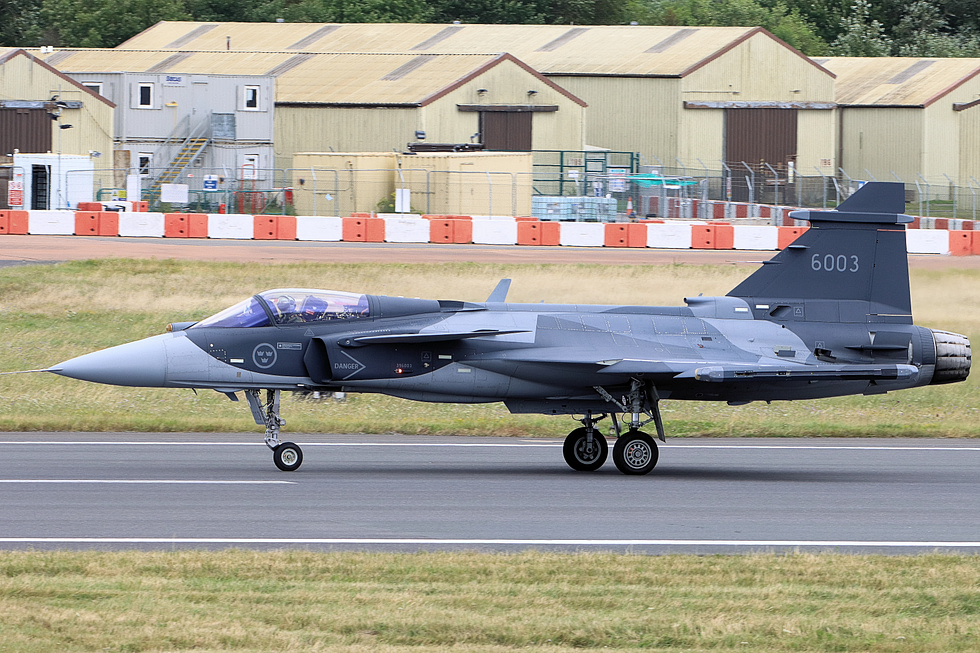
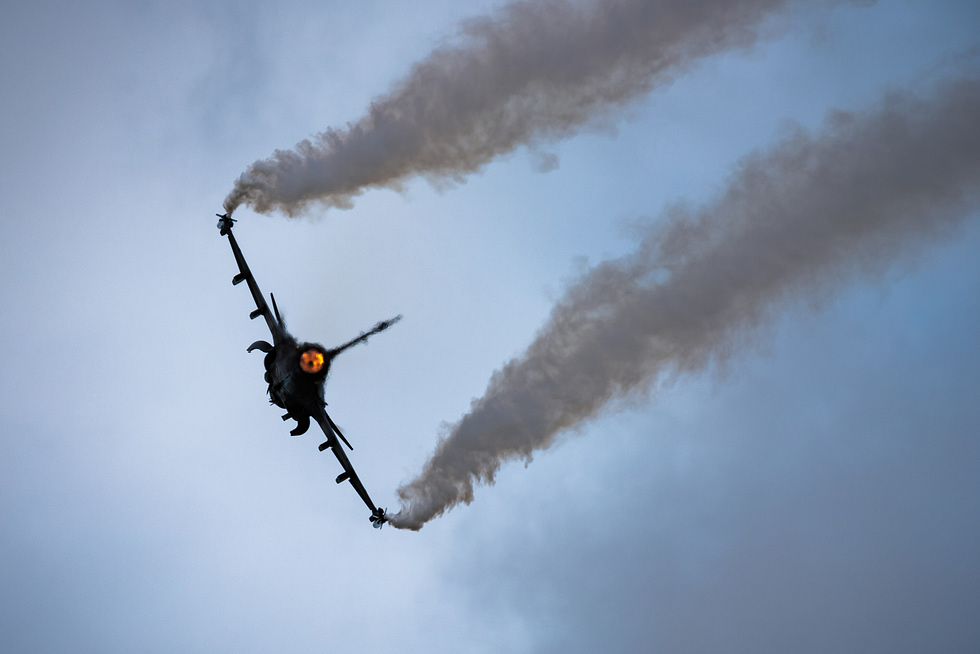
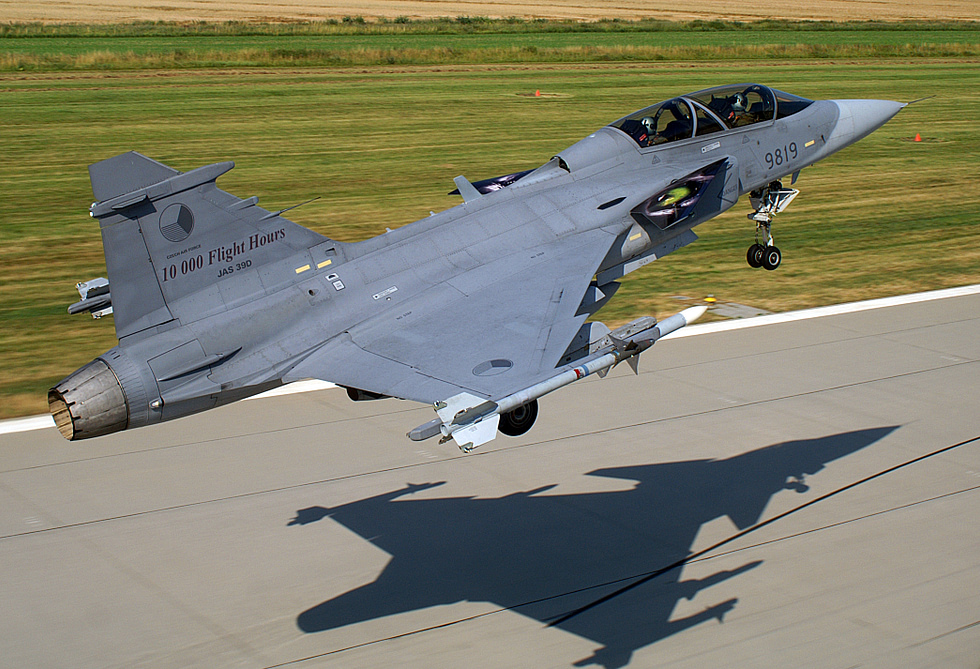
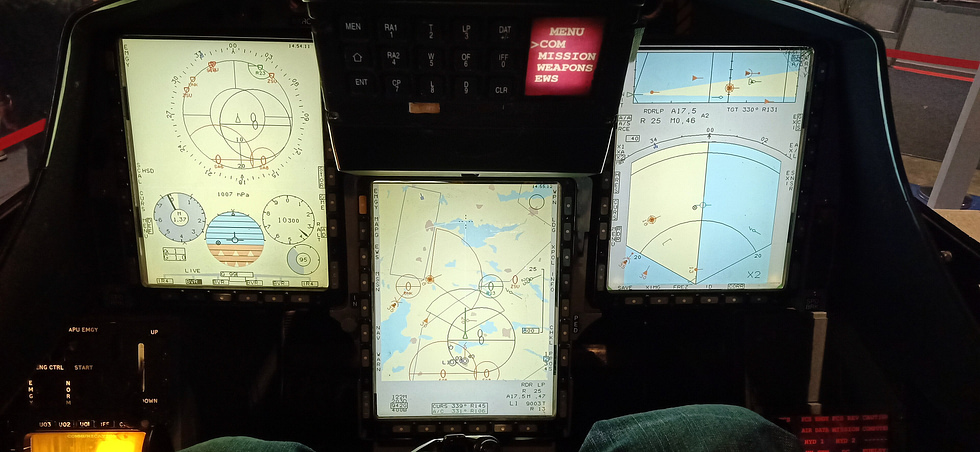
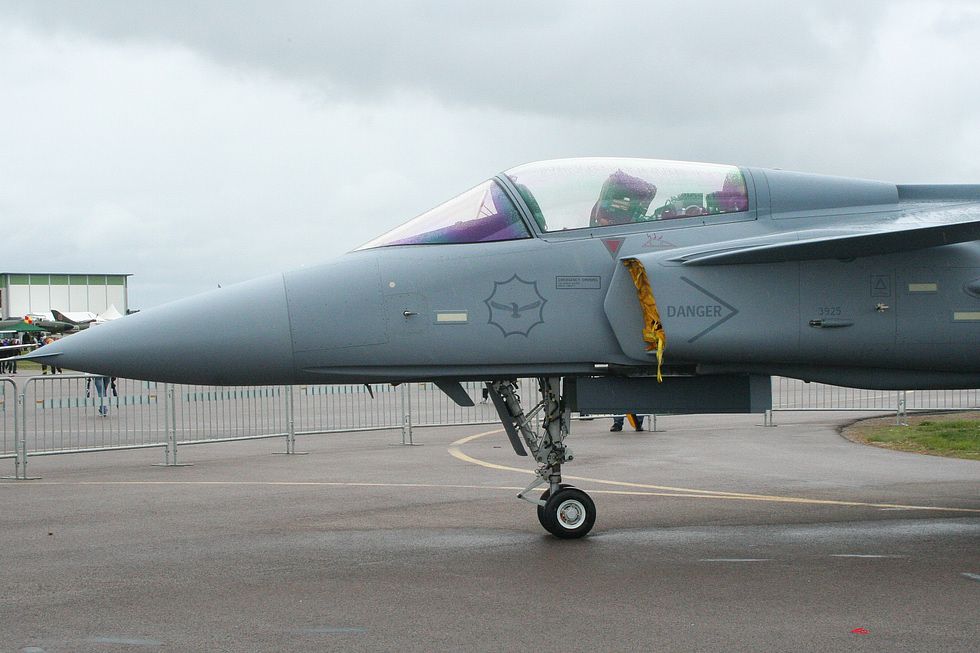
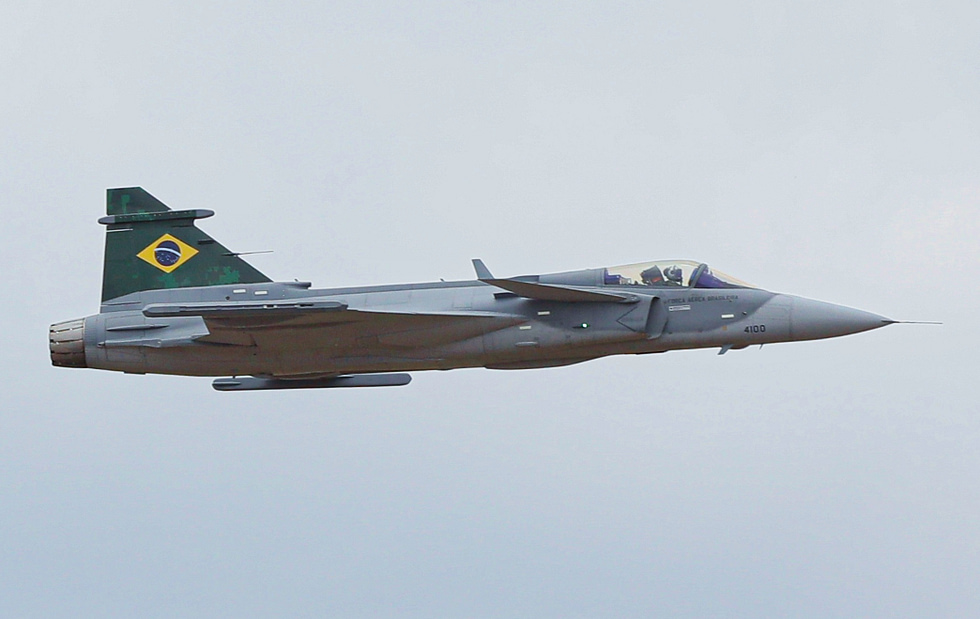
The Gripen in motion
A dedicated Gripen video is coming soon.
Where the Gripen flies
A jet built to be used, not to boast
The Gripen has seen limited combat and no confirmed air-to-air kills. Its most-cited deployment was Sweden’s contribution to the 2011 NATO Libya campaign, where eight Gripens flew tactical reconnaissance — not strike or air-to-air. Beyond that, its record is overwhelmingly peacetime air policing: Baltic intercepts of Russian aircraft, Czech and Hungarian NATO quick-reaction alert, and Thai, South African and Brazilian air defence. Ukraine’s 2026 order is expected to give the type its first true high-intensity test.
Compare the combat record of every military aircraft. Figures as of July 2026.
Everything people ask about the Gripen
Can I fly in a Gripen?
How fast is the Gripen?
Is it really the cheapest fighter to operate?
Can it operate from roads?
How does it compare to the Rafale and Typhoon?
What is the Gripen E?
How many have been built?
You can’t fly the Gripen.
These, you can.
Some legends only live in museums — others are fuelled and waiting. MiGFlug has put civilians in real military jet cockpits since 2004.
 Fly the L-39 AlbatrosThe world’s most-flown jet trainer — aerobatics included
 Fly the F-104 Starfighter“The missile with a man in it”
 Fly the MiG-21The Cold War’s most-produced jet
 Pilote o T-33 Shooting StarAmerica’s first jet trainer
 Fly the DH VampireA piece of early jet history
 Fly the S.211Agile Italian jet trainer
 Fly the MB-326The classic Aermacchi jet
 Fly the MiG-15The Soviet legend of the Korean War
Continue the tour
Every fact, checked
- Saab — Gripen & the dispersed air basing systemThe manufacturer’s account of road-base operations and fast turnaround.
- The War Zone — Gripen E joins the Swedish Air ForceThe Gripen E entering Swedish service in October 2025.
- Forecast International — first Brazilian-built Gripen ESaab and Embraer unveil the locally assembled Gripen E (March 2026).
- 19FortyFive — Ukraine buys the Gripen EThe 2026 Ukrainian order and the Gripen’s Cold-War origins.
- StratPost — lowest operating cost (Jane’s)The IHS Jane’s cost-per-flight-hour comparison.
- FlightGlobal — Gripens over LibyaSweden’s 2011 reconnaissance deployment in Operation Unified Protector.
- GlobalMilitary.net — JAS 39 Gripen specs & operatorsSpecifications and current operator overview (2026).
- MiGFlug — Flights & PricesThe jets you actually can fly — confirms the Gripen is not offered.