
Boeing P-12 / F4B
Boeing’s classic radial-engined biplane fighter — bought in large numbers by both the US Army, as the P-12, and the US Navy and Marines, as the carrier-capable F4B. One of the two standard American pursuits of its age.
A História
The Boeing P-12 and F4B: the fighter both services bought
The Boeing P-12 and its naval twin the F4B are among the classic American fighters of the golden age of the biplane. A single, elegant Boeing design, bought in quantity by both the US Army Air Corps and the US Navy and Marine Corps, it was one of the two standard American pursuit types of the late 1920s and early 1930s — the air-cooled, radial-engined counterpart to the sleek, liquid-cooled Curtiss P-6 Hawk. Light, agile and much loved by its pilots, the P-12/F4B was also a milestone for Boeing, and it did an enormous share of America’s peacetime fighter flying in the years before the monoplane swept the biplane away.
The aircraft began not as a military order but as a private venture. In the late 1920s Boeing designed a new pursuit biplane on its own initiative, building prototypes at company expense in the hope of selling them to the armed forces. The gamble paid off handsomely. Both services liked what they saw, and both placed orders — the Army adopting the type as the P-12 and the Navy and Marines as the F4B. Buying the same basic aircraft for both the land-based and carrier-based fighter roles was economical and sensible, and it made the Boeing design one of the most widely used American fighters of its day.
Boeing tracked the design internally through a string of model numbers — the Model 83 and 89 prototypes that led to the P-12 and F4B, and later the Model 100 civil version — a reminder of how methodically the company developed the type. The prototypes even differed in their landing gear and equipment as Boeing tuned the design to suit the Army and the Navy respectively. From these hand-built machines grew a production programme that would run for years and hundreds of aircraft.
“One design, two services — the Army’s P-12 and the Navy’s F4B were the same elegant Boeing biplane under two names.”— the P-12/F4B’s place in history, in a sentence
Power came from the Pratt & Whitney Wasp, an air-cooled radial engine that was itself one of the great success stories of American aviation. The Wasp was reliable, relatively light and easy to maintain, and it gave the little Boeing lively performance — a top speed approaching 190 miles per hour, competitive with the best fighters of its era. The choice of a radial rather than a liquid-cooled engine was the key distinction between the Boeing and its great rival, the Curtiss P-6 Hawk: the two aircraft represented the two competing engine philosophies of American fighter design, and the Army bought both.
For the Navy, the choice of an air-cooled radial was more than a preference — it was close to a necessity. A liquid-cooled engine over the sea meant radiators, plumbing and coolant that could leak or be shot away, leaving a pilot with a seizing engine far from land. The Wasp had none of that vulnerability, and its inherent reliability made it the natural choice for carrier operations. This is a large part of why the radial came to dominate American naval aviation for decades, and the F4B was an early expression of that enduring logic.
The radial gave the P-12/F4B its characteristic blunt-nosed look, but Boeing worked hard to refine the design over its production life. Early aircraft had fabric-covered fuselages of welded steel tube; later versions introduced a smooth, semi-monocoque metal fuselage that was both stronger and cleaner. A ring cowl was added around the engine to reduce drag and improve cooling, and neat wheel spats tidied up the undercarriage. Across the many sub-variants — the P-12B, C, D, E and F for the Army, and the F4B-1 through F4B-4 for the Navy — the aircraft was steadily improved, each version a little faster and more polished than the last.
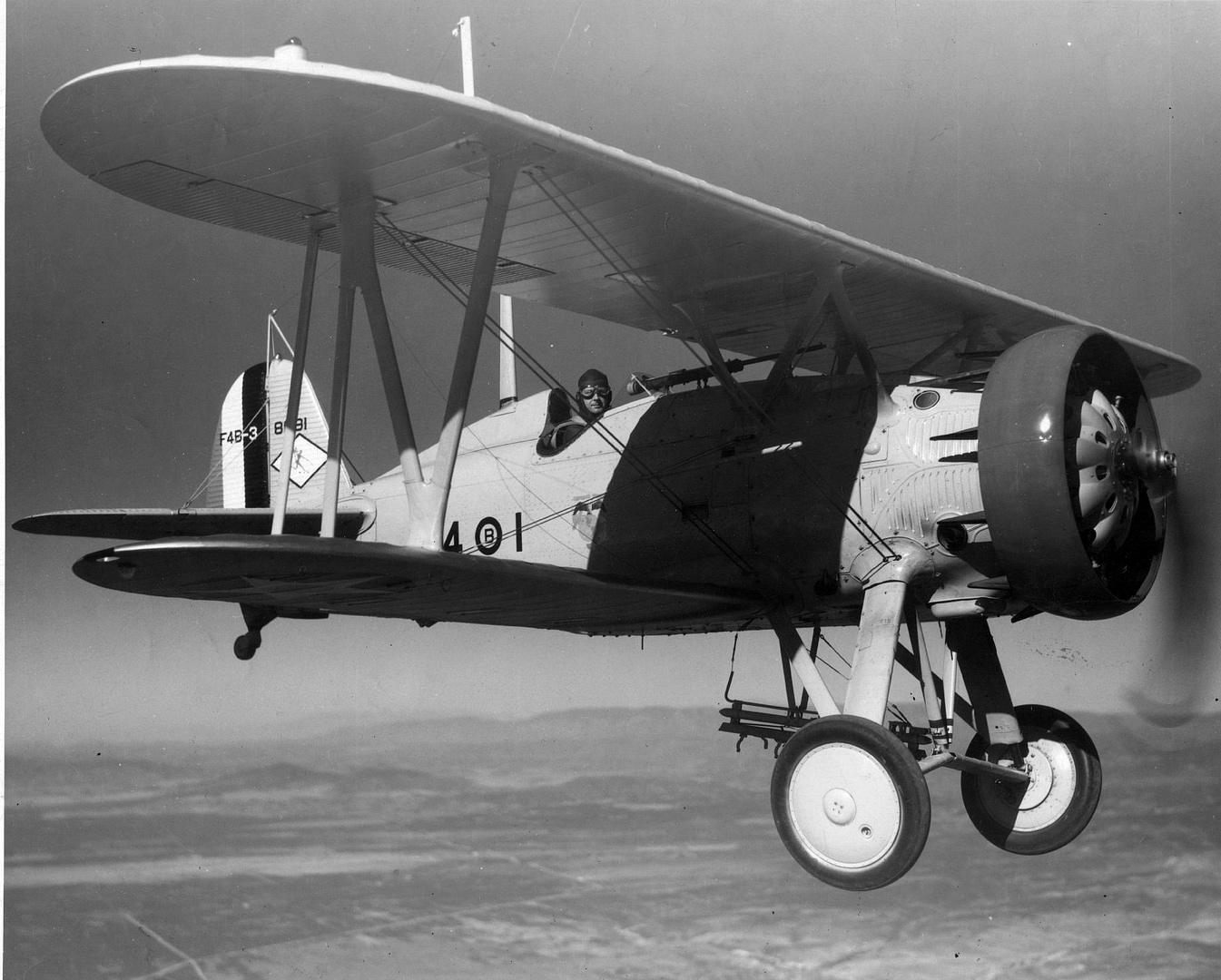
For the Navy and Marines, the F4B had to do something the Army’s P-12 did not: operate from aircraft carriers. Fitted with an arrestor hook and strengthened for the punishment of deck landings, the F4B flew from the US Navy’s early carriers, and it was one of the standard shipboard fighters of the fleet in the early 1930s. Carrier flying in that era was a demanding, hazardous business, and the sturdy, manoeuvrable little Boeing was well suited to it. The same basic aircraft thus served on land airfields and on pitching flight decks alike.
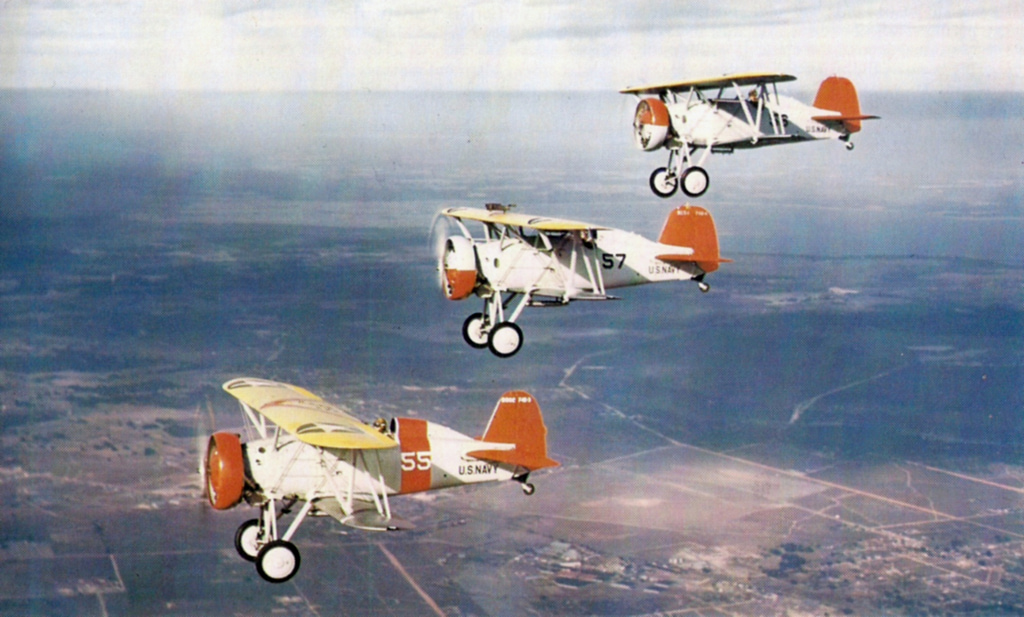
The F4B flew in a formative period for American naval aviation, as the US Navy learned the art of the aircraft carrier aboard ships like the Lexington and Saratoga. The nimble little Boeings, in the bright pre-war fleet schemes of yellow wings and gaily painted cowlings, were among the aircraft that turned carrier flying from a risky novelty into a practised discipline. They are part of the romance of that golden age, when naval aviators were pioneers and their biplanes wore some of the most colourful markings ever flown.
As a fighter, the P-12/F4B was a delight. It was light, responsive and highly aerobatic, and pilots who flew it remembered it with great affection as one of the nicest-handling aircraft of its generation. Armed with a pair of machine guns firing through the propeller, and able to carry a few light bombs, it was a capable pursuit aircraft by the standards of the day. In the peaceful skies of interwar America it was among the best fighters the country possessed, and it was a familiar and admired sight at air shows and military displays.
It was also produced in large numbers for the era. Around 586 were built across all the Army and Navy versions, making the P-12/F4B one of the more numerous American fighters of the interwar years — a considerable production run at a time of tight budgets, and a reflection of how well the design suited both services’ needs. That success made the type an important commercial milestone for Boeing, cementing the company’s place as a leading builder of military aircraft.
That so many were built is remarkable given the times. The orders came during the depths of the Great Depression, when defence budgets were slashed and every dollar was fought over. For Boeing, the steady flow of P-12 and F4B contracts was a lifeline, keeping the Seattle plant working and its engineers employed through years when other firms foundered. The programme did not just equip two air arms; it helped carry Boeing itself through to the era of the great monoplanes.
Like every biplane fighter of its generation, though, the P-12/F4B was overtaken by the monoplane. The change came quickly. Boeing itself led the way, and the experience it gained building the metal-fuselage later P-12s fed directly into its revolutionary monoplanes — the P-26 Peashooter fighter and the Model 247 airliner. By the mid-1930s the new all-metal monoplanes, with their higher speeds and modern construction, were rendering the fabric-and-wire biplane obsolete, and the P-12 and F4B were steadily withdrawn from front-line service. The type that had helped establish Boeing as a fighter-maker was superseded by Boeing’s own next generation.
Exports were limited, as befitted a type bought mainly for America’s own services, but the Boeing did serve abroad: Brazil operated F4Bs, and a small number of related Boeing export models went to other buyers, including civil owners. Its combat record, by contrast, was slight — and it is only honest to say so. The P-12/F4B served in the peaceful interwar years and was largely gone from front-line units before the Second World War; it saw little or no significant combat, spending its career on patrols, exercises, carrier work, displays and training rather than in battle.
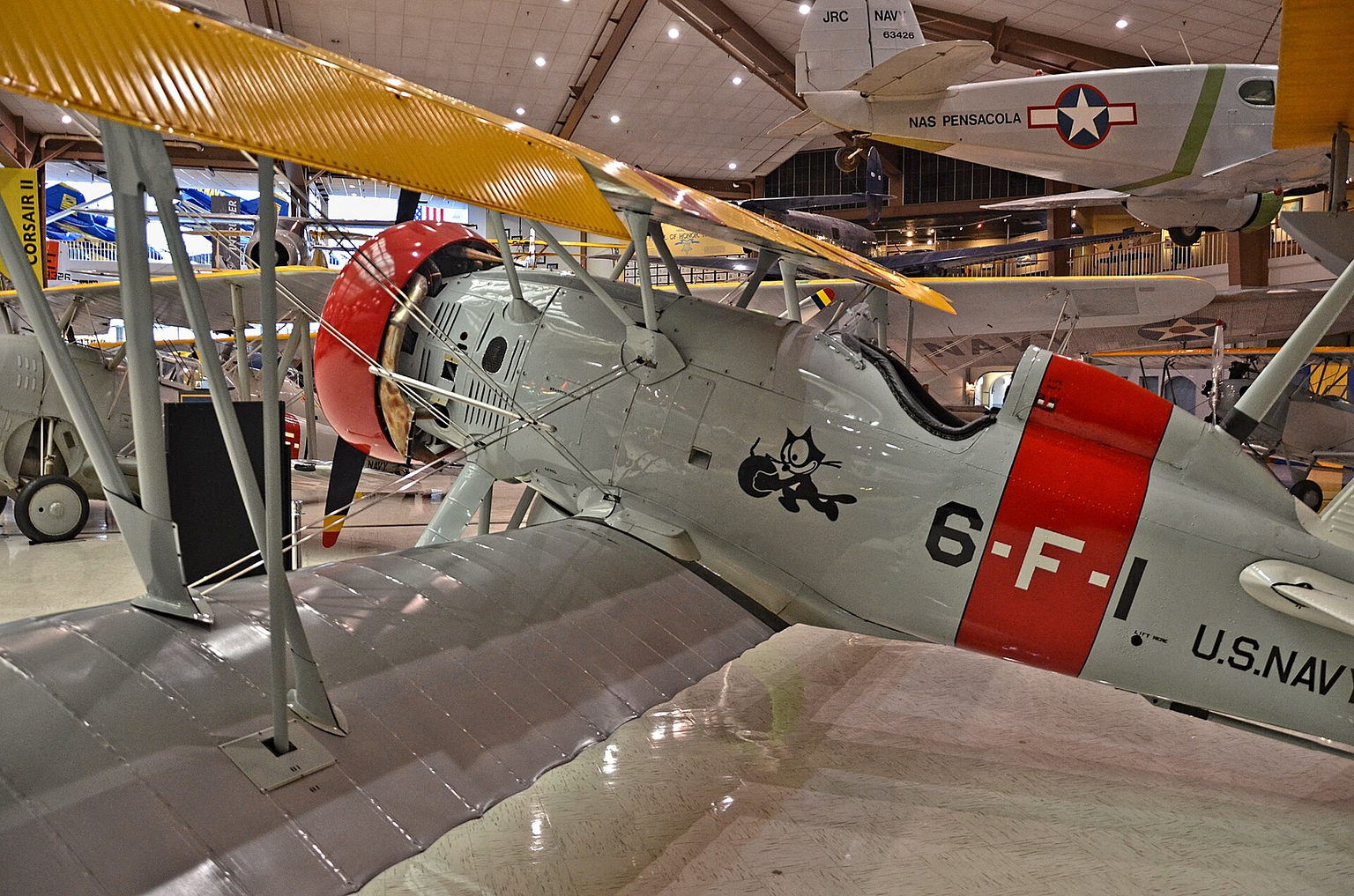
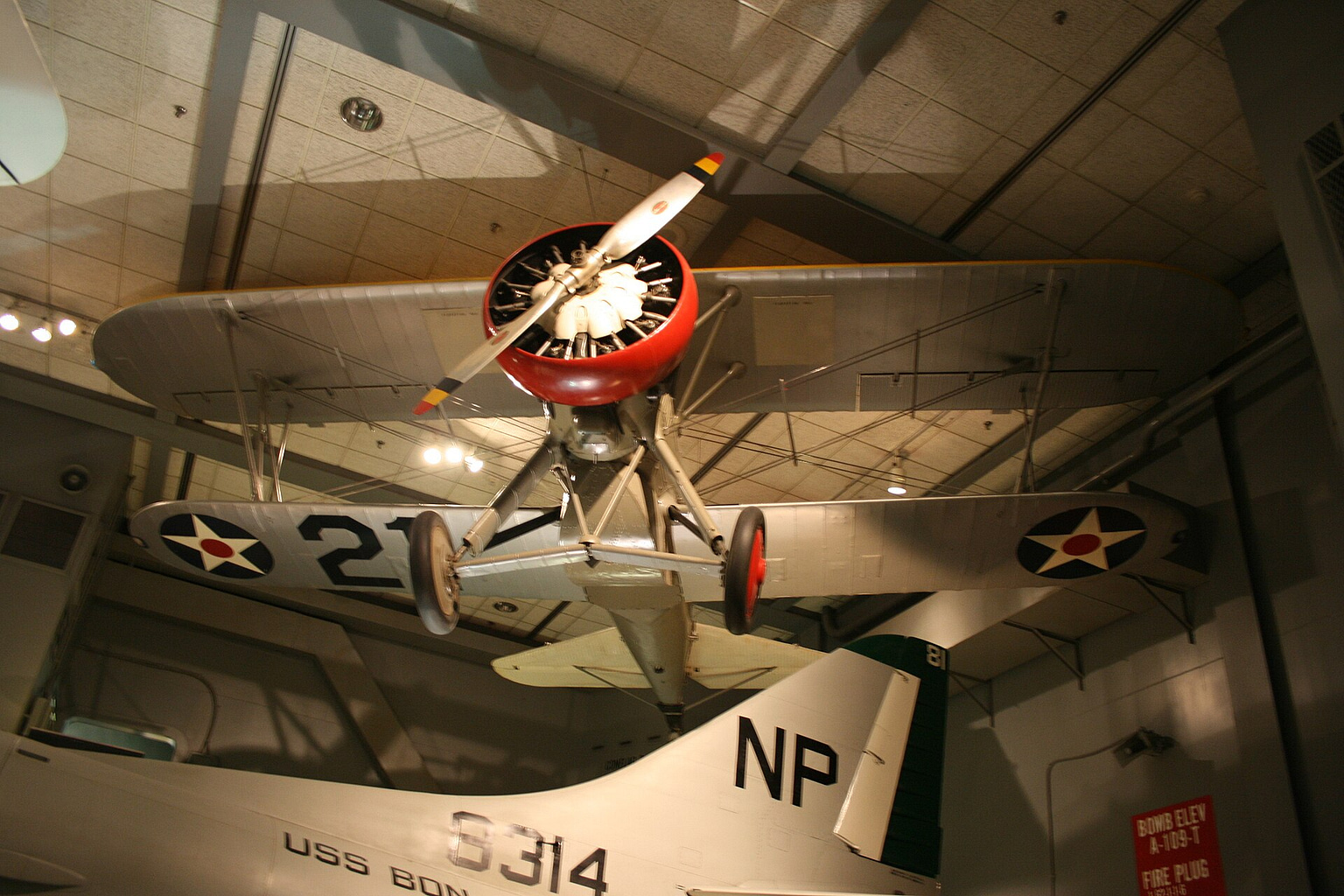
None of that diminishes the aircraft’s standing. The Boeing P-12 and F4B are remembered as among the finest and most charismatic American fighters of the biplane era — elegant, agile, flown by both services and by the fleet, and important both as a mainstay of interwar American air power and as a milestone in Boeing’s rise. Preserved examples survive in American museums, including at the National Museum of the United States Air Force and the National Naval Aviation Museum, where these beautiful little radial-engined biplanes continue to charm all who see them.
01Boeing’s private-venture origin+
Unlike many military aircraft, the P-12/F4B did not begin with a government order. In the late 1920s Boeing designed a new pursuit biplane on its own initiative and built the prototypes at its own expense, gambling that it could sell the result to the armed services. It was a bold commercial bet.
The bet paid off spectacularly. The prototypes impressed both the Army and the Navy, and both placed substantial orders. This private-venture origin is an important part of the story: it showed Boeing’s confidence and its growing expertise as a fighter designer, and it launched one of the company’s most commercially successful early military programmes.
02Bought by both services: P-12 and F4B+
The most distinctive fact about the Boeing is that the same basic aircraft was adopted by both American air arms. The US Army Air Corps bought it as the P-12; the US Navy and Marine Corps bought it as the F4B. Allowing for the differences needed for carrier operations, they were essentially the same design.
This was unusual and economical. Rather than each service developing and buying its own separate fighter, both used a single proven Boeing design, sharing the development and gaining the benefits of a larger combined production run. It is one of the clearest examples in the interwar years of a single fighter serving the whole of a nation’s military aviation, on land and at sea alike.
03The Pratt & Whitney Wasp radial+
The P-12/F4B was powered by the Pratt & Whitney Wasp, an air-cooled radial engine that was one of the landmark American aero-engines of its time. Reliable, comparatively light and straightforward to maintain, the Wasp gave the little Boeing fighter lively, competitive performance.
The choice of an air-cooled radial suited naval use particularly well — there was no vulnerable cooling system of radiators and coolant to be damaged or to leak over the sea — and it gave the aircraft its characteristic blunt-nosed profile. The Wasp itself went on to power a huge range of aircraft and became one of the most important engines in aviation history; the P-12/F4B was among its early and important applications.
04Radial versus liquid-cooled: the P-6 Hawk contrast+
The Boeing P-12 is best understood alongside its great rival, the Curtiss P-6 Hawk. The two were the standard US Army pursuit fighters of the same era, and they embodied the two competing engine philosophies of the day: the Boeing used an air-cooled radial, the Curtiss a liquid-cooled inline V-12.
Each approach had its merits. The liquid-cooled Curtiss had a slimmer, more streamlined nose and a slight edge in aerodynamic cleanliness; the air-cooled Boeing was simpler, more rugged and better suited to naval use, with no cooling system to be shot up or to fail. The Army, tellingly, bought both, hedging its bets between the two philosophies — a debate that would run on in fighter design for years. The P-12 and the P-6 together defined the American pursuit biplane at its peak.
05Light, agile and a joy to fly+
By every account, the P-12/F4B was a delightful aircraft to fly. It was light and small, with a good power-to-weight ratio from its Wasp engine, and this gave it excellent agility — it climbed well, turned tightly and was superbly aerobatic. Pilots consistently remembered it as one of the nicest-handling aircraft of its generation.
These qualities made it not only an effective dogfighter by the standards of its day but also a favourite mount for display flying. In an age when military pilots prized manoeuvrability above almost all else, the responsive little Boeing was close to ideal. Its handling is a large part of why the type is remembered with such affection.
06Progressive refinement: from fabric to metal fuselage+
One of the most interesting aspects of the P-12/F4B is how much it was refined over its production life. The earliest versions had fuselages built up from welded steel tube and covered in fabric, in the traditional manner. Later versions introduced a smooth, semi-monocoque fuselage of light metal, which was stronger, cleaner and more modern.
This transition was significant beyond the aircraft itself. The experience Boeing gained building metal semi-monocoque structures on the later P-12s and F4Bs fed directly into its pioneering all-metal monoplanes. In refining the biplane, in other words, Boeing was learning the techniques that would let it build the aircraft that made the biplane obsolete — a neat illustration of how one generation of technology grows out of the last.
07The ring cowl and wheel spats+
Two visible refinements marked the more developed versions of the Boeing: a ring cowl around the radial engine, and neat spats, or fairings, over the main wheels. Both were aerodynamic improvements aimed at reducing drag and squeezing more speed from the design.
The ring cowl — a narrow band of cowling around the cylinder heads — smoothed the airflow around the otherwise bluff radial engine and improved cooling, a clever solution that many aircraft of the era adopted. The wheel spats tidied up the fixed undercarriage, one of the biggest sources of drag on a fixed-gear biplane. Together they gave the later P-12s and F4Bs a more finished, purposeful look and a useful gain in performance — small refinements typical of the careful development the type received.
08The Navy F4B and carrier operations+
For the US Navy and Marine Corps, the F4B had to be a carrier aircraft, and it was adapted accordingly — fitted with an arrestor hook to catch the wires on landing, and strengthened to withstand the heavy loads of deck operations. It became one of the standard shipboard fighters of the US fleet in the early 1930s, flying from the Navy’s early aircraft carriers.
Carrier aviation was young and dangerous in this period, and a good deck fighter needed to be tough, manoeuvrable and forgiving at low speed. The sturdy, agile little Boeing fitted the bill well. That the same basic design could serve both as a land-based Army pursuit and as a carrier-borne Navy fighter is a testament to the soundness of Boeing’s work.
09A standard US pursuit of its era+
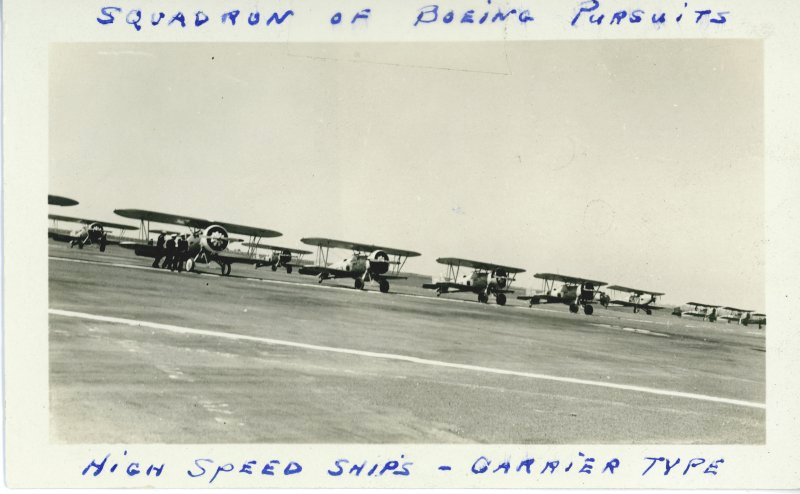
Through the early 1930s the P-12 and F4B were, alongside the Curtiss Hawk, the standard American fighters — the aircraft that equipped the pursuit squadrons of the Army Air Corps and the fighter units of the Navy and Marines. They were the sharp end of American fighter aviation in the years between the wars.
This was a small, underfunded period for American military aviation, and the fighters of the day spent their time on training, exercises, manoeuvres and displays rather than combat. The P-12/F4B was the front-line pursuit of that quiet era — the machine a whole generation of American fighter pilots flew, and on which they honed the skills that some would carry into the great air war to come.
10Large production and many sub-variants+
The P-12/F4B was built in substantial numbers for the interwar years — around 586 aircraft across all the Army and Navy versions. That made it one of the more numerous American fighters of its era, a notable achievement given how little money there was for military aircraft in the late 1920s and 1930s.
The production run was spread across many sub-variants: for the Army, the P-12, P-12B, P-12C, P-12D, P-12E and P-12F; for the Navy, the F4B-1, F4B-2, F4B-3 and F4B-4. Each brought incremental improvements — the metal fuselage, the ring cowl, engine and equipment changes — so that the last versions were considerably more refined than the first. This steady evolution across a large production run is one of the hallmarks of the programme.
11The transition to monoplanes+
The P-12/F4B’s front-line career, like that of every biplane fighter of its generation, was ended by the monoplane. And the monoplane that led the charge came from Boeing itself. The company’s Model 248/P-26 Peashooter — a low-wing, all-metal monoplane — entered Army service in the mid-1930s, and it, along with the Navy’s new monoplanes, quickly made the fabric-and-wire biplane look obsolete.
There is a real continuity here: the metal-construction experience Boeing gained on the later P-12s fed straight into the P-26 and the Model 247 airliner. In a sense the P-12/F4B was the aircraft on which Boeing learned the skills that let it build the monoplanes that replaced it. The biplane bowed out gracefully, its lessons carried forward into the aircraft of the next age.
12Exports and the civil Boeing 100+
The Boeing was built mainly for America’s own services, so exports were limited, but the type did serve abroad. Brazil operated F4Bs, and a small number of related Boeing export models went to other buyers. Boeing also built a handful of civil versions, known as the Model 100, which found their way into private hands.
These civil Boeing 100s are a charming footnote: one was famously owned and flown by figures in aviation and Hollywood, and at least one survives in airworthy condition today, occasionally seen at air shows. So while the P-12/F4B never became a great export success like some contemporaries, it did spread modestly beyond the US military, and its civil examples have helped keep the type alive and flying.
13Limited combat: an honest note+
It is only honest to be clear about the P-12/F4B’s combat record: it was slight. The type served during the peaceful interwar years and was largely withdrawn from front-line service before the Second World War, by which time modern monoplanes had taken over. Its career was spent on patrols, carrier work, exercises, air shows and training, not in battle.
Some elderly airframes lingered in second-line roles into the war years — as trainers and hacks, and a few even as radio-controlled target drones — but the P-12/F4B was never a combat aircraft of the war itself. Its importance rests on its role as a mainstay interwar American fighter, flown by both services, and as a Boeing milestone — not on a war record. To claim more would be to misrepresent a genuinely fine, but genuinely peacetime, aircraft.
Design & Engineering
How the Boeing was built: a radial fighter for two services
A private-venture Boeing biplane around the reliable Pratt & Whitney Wasp radial — light, agile, progressively refined from fabric to metal, and adapted for both land airfields and carrier decks.
Wasp radial power
The reliable air-cooled Pratt & Whitney Wasp gave lively performance and a rugged simplicity well suited to naval use — and the blunt-nosed radial look.
Refined over time
From a fabric-covered steel-tube fuselage to a smooth metal semi-monocoque, with a ring cowl and wheel spats — steady drag-cutting refinement.
Army and Navy
One design, two services: the land-based P-12 and the carrier-capable F4B, with an arrestor hook and strengthened structure for deck landings.
Especificações
Boeing P-12E / F4B specifications: dimensions, performance and cost
| Tipo | Single-seat biplane pursuit fighter (Army & carrier Navy) |
| Equipe | 1 (pilot) |
| Comprimento | ~6.17 m (20 ft 3 in) — approx. |
| Envergadura | ~9.14 m (30 ft) — approx. |
| Altura | ~2.7 m (9 ft) — approx. |
| Peso vazio | ~900 kg (~2,000 lb) — approx. |
| Loaded weight | ~1,220 kg (~2,690 lb) — approx. |
| Motor | 1 × Pratt & Whitney R-1340 Wasp air-cooled radial, ~500–600 hp |
| Max speed | ~304 km/h (~189 mph) — approx. |
| Faixa | ~930 km (~580 miles) — approx. |
| Teto de serviço | ~8,200 m (~26,900 ft) — approx. |
| Armamento | 2 × machine guns (synchronised); light bombs |
| First flight | 1928 (prototype) |
| Introduced | 1929 (US Army & US Navy) |
| Number built | ~586 (all P-12 and F4B versions) |
| Main variants | P-12, P-12B/C/D/E/F (Army); F4B-1/2/3/4 (Navy); Boeing 100 (civil) |
| Operators | United States (Army, Navy & Marines); Brazil (export) |
| Unit cost | not reliably recorded (interwar procurement) |
| Cost per flight hour | not reliably recorded |
14The P-12/F4B family: a summary of the variants+
The Boeing design ran through a long series of variants. On the Army side, the P-12 was followed by the P-12B, C, D, E and F, each with detail improvements; the P-12E, with its metal semi-monocoque fuselage and ring cowl, is often considered the definitive Army version. On the Navy side, the F4B-1 led to the F4B-2, F4B-3 and F4B-4, with the F4B-4 the most refined and most numerous.
The Army and Navy versions differed mainly in equipment — the Navy aircraft carried the arrestor gear and other naval fittings — but shared the same basic airframe and Wasp engine. Together they made up the roughly 586 aircraft of the whole programme, one of the larger American fighter production runs of the interwar period.
15The Boeing P-12’s cost: what the records show+
As with most interwar military aircraft, there is no reliable, transparent public figure for the P-12/F4B’s unit cost, cost per flight hour or total programme cost. It was procured in batches through US Army and Navy contracts over several years, and consistent lifetime cost data for so old and long-serving a type does not exist in a usable form.
Rather than repeat an invented number, we list the cost fields here as “not reliably recorded.” What can be said is that buying a single design for both services was, in itself, a way of controlling cost — sharing development and lengthening the production run — which was part of the appeal of the Boeing to two chronically underfunded interwar air arms.
16A Boeing milestone: the road to the monoplanes+
The P-12/F4B was a landmark in Boeing’s history. Commercially, it was one of the company’s most successful early military products, selling in large numbers to both services and establishing Boeing as a leading fighter-maker. Technically, it was the aircraft on which Boeing developed the metal semi-monocoque construction that would define its future.
That experience fed directly into Boeing’s revolutionary monoplanes of the early-to-mid 1930s — the P-26 Peashooter fighter, the B-9 bomber and the Model 247 airliner, all of which drew on the structural know-how gained on the later P-12s and F4Bs. In a real sense, the classic biplane fighter was the stepping stone from which Boeing launched itself into the monoplane age — and, in time, toward the great bombers and airliners for which it became famous.
17Survivors and where to see them+
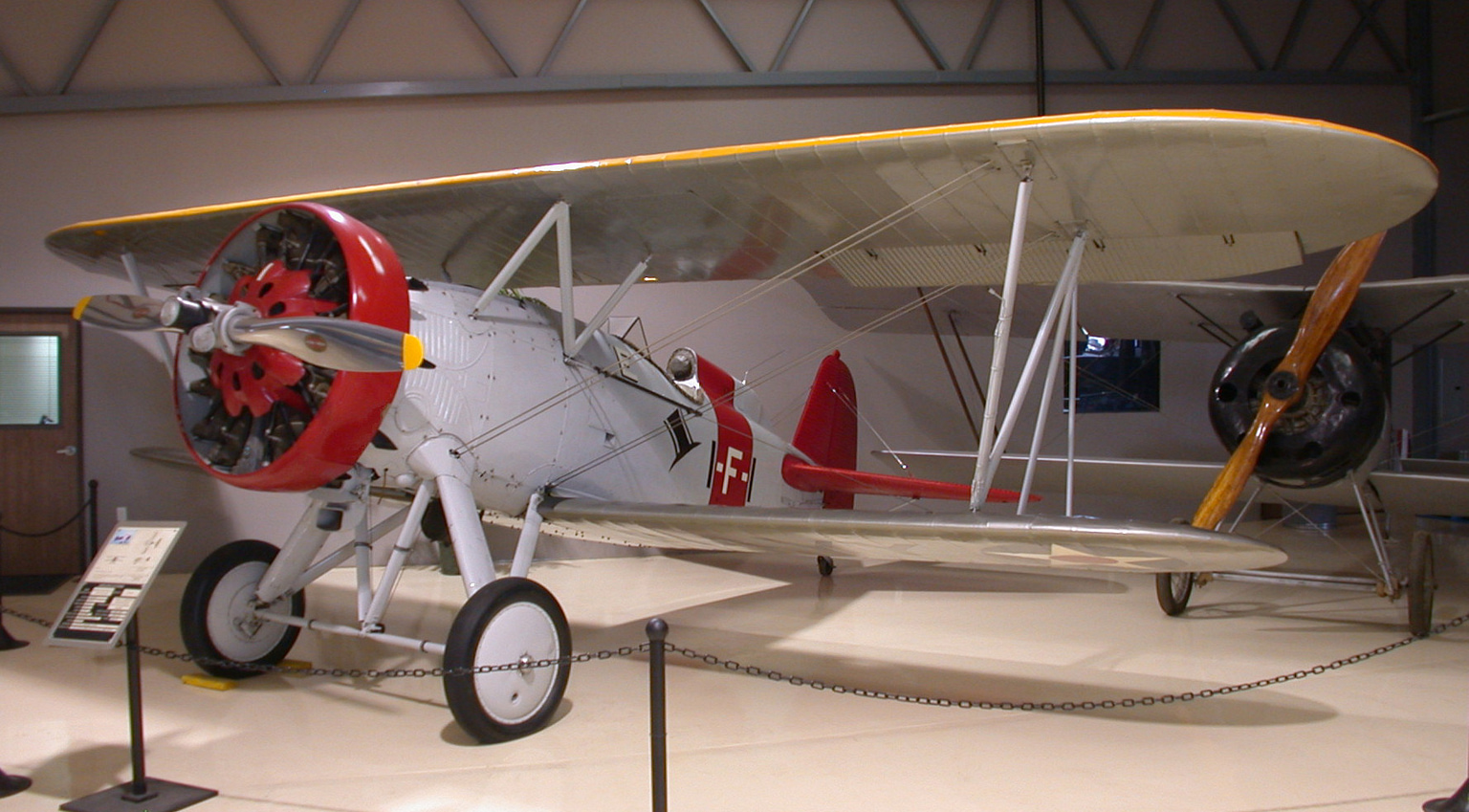
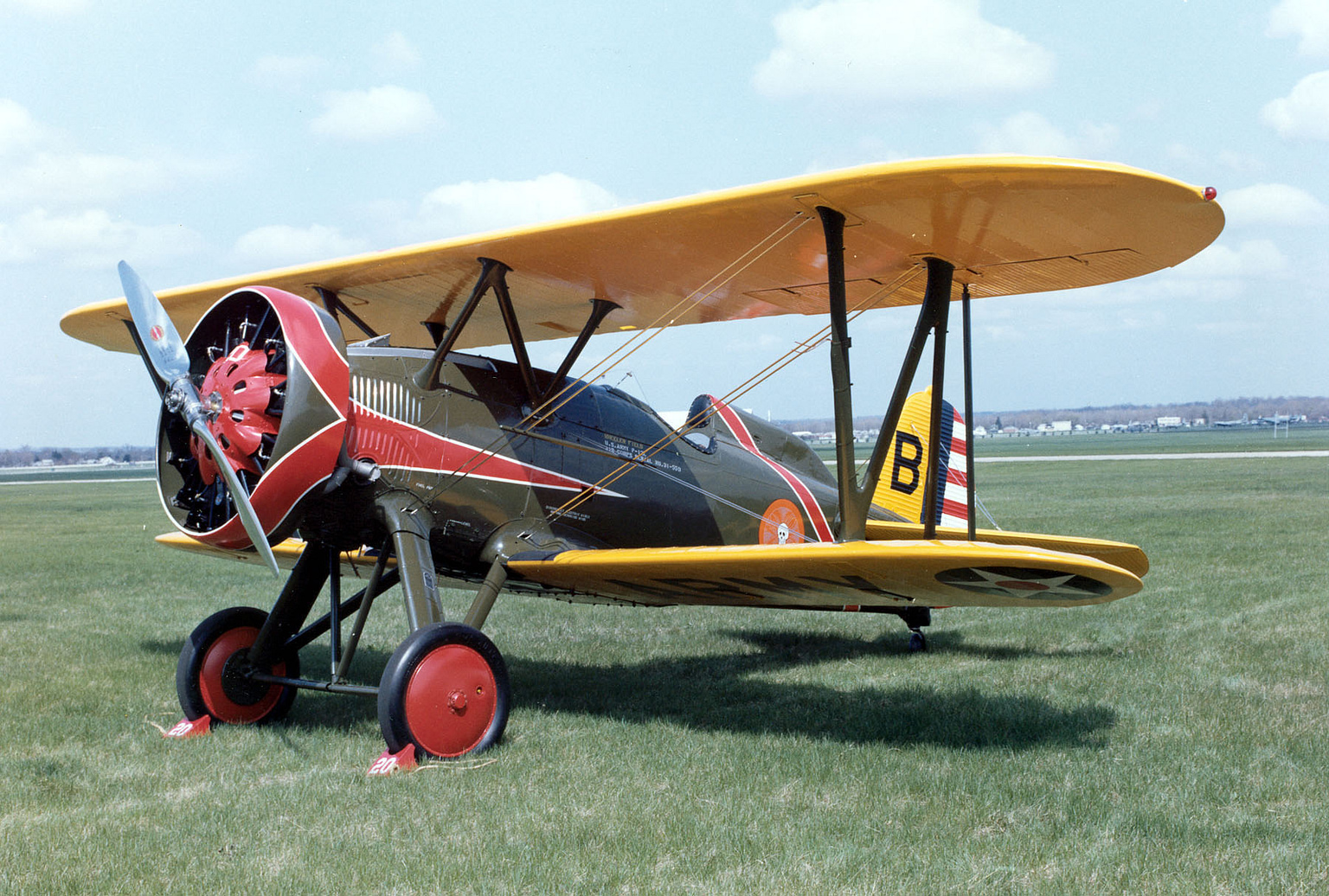
Several P-12/F4B aircraft survive, all in the United States, the country that built and overwhelmingly operated them. A P-12E is preserved at the National Museum of the United States Air Force in Ohio, and an F4B is displayed at the National Naval Aviation Museum in Florida, letting visitors see both the Army and Navy sides of the story.
A civil Boeing 100 — the commercial version of the design — also survives in airworthy condition and is occasionally flown at air shows, giving modern audiences the rare chance to see one of these elegant radial biplanes in the air. For an aircraft of its age, the P-12/F4B is unusually well represented among survivors — a reflection of the affection and historical importance it commands.
Timeline
The Boeing P-12 / F4B through the years
Boeing designs and builds prototypes of a new pursuit biplane at its own expense, hoping to sell it to the armed forces.
The Army adopts the type as the P-12 and the Navy and Marines as the F4B; both begin entering service.
The P-12 and F4B become, with the Curtiss Hawk, the standard American fighters, on land airfields and carrier decks alike.
Later versions gain a metal semi-monocoque fuselage, a ring cowl and wheel spats, steadily improving performance.
The P-12E for the Army and the F4B-4 for the Navy arrive as the most refined and numerous variants of the family.
F4Bs serve as standard shipboard fighters aboard the US Navy’s early aircraft carriers.
Brazil operates F4Bs, and a small number of related Boeing export and civil models go to other owners.
Boeing’s own P-26 Peashooter monoplane enters Army service, beginning the end of the biplane fighter.
Modern monoplanes render the P-12/F4B obsolete, and it is withdrawn to training and second-line duties.
P-12/F4B aircraft survive in US museums, and a civil Boeing 100 remains airworthy.
Stories & Eyewitnesses
The Boeing P-12 / F4B in stories: the moments that defined it
A private-venture Boeing bought by both services, a Wasp-radial contrast to the Curtiss Hawk, a carrier fighter and a Boeing milestone — the P-12/F4B’s history through the moments that stuck.
Private Venture
Boeing’s own gamble
Built at company expense, on spec.
Boeing designed and built the prototypes at its own expense, gambling it could sell them to the services — and it worked.
A bold commercial bet that launched a hugely successful programme.
Two Services
P-12 and F4B
The Army and the Navy both bought it.
The Army adopted it as the P-12, the Navy and Marines as the carrier-capable F4B — the same elegant Boeing under two names.
One design serving a whole nation’s military aviation.
The Wasp
Air-cooled radial
Reliable Pratt & Whitney power.
The Pratt & Whitney Wasp radial gave lively performance, rugged simplicity and a blunt-nosed look — ideal for naval use.
One of the great American aero-engines, in an early application.
The Rivalry
Radial vs the Hawk
The counterpart to the Curtiss P-6.
The radial Boeing and the liquid-cooled Curtiss P-6 Hawk were the two standard Army pursuits — rival engine philosophies side by side.
The Army bought both, hedging its bets.
A Joy
Light and agile
One of the nicest-handling of its day.
Light, responsive and superbly aerobatic, the little Boeing was remembered as one of the finest-handling aircraft of its generation.
A favourite for dogfighting and for display flying alike.
Metal Skin
Fabric to monocoque
Refined across its production life.
Early aircraft had fabric-covered steel-tube fuselages; later ones gained a smooth metal semi-monocoque.
The metal-construction lessons fed straight into Boeing’s monoplanes.
Cleaned Up
Ring cowl and spats
Drag-cutting refinements.
A ring cowl around the radial and neat wheel spats cut drag and improved cooling on the later versions.
Small refinements that gave a more finished, faster aircraft.
Carrier Fighter
The Navy F4B
Hook-equipped for the decks.
Fitted with an arrestor hook and strengthened for deck landings, the F4B was a standard shipboard fighter of the early-1930s fleet.
The same design serving on land and at sea.
Standard Pursuit
The interwar front line
America’s fighter, in peacetime.
Through the early 1930s the P-12/F4B was, with the Curtiss Hawk, the standard US fighter — the mount of a generation of American pilots.
Its work was training and displays, not battle.
Well Built
~586 aircraft
Numerous, for the era.
Around 586 were built across all the Army and Navy versions — one of the more numerous US fighters of the interwar years.
A big run at a time of very tight budgets.
Overtaken
Boeing’s own monoplane
The P-26 ended its reign.
Boeing’s own P-26 Peashooter monoplane, built on lessons from the metal P-12s, quickly made the biplane obsolete.
Superseded by the next generation from the same company.
Milestone
A Boeing landmark
Cementing Boeing as a fighter-maker.
The commercial and technical success of the P-12/F4B established Boeing as a leading builder of military aircraft.
A stepping stone toward the monoplanes, bombers and airliners to come.
Honest
Little combat
A peacetime fighter, preserved.
The P-12/F4B saw little or no significant combat, serving in the quiet interwar years and retiring before WWII.
Survivors are preserved in US museums, and a civil Boeing 100 still flies.
Photo Gallery
The Boeing P-12 / F4B in photographs
Museum, archival and restored-aircraft photographs of the Boeing P-12 and F4B, each credited to its source and licence. Click any photo to enlarge.

On Film
The Boeing P-12 / F4B on video: the classic radial biplane fighter
A look at the Boeing P-12 and F4B — the private-venture biplane bought by both American services, and a milestone in Boeing’s rise.
“Boeing 100 / P-12 / F4B | A pilot’s hot rod” by Fly with Magnar (approx. 13,700 views at time of writing; running time ~30 minutes) — a pilot’s feature on the Boeing P-12/F4B and its civil Boeing 100 version.
Operations Overview
Where the Boeing P-12 / F4B flew: an operator map
Designed, built and flown chiefly by the United States — by the Army as the P-12 and the Navy and Marines as the F4B. Exports were limited; Brazil was the main foreign operator. This is therefore a small map. Hover or tap a country for detail.
Categories: Design, Manufacture, Army & Navy (United States) · Export Operator (Brazil, which operated F4Bs) · Surviving Airframes (United States). The P-12/F4B was overwhelmingly a US type; foreign use was minor.
Service Record
The P-12/F4B’s record: a two-service mainstay
The P-12/F4B’s significance lies in its adoption by both American services, its large production for the era, and its place as a Boeing milestone on the road to the monoplane.
Questions & Answers
Boeing P-12 / F4B: your questions answered
Can I fly in a Boeing P-12 or F4B?
No — there is no bookable P-12 or F4B flight experience, and MiGFlug does not offer one. The type retired in the 1930s, and the survivors are museum aircraft (though a civil Boeing 100 version is airworthy, flown only by its expert operators). If what you actually want is the real thing — strapping into a genuine military aircraft and flying it — you very much can do that today in other types. MiGFlug arranges flights in real fighter jets and warbirds around the world. Start here: migflug.com/flights-prices.
Why is the Boeing P-12 / F4B historically important?
The P-12/F4B was one of the two standard American pursuit fighters of the late 1920s and early 1930s, bought in large numbers by both the US Army (as the P-12) and the US Navy and Marines (as the carrier-capable F4B). It was a mainstay of interwar American air power, a delightful and much-loved fighter, and an important commercial and technical milestone for Boeing on its road to the all-metal monoplane.
What is the difference between the P-12 and the F4B?
They are essentially the same Boeing design bought by two different services. The US Army Air Corps operated it as the P-12, from land airfields; the US Navy and Marine Corps operated it as the F4B, adapted for carrier operations with an arrestor hook and a strengthened structure. Beyond the naval equipment, the two shared the same basic airframe and Pratt & Whitney Wasp radial engine. Think of them as the Army and Navy versions of one aircraft.
How did the P-12 compare with the Curtiss P-6 Hawk?
They were rivals and complements — the two standard US Army pursuits of the era, embodying different engine philosophies. The Boeing P-12 used an air-cooled Pratt & Whitney Wasp radial; the Curtiss P-6 Hawk used a liquid-cooled Curtiss Conqueror V-12. The liquid-cooled Curtiss had a slimmer, more streamlined nose; the air-cooled Boeing was simpler, more rugged and better suited to naval use. The Army, revealingly, bought both, hedging between the two approaches.
Did the Boeing P-12 / F4B see combat?
Little or none of significance. The type served in the peaceful interwar years and was largely withdrawn from front-line service before the Second World War, by which time modern monoplanes had taken over. Its career was spent on patrols, carrier work, exercises, air shows and training. A few elderly airframes lingered into the war as trainers, hacks and even radio-controlled target drones, but the P-12/F4B was never a combat aircraft of the war. Its importance is as an interwar mainstay, not a war record.
How many were built, and do any survive?
Around 586 were built across all the Army P-12 and Navy F4B versions, making it one of the more numerous US fighters of the interwar years. Several survive, all in the United States: a P-12E at the National Museum of the US Air Force and an F4B at the National Naval Aviation Museum, among others. A civil Boeing 100 version also survives in airworthy condition and is occasionally flown at air shows.
Who operated the P-12 / F4B?
Overwhelmingly the United States — the Army Air Corps as the P-12 and the Navy and Marine Corps as the F4B. Exports were limited: Brazil operated F4Bs, and a small number of related Boeing export and civil models went to other buyers. It was essentially a US front-line pursuit of the early 1930s, built and flown mainly at home.
Was the Boeing P-12 / F4B a good aircraft?
Yes — it was an excellent fighter for its time. It was fast enough to be competitive, light, wonderfully agile and much loved by its pilots, and it was rugged and adaptable enough to serve both as a land-based Army pursuit and a carrier-borne Navy fighter. Its limited combat record does not diminish it: it was a peacetime fighter that excelled at its job, one of the two standard American pursuits of its era, and a genuine milestone for Boeing.
Fly For Real
You can’t fly the P-12 — but these, you can
No Boeing P-12 or F4B is a bookable ride today. The urge behind it — to strap into a real aircraft and actually fly — is very much still bookable. MiGFlug puts you in genuine fighters and warbirds around the world.
Fighter Jet Flights
Take the controls of a real ex-military jet with an experienced pilot.
Warbird experiences
Fly in a genuine piston-engined warbird from the golden age of aviation.
All flights are operated by MiGFlug’s vetted partners with professional pilots. Browse every option and current pricing at migflug.com/flights-prices. MiGFlug does not operate Boeing P-12 / F4B flights — no bookable example exists.
Related Aircraft
If the Boeing P-12 / F4B interests you, explore these
Sources & Further Reading
Where this Boeing P-12 / F4B history comes from
Note on figures: dimensions, performance and production numbers for the P-12/F4B vary between sources and by variant, and are hedged here as approximate; the figures given are broadly for the P-12E / F4B-4. Cost fields are listed as not reliably recorded because trustworthy interwar procurement cost data is not available. The P-12/F4B saw little or no significant combat and served only in the interwar and early-war second-line period; this profile is careful not to overstate its war record, resting its importance on its two-service interwar service, its production scale and its place as a Boeing milestone. The Boeing P-12 and F4B are the Army and Navy versions of a single design. Survivors are preserved in the United States, and a civil Boeing 100 remains airworthy.