
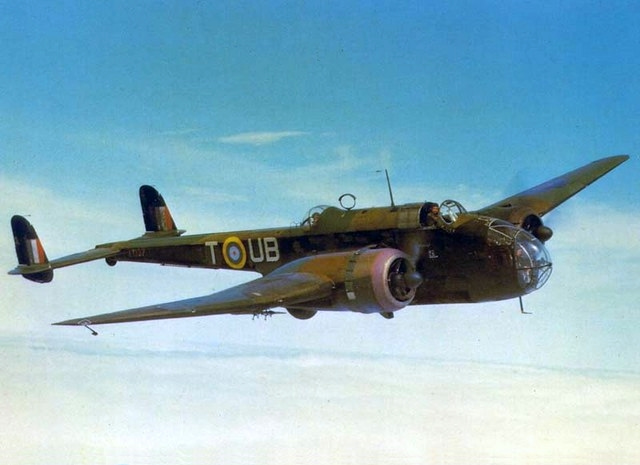
Handley Page Hampden
One of RAF Bomber Command’s three front-line medium bombers in 1939 — fast, agile and long-legged, but so cramped that its own crews nicknamed it the “Flying Suitcase,” and so lightly defended that it was driven from the daylight sky into the darkness.
The Handley Page Hampden: the “Flying Suitcase” that went to war in 1939
When Britain went to war in September 1939, RAF Bomber Command’s daylight striking force rested on three twin-engine medium bombers: the Vickers Wellington, the Armstrong Whitworth Whitley and the Handley Page Hampden. The Hampden was the newest and, in some ways, the most promising of the three — fast, nimble, and able to carry a useful bomb load a long way. It was also the strangest to look at, and the cruellest to fly in.
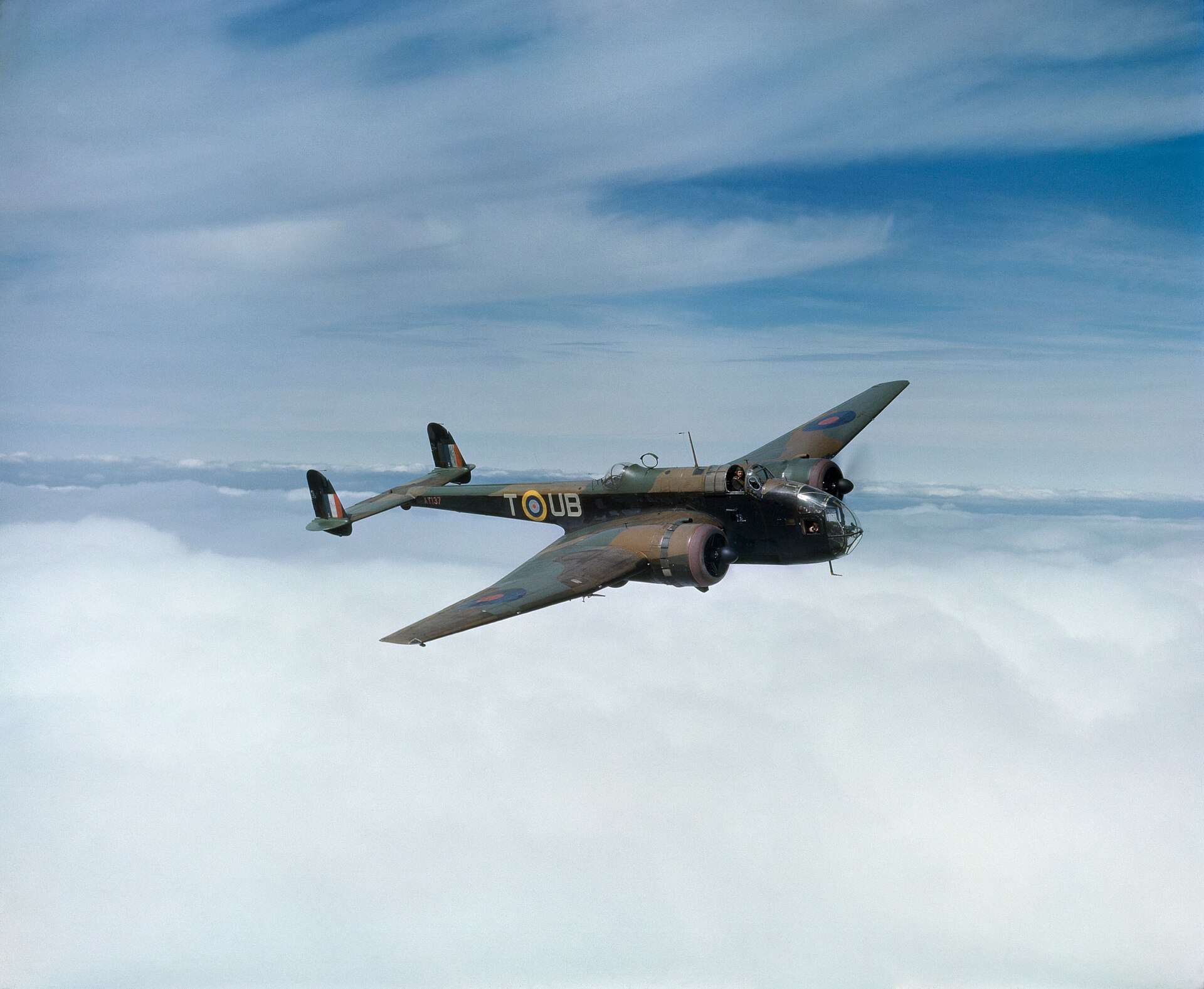
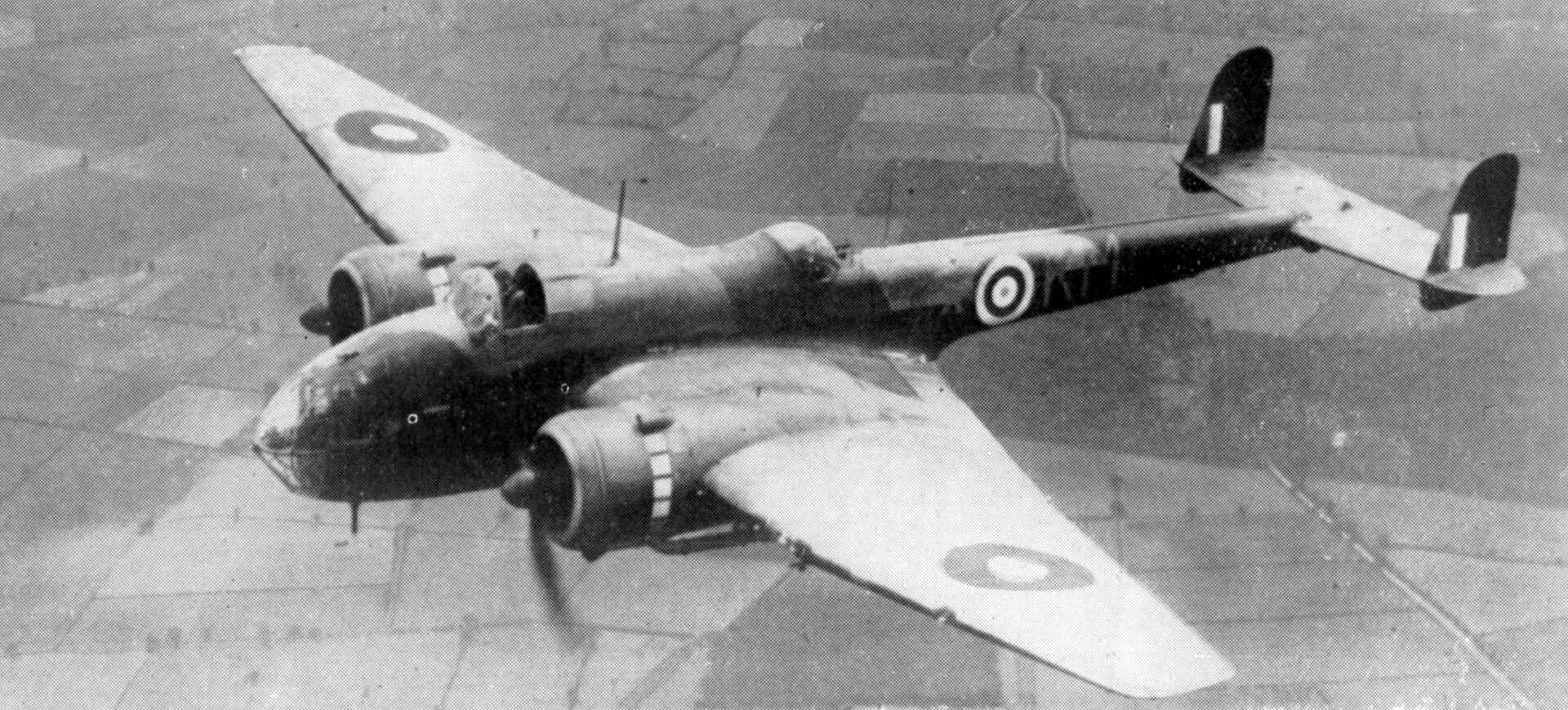
The Hampden was the work of a design team under Gustav Lachmann at Handley Page, answering the same 1932 Air Ministry specification (B.9/32) that produced the Wellington. Where Barnes Wallis gave the Wellington its basket-weave geodetic structure, Handley Page chose a radically different shape: a deep but extraordinarily narrow fuselage — barely wider than a man’s shoulders in places — tapering into a slim tail boom that carried a twin-finned tail. From the side it looked purposeful and fast; head-on it was almost absurdly thin. The crew of four were strung out nose-to-tail inside that slender body, unable to change places or reach one another in flight.
That layout earned the aircraft its enduring nicknames. To its crews it was the “Flying Suitcase,” for the cramped, boxed-in feeling of its stations; others called it the “Flying Panhandle,” the “Flying Tadpole” or the “Flying Frying Pan,” all playing on the odd bulbous-nose-and-thin-tail profile. The jokes were affectionate, but they described a real operational weakness: a wounded pilot could not be relieved, an injured gunner could not be reached, and each man fought his own small battle in isolation.
“The Hampden handled beautifully — light on the controls, quick to manoeuvre for a bomber. But you sat locked in your own little compartment, and if things went wrong there was often nothing anyone else could do for you.”— A characterisation drawn from wartime Hampden aircrew accounts collected by RAF and museum historians
In the air the Hampden was genuinely good. Its two Bristol Pegasus radial engines gave it a top speed and agility that flattered a bomber; pilots enjoyed throwing it around, and it was often described as the nearest thing Bomber Command had to a large fighter. But the design had bought that performance partly by keeping the aircraft light and slim, and it had paid for it in defence. The Hampden’s armament was a handful of hand-aimed rifle-calibre machine guns in nose, dorsal and ventral positions, with wide blind spots — especially to the rear and below — that German fighter pilots quickly learned to exploit.
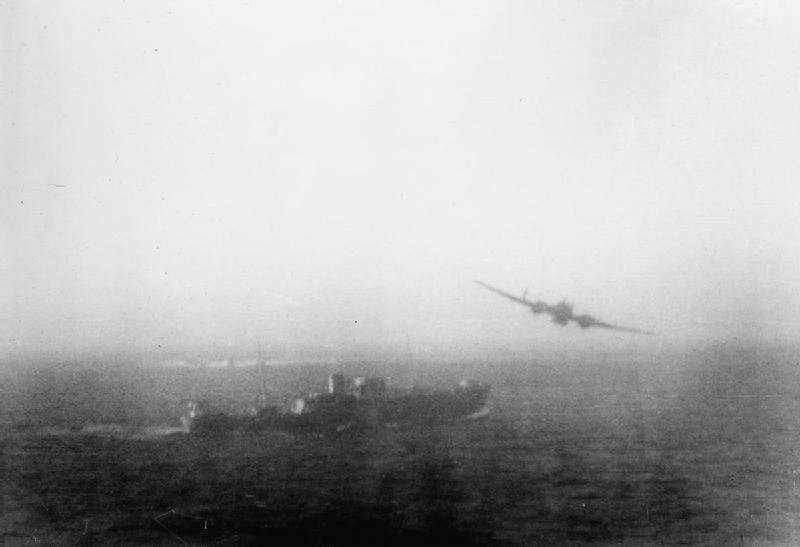
The consequences came fast. Early daylight anti-shipping and armed-reconnaissance sorties over the North Sea in 1939 ran into Messerschmitt Bf 109s and Bf 110s, and on several occasions Hampden formations were savaged — most infamously on 29 September 1939, when a formation was almost wiped out. Like the Wellington and the Whitley, the Hampden was quietly withdrawn from unescorted daylight operations and sent to work by night. In the darkness it found its real war: night raids on German targets, including early attacks associated with the first RAF raids on Berlin in August 1940, leaflet sorties, and above all the long, cold, dangerous business of mine-laying — “gardening” — in enemy coastal waters, a task at which the Hampden became a mainstay.
It was in these months that the Hampden earned its place in RAF legend. Two of its crewmen won the Victoria Cross: Flight Lieutenant Roderick “Babe” Learoyd of No. 49 Squadron, for a low-level attack on the Dortmund–Ems Canal on the night of 12 August 1940, and Sergeant John Hannah of No. 83 Squadron, an eighteen-year-old wireless operator/air gunner who fought a raging fire in his aircraft on the night of 15/16 September 1940 and became the youngest airman ever to receive the decoration.
By 1942 the Hampden was obsolescent as a bomber, outclassed by the four-engine “heavies” now coming into service. Bomber Command flew its last Hampden operation in September 1942. But the aircraft found a second career with Coastal Command: a torpedo-carrying version, the Hampden TB Mk I, served in the anti-shipping role off Norway and further afield — and in one of the war’s stranger episodes, dozens of them were flown to northern Russia in 1942 to help protect the Arctic convoys, with the survivors handed over to the Soviet Navy. Roughly 1,430 Hampdens were built in all, including a substantial batch produced in Canada. Today not one intact original survives from service; every Hampden you can see has been recovered from a crash site and painstakingly rebuilt.
01Where the Handley Page Hampden came from: specification B.9/32 and the twin-bomber generation+
The Hampden was born from Air Ministry Specification B.9/32, issued in the early 1930s for a twin-engine day bomber of good performance. The same requirement gave rise to the Vickers Wellington; the Armstrong Whitworth Whitley came from a separate night-bomber specification. Together these three types formed the backbone of RAF Bomber Command’s medium-bomber force at the outbreak of war in 1939.
Handley Page’s answer, designed by a team led by the German-born aerodynamicist Gustav Lachmann, first flew as the HP.52 prototype on 21 June 1936. It entered RAF service in 1938, with No. 49 Squadron among the first to re-equip. From the start the Hampden was pitched as a fast, manoeuvrable bomber that could look after itself — a philosophy that made sense against the fighters of the mid-1930s but was already being overtaken by the fast monoplane fighters, cannon armament and radar-directed defences of the war that was coming.
02The Handley Page Hampden’s shape: why it became the “Flying Suitcase”+
The Hampden’s most striking feature was its fuselage. To keep drag and weight down, Handley Page made the crew nacelle deep but extremely narrow — in places only around three feet wide — and then tapered it sharply into a slender tail boom carrying twin fins and rudders. The result was fast and distinctive, but brutally cramped. The four crew members were arranged in single file: pilot, then the navigator/bomb-aimer in the glazed nose, with the wireless operator/upper gunner and the lower gunner further aft. None could swap positions in flight, and the tight tunnels between stations meant a wounded man was effectively trapped where he sat.
Crews responded with gallows humour, coining the nicknames that stuck to the aircraft forever — “Flying Suitcase” above all, but also “Flying Panhandle,” “Flying Tadpole” and “Flying Frying Pan,” all riffing on the fat-nosed, thin-tailed silhouette. The names were fond, but they pointed at a genuine flaw. The layout that made the Hampden slim and quick also made it a difficult place to fight for survival when it was hit.
03The Handley Page Hampden’s fatal weakness: light defensive armament and the daylight killing grounds of 1939+
Pre-war RAF doctrine held that a fast bomber flying in tight formation could defend itself against fighters with its own guns. The Hampden was built to that theory, and the theory failed. Its defensive armament was a small number of hand-operated .303-inch (rifle-calibre) machine guns in the nose, dorsal and ventral positions, initially often single guns, later paired. These had limited traverse and left serious blind spots, particularly astern and below — exactly the angles from which German fighters preferred to attack.
The reckoning came in the first weeks of the war. Hampdens flying daylight sweeps and anti-shipping strikes over the North Sea met Bf 109s and Bf 110s and suffered severely; on 29 September 1939 a formation of No. 144 Squadron Hampdens was almost annihilated. The lesson, shared with the Wellington and Whitley, was blunt: unescorted medium bombers could not survive by day against modern fighters. The Hampden was pulled back to night operations, where its weak armament mattered far less and its speed and range could still be put to use.
How the Handley Page Hampden was built — speed and agility bought at a price
The narrow “suitcase” fuselage
A deep but very slim crew nacelle — barely wider than a man in places — tapering into a slender tail boom. Fast and distinctive, but so cramped the four-man crew could not change places or reach a wounded comrade in flight.
Bristol Pegasus power
Two Bristol Pegasus nine-cylinder radial engines of around 980–1,000 hp each gave the Hampden a high top speed and fighter-like handling — pilots reckoned it the most manoeuvrable large aircraft they had flown.
Hand-aimed guns, wide blind spots
Defence rested on a few hand-held .303-inch machine guns with poor traverse and gaps astern and below. Adequate against 1930s biplanes, hopeless against Bf 109s — which is what drove the Hampden out of the daylight sky.
04The Handley Page Hampden’s structure and crew stations: four men in single file+
The Hampden was an all-metal, stressed-skin monoplane with a mid-set wing, retractable undercarriage and the twin-finned tail characteristic of many Handley Page designs. Its handling qualities were widely praised: light, responsive controls and a good turn of speed made it feel more like an oversized fighter than a bomber, and it was cleared for manoeuvres few contemporaries would attempt.
The price was paid inside. The crew of four — pilot, navigator/bomb-aimer, wireless operator/upper gunner and lower (ventral) gunner — occupied separate, tightly enclosed stations along the narrow fuselage. There was no room to move between them once airborne. If the pilot was hit, no one could take the controls; if a gunner was wounded, he could not easily be reached or relieved. This isolation, more than any single statistic, defined what it was like to go to war in a Hampden, and it is the human core of the “Flying Suitcase” nickname.
05The Bristol Pegasus engines and the Hampden’s fighter-like performance+
Power came from two Bristol Pegasus air-cooled radial engines — the same well-proven family that powered the Wellington and the Short Sunderland — driving three-blade propellers. In the definitive Hampden Mk I these were Pegasus XVIII units of roughly 980 to 1,000 horsepower each. They gave the aircraft a maximum speed usually quoted at around 410 km/h (255 mph), with some sources citing figures up to about 426 km/h (265 mph), and a range with a useful bomb load of roughly 1,900 kilometres.
Those numbers made the Hampden fast for a 1939 medium bomber, and combined with its light controls they produced genuinely sparkling handling. Crews and test pilots repeatedly described it as the most manoeuvrable large aircraft of its day. A closely related variant, the Handley Page Hereford, used Napier Dagger inline engines instead of the Pegasus; the Dagger proved troublesome and the Hereford was relegated largely to training, leaving the Pegasus-powered Hampden as the definitive service aircraft.
06Variants of the Handley Page Hampden: the Mk I, the torpedo TB Mk I and the Hereford+
The main service version was the Hampden Mk I bomber, built by Handley Page, by English Electric, and by the Canadian Associated Aircraft consortium in Canada. Across all builders roughly 1,430 aircraft were completed (some references give figures around 1,430–1,432), with the Canadian line contributing about 160.
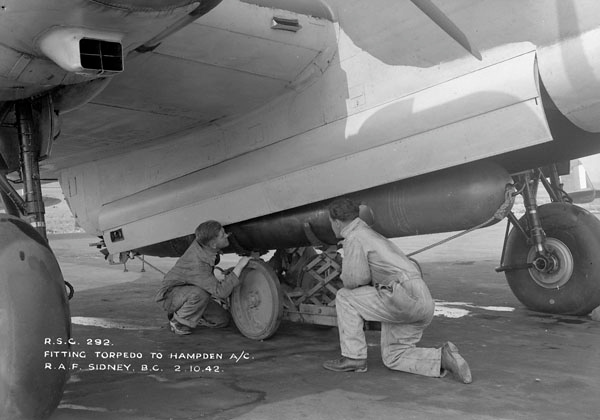
The most important derivative was the Hampden TB Mk I, a torpedo-bomber conversion for Coastal Command that could carry an 18-inch aerial torpedo in a modified bomb bay for anti-shipping strikes. The Handley Page Hereford was a Hampden airframe fitted with Napier Dagger engines; its unreliable powerplant confined it mostly to training duties. Sub-variants and field modifications improved the defensive armament over time — replacing single guns with twin mountings — but never fully cured the aircraft’s defensive shortcomings.
Handley Page Hampden Mk I specifications and cost
Figures below are for the Pegasus-powered Hampden Mk I and are drawn from established reference works. Wartime figures vary between sources, so contested values are flagged as estimates.
| Tipo | Twin-engine medium bomber / mine-layer / torpedo-bomber |
|---|---|
| Equipe | 4 (pilot, navigator/bomb-aimer, wireless operator/upper gunner, lower gunner) |
| Comprimento | 16.33 m (53 ft 7 in) |
| Envergadura | 21.08 m (69 ft 2 in) |
| Altura | 4.55 m (14 ft 11 in) sources vary ~4.4–4.6 m |
| Max speed | ~410 km/h (255 mph) at altitude estimate — some sources up to ~426 km/h (265 mph) |
| Faixa | ~1,900 km (1,180 mi) with bomb load; ferry range considerably greater varies by load |
| Teto de serviço | ~5,790 m (19,000 ft) estimate |
| First flight | 21 June 1936 (HP.52 prototype) |
| Entered service | 1938 (RAF; No. 49 Squadron among the first) |
| Number built | ~1,430 (all builders, incl. ~160 in Canada) sources give ~1,430–1,432 |
| Engines | 2 × Bristol Pegasus XVIII nine-cylinder air-cooled radials |
|---|---|
| Power | ~980–1,000 hp each estimate |
| Defensive armament | 4–6 × 0.303 in (7.7 mm) machine guns in nose, dorsal & ventral positions (hand-aimed; single, later twin) varies by build |
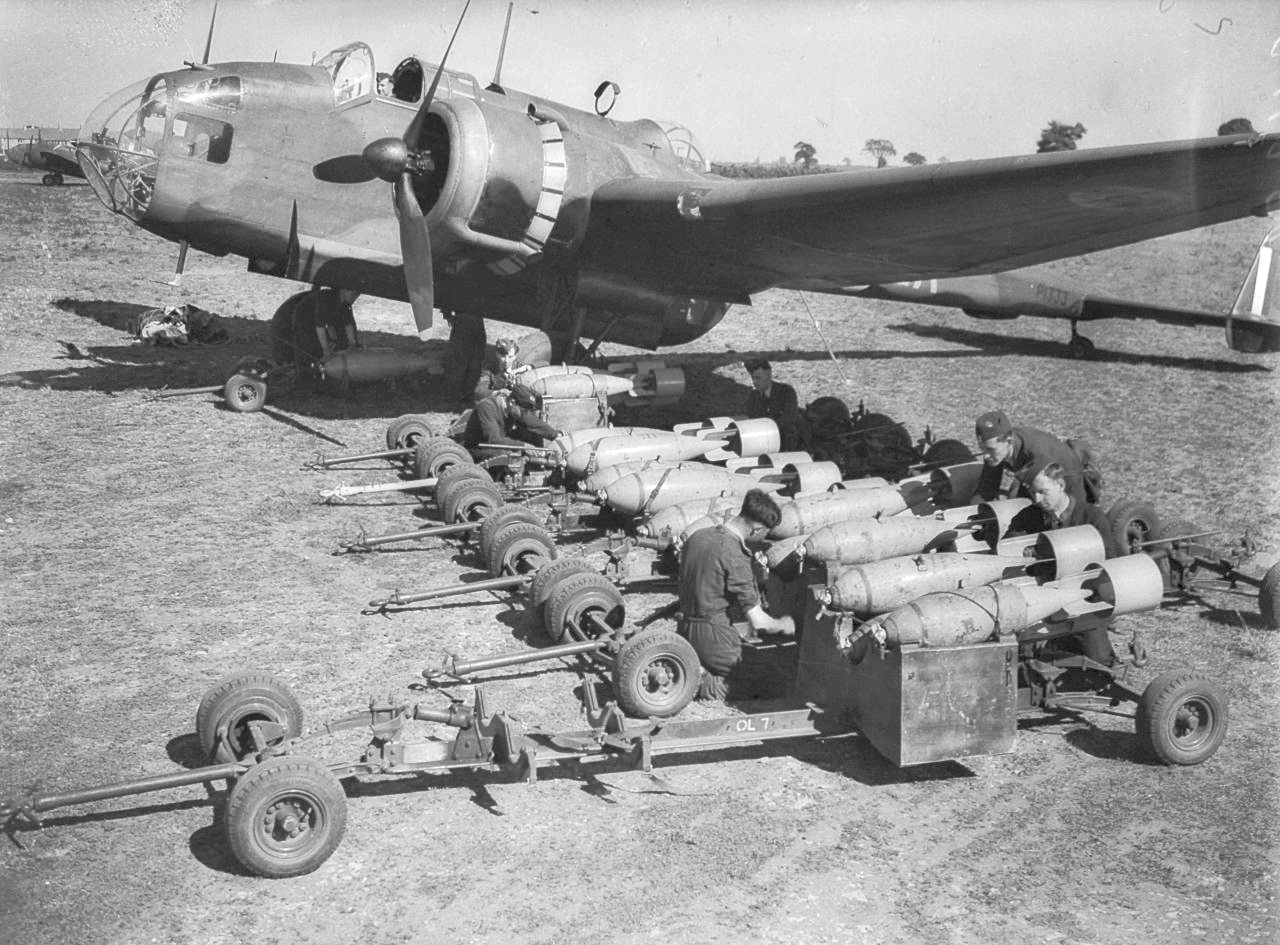
| Offensive load | Up to ~1,814 kg (4,000 lb) of bombs or sea mines; or one 18-inch torpedo (TB Mk I) |
| Unit cost | Not reliably recorded (WWII) |
| Cost per flight hour | Not applicable — no airworthy example exists |
| Programme cost | Not reliably recorded (WWII) |
| Surviving airworthy aircraft | None — all survivors are recovered wrecks, rebuilt for static display |
07The Handley Page Hampden’s operating costs: why no cost-per-hour figure exists today+
Wartime British aircraft were not costed in a way that converts neatly into a modern cost-per-flight-hour number, and no reliable programme accounting for the Hampden survives in comparable form. Unit prices quoted for other 1930s–40s RAF types are inconsistent and are not usefully recorded for the Hampden, so we record its unit and programme cost honestly as “not reliably recorded (WWII).”
More fundamentally, there is no Hampden flying anywhere in the world, and no airworthy airframe to operate. The handful of surviving examples are composites rebuilt from recovered wrecks for static museum display. With no operator, no maintenance schedule and no fuel bill, any “cost per hour” figure would be pure invention — so we list it as not applicable. If you want to know what flying a genuine historic military jet actually costs today, MiGFlug’s live pricing is the place to look.
08How many Handley Page Hampdens were built — and how many were lost+
Production is usually given as roughly 1,430 aircraft (some references cite 1,430 to 1,432), built by Handley Page at Cricklewood, by English Electric, and by the Canadian Associated Aircraft consortium in Canada, which contributed on the order of 160 machines. That made the Hampden a major part of Bomber Command’s early-war strength, alongside the Wellington and Whitley.
It was also, like all early bombers, expensive in lives and airframes. The Hampden suffered heavily in the daylight operations of 1939–40 and continued to take losses on night bombing and mine-laying, where flak, fighters, weather and the sheer hazards of low-level “gardening” all took their toll. Precise loss totals vary between sources and are best treated as estimates, but Bomber Command’s Hampden fleet was worn down steadily until the type was withdrawn from front-line bombing in 1942. What is not in doubt is the human cost carried by an aircraft in which each crewman fought, and too often died, alone in his own compartment.
The Hampden and Bomber Command’s other early-war twins
In September 1939 RAF Bomber Command’s medium force rested on three twin-engine types. The Hampden was the fastest and most agile, the Wellington the toughest and most numerous, the Whitley the dedicated night bomber. Figures are representative and rounded; wartime sources vary.
| Aeronave | Origin | Engines | Max speed | Bomb load | Built |
|---|---|---|---|---|---|
| Handley Page Hampden | Reino Unido | 2 radial | ~410 km/h | up to ~1,814 kg | ~1,430 |
| Vickers Wellington | Reino Unido | 2 radial | ~380 km/h | up to ~2,041 kg | ~11,460 |
| Armstrong Whitworth Whitley | Reino Unido | 2 inline | ~350 km/h | up to ~3,175 kg | ~1,814 |
| Bristol Blenheim | Reino Unido | 2 radial | ~430 km/h | up to ~600 kg | ~4,400 |
Each had its own compromise. The Hampden was quick and handy but cramped and weakly armed; the Wellington’s geodetic structure let it absorb astonishing battle damage and go on to serve the whole war; the Whitley plodded but carried a heavy load into the night; the little Blenheim was fast when new but soon outpaced by fighters. The Hampden’s particular gift — speed and manoeuvrability — could not save it in daylight, but made it a capable night bomber and mine-layer once it was used correctly.
The Handley Page Hampden: a development and service timeline
Specification B.9/32
The Air Ministry issues the requirement for a fast twin-engine day bomber that also gives rise to the Vickers Wellington. Handley Page’s design team under Gustav Lachmann begins work.
First flight
The HP.52 prototype flies on 21 June 1936, revealing its distinctive deep, narrow fuselage and slim tail boom.
Into RAF service
The Hampden enters service with Bomber Command; No. 49 Squadron is among the first to re-equip.
War — and the daylight reckoning
Hampdens fly early North Sea anti-shipping and reconnaissance sorties. On 29 September a formation is almost wiped out by German fighters, exposing the type’s weak defences.
Night bombing, Berlin and mine-laying
Switched to night operations, Hampdens raid German targets — including early attacks linked to the first RAF raids on Berlin in August 1940 — and take up large-scale “gardening” (mine-laying).
Two Victoria Crosses
Flt Lt Roderick Learoyd (No. 49 Sqn) wins the VC at the Dortmund–Ems Canal on 12 August; Sgt John Hannah (No. 83 Sqn) wins it fighting a fire on 15/16 September, becoming the youngest airman VC.
Torpedo Hampdens and the Arctic
The Hampden TB Mk I serves with Coastal Command in the anti-shipping role. In September, 32 torpedo Hampdens fly to North Russia to help cover convoy PQ18; the survivors are handed to the Soviet Navy.
Out of Bomber Command
Bomber Command flies its last Hampden operation in mid-September 1942; the four-engine heavies have made the type obsolete as a bomber.
Final service and retirement
Coastal Command torpedo Hampdens soldier on into 1943 before the type is finally withdrawn from front-line use.
Recovered from the deep and the ice
Wrecked Hampdens are located and recovered — from a British Columbia inlet (P5436) and from the Russian Arctic (P1344) — and rebuilt for museum display. No intact original survived in service.
The Handley Page Hampden in the words and deeds of those who flew it
Twelve short stories that capture the Hampden’s strange, brave career — from its nickname to its two Victoria Crosses and its Arctic odyssey. Expand each card to read more.
Why they called it the “Flying Suitcase”
The Hampden’s deep, narrow fuselage boxed its crew into cramped single-file stations — hence the fond, grim nickname.
Leia mais
The bomber that flew like a fighter
From its first flight in 1936, the Hampden impressed pilots with light controls and fighter-like agility.
Leia mais
The 29 September massacre
Sent to hunt German warships by day, a Hampden formation ran into fighters and was almost wiped out.
Leia mais
Finding its war at night
Withdrawn from daylight operations, the Hampden became a capable night bomber over Germany.
Leia mais
Among the first to bomb Berlin
Hampdens took part in Bomber Command’s early raids on the German capital in August 1940.
Leia mais
Learoyd and the Dortmund–Ems Canal
On 12 August 1940, Flt Lt Roderick Learoyd pressed home a low-level attack through intense fire to win the VC.
Leia mais
John Hannah, the youngest airman VC
An eighteen-year-old wireless operator fought a raging fire with his hands and log book to save his Hampden.
Leia mais
Sowing mines in enemy waters
The Hampden became a mainstay of Bomber Command’s mine-laying campaign, code-named “gardening.”
Leia mais
The torpedo Hampden
A modified version carried an 18-inch torpedo to attack enemy shipping off the coasts of occupied Europe.
Leia mais
Hampdens to Russia
In September 1942, dozens of torpedo Hampdens flew to northern Russia to help protect an Arctic convoy.
Leia mais
Overtaken by the heavies
By 1942 the four-engine bombers had made the Hampden obsolete, and Bomber Command flew its last Hampden op that September.
Leia mais
Built and flown across the Atlantic
Around 160 Hampdens were built in Canada, and the RCAF used the type for operational training.
Leia mais
No intact survivor — only the recovered
Every Hampden you can see today was pulled from a crash site and rebuilt; none survived intact from service.
Leia mais
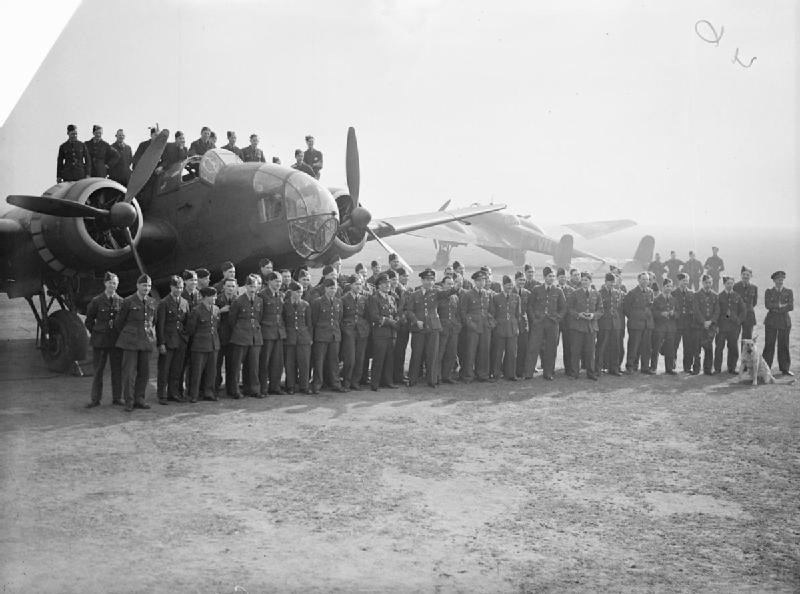
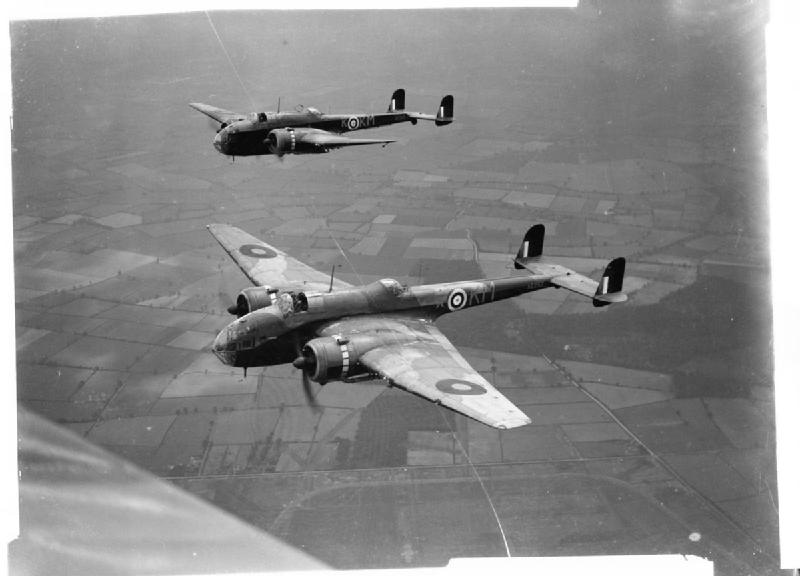
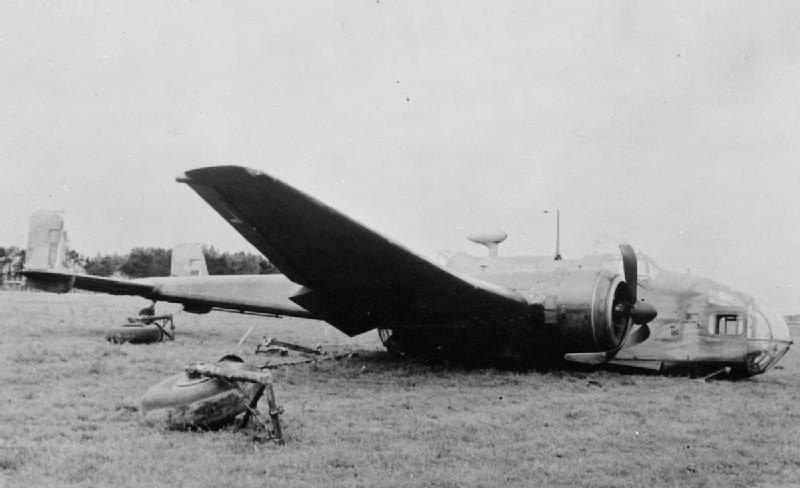
Handley Page Hampden photographs
Genuine wartime and archival images of the Hampden. Click any photo to enlarge. All images via Wikimedia Commons — credits below each frame.
Watch: the Handley Page Hampden, the “Flying Suitcase”
“A Bomber So Cramped It Was Called The ‘Flying Suitcase’ | Handley Page Hampden” by Rex’s Hangar (256k subscribers) — over 1.0 million views. A well-researched history of the Hampden’s design, nickname and combat career. Verified on YouTube.
Where the Handley Page Hampden flew — origin, operators and survivors
The Hampden was a British aircraft flown by the RAF and Commonwealth air forces, with one remarkable detour to the Soviet Arctic. This map shows its country of origin, the wartime operators and their roles, its “other operator” (the torpedo Hampdens handed to the USSR after covering the PQ18 convoy), and the two countries where recovered airframes survive today. Hover (or tap) a country for detail.
The Handley Page Hampden by the numbers
The Handley Page Hampden: six deeper questions
09The two Hampden Victoria Crosses: Learoyd and Hannah in detail+
Two men won the Victoria Cross flying Hampdens, and their stories bracket the aircraft’s finest weeks in the late summer of 1940. Flight Lieutenant Roderick Alastair Brook “Babe” Learoyd, of No. 49 Squadron, earned his on the night of 12 August 1940 in a low-level attack on an aqueduct of the Dortmund–Ems Canal, a key German inland waterway. Bombing from barely over a hundred feet, he held his Hampden steady through a storm of searchlights and light flak that riddled the aircraft, then coaxed the crippled bomber back to England and waited for daylight to land it safely. His was among the very first Victoria Crosses awarded to Bomber Command in the war.
Five weeks later, on the night of 15/16 September 1940, Sergeant John Hannah, an eighteen-year-old wireless operator/air gunner of No. 83 Squadron, was aboard a Hampden hit by flak during a raid on invasion barges at Antwerp. Fire took hold in the fuselage, exploding ammunition and threatening the fuel tanks. With two of the crew having baled out, Hannah stayed and fought the blaze — with extinguishers, then his log book, then his bare hands — until it was out, badly burning himself in the process, and helped the wounded pilot fly home. He became the youngest airman ever to receive the Victoria Cross. His injuries wrecked his health, and he died young, in 1947. Between them, the two awards say much about the Hampden: an aircraft that asked extraordinary things of the isolated men inside it.
10Night bombing and the early raids on Berlin: the Hampden’s real war+
Once daylight operations proved suicidal, the Hampden’s true career unfolded in darkness. From 1940 it was a regular of Bomber Command’s night force, striking German industrial, transport and port targets and dropping propaganda leaflets on long sorties flown by dead reckoning. When, after German raids on London, Churchill ordered retaliation against the German capital, Hampdens were among the aircraft that flew Bomber Command’s first raids on Berlin in late August 1940.
These early Berlin raids did little physical damage — Berlin lay near the limit of the Hampden’s range, and bombing accuracy at night in 1940 was poor — but their strategic effect was large. They shattered the Nazi boast that the capital was untouchable and contributed to the German decision to shift the Luftwaffe’s effort from RAF airfields to British cities, easing the pressure on Fighter Command at a critical moment in the Battle of Britain. For a cramped, lightly armed medium bomber, it was a disproportionate mark to leave on history.
11“Gardening”: the Handley Page Hampden as Bomber Command’s mine-layer+
One of the Hampden’s most valuable and least celebrated roles was aerial mine-laying, known in RAF slang as “gardening.” Each stretch of enemy water was a numbered “garden,” and crews flew low over harbours, estuaries and coastal shipping routes — from the German and Dutch coasts into the Baltic — to sow parachute-retarded sea mines with precision.
It was demanding, dangerous work. Success required accurate low-level navigation over featureless dark water, often within range of coastal flak, with little margin for error. But the payoff was real: mines laid by Hampdens and other aircraft sank and damaged enemy shipping, forced the Germans to divert large minesweeping resources, and constricted the movement of iron-ore carriers, coastal convoys and U-boats. The Hampden’s combination of range, load and low-level handling made it particularly well suited to gardening, and the campaign was one of its most enduring contributions to the war at sea.
12The torpedo Hampden and the flight to Russia: covering convoy PQ18+
As the Hampden bowed out of Bomber Command, Coastal Command gave it a second life as the Hampden TB Mk I torpedo-bomber, its bomb bay adapted to carry a single 18-inch aerial torpedo. Squadrons including No. 144 RAF and No. 455 RAAF flew low-level torpedo strikes against German shipping off occupied Norway — a role that made full use of the aircraft’s speed and handling, but at a heavy cost against alert defences and in savage northern weather.
The most extraordinary chapter came in September 1942, when 32 torpedo Hampdens of Nos. 144 and 455 Squadrons flew an epic ferry route to the Kola Peninsula in northern Russia to provide torpedo cover for the Arctic convoy PQ18. Several were lost en route across the far north; one, P1344, was intercepted by German fighters near Petsamo and crash-landed in the Arctic. The survivors operated briefly from Soviet airfields near Murmansk and were then handed over to the Soviet Naval Air Force rather than flown home. It remains one of the strangest and most demanding operations undertaken by any RAF aircraft in the war.
13Why the Hampden failed by day but succeeded by night+
The Hampden’s whole career is a lesson in matching an aircraft to its task. Designed to a 1930s theory that a fast bomber could defend itself by day, it was sent to do exactly that in 1939 — and was slaughtered, because its rifle-calibre guns and blind spots were no answer to cannon-armed monoplane fighters. The daylight disasters of 1939–40 were not a failure of the crews’ courage but of the concept behind the aeroplane.
By night, the equation changed. Fighters could rarely find it, so its weak armament mattered little; and the qualities the designers had genuinely delivered — speed, range, a heavy load for its size, and delightful handling — became assets. As a night bomber, mine-layer and torpedo aircraft, the Hampden did solid, valuable work for two more years. The type was not a bad aircraft; it was a good aircraft asked, at first, to do an impossible job, and it flourished the moment it was given a role it could actually perform.
14Why no intact Hampden survives — and the wrecks that were raised+
When the Hampden was retired, no one thought to preserve one; like most obsolete war machines, the survivors were scrapped. As a result, not a single intact original Hampden came through the war and into preservation — a striking gap, given the aircraft’s fame and its two Victoria Crosses. Every Hampden that exists today is a recovery.
The best known is P5436, a Canadian-built aircraft that crashed into Saanich Inlet near Patricia Bay, British Columbia, in November 1942. It lay some 180 metres down for over four decades until it was located by sonar in 1985 and recovered; volunteers at the Canadian Museum of Flight then rebuilt it over many years, using components salvaged from other crash sites, into the only Hampden on public display anywhere in the world. In parallel, P1344 — the torpedo Hampden shot down on the ferry flight to Russia in 1942 — was recovered from the Arctic and passed to the RAF Museum, which has been conserving and reassembling it (with parts from other wrecks) at its Cosford and Cardington sites. Other relics and composite airframes survive in fragments. But there is no airworthy Hampden, and short of another wreck being raised and made whole, there never will be.
Handley Page Hampden: your questions answered
Can I fly in a Handley Page Hampden?
No. There is no airworthy Handley Page Hampden anywhere in the world, and no bookable flight of any kind. The only Hampden on public display — P5436 at the Canadian Museum of Flight in British Columbia — is a static aircraft rebuilt from a recovered wreck, and the RAF Museum’s P1344 is a long-term conservation project, not a flyable machine. MiGFlug does not offer Hampden flights, and no one else can either.
Você can, however, fly in several genuine historic military jets today. MiGFlug arranges real flights in aircraft such as the L-39 Albatros, Hawker Hunter, MiG-15, de Havilland Vampire and others. See what is currently bookable at migflug.com/flights-prices.
Why was the Hampden called the “Flying Suitcase”?
Because of its deep but extremely narrow fuselage. The crew nacelle was so slim — barely wider than a man’s shoulders in places — that the four crew were packed into single-file stations and could not change places or reach one another in flight. Crews called it the “Flying Suitcase” for that boxed-in feeling, and also the “Flying Panhandle,” “Flying Tadpole” and “Flying Frying Pan” for its fat-nosed, thin-tailed shape.
What engines did the Handley Page Hampden use?
Two Bristol Pegasus air-cooled radial engines — Pegasus XVIII units of roughly 980 to 1,000 horsepower each in the definitive Mk I. They gave the Hampden a top speed usually quoted around 410 km/h (255 mph), with some sources citing up to about 426 km/h, and fighter-like handling. A separate variant, the Hereford, used Napier Dagger inline engines but proved unreliable and was mostly used for training.
Why did the Hampden stop flying daylight raids?
Because it was too lightly defended to survive against modern fighters. Its armament was a few hand-aimed rifle-calibre (.303-inch) machine guns with wide blind spots astern and below. In the first weeks of the war, Hampden formations on daylight anti-shipping sorties were badly mauled by German fighters — notably on 29 September 1939 — so, like the Wellington and Whitley, the type was switched to night operations, mine-laying and, later, torpedo work.
How many Victoria Crosses were won flying Hampdens?
Two. Flight Lieutenant Roderick “Babe” Learoyd of No. 49 Squadron won the VC for a low-level attack on the Dortmund–Ems Canal on the night of 12 August 1940. Sergeant John Hannah of No. 83 Squadron won it on the night of 15/16 September 1940 for fighting a fire aboard his burning Hampden over Antwerp; aged eighteen, he became the youngest airman ever to receive the decoration.
Did Hampdens really fly to Russia?
Yes. In September 1942, 32 torpedo Hampden TB Mk Is of Nos. 144 and 455 Squadrons flew an epic ferry route to the Kola Peninsula in northern Russia to provide torpedo cover for the Arctic convoy PQ18. Several were lost on the way. The survivors operated briefly from Soviet airfields near Murmansk and were then handed over to the Soviet Naval Air Force rather than flown back to Britain.
How many Hampdens were built, and how fast was it?
Roughly 1,430 were built (sources give figures around 1,430–1,432), by Handley Page, English Electric and — about 160 of them — the Canadian Associated Aircraft consortium in Canada. The Mk I had a top speed usually cited around 410 km/h (255 mph), a range with a bomb load of roughly 1,900 km, a crew of four, and could carry up to about 1,814 kg (4,000 lb) of bombs or mines, or one 18-inch torpedo in the TB Mk I.
Are there any surviving Handley Page Hampdens?
No intact original survived from service — every Hampden today is a recovered wreck. P5436, raised from a British Columbia inlet in 1985, was rebuilt by volunteers and is the only Hampden on public display anywhere in the world, at the Canadian Museum of Flight. P1344, recovered from the Russian Arctic, is under long-term conservation at the RAF Museum. There is no airworthy Hampden.
How does the Hampden compare to the Wellington?
They came from the same 1932 specification but were very different aircraft. The Hampden was faster and far more agile, but cramped and lightly armed, and it left front-line bombing in 1942. The Vickers Wellington, with its resilient geodetic structure, could absorb heavy battle damage, carried a slightly larger bomb load, was built in far greater numbers (around 11,460) and served in many roles throughout the entire war. The Wellington was the more important aircraft; the Hampden was the sprightlier one.
Was the Handley Page Hampden a good aircraft — or a death-trap?
The honest answer is: both, depending on when you asked. As a flying machine the Hampden was a success. It was fast for its generation, it had a good range and a useful bomb load, and it handled so well that pilots compared it to a fighter. Barnes Wallis’s Wellington may have been tougher and the Whitley may have carried more, but neither was as much fun to fly, and in the right role the Hampden did real, valuable work — night bombing, the first raids on Berlin, the long grind of mine-laying, and finally torpedo strikes off Norway and the astonishing flight to Arctic Russia.
What let it down was the thinking behind it. The narrow “Flying Suitcase” fuselage that made it slim and quick also trapped its crew in isolated compartments, and the pre-war faith that a fast bomber could defend itself by day with a few rifle-calibre guns was simply wrong. Sent into the daylight skies of 1939 to prove that theory, the Hampden and its crews paid for it in blood, until the RAF accepted the lesson and moved them into the dark.
So the Hampden is neither a triumph nor a disgrace, but something more interesting: a genuinely fine aeroplane built around an outdated idea of air warfare, redeemed by the courage of the men who flew it and by commanders who eventually found it the jobs it could do. Its two Victoria Crosses, its ghostly survival only as recovered wreckage, and its enduring, affectionate nickname all belong to the same story — that of a brave, awkward, likeable bomber that went to war a year or two after its concept had already been overtaken by events.
No airworthy Hampden survives. But you can strap into a real fighter jet.
The Handley Page Hampden exists today only as photographs and recovered wreckage. If you want the genuine experience of flying in a historic military aircraft — the g-forces, the noise, the view from a fast-jet cockpit — MiGFlug makes it real. Here are some of the aircraft you can actually book.
Explore more from the Aircraft Museum
Sources & further reading