
HAL HF-24
“Marut”
India’s first indigenous jet fighter — a clean, supersonic-capable airframe drawn by the German designer of the Fw 190, and let down only by the powerful engine it was never given.
India’s first fighter, built from scratch
In the mid-1950s a newly independent India set out to do something no other developing nation had attempted: design and build its own supersonic jet fighter. With almost no aeronautical industry to draw on, Hindustan Aircraft (later Hindustan Aeronautics, HAL) turned to one of the great names of piston-era aviation — Kurt Tank, the German engineer behind the Focke-Wulf Fw 190. Tank arrived in Bangalore in 1956 to lead a design office that started life barely fifty people strong, with no proper prototype shop or flight-test facilities.
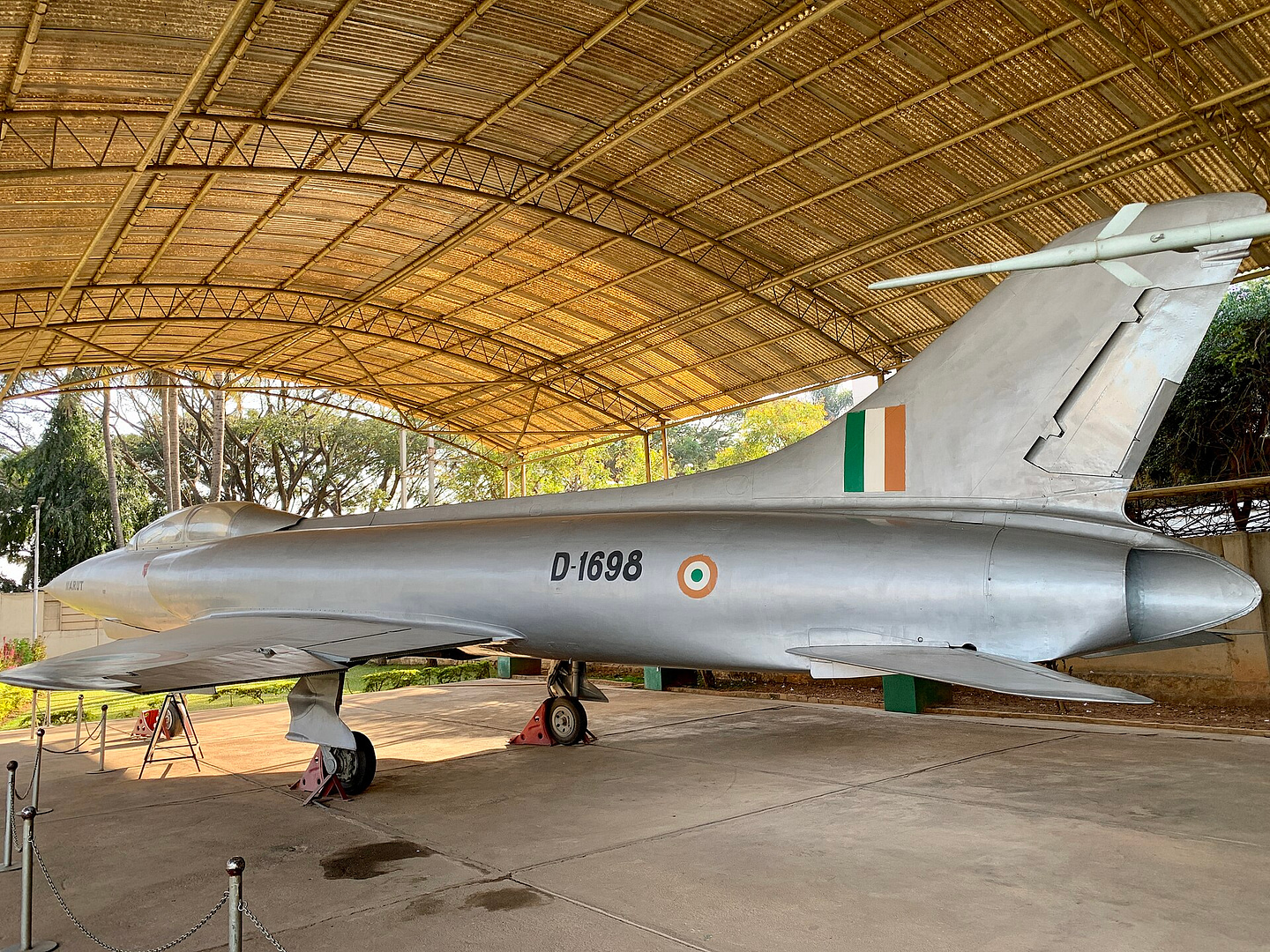
What that small team produced was remarkable. The HF-24 Marut — the name comes from the Maruts, the storm gods of Vedic myth — was a clean, twin-engined, area-ruled design that first flew on 17 June 1961 in the hands of test pilot Wing Commander Suranjan Das. Aerodynamically it was sound and genuinely supersonic-capable: it was the first jet fighter designed in Asia outside the Soviet bloc, and by some distance the most ambitious.
The tragedy of the Marut was written into its engines. Tank had designed the airframe around a reheated (afterburning) version of the Bristol Orpheus, the BOr.12, which would have given roughly the thrust needed for the intended Mach 2. But developing that engine required money India chose not to spend, and the reheated Orpheus was never funded. The Marut instead flew on two non-afterburning Orpheus 703 turbojets of about 21.6 kN each — far short of what the design called for. The result was an aircraft that looked like a Mach-2 fighter and handled like one, but topped out at barely Mach 1.
Underpowered or not, the Marut proved its worth where it mattered. In the 1971 Indo-Pakistani War two IAF squadrons flew it hard in the low-level ground-attack role over the desert of the western front. Pilots praised its ruggedness, stability as a gun and rocket platform, and high serviceability; one Marut even shot down a Pakistani F-86 Sabre, and none was lost in air-to-air combat. Repeated attempts to give the aircraft the engine it deserved all failed, and the type was finally retired in 1990 — an airframe that was always better than its powerplant allowed it to be.
01The HF-24 Marut’s engine problem: the reheated Orpheus that was never funded
Kurt Tank sized the Marut around a reheated Bristol Orpheus, the BOr.12, which with afterburner promised roughly 8,000 lbf of thrust per engine — enough to push the clean airframe toward its designed Mach 2. That engine, however, had been developed for a wider light-fighter effort and needed a substantial further investment (commonly cited at around £13 million) to bring to production. India declined to fund it, and no other government picked up the bill.
Left without its intended powerplant, the Marut entered service on two non-afterburning Orpheus 703 engines of about 4,850 lbf (21.6 kN) each — roughly 40% less thrust than the design assumed. HAL and its partners spent years chasing an alternative: a Soviet RD-9F, an Egyptian “E-300” turbojet developed at Helwan (abandoned after the 1967 war), and HAL’s own reheated Orpheus 703R, which flew in test airframes but never entered series production. The Marut therefore never reached the performance its aerodynamics allowed — the central “what if” of the whole programme.
What makes it special
A clean, area-ruled supersonic airframe
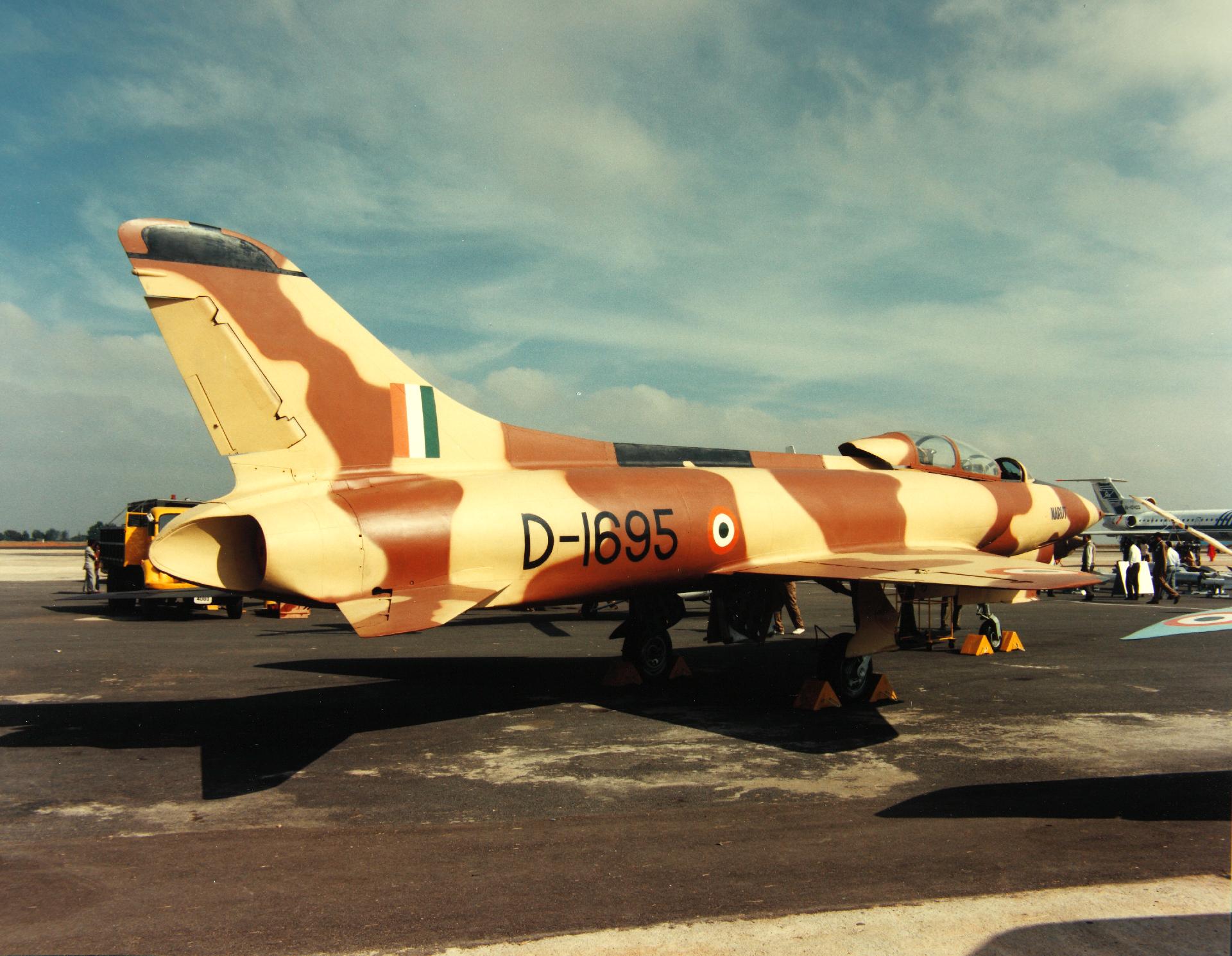
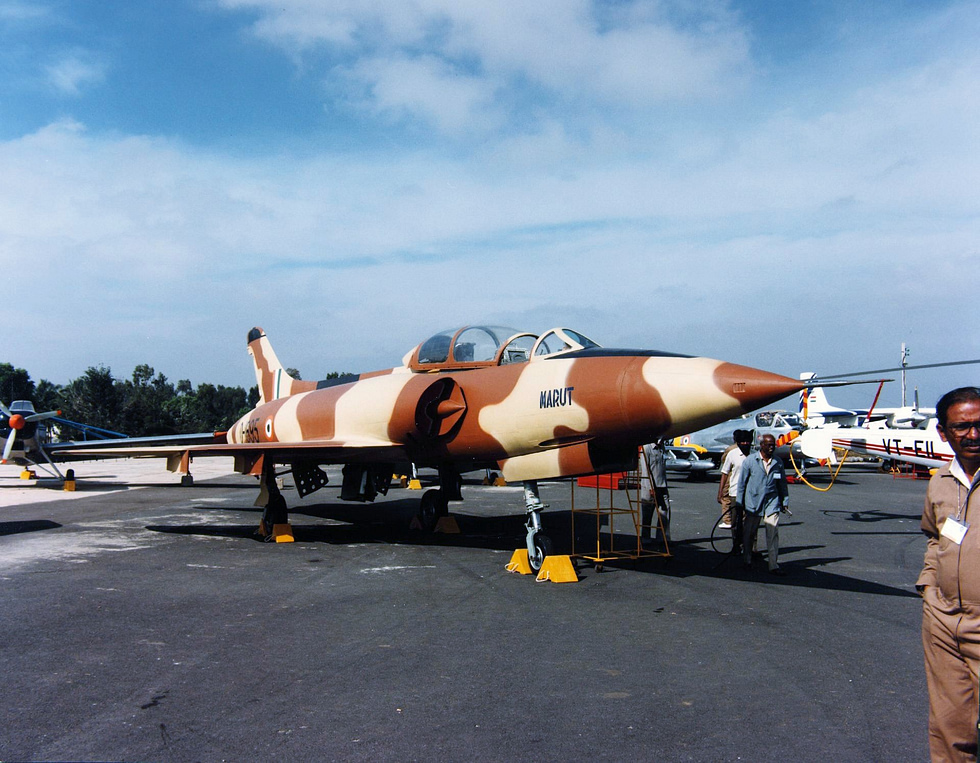
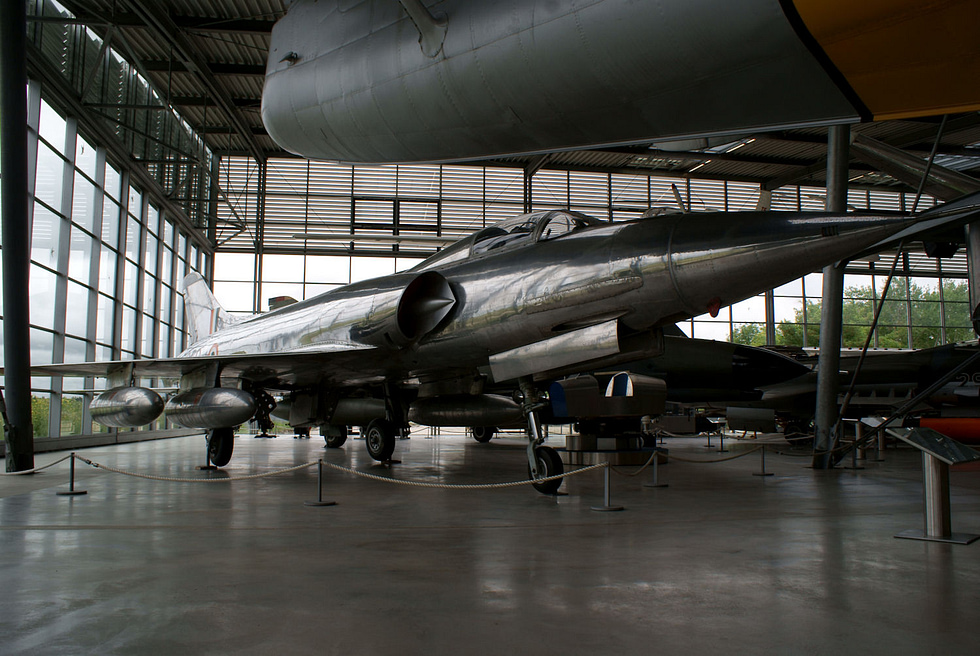
The Marut was the first jet fighter designed in Asia outside the Soviet bloc, and it looked the part: a sharply swept wing, a slim “coke-bottle” area-ruled fuselage to cut transonic drag, and twin side intakes feeding two engines. Aerodynamically the design was genuinely sound and supersonic-capable — a serious achievement for a country with almost no jet-industry base in the 1950s.
Designed for Mach 2, flown at Mach 1
Kurt Tank drew the Marut around a reheated Bristol Orpheus that was never funded. Flying instead on two non-afterburning Orpheus 703 turbojets, the aircraft was chronically short of thrust and topped out at about Mach 1.02 rather than its intended Mach 2. The airframe could handle far more than its engines could deliver.
A concentrated ground-attack punch
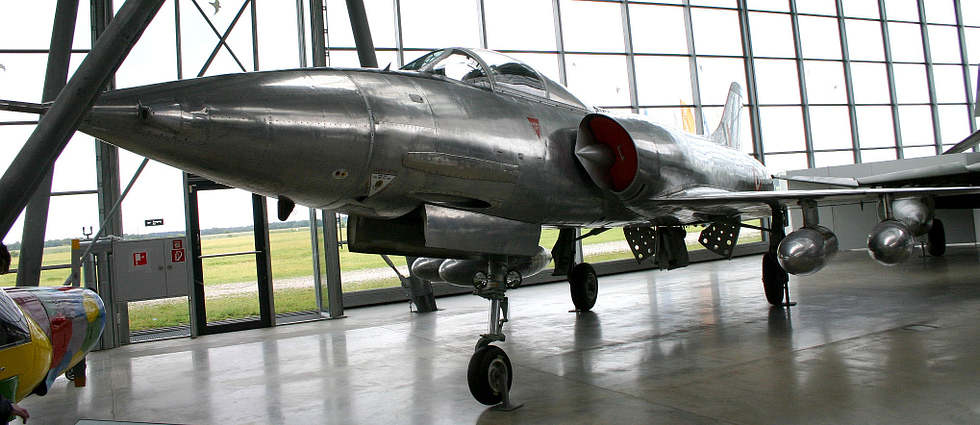
The Marut carried a heavy nose battery of four 30 mm ADEN cannon plus a retractable Matra pack of 50×68 mm SNEB rockets that deployed from the belly and faded back into the fuselage, with bombs and rockets on four underwing pylons. It made a rugged, hard-hitting low-level strike aircraft.
02The HF-24 Marut’s Kurt Tank connection: from the Fw 190 to Bangalore
Kurt Tank had designed the Focke-Wulf Fw 190, one of the best fighters of the Second World War, and the jet Ta 183 project. After years working in Argentina, he was recruited by Hindustan Aircraft in 1956 to create India’s first jet fighter. He inherited a design office of only around fifty engineers and virtually no test infrastructure, yet within five years had a supersonic-capable prototype flying. The Marut is, in a real sense, the last aircraft to carry the design signature of one of the great figures of Second World War aviation.
03The HF-24 Marut’s armament: four cannon and a retractable rocket pack
For its ground-attack role the Marut mounted four 30 mm ADEN cannon in the nose — a genuinely heavy gun battery — backed by a distinctive retractable belly rocket pack holding fifty 68 mm SNEB rockets that extended to fire and then retracted flush to preserve the aircraft’s clean lines. Four underwing hardpoints carried bombs and additional rockets, up to roughly 1,800 kg of external stores. In 1971 this concentrated firepower, combined with the airframe’s stability at low level, made the Marut an effective and popular strike platform.
Full specifications
Airframe & Performance
- צוות
- 1 (Mk.1T trainer seats 2)
- מֶשֶׁך
- 15.87 m
- מוּטַת כְּנָפַים
- 9.00 m
- גוֹבַה
- 3.60 m
- משקל ריק
- ~6,195 kg
- Max takeoff weight
- ~10,908 kg
- Max speed
- ~1,112 km/h · Mach ~1.02
- תקרת השירות
- ~12,200 m
- רדיוס לחימה
- ~395 km
- Ferry range
- ~1,000 km
Propulsion & Systems
- Engines
- 2 × HAL-built Bristol Orpheus 703
- Thrust (each)
- ~21.6 kN (4,850 lbf), no afterburner
- Designed engine
- Orpheus BOr.12 with reheat (never funded)
- Guns
- 4 × 30 mm ADEN cannon
- Rockets
- Retractable pack, 50 × 68 mm SNEB
- External load
- ~1,800 kg on 4 hardpoints
- First flight
- 17 June 1961
- Built
- ~147 (incl. ~16–18 trainers)
- Unit cost
- No reliable public figure
- Cost per flight hour
- No reliable public figure
04The HF-24 Marut’s operating costs: why the numbers are elusive
The Marut was a state programme, produced in modest numbers by a young national industry and never sold on an open market, so no reliable flyaway unit price or cost-per-flight-hour figure exists in the public record. The most commonly repeated qualitative claim is that it cost more to build each Marut at home than it would have to buy a more capable foreign fighter — a judgement on the economics of self-reliance rather than a sourced accounting figure. Any precise dollar cost attached to the type should be treated as an estimate.
From Kurt Tank’s drawing board to retirement
Kurt Tank hired
Hindustan Aircraft recruits the Fw 190 designer Kurt Tank to lead India’s first indigenous jet-fighter project in Bangalore.
First flight
The prototype flies on 17 June, piloted by Wing Commander Suranjan Das — a supersonic-capable design airborne within five years.
The reheat engine is shelved
The afterburning Bristol Orpheus the Marut was designed around goes unfunded, condemning the aircraft to non-afterburning engines.
Enters service
No. 10 Squadron “Winged Daggers” forms on the type; the Marut becomes the IAF’s home-built ground-attack fighter.
War over the desert
Two squadrons fly the Marut in low-level ground attack over the Naya Chor sector; one downs a PAF F-86 Sabre with no air-to-air losses.
The re-engining that failed
Soviet, Egyptian and HAL reheat engines are all trialled to fix the thrust shortfall; none reaches production.
The HF-73 that never was
A proposed Mach-2 re-engined successor, the HF-73, is studied and cancelled, leaving India without a follow-on indigenous fighter for decades.
Retired
The last Maruts are withdrawn from IAF service — the end of India’s first, hard-won attempt at a home-grown jet fighter.
From the programme: twelve Marut stories
A nation decides to build its own fighter
Newly independent India set out to design a supersonic jet with almost no aircraft industry to build on.
Read the full story
Kurt Tank comes to Bangalore
The man who designed the Focke-Wulf Fw 190 led the Marut project from 1956.
Read the full story
Suranjan Das takes it up
The Marut first flew on 17 June 1961 in the hands of one of India’s finest test pilots.
Read the full story
Marut: the storm gods of the Veda
The fighter was named for the Maruts, the wind-and-storm deities of Hindu mythology.
Read the full story
The engine that never came
The Marut was designed for a reheated Orpheus that India chose not to fund.
Read the full story
The coke-bottle fuselage
The Marut used area-ruling to tame transonic drag — advanced thinking for a first-generation design.
Read the full story
A decade chasing thrust
Soviet, Egyptian and HAL engines were all tried to cure the Marut’s thrust shortfall.
Read the full story
The tempests of Uttarlai
Two Marut squadrons flew hard in the ground-attack role on the western front.
Read the full story
A Marut downs an F-86
In early December 1971 a Marut shot down a Pakistani F-86 Sabre in air combat.
Read the full story
Tough, steady and no losses in the air
The Marut proved rugged and survivable in combat, losing none of its number in air-to-air fighting.
Read the full story
The HF-73 successor
A proposed Mach-2 re-engined Marut was studied and then cancelled.
Read the full story
A hard lesson in self-reliance
Retired in 1990, the Marut taught India that an airframe is only as good as its engine.
Read the full story
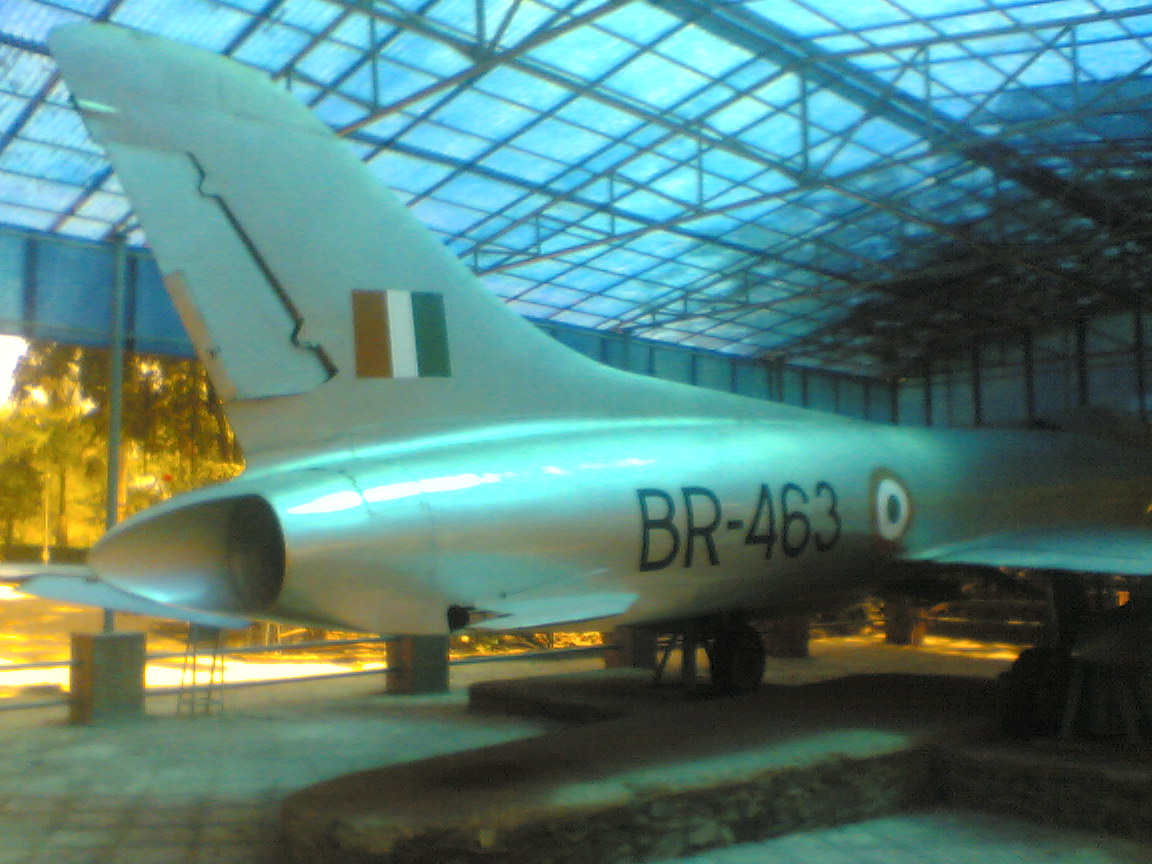
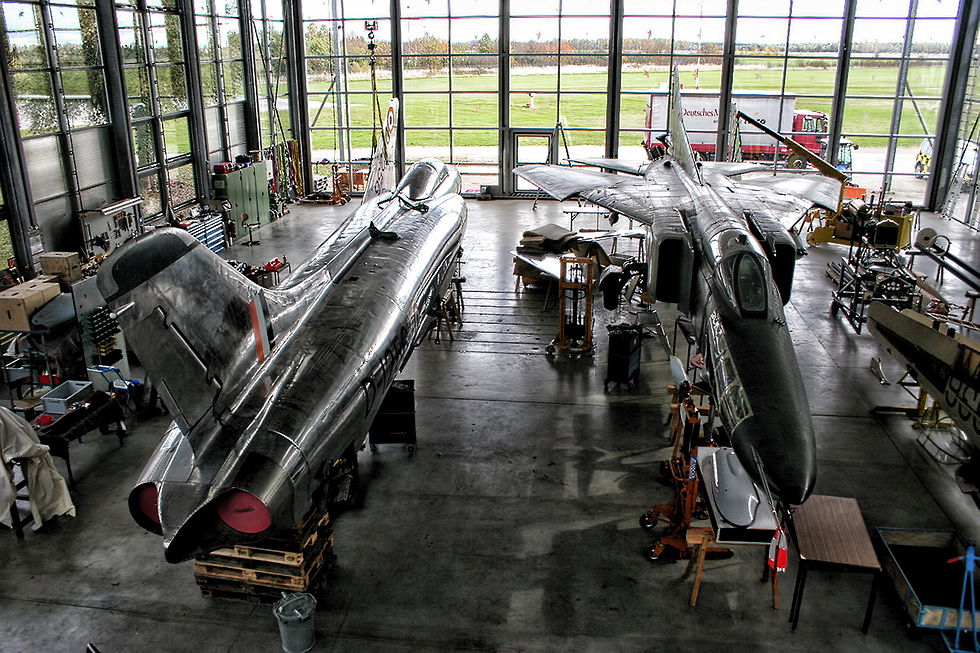
The Marut in pictures
Where the Marut flew
The score that defines it
The Marut was a ground-attack aircraft, and its combat record was written at low level in the 1971 Indo-Pakistani War. Two IAF squadrons flew well over a hundred close-support and interdiction sorties across the western desert in a fortnight of war, and the type proved rugged and dependable. Remarkably for a strike aircraft, it also scored an air-to-air kill — and lost none of its own in air combat.
Compare the combat record of every military aircraft. Figures as of July 2026.
Everything people ask about the HF-24 Marut
Can I fly in an HF-24 Marut?
Who designed the HF-24 Marut?
Why was the Marut underpowered?
Did the Marut see combat?
How fast was the HF-24 Marut?
How many HF-24 Maruts were built?
Is the HF-24 Marut still in service?
You can’t fly the Marut.
These, you can.
Some legends only live in museums — others are fuelled and waiting. MiGFlug has put civilians in real military jet cockpits since 2004.
 Fly the L-39 AlbatrosThe world’s most-flown jet trainer — aerobatics included
 Fly the F-104 Starfighter“The missile with a man in it”
 Fly the MiG-21The Cold War’s most-produced jet
 טסו על ה-T-33 Shooting StarAmerica’s first jet trainer
 Fly the DH VampireA piece of early jet history
 Fly the S.211Agile Italian jet trainer
 Fly the MB-326The classic Aermacchi jet
 Fly the MiG-15The Soviet legend of the Korean War
Continue the tour
Every fact, checked
- HistoryNet — Kurt Tank’s Indian StormKurt Tank’s arrival, the HAL design team, first flight and the reheat-engine shortfall.
- The National Interest — The Marut Jet FighterThe unfunded reheated Orpheus, the “barely Mach 1” performance and the HF-73 successor.
- Centre for Air Power Studies (CAPS)The Marut’s 1971 war service: squadrons, sorties, the Sabre kill and combat losses.
- Military Factory — HAL HF-24 MarutDimensions, weights, engine thrust, armament and production numbers.
- GlobalSecurity.org — HF-24 MarutAlternative-engine trials (RD-9F, E-300, Orpheus 703R) and the area-ruled airframe.
- Vintage Aviation News — First Flight of the HF-24The 17 June 1961 first flight and the Marut’s place as Asia’s first indigenous jet fighter.
- Defence Update — When the Marut Scored a KillSquadron Leader K. K. Bakshi’s F-86 Sabre shootdown in the 1971 war.
- Bharat Rakshak — IAF History: MarutIndian service history, variants and the type’s retirement in 1990.