
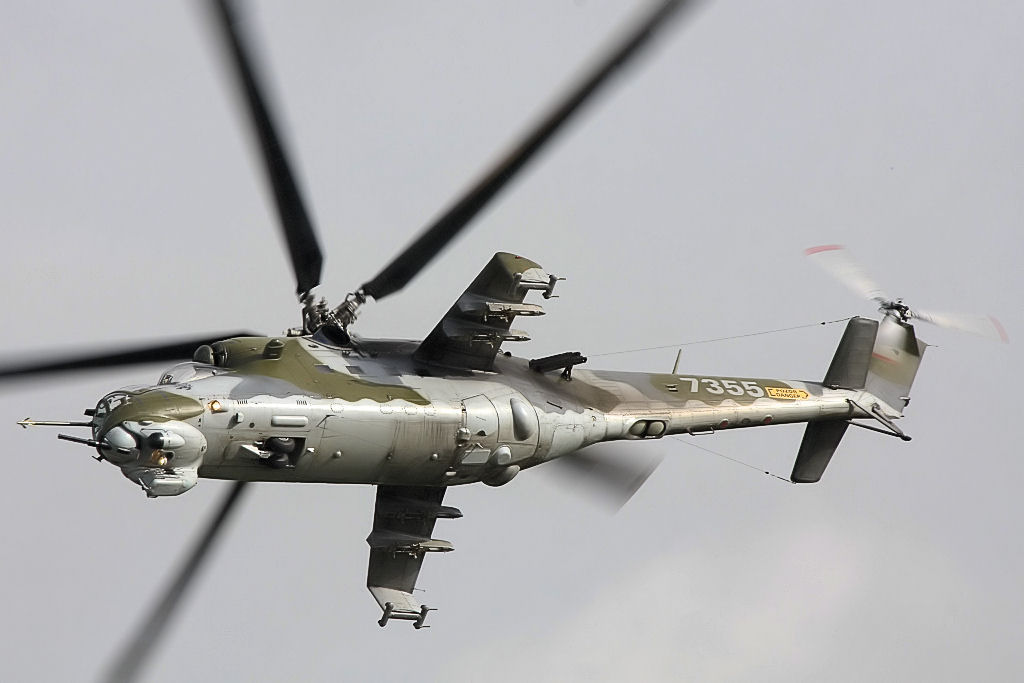
Mil Mi-24 “Hind”
The flying tank
The Soviet armoured gunship that broke every rule — a heavily armed attack helicopter that could also carry eight soldiers into battle. Mujahideen fighters called it “Satan’s chariot.”
The Mil Mi-24 Hind: the gunship that also carried an army
In the late 1960s the Soviet Union watched the United States pioneer the armed helicopter in Vietnam and reached a bold conclusion: it wanted something more. Not just a gunship, and not just a troop carrier, but a single armoured machine that could do both — smash a defended position with rockets and cannon fire, then land and disgorge a squad of infantry to hold it. The result, designed by the Mil Moscow Helicopter Plant founded by Mikhail Mil, was unlike anything in the West.
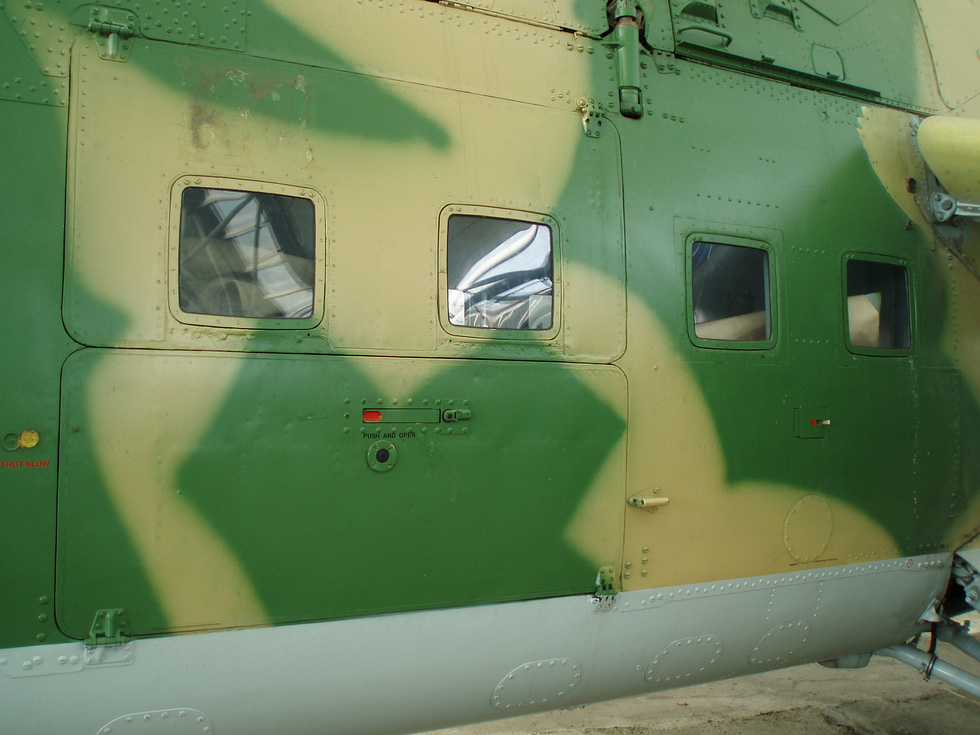
The prototype first flew on 19 September 1969, and the type entered Soviet service in the early 1970s. Where American doctrine kept the attack helicopter (the AH-1 Cobra) and the transport (the UH-1 Huey) as separate aircraft, the Mi-24 fused the two roles into one heavily armoured airframe. A gunner and pilot sat up front behind armoured glass; behind them, a cabin could carry up to eight fully equipped troops. No Western attack helicopter has ever matched that combination.
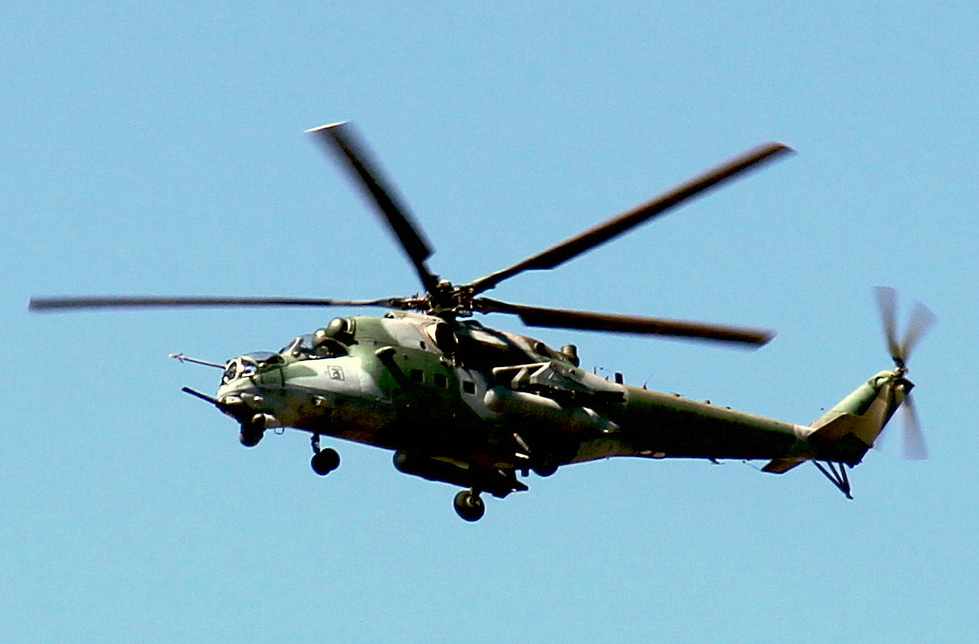
Power came from two Isotov (later Klimov) TV3-117 turboshafts of roughly 2,200 shaft horsepower each, turning a five-blade main rotor. The Mi-24 was fast — a modified example set an absolute helicopter speed record — and it was tough, wrapped in titanium and armoured glass designed to shrug off small-arms fire and cannon shells. Soviet crews nicknamed it the “Krokodil” (crocodile) for its mottled camouflage and menacing snout, and simply the “flying tank.”
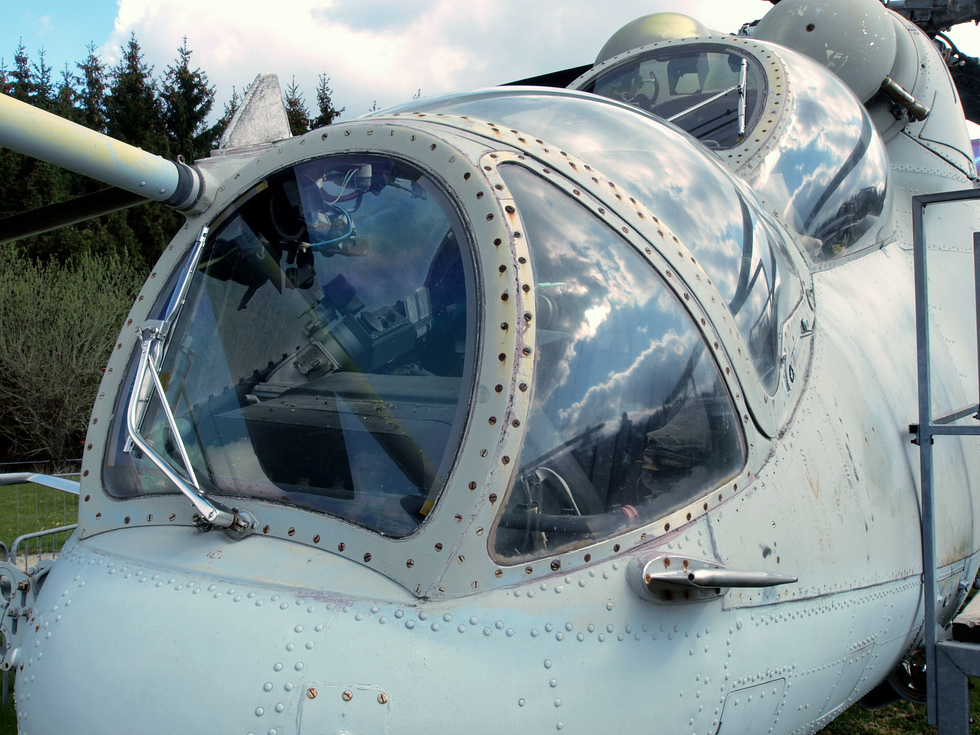
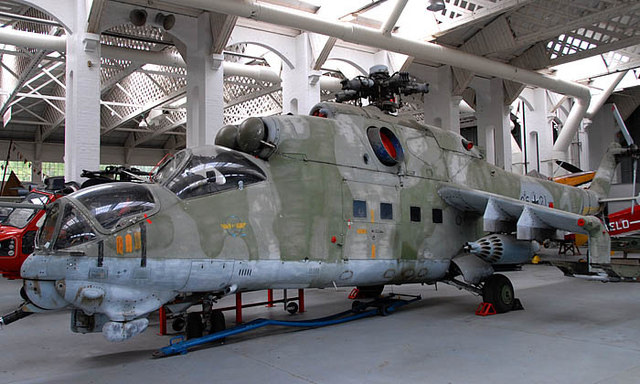
Early Mi-24A models had a wide “greenhouse” cockpit seating the crew side by side. From the definitive Mi-24D onwards the nose was completely redesigned into the now-iconic tandem “double-bubble” canopy, with the weapons operator sitting low in the nose and the pilot stepped up behind — a silhouette recognised around the world. Armament grew accordingly: a 12.7 mm four-barrel Gatling gun in the nose, later variants with fixed 23 mm or 30 mm cannon, plus rockets, bombs and anti-tank guided missiles slung under stubby weapon-carrying wings.
It was the Soviet–Afghan War (1979–1989) that made the Hind infamous. Ranging over the mountains, Mi-24s escorted convoys, hunted mujahideen columns and delivered troops into the high valleys. To the fighters on the ground it was a terror weapon — they called it “Shaitan-Arba,” Satan’s chariot — until American-supplied Stinger missiles began to redress the balance. The war wrote the Hind into history and shaped a generation of Soviet rotary tactics.
The Mi-24 never stopped fighting. Exported as the Mi-25 ו Mi-35, it saw action in the Iran–Iraq War, across a dozen African conflicts, in Sri Lanka, the Balkans, Chechnya, Syria and beyond, flown by more than fifty nations. More than half a century after that first flight, upgraded Mi-35M gunships remain in production and front-line service — the flying tank still very much on the battlefield.
01The Mil Mi-24 Hind’s nicknames: “Krokodil,” the flying tank and Satan’s chariot
Few aircraft have collected as many names. Soviet crews called the Mi-24 the “Krokodil” (crocodile), partly for the reptilian camouflage schemes and partly for the long, armoured, snout-like nose of the tandem-cockpit variants. The broader nickname was the “letayushchiy tank,” the flying tank — a nod to its heavy armour and its role as an airborne assault vehicle. Some crews also called the fat-fuselage early models the “Stakan” (drinking glass) for the flat glazing of the greenhouse canopy.
But the most chilling name came from its enemies. Mujahideen fighters in Afghanistan reportedly called the Hind “Shaitan-Arba” — Satan’s chariot — a measure of the fear the armoured gunship inspired before shoulder-launched missiles gave the fighters a way to strike back. That reputation, forged over the mountains of Afghanistan, has followed the Mi-24 ever since.
What makes the Mil Mi-24 Hind special
Gunship and troop carrier in one airframe
The Hind’s defining feature is its dual nature. Behind the two-seat armoured cockpit sits a cabin that can carry up to eight troops — so a single Mi-24 can suppress a landing zone with rockets and cannon, then land and deliver the assault force itself. No Western attack helicopter, from the Cobra to the Apache, was ever built to do both. It is the feature that makes the Hind genuinely unique.
Armour built to take hits
The Mi-24 was designed to fly into fire and survive. The crew sit behind armoured glass and titanium, the cockpit tub is protected, and key systems are hardened against small-arms and cannon fire. Combined with two powerful turboshafts and a rugged five-blade rotor, that protection let Hind crews press home attacks at low level in the face of ground fire — and earned the type its “flying tank” reputation.
A heavy, versatile weapons fit
Under its stubby weapon-carrying wings and nose the Hind carries a formidable arsenal: a nose-mounted 12.7 mm four-barrel Gatling gun (or fixed 23 mm/30 mm cannon on later variants), pods of unguided rockets, bombs, and anti-tank guided missiles. The stub wings also generate lift in fast forward flight, offloading the rotor. Few helicopters have ever brought so many weapons to the fight.
02The Mil Mi-24 Hind’s “double-bubble” cockpit: how the definitive Hind got its face
The earliest Mi-24A carried its crew side by side under a wide, flat “greenhouse” canopy. It worked, but it offered the crew poor protection and a cluttered view. With the definitive Mi-24D of the mid-1970s the Mil bureau completely reshaped the nose, adopting a tandem “double-bubble” canopy: the weapons operator sits low in a separate bubble in the extreme nose with an excellent field of fire, while the pilot sits raised behind, looking over the gunner’s head. Both are wrapped in armoured glass. That stepped, twin-blister silhouette became the Hind’s signature and has defined every major variant since.
03The Mil Mi-24 Hind’s engines: the Isotov TV3-117 turboshaft
The Hind is powered by two Isotov TV3-117 turboshafts (the design bureau later became Klimov), each producing roughly 2,200 shaft horsepower. The same reliable engine family powers the Mi-8/Mi-17 transport and the Ka-50/52, and it has been progressively uprated over decades of production. Twin engines give the heavy Hind the power to lift its armour, weapons and troops, and provide a margin of safety if one fails. Mounted above the cabin with prominent intakes either side of the rotor mast, the TV3-117 is a large part of why the Mi-24 can be both fast and hard-hitting. The very early Mi-24A used the earlier TV2-117 before the switch to the more powerful TV3-117.
04The Mil Mi-24 Hind’s variants: from Hind-A to the Mi-35M
The Hind family is large. The original Mi-24A (Hind-A/B) had the greenhouse cockpit. The redesigned Mi-24D (Hind-D) introduced the tandem double-bubble cockpit and the 12.7 mm Gatling nose gun, and was exported as the Mi-25. The Mi-24V (Hind-E) added the more capable 9M114 Shturm anti-tank missile and was exported as the Mi-35. The Mi-24P (Hind-F) swapped the turret for a fixed side-mounted 30 mm twin-barrel cannon, while the Mi-24VP used a 23 mm turret. The modernised Mi-35M, still in production, adds a shortened wing, fixed landing gear, night-attack sensors and modern missiles — keeping the flying tank current more than fifty years after the first flight.
Full Mil Mi-24 Hind specifications
Airframe & Performance (Mi-24D/V)
- צוות
- 2–3 (pilot, weapons operator, optional flight technician)
- Troop capacity
- Up to 8 fully equipped soldiers
- Fuselage length
- ~17.5 m
- Main rotor diameter
- ~17.3 m (5 blades)
- Tail rotor
- 3-blade anti-torque rotor
- גוֹבַה
- ~3.97 m (fuselage)
- משקל ריק
- ~8,500 kg
- Max takeoff weight
- ~11,500–12,000 kg
- Max speed
- ~335 km/h (~208 mph)
- מהירות שיוט
- ~270 km/h
- תקרת השירות
- ~4,500 m
- לָנוּעַ
- ~450 km (ferry range greater with auxiliary tanks)
Propulsion, Armament, Production & Cost
- Powerplant
- 2 × Isotov/Klimov TV3-117 turboshaft
- Power
- ~2,200 shp each (early Mi-24A used the TV2-117)
- Main rotor
- Five-blade fully articulated
- Gun
- 12.7 mm 4-barrel Gatling (Mi-24D); fixed 30 mm twin (Mi-24P) or 23 mm turret (VP)
- Ordnance
- Rockets, bombs and anti-tank guided missiles on six wing hardpoints
- First flight
- 19 September 1969 (prototype)
- Main variants
- Mi-24A/D/V/P; export Mi-25 & Mi-35; modernised Mi-35M
- Operators
- Soviet Union/Russia + more than 50 nations
- Built
- Commonly cited from ~2,600 to ~3,500 (sources differ)
- Cost per flight hour
- No authoritative public figure; widely estimated in the low thousands of USD per hour (rough estimate, varies by operator and era)
05The Mil Mi-24 Hind’s operating costs: what a flying tank costs to run
There is no reliable published cost-per-flight-hour figure for the Mi-24. As a heavy twin-turbine combat helicopter operated mostly by state air arms — many of which do not publish detailed cost data — its true operating cost is hard to pin down and varies enormously with country, variant, age and how the accounting is done. Rough public estimates for operating a Hind fall in the low thousands of US dollars per flight hour, but that figure should be treated as an approximation rather than an official number. What can be said with confidence is that the Mi-24 was designed to be relatively simple, rugged and cheap to keep flying by the standards of a heavily armed combat helicopter — one reason so many nations could afford to operate it, and why upgraded Mi-35 versions remain attractive on the export market today. Treat any single Hind cost figure as an estimate.
06The Mil Mi-24 Hind’s numbers: how many were built and who flew them
Production totals for the Mi-24 vary by source. Figures commonly cited range from around 2,600 to roughly 3,500 airframes across all variants, built over decades at Soviet (later Russian) plants, with export versions designated Mi-25 and Mi-35. The type has been operated by more than fifty nations across Europe, Asia, Africa and Latin America — from India, Algeria and Vietnam to Poland, the Czech Republic, Cuba and beyond — and it has seen combat on almost every continent. Because different sources count sub-variants, export machines and licence work differently, exact totals should be treated as best estimates rather than definitive counts.
The Mil Mi-24 Hind from prototype to modern battlefield
A radical requirement
Watching armed helicopters emerge in Vietnam, the Soviet military asks the Mil bureau for something more: an armoured flying weapon that can also carry an assault squad.
First flight
The prototype flies for the first time on 19 September 1969, powered by twin turboshafts and combining gunship firepower with a troop cabin.
Enters Soviet service
The Mi-24 enters service with Soviet forces in the early 1970s as the first of a new class of armoured assault helicopters.
The definitive Mi-24D
The redesigned Mi-24D introduces the tandem “double-bubble” cockpit and the 12.7 mm Gatling nose gun — the classic Hind silhouette.
The Soviet–Afghan War
The Hind becomes infamous over Afghanistan, escorting convoys and hunting fighters who nickname it “Satan’s chariot” — until Stinger missiles change the odds.
Exported and combat-proven
Exported as the Mi-25 and Mi-35, the Hind fights in the Iran–Iraq War and across a string of African and Asian conflicts.
Post-Soviet wars
Hinds see heavy use in the Balkans, the Chechen wars and numerous regional conflicts as former Soviet stocks spread worldwide.
The modernised Mi-35M
Russian Helicopters develops the upgraded Mi-35M with night-attack sensors, modern missiles and a shortened wing, keeping the design current.
Syria and beyond
Mi-24s and Mi-35s fly combat missions in Syria and other theatres, more than forty years after entering service.
Still on the front line
Operated by more than fifty nations and still in production as the Mi-35M, the flying tank remains one of the most widely used combat helicopters ever built.
From the flight line: twelve Mil Mi-24 Hind stories
A weapon with no equal
The Soviets wanted more than a gunship — they wanted a flying armoured personnel carrier.
Read the full story
Gunship and taxi in one
The Hind could suppress a landing zone and then unload the men to take it.
Read the full story
The double-bubble cockpit
A nose redesign gave the Hind the silhouette the world remembers.
Read the full story
Why crews called it the crocodile
Camouflage and a menacing snout earned the Hind a reptilian nickname.
Read the full story
Satan’s chariot
Over the mountains of Afghanistan the Hind became a legend of fear.
Read the full story
Built to fly into fire
Titanium and armoured glass let Hind crews press home their attacks.
Read the full story
A record-setting helicopter
The heavy Hind was also genuinely fast.
Read the full story
Guns, rockets and missiles
Few helicopters have ever carried so much.
Read the full story
Mi-25 and Mi-35 worldwide
The Hind became one of the Soviet bloc’s great exports.
Read the full story
Fighting on every continent
From the Gulf to Africa to the Balkans, the Hind kept turning up.
Read the full story
The Mi-35M keeps it current
Decades on, the flying tank is still being built.
Read the full story
The gunship that stayed unique
No one has copied the Hind — and it is still flying.
Read the full story
The Mil Mi-24 Hind in pictures
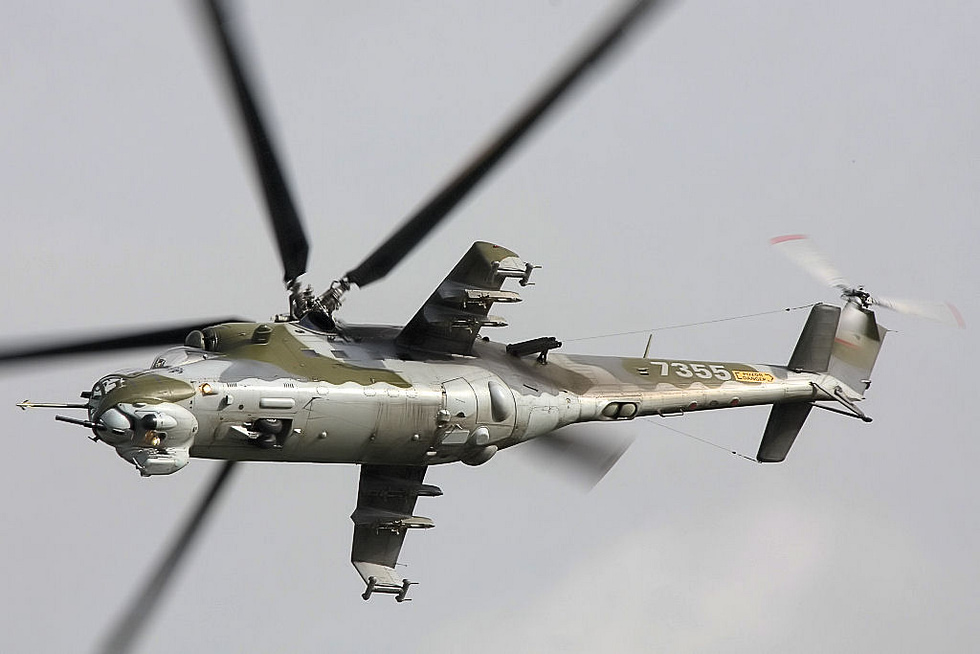
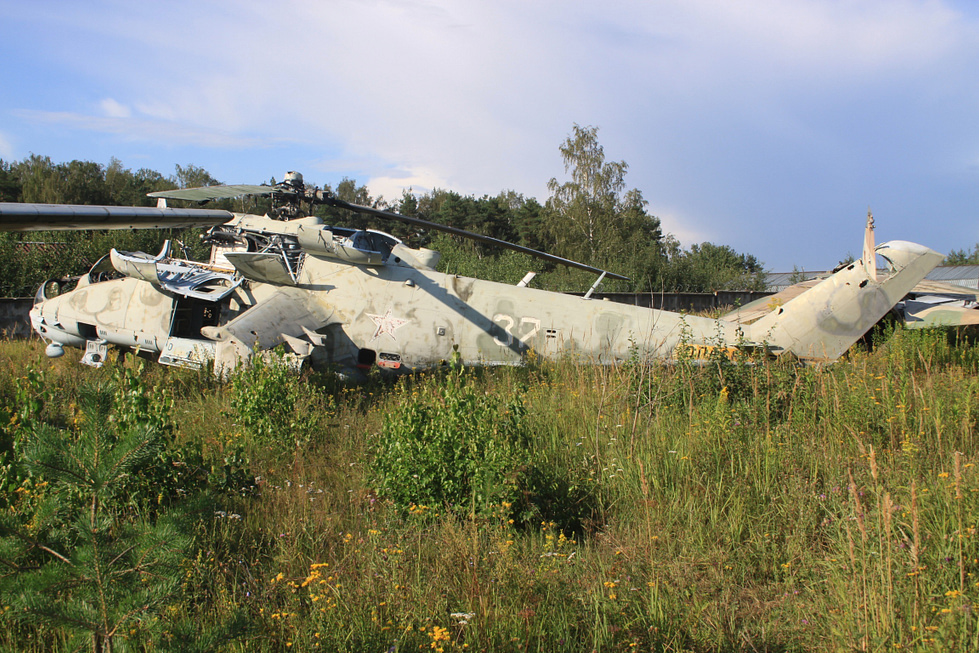
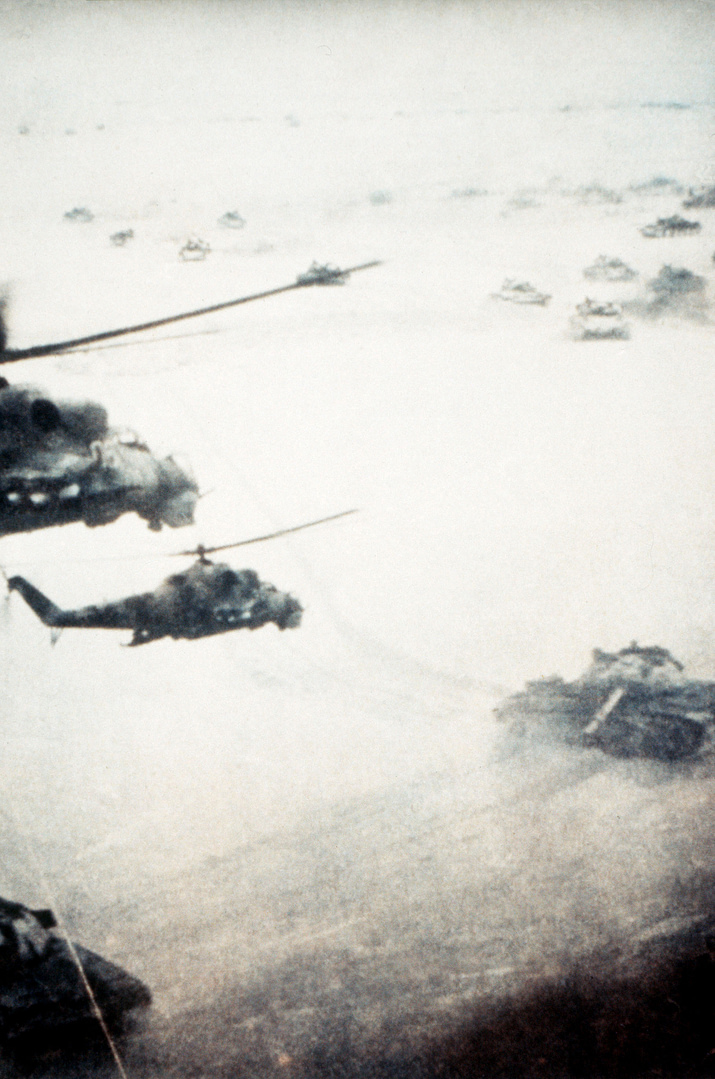
The Mil Mi-24 Hind in motion
“A Flying Tank”: Why the Mi-24 Is Called the World’s Only Assault Helicopter — from the WSJ Equipped series by The Wall Street Journal, a clear explainer of why the Hind’s gunship-plus-transport concept remains unique.
Where the Mil Mi-24 Hind flew
The Mil Mi-24 Hind’s record: half a century of combat
Few helicopters have fought in as many wars as the Mi-24. Its combat debut came in the Soviet–Afghan War of 1979–1989, where Hinds flew convoy escort, ground attack and air assault until shoulder-launched Stinger missiles raised the cost. Exported widely, it went on to fight in the Iran–Iraq War, across the civil wars of Angola and Africa, in Sri Lanka, the Balkans, Chechnya, Syria and Ukraine, flown by more than fifty nations. These conflicts are well documented, though loss and sortie figures vary by source and should be read as estimates.
See the aircraft that flew alongside it: the Sukhoi Su-25 Frogfoot, its fixed-wing “flying tank” partner over Afghanistan, and the Bell UH-1 Huey, the Western helicopter it was conceived to answer.
Everything people ask about the Mil Mi-24 Hind
Can I fly in a Mi-24 Hind?
What is the Mil Mi-24 Hind?
Why is the Mi-24 called the “flying tank”?
When did the Mi-24 first fly and enter service?
What engines does the Mi-24 Hind have?
How many troops can a Mi-24 carry?
What weapons does the Mi-24 carry?
What is the difference between the Mi-24, Mi-25 and Mi-35?
What was the Mi-24’s role in the Soviet–Afghan War?
Why does the Mi-24 have stub wings?
Is the Mi-24 Hind still in service?
How fast is the Mi-24?
You can’t fly the Mi-24 Hind.
These, you can.
Some legends only live in museums — others are fuelled and waiting. MiGFlug has put civilians in real military jet cockpits since 2004.
 Fly the L-39 AlbatrosThe world’s most-flown jet trainer — aerobatics included
 Fly the F-104 Starfighter“The missile with a man in it”
 Fly the MiG-21The Cold War’s most-produced jet
 טסו על ה-T-33 Shooting StarAmerica’s first jet trainer
 Fly the DH VampireA piece of early jet history
 Fly the S.211Agile Italian jet trainer
 Fly the MB-326The classic Aermacchi jet
 Fly the MiG-15The Soviet legend of the Korean War
Continue the tour
Every fact, checked
- Russian HelicoptersThe manufacturer group behind the Mi-24 and the modernised Mi-35M.
- Mil Moscow Helicopter PlantThe design bureau, founded by Mikhail Mil, that created the Hind.
- National Museum of the U.S. Air ForceFact sheet on the Mi-24D Hind and its history.
- Royal Air Force MuseumReference material on the Mi-24 and Cold War Soviet aircraft.
- Helis.com Helicopter DatabaseDevelopment history, variants and production data for the Mi-24.
- Military FactorySpecifications, variants and operator data for the Mi-24 Hind.
- Key AeroEstablished aviation reference for Hind development, variants and combat use.
- Imperial War MuseumContext on the Soviet-Afghan War and the Hind’s combat record.