
Gustave Delage’s nimble French sesquiplane — superb to see from, quick to climb and turn, and flown by half the aces of the age — with one honest flaw built into its lower wing.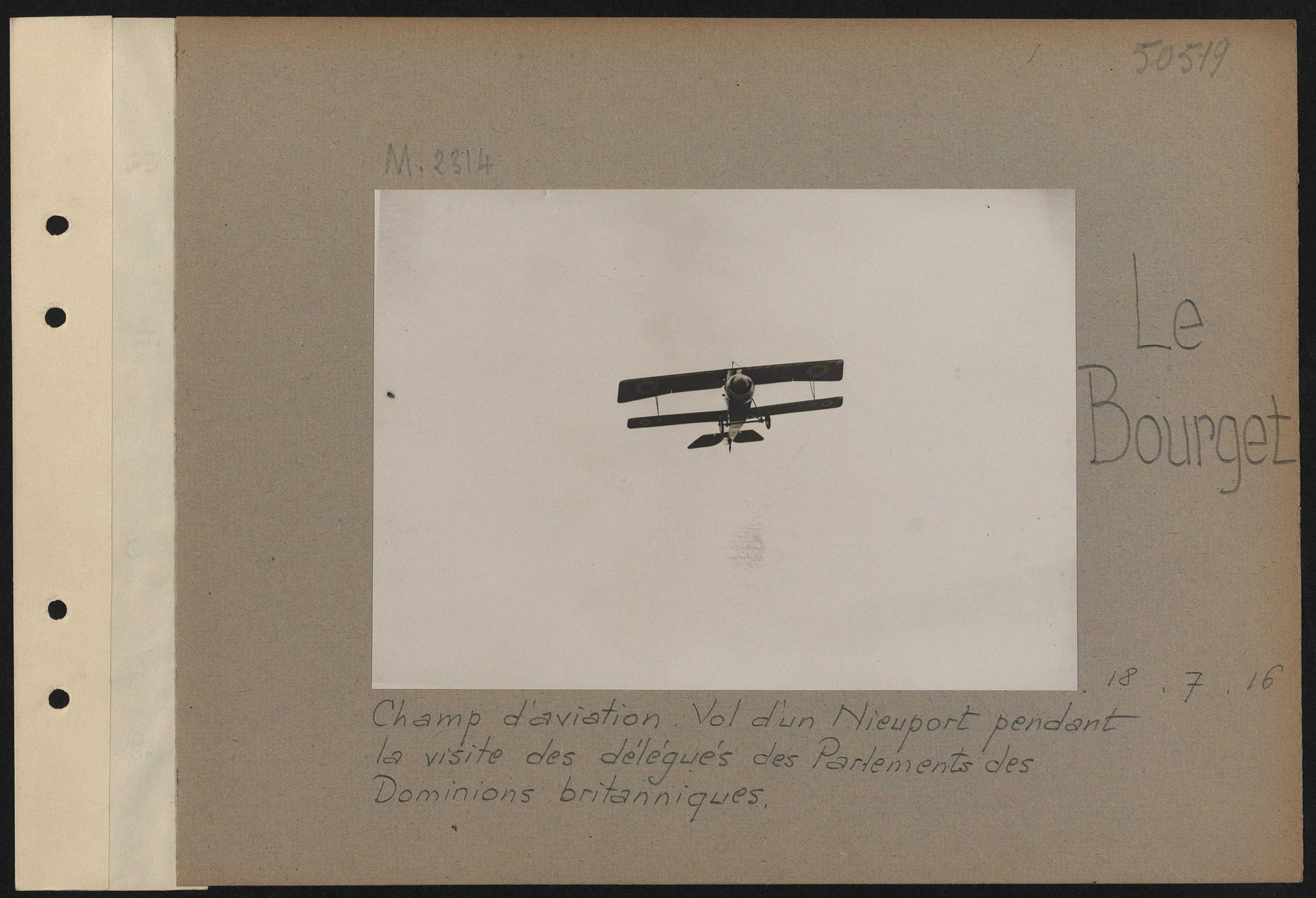
Nieuport 17
“The scout that gave the Allies the edge in 1916”
The Nieuport 17: how a French sesquiplane gave the Allies their edge in 1916
In the winter of 1915–16 the German Fokker Eindecker, with its synchronised gun firing through the propeller, had made the Western Front deadly for Allied airmen — a period the British press called the “Fokker Scourge.” The first answer came from the little Nieuport 11 “Bebé”, a tiny sesquiplane scout that, alongside the Airco DH.2 and F.E.2b, broke the Eindecker’s grip in the spring of 1916. What the Allies needed next was something with the same agility but more power and more punch. That aircraft was the Nieuport 17.
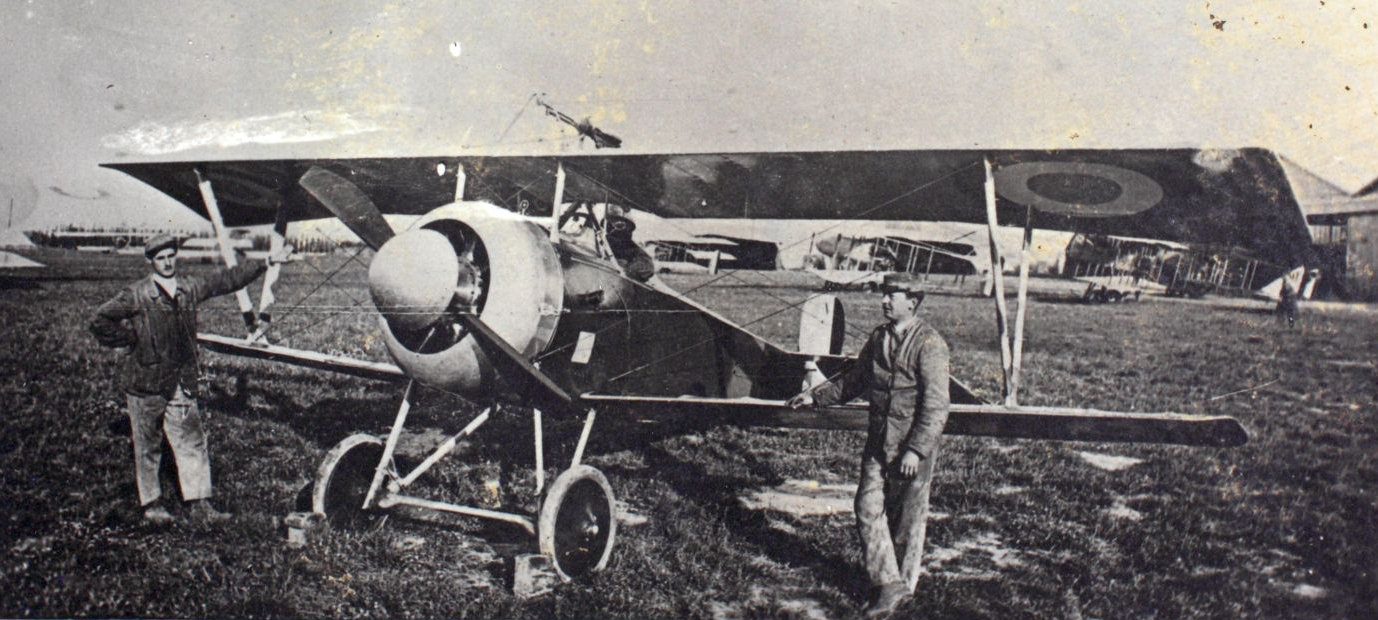
Designed by Gustave Delage, the 17 was a scaled-up, more powerful development of the Bebé. It kept the distinctive sesquiplane layout — a normal upper wing over a much narrower lower wing built around a single spar — which gave the pilot an almost unobstructed view downward and forward, exactly where a fighter pilot needs to look. On a Le Rhône 9J rotary of around 110 horsepower it climbed fast, turned tightly and handled beautifully. It reached the front with French Escadrille N.57 on 2 May 1916 and was an immediate success.
Its influence outran the French air service. Britain’s Royal Flying Corps and Royal Naval Air Service bought the type to cover the gap before their own scouts matured; Italy and Russia flew it and built it under licence; Belgium and, later, the United States operated it. It became the mount of a startling roster of aces — Charles Nungesser, Albert Ball, Billy Bishop and, early in his career, Georges Guynemer — and for the second half of 1916 it was among the best fighters in the sky.
There was one honest flaw. The slender single-spar lower wing that gave such a fine view could twist and, in a hard dive, even fail. Pilots learned not to hold a high-speed dive too long, the RFC ordered the wings strengthened, and by mid-1917 the newer German Albatros scouts and the arrival of the more robust SPAD pushed the Nieuport sesquiplanes out of the front line. But in its moment, the 17 was exactly the aeroplane the Allies needed.
01The Nieuport 17’s origins: Gustave Delage, the sesquiplane line and the Bebé that came before
Gustave Delage joined Nieuport in January 1914 and gave the firm a family of sesquiplane scouts — aircraft with a full-size upper wing and a much narrower lower wing carried on a single spar. The layout was inspired by the pre-war “one-and-a-half wing” racers and offered two things a fighter pilot craved: a clean view below the aircraft, and low drag for a good climb.
ה Nieuport 11 “Bebé” of 1915 proved the concept in combat, helping to break the Fokker Scourge. The Nieuport 17 that followed in 1916 was a refinement rather than a revolution: a slightly larger airframe, a more powerful Le Rhône rotary, rounded wingtips and a cleaner cowling, and provision for a proper synchronised gun. The result kept the Bebé’s agility while adding the speed and firepower the earlier machine lacked.
What makes the Nieuport 17 special
A sesquiplane wing built for the pilot’s eyes
The narrow single-spar lower wing gave the pilot a nearly unobstructed view down and forward, and low drag for a strong climb and tight turn. It was the feature that made the 17 such a natural dogfighter — and, as the trade-off, the source of its one structural weakness.
A light rotary that punched above its weight
ה Le Rhône 9J rotary of roughly 110 horsepower (some machines used Clerget rotaries) spun the whole engine with the propeller. Light and compact, it gave the small airframe an excellent power-to-weight ratio — the key to the 17’s climb and manoeuvrability.
A gun you aimed with the aeroplane
French 17s carried a synchronised Vickers firing through the propeller arc; British RFC machines mounted a Lewis gun over the top wing on the Foster rail, which could be pulled down to change drums or fire upward. Either way the pilot aimed by pointing the whole fighter.
02The Nieuport 17’s sesquiplane wing: visibility and climb versus torsional strength
A conventional biplane has two wings of similar chord, braced together into a rigid box that resists twisting. Delage’s sesquiplane deliberately traded that box away: the lower wing was made narrow and hung on a single spar, braced to the upper wing by a distinctive V-strut. The pay-off was excellent downward visibility, light weight and low drag, all of which helped the climb and the turn.
The cost was torsional rigidity. With only one spar and no box structure, the lower wing could flex and twist under aerodynamic load. In gentle flying this was harmless, but it set a hard limit that the design never fully escaped — and which the next expander describes.
03The Nieuport 17’s guns: the Foster mounting, the over-wing Lewis and the French synchronised Vickers
Early Nieuport scouts predated a reliable French gun-synchronising gear, so the RFC mounted a Lewis gun above the upper wing on the Foster mounting — a curved rail that let the pilot slide the gun back and down to swap the 47- or 97-round drum, and, usefully, to fire upward into the belly of an enemy aircraft. It was Albert Ball’s favoured trick.
As synchronisation matured, French Nieuport 17s standardised on a single synchronised Vickers firing through the propeller arc, a lighter and simpler installation. Some machines carried both. Either arrangement kept the armament on the aircraft’s centreline, so aiming meant pointing the whole fighter — the essence of the era’s dogfighting.
04The Nieuport 17’s lower-wing weakness: why the sesquiplanes could shed a wing in a dive
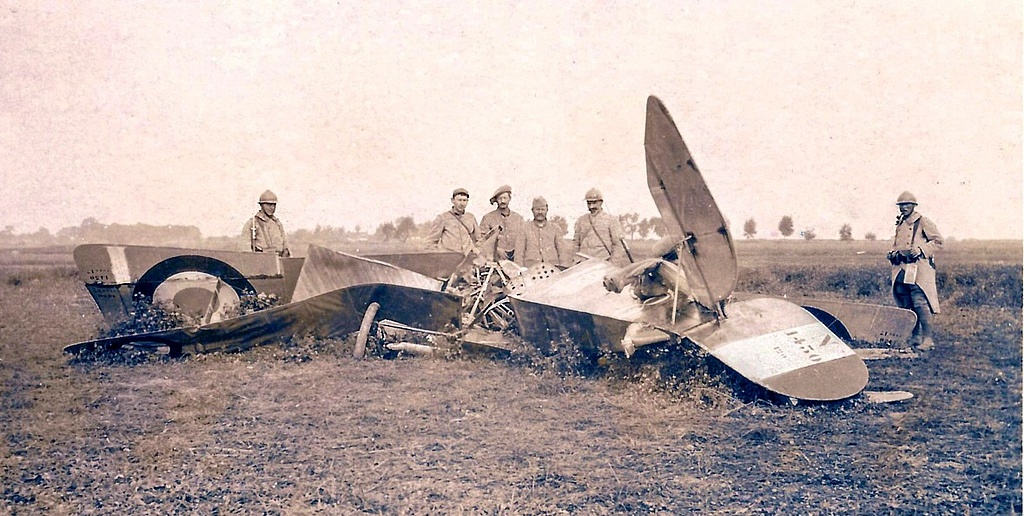
This is the caveat that any honest account of the Nieuport 17 has to include. Because the lower wing carried its loads on a single spar with no box to resist twisting, a prolonged or high-speed dive could let the wing flutter and twist. In the worst cases it failed — typically at the wing root or at the junction of the spar and the V-strut — and a failure there was usually fatal.
Pilots adapted by not holding steep dives, and the Royal Flying Corps ordered lower wings strengthened in 1917. The flaw was not unique to Nieuport: when the German designer Robert Thelen copied the sesquiplane layout for the Albatros D.III, it inherited exactly the same wing-shedding tendency. The lesson — that visibility and climb had been bought with structural margin — helped push front-line units toward the sturdier two-spar SPAD from 1917.
Nieuport 17 specifications
Figures are for the standard Nieuport 17.C1 on the Le Rhône 9J; sources vary and several values are hedged. The near-identical 17bis (Clerget) and 23 differed in detail.
Airframe & Performance
- צוות
- 1 — pilot
- מֶשֶׁך
- ~5.8 m (some sources ~5.96 m)
- מוּטַת כְּנָפַים
- ~8.2 m (8.16 m)
- גוֹבַה
- ~2.4 m
- אזור הכנף
- ~14.75 m²
- Empty / loaded weight
- ~375 kg / ~560 kg
- Max speed
- ~177 km/h (110 mph); some sources ~165–171 km/h
- תקרת השירות
- ~5,300 m (~17,400 ft)
- Endurance
- ~2 hours
Propulsion, Armament & Production
- מָנוֹעַ
- 1 × Le Rhône 9J rotary, ~110 hp (some Clerget 9B, ~130 hp)
- Engine type
- 9-cylinder air-cooled rotary
- הְתחַמְשׁוּת
- 1 × synchronised Vickers (French) or over-wing Lewis on Foster mount (RFC); some carried both
- First flight / service
- 1916; French service from 2 May 1916 (Escadrille N.57)
- Built
- Figures vary — ~2,000 to several thousand across the 17 / 17bis / 23 family
- Manufacturers
- Nieuport (France); Macchi (Italy) & Dux (Russia) under licence
- Unit cost
- Not reliably recorded (1916 procurement)
- Cost per flight hour
- ~$2,000–4,000 (modern airworthy-replica operating estimate — unofficial)
05The Nieuport 17 family: the 17bis, 23, 21, 24 and 27, and licence production abroad
The 17 sat in the middle of a fast-evolving family. The Nieuport 21 was a lower-powered trainer/scout; the 17bis introduced a Clerget rotary and a slightly refined fuselage; the Nieuport 23 was near-identical to the 17 but differed in gun mounting and small fittings, so the two are often counted together. The later 24 ו 27 brought rounded fuselages and further refinement before the whole sesquiplane line gave way to the SPAD.
Production was not confined to France. Macchi built Nieuport scouts under licence in Italy, and the Dux works produced them in Russia; Switzerland later built the type under licence as well. Because records are incomplete and the 17 and 23 share a production run, total-built figures in the literature vary widely — a point worth keeping in mind whenever a single number is quoted.
06The Nieuport 17’s costs: 1916 francs and what a flying replica costs today
Per-aircraft procurement prices for the Nieuport 17 are not reliably recorded in surviving sources, and translating 1916 French war-contract francs into modern money is fraught — wartime inflation and the post-war collapse of the franc make any single figure misleading. We have therefore left the unit-cost row as “not reliably recorded.”
What can be said is about flying one today. Operating an airworthy WWI-type replica on a small rotary or radial — hangarage, insurance, fuel and castor oil, and the specialist maintenance a vintage engine needs — is commonly discussed in the vintage-aviation community in the region of a few thousand US dollars per flight hour. The ~$2,000–4,000/hour figure in the table is an unofficial estimate for a modern replica, not a historical cost, and is flagged as such.
The Nieuport 17 through the war
Delage joins Nieuport
Gustave Delage takes charge of design at the Société Anonyme des Établissements Nieuport and begins the sesquiplane scout line that will lead to the 17.
The Nieuport 11 “Bebé” enters combat
The tiny sesquiplane scout reaches the front and, with the DH.2 and F.E.2b, begins breaking the Fokker Scourge in early 1916 — proving the layout the 17 will inherit.
Into service with Escadrille N.57
The more powerful Nieuport 17 reaches French squadrons on 2 May 1916 and is an immediate success over Verdun and the Somme.
Adopted by the RFC, RNAS, Italy, Russia and Belgium
The Allies buy and licence-build the type to cover the gap before their own scouts mature; aces including Ball, Bishop, Nungesser and Guynemer make their names on it.
The lower wing catches up with the design
High-speed wing failures prompt the RFC to order lower wings strengthened; the newer Albatros D.III — which copied the sesquiplane — suffers the same trouble.
Superseded by the SPAD and later Nieuports
The sturdier two-spar SPAD S.VII and the refined Nieuport 24 and 27 take over front-line pursuit work as the 17 is outclassed by newer German scouts.
Second-line and post-war service
Surviving and licence-built airframes serve as trainers and with smaller air arms into the 1920s, from the United States to the newly independent states of Europe.
A rare original, a thriving replica
Genuine Nieuport 17s are among the rarest WWI survivors, while airworthy reproductions fly at collections such as Shuttleworth, The Vintage Aviator and Old Rhinebeck.
The Nieuport 17 in the words of those who flew it
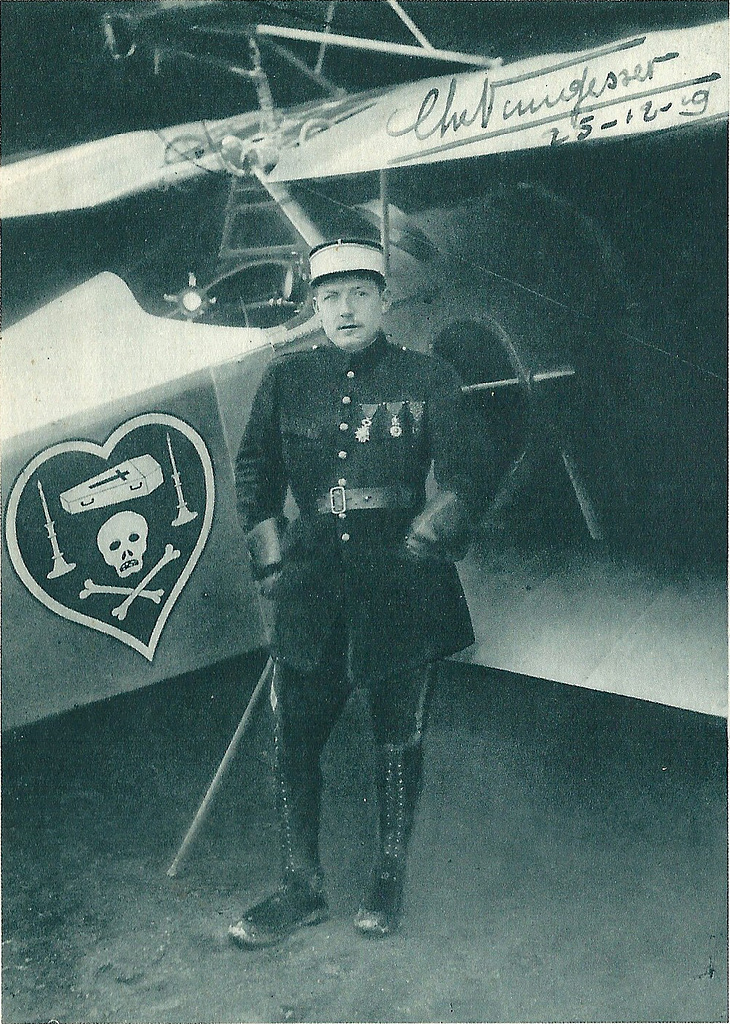
Charles Nungesser and the macabre Nieuport
France’s indestructible ace painted his 17 with a skull, coffin and candles — and kept flying through a catalogue of injuries.
Read the full story
Albert Ball and the Foster mounting trick
Britain’s first great ace used the top-wing Lewis to attack from below, firing up into an enemy’s blind spot.
Read the full story
Billy Bishop’s Nieuport summer
The Canadian ran up a formidable score on the 17, culminating in a solo dawn raid that earned the Victoria Cross.
Read the full story
Guynemer’s early Nieuports
Before the SPAD made him a legend, Georges Guynemer honed his craft on Nieuport scouts with the famous Storks.
Read the full story
The Escadrille Lafayette
American volunteers flew Nieuport 17s in French service before their own country entered the war.
Read the full story
Willy Coppens learns his trade
Belgium’s greatest ace started on the Nieuport before making his name against observation balloons.
Read the full story
The wing that could not be trusted in a dive
The feature pilots loved — the clear-view lower wing — was also the one they feared at high speed.
Read the full story
Imitation on the other side of the line
The layout was copied by Albatros — wing weakness and all.
Read the full story
First into service
The unit that took the 17 to war in May 1916.
Read the full story
Macchi and Dux
The 17 was built far beyond France — in Italy and in Russia.
Read the full story
A gentle second career
Forgiving handling made the retired fighter a natural teacher.
Read the full story
Rare originals, living replicas
Almost no genuine 17s remain — but the type flies again in faithful reproductions.
Read the full story
The Nieuport 17 in pictures


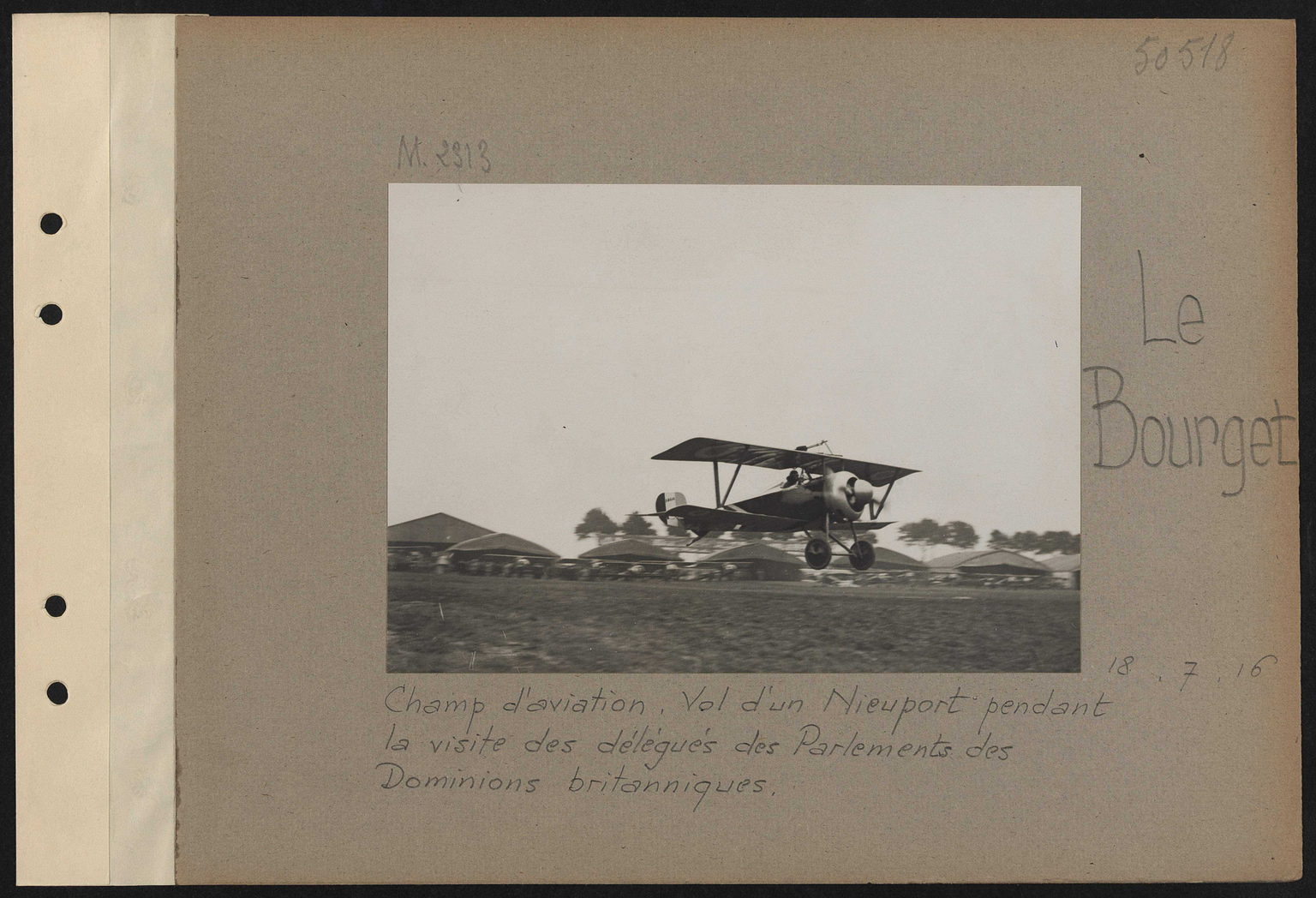
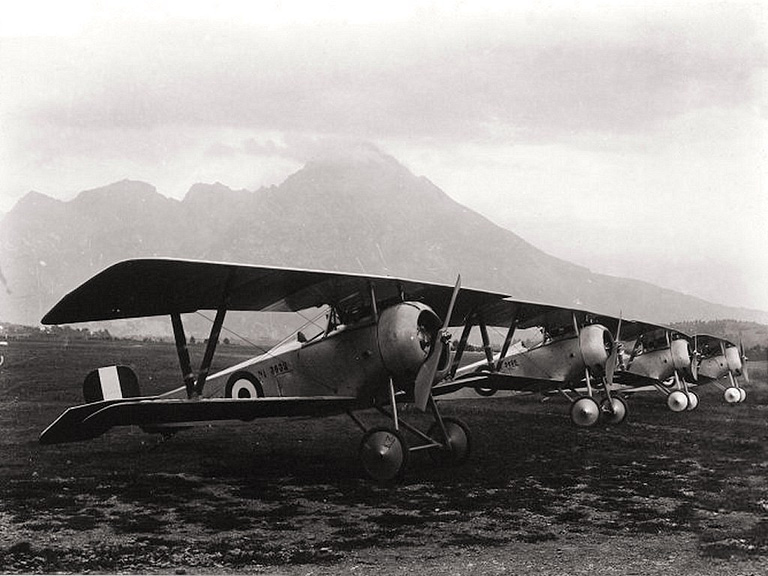
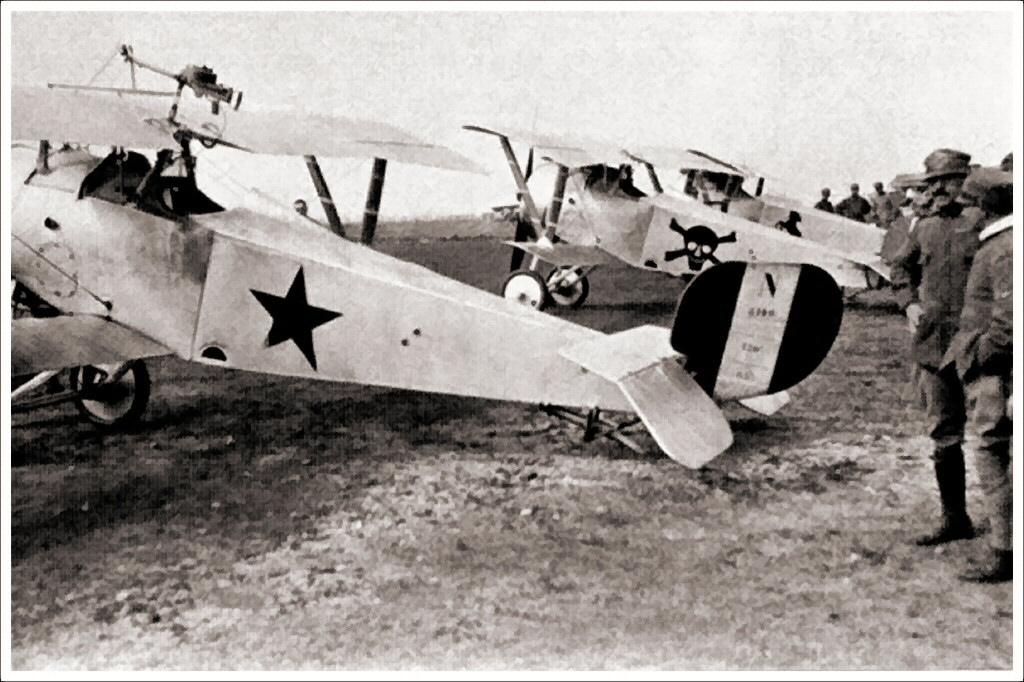
The Nieuport 17 in the air
Helmet-camera footage filmed by pilot Rob Gauld-Galliers flying the airworthy Nieuport 17 reproduction G-BWMJ at the La Ferté-Alais display in France — a rare in-cockpit view from a genuine flying Nieuport 17. (Channel: Robert Gauld-Galliers · ~12,500 views.)
Where the Nieuport 17 flew
Designed and built in France, fought over the Western Front, the Italian Alps and the Eastern Front, and built under licence in Italy and Russia — the Nieuport 17 and its near-identical 17bis and 23 siblings served with a dozen air arms. Toggle the categories to see its origin, wartime operators and combat, other and licence operators, and where survivors and replicas are displayed today.
The record the Nieuport 17 left behind
Victory tallies from the First World War are inherently uncertain: claims were often shared, confirmation was inconsistent between air services, and many combats went unrecorded. The figures above are indicative of the type’s standing in 1916, not audited scores.
Nieuport 17: your questions answered
Can I fly in a Nieuport 17?
What made the Nieuport 17 so effective in 1916?
Was the Nieuport 17’s lower wing really a weakness?
Which aces flew the Nieuport 17?
Did the Nieuport 17 end the ‘Fokker Scourge’?
How many Nieuport 17s were built, and are any left?
You can’t fly the Nieuport 17.
These, you can.
Some legends only live in museums — others are fuelled and waiting. MiGFlug has put civilians in real military jet cockpits since 2004.
 Fly the L-39 AlbatrosThe world’s most-flown jet trainer — aerobatics included
 Fly the F-104 Starfighter“The missile with a man in it”
 Fly the MiG-21The Cold War’s most-produced jet
 טסו על ה-T-33 Shooting StarAmerica’s first jet trainer
 Fly the DH VampireA piece of early jet history
 Fly the S.211Agile Italian jet trainer
 Fly the MB-326The classic Aermacchi jet
 Fly the MiG-15The Soviet legend of the Korean War
Explore more of the collection
Every fact, checked
- Royal Air Force Museum — The Evolution of the Nieuport FighterDelage’s sesquiplane line and the single-spar lower-wing weakness
- Smithsonian National Air and Space Museum — First World War aviationWWI fighter development and the air war context
- Imperial War Museums — The Birth of Military AviationThe Fokker Scourge and the Allied response of 1916
- Musée de l’Air et de l’Espace, Le BourgetFrench national collection of Nieuport and WWI aircraft
- History of War — Nieuport 17Specifications, service entry and the 1917 wing-strengthening order
- The Shuttleworth CollectionOperator of an airworthy Nieuport in the United Kingdom
- The Vintage Aviator (New Zealand)Builder and operator of flying Nieuport reproductions
- Key Aero — Nieuport 17/23: Facsimile FighterThe type’s design, handling and modern replicas
- C. Shores, N. Franks & R. Guest — Above the TrenchesReference on Allied aces and their Nieuport victories
- J. M. Bruce — The Aeroplanes of the Royal Flying Corps (Military Wing)Detailed account of RFC Nieuport 17 service and armament