
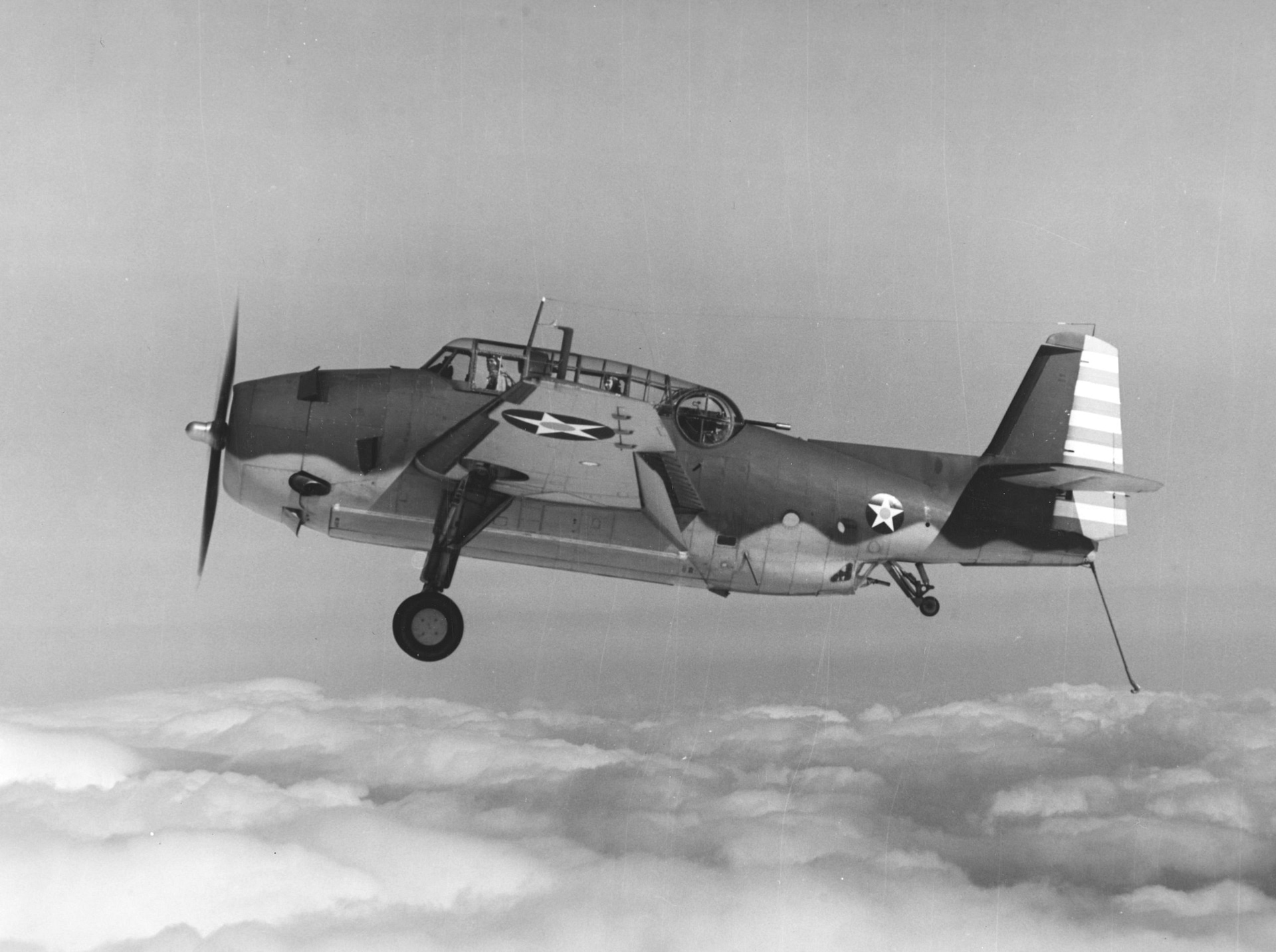
Grumman TBF / TBM
“Avenger”
The big, rugged carrier torpedo bomber that survived a catastrophic combat debut at Midway to become the standard US Navy strike aircraft of the Pacific war — and helped sink the two largest battleships ever built.
The Grumman TBF Avenger: from Midway disaster to the Pacific’s standard torpedo bomber
ה Grumman TBF Avenger was designed in 1940 to replace the hopelessly obsolete Douglas TBD Devastator as the US Navy’s carrier torpedo bomber. It was a big, single-engined machine — the heaviest single-engined aircraft of the war to fly from carriers — with a deep fuselage built around an internal weapons bay, a crew of three, and a power-operated ball turret behind the cockpit. The prototype first flew on 7 August 1941, and the type was named “Avenger” in the aftermath of Pearl Harbor.
Its combat debut was a massacre. Six Avengers of Torpedo Squadron 8 flew from Midway on the morning of 4 June 1942, ahead of the carriers; five were shot down and only one badly shot-up aircraft, flown by Ensign Albert “Bert” Earnest, limped back. Yet the Avenger recovered from that opening catastrophe to become one of the most important American aircraft of the Pacific. Built in enormous numbers — General Motors’ Eastern Aircraft Division turned out the majority as the TBM — it equipped almost every US Navy and Marine torpedo squadron for the rest of the war.
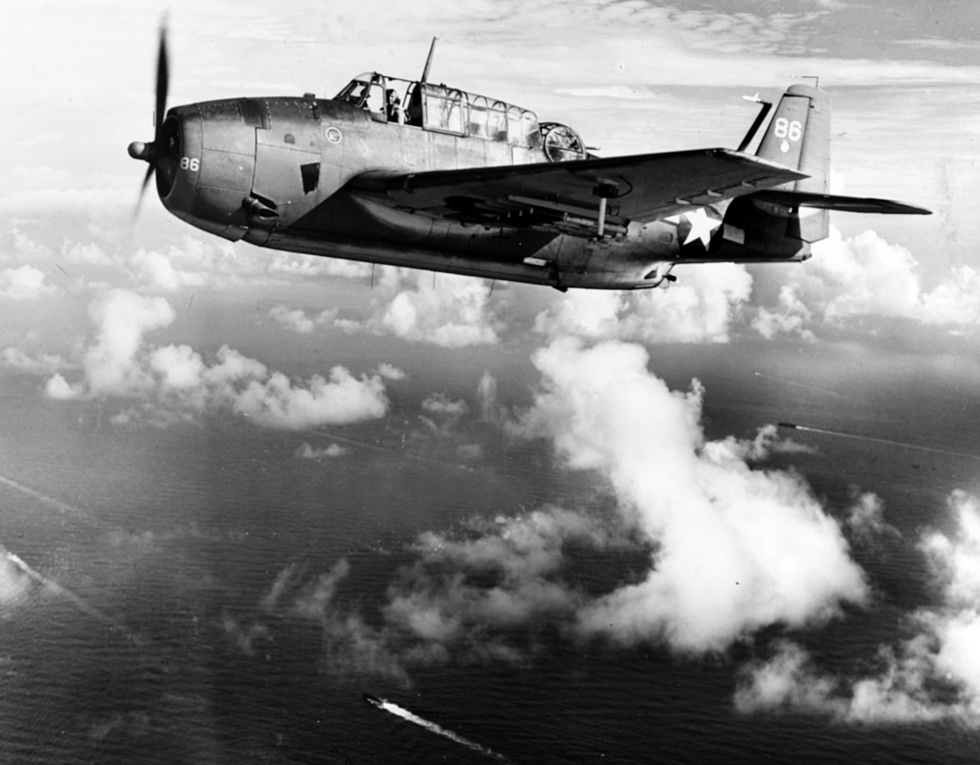
The Avenger was rugged, stable and versatile. It carried a Mark 13 torpedo or up to about 900 kg of bombs, dropped them level or in a glide, hunted submarines from tiny escort carriers, fired rockets at shipping and shore targets, and later carried early airborne radar. Avengers helped sink the Japanese super-battleships Musashi (1944) and Yamato (1945), sank U-boats in the Atlantic, and served with the navies of Britain, New Zealand, Canada, France, the Netherlands and postwar Japan. A young naval aviator named George H. W. Bush flew one and was shot down near Chichijima in 1944. Long after the war, surplus Avengers found a second life as aerial water- and borate-bombers fighting forest fires.
01The TBF Avenger’s name: how a torpedo bomber came to be called “Avenger”
Grumman rolled the prototype out just before the United States entered the war. The company had a house style of naming its fighters “Cats” — Wildcat, Hellcat, Bearcat — but the new torpedo bomber was publicly unveiled at a ceremony held, by coincidence, only days after the Japanese attack on Pearl Harbor in December 1941. The name “Avenger” was chosen to reflect the national mood: an aircraft that would carry America’s answer back to the enemy. It proved apt — within three years Avengers were sinking the largest warships Japan possessed.
What makes the Avenger special
A rugged carrier bomber with an internal bay
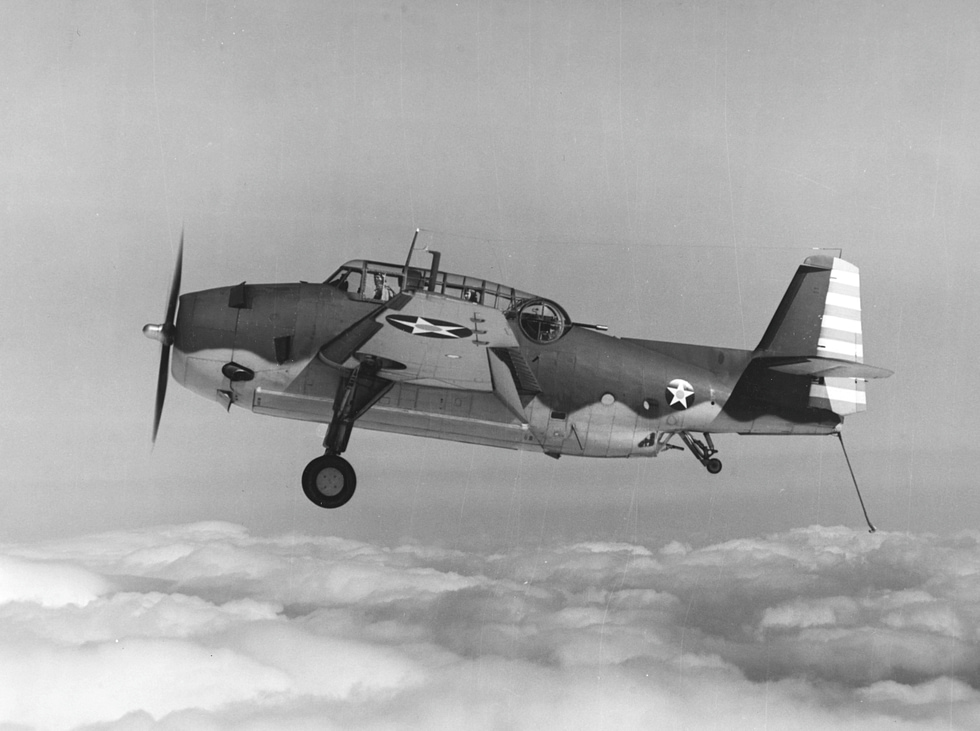
The Avenger was built around a deep, roomy fuselage with an internal weapons bay that could swallow a full-length Mark 13 torpedo or up to about 900 kg (2,000 lb) of bombs — unusual for a carrier aircraft of its day, and far cleaner aerodynamically than slinging ordnance under the wings. Folding wings, a stout undercarriage and Grumman’s famous structural toughness let it absorb heavy battle damage and still come home.
The powered ball turret — defensive firepower
The Avenger was among the first US Navy aircraft to carry a power-operated gun turret: an electro-hydraulic ball turret behind the cockpit mounting a single .50-calibre machine gun, with a second .50 in the wings and a .30 in a ventral tunnel position. Three crew — pilot, turret gunner and radio operator/bombardier — gave it all-round defence that a single-seat dive bomber could never match.
Versatility: torpedo, bomber, sub-hunter, radar picket
Few aircraft did so many jobs so well. The Avenger dropped torpedoes and bombs, fired rockets, laid mines, spotted for gunfire, and became a superb anti-submarine platform flying from small escort carriers. Radar-equipped versions hunted U-boats at night, and the postwar TBM-3W carried a large search radar as one of the first airborne early-warning aircraft.
02The Avenger’s toughness: why Grumman airframes came home shot to pieces
Grumman’s Bethpage factory earned the nickname “the Grumman Iron Works” for the sheer structural strength of its aircraft. The Avenger inherited it. Bert Earnest’s TBF at Midway had its hydraulics shot out, its elevator cables severed and one wheel hanging, its turret gunner dead — and it still flew him and his wounded radioman back to a crash-landing at Midway. That ability to soak up damage and keep flying, over hundreds of kilometres of open ocean, was worth as much to aircrews as any performance figure.
03The Avenger and the Devastator: replacing a torpedo bomber that had become a death trap
The aircraft the Avenger replaced, the Douglas TBD Devastator, was slow, lightly built and by 1942 desperately obsolete. At Midway the Devastator squadrons were annihilated attacking the Japanese carriers. The Avenger was the answer already in the pipeline: faster, far tougher, better armed and better protected. Ironically its own first mission, flown by the Midway-based Avenger detachment of the same Torpedo 8, was nearly as costly — but the aircraft itself was sound, and mass production quickly made it the backbone of Navy torpedo aviation.
Full specifications: the Grumman TBM-3 Avenger
Airframe & Performance
- צוות
- 3 (pilot, turret gunner, radio/bombardier)
- מֶשֶׁך
- 12.48 m (40 ft 11 in)
- מוּטַת כְּנָפַים
- 16.51 m (54 ft 2 in)
- גוֹבַה
- ~4.19 m (13 ft 9 in)
- משקל ריק
- ~4,783 kg (10,545 lb)
- Max takeoff weight
- ~8,115 kg (17,893 lb)
- Max speed
- ~442 km/h (275 mph) at altitude
- מהירות שיוט
- ~233 km/h (145 mph)
- לָנוּעַ
- ~1,600 km (1,000 mi)
- תקרת השירות
- ~9,170 m (30,100 ft)
Propulsion, Armament & Production
- מָנוֹעַ
- 1 × Wright R-2600-20 Twin Cyclone radial
- Power
- ~1,900 hp (1,417 kW)
- Guns
- 2 × .50 in wing, 1 × .50 in dorsal turret, 1 × .30 in ventral
- Warload
- 1 × Mk 13 torpedo or ~907 kg (2,000 lb) bombs; up to 8 rockets
- First flight
- 7 August 1941
- Built
- ~9,839 (Grumman TBF + GM TBM, 1942–45)
- Unit cost
- Not reliably recorded (wartime, estimate)
- Cost per flight hour
- No reliable public figure
04The Avenger’s operating costs: why no clean dollar figure exists
The Avenger was a wartime government product built by the thousand under military contract, so no clean, comparable flyaway unit price or cost-per-flight-hour survives in the public record the way it does for modern jets. What is well documented is scale: nearly 9,839 were built in barely three years, most of them by General Motors’ Eastern Aircraft Division. Today the relevant cost is the price of keeping a warbird airworthy — a restored, flying Avenger is a multi-million-dollar aircraft, and each display flight burns a large radial engine’s worth of fuel and maintenance. Any precise period dollar figure you see should be treated as an estimate.
The Avenger: from drawing board to fire-bomber
Ordered
The US Navy selects Grumman’s design to replace the obsolete TBD Devastator torpedo bomber.
First flight
The XTBF-1 prototype flies on 7 August; the type is named “Avenger” after the attack on Pearl Harbor.
Midway debut
Six Avengers of VT-8 attack from Midway on 4 June; five are shot down, only one returns — a brutal baptism.
Mass production as the TBM
General Motors builds Avengers by the thousand as the TBM; the type equips carrier and escort-carrier squadrons across the Pacific and Atlantic.
Musashi and Chichijima
Carrier Avengers help sink the battleship Musashi (24 October). On 2 September, Lt (jg) George H. W. Bush is shot down near Chichijima and rescued by a submarine.
Yamato sunk
On 7 April, Avengers are among the aircraft that torpedo and sink the super-battleship Yamato.
Postwar: ASW, AEW and export
Avengers soldier on in anti-submarine and airborne-early-warning roles and serve with the navies of Britain, New Zealand, Canada, France, the Netherlands and Japan.
Second life as a fire-bomber
Surplus Avengers become civilian aerial fire-fighting water and borate bombers, some flying in Canada into the 21st century.
From the cockpit: twelve Avenger stories
Grumman’s answer to the Devastator
The Avenger was designed to replace a torpedo bomber that had become obsolete before the war even began.
Read the full story
A massacre on debut
Six Avengers flew from Midway on 4 June 1942. Five never came back.
Read the full story
Bert Earnest brings one home
The single Avenger that returned was flown by an ensign on his first-ever combat flight.
Read the full story
Chevrolet builds a torpedo bomber
Most Avengers were not built by Grumman at all — they were built by General Motors.
Read the full story
The powered ball turret
The Avenger was one of the first US Navy aircraft with a power-operated gun turret.
Read the full story
Helping to finish a battleship
Avengers joined the running battles off Guadalcanal in late 1942.
Read the full story
The future president is shot down
A 20-year-old Avenger pilot named George Bush was hit over Chichijima and bailed out at sea.
Read the full story
Sinking the Musashi
On 24 October 1944, US carrier aircraft overwhelmed one of the two largest battleships ever built.
Read the full story
Sinking the Yamato
On 7 April 1945, Avengers helped send the largest battleship in history to the bottom.
Read the full story
Hunting U-boats
From tiny escort carriers, Avengers became one of the U-boat’s deadliest enemies.
Read the full story
The Avenger that was first called “Tarpon”
Britain’s Fleet Air Arm flew the type in numbers — under two different names.
Read the full story
Radar pickets and fire-bombers
The Avenger’s war ended in 1945, but its flying career ran on for decades.
Read the full story
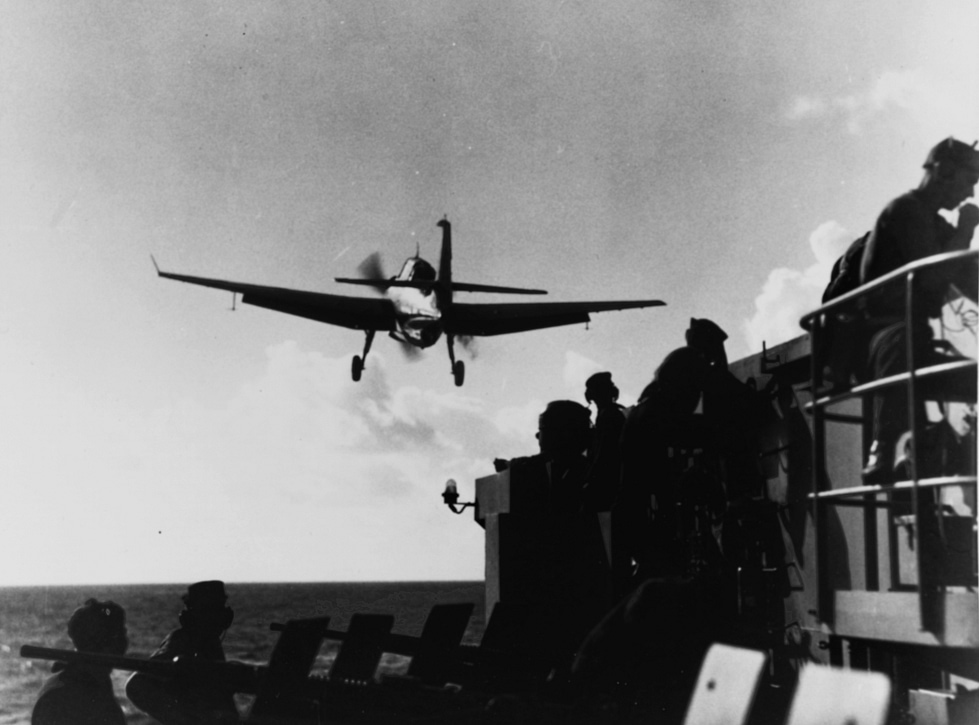
The Avenger in pictures
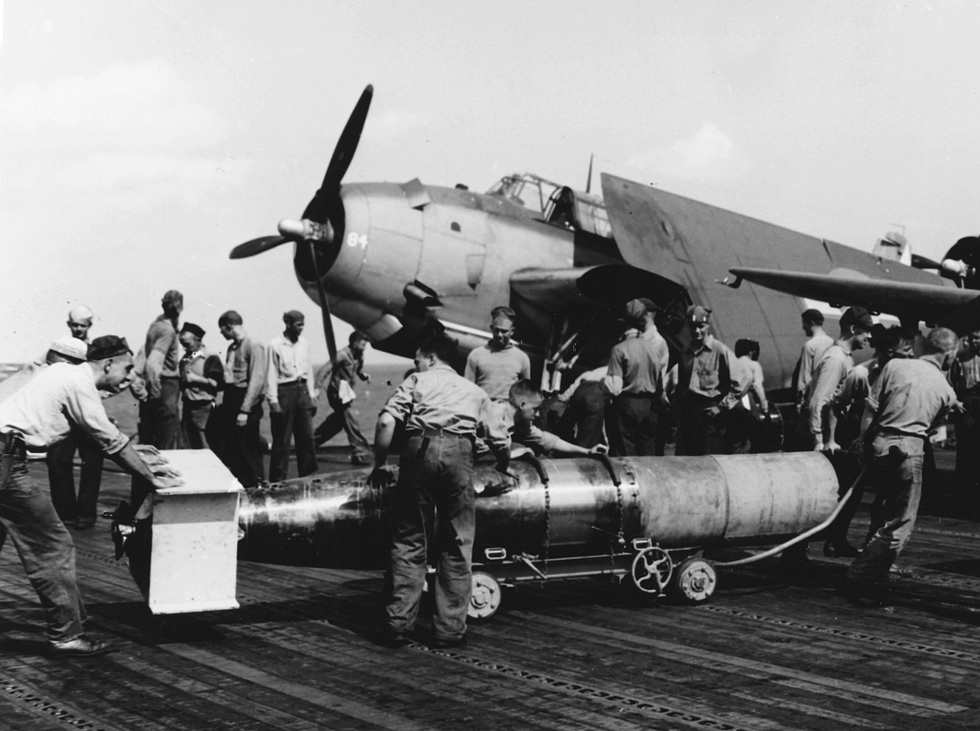
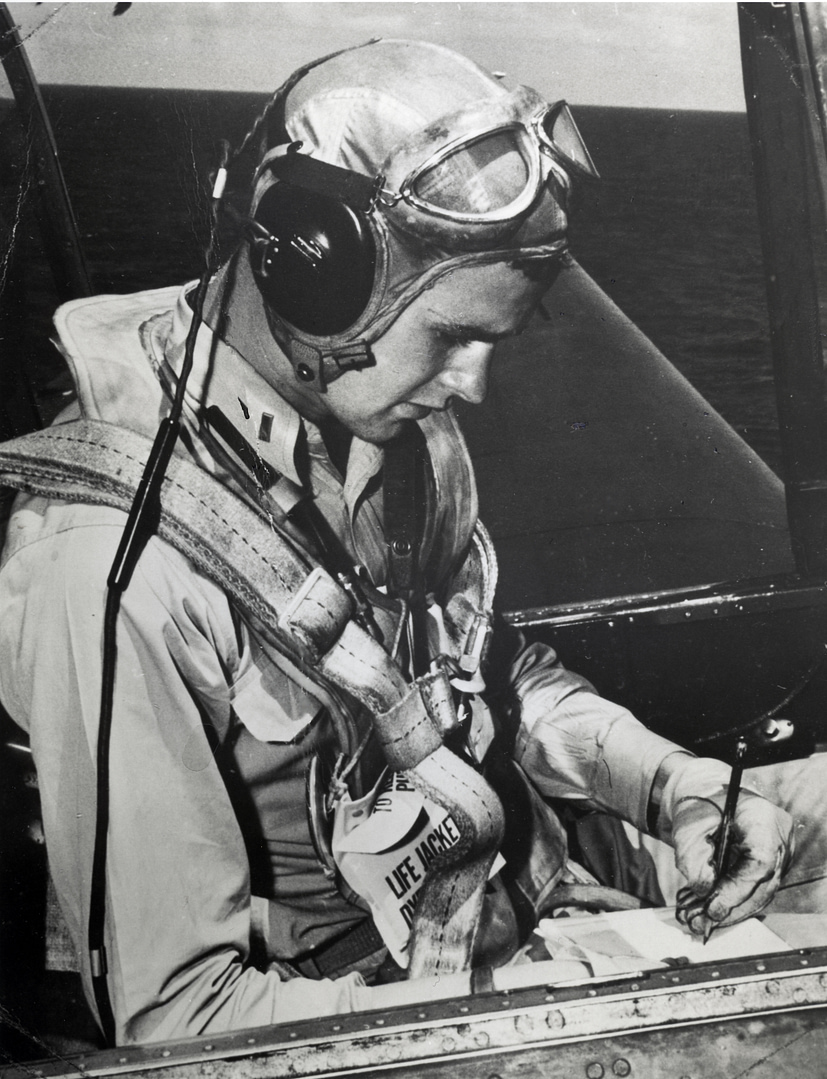
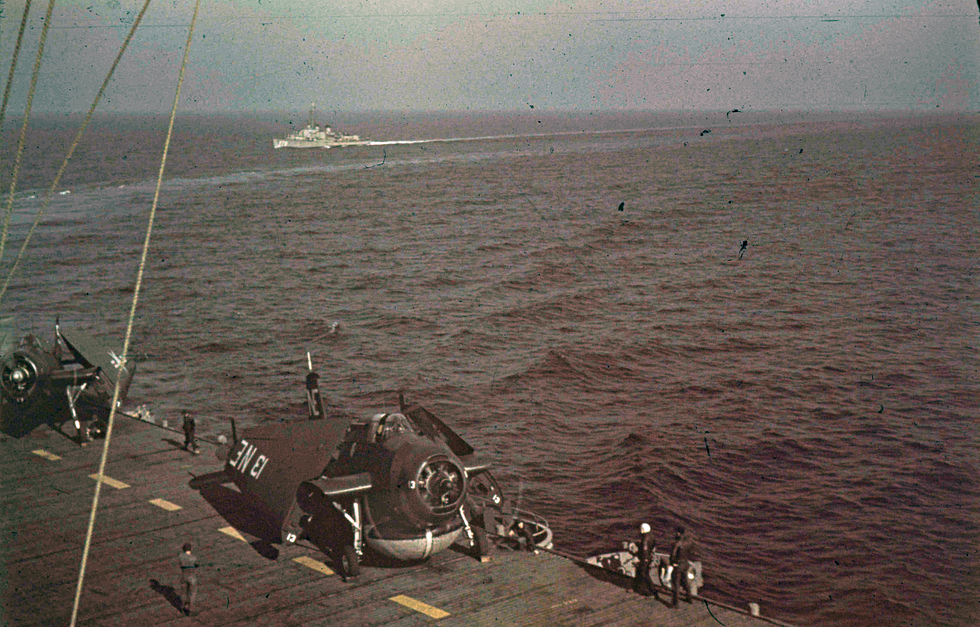
The Avenger in motion
A verified, high-authority video feature on the Grumman TBF/TBM Avenger is coming soon. In the meantime, explore the gallery above and the eyewitness stories from Midway, Leyte Gulf and the Atlantic.
Where the Avenger flew and served
The score that defines the Avenger
The Avenger’s record is not written in air-to-air kills but in ships sent to the bottom. After a catastrophic debut at Midway, it became the US Navy’s standard torpedo bomber and helped sink capital ships, submarines and merchant tonnage across two oceans — including the two largest battleships ever built.
Compare the combat record of every military aircraft. Figures as of July 2026.
Everything people ask about the Grumman Avenger
Can I fly in an Avenger?
What was the Avenger’s job?
Why was the Avenger’s debut at Midway such a disaster?
Did a US president fly the Avenger?
Did Avengers really help sink the Yamato and Musashi?
How many Avengers were built, and who built them?
Who else flew the Avenger besides the US?
Is the Avenger still flying today?
You can’t fly the Avenger.
These, you can.
Some legends only live in museums — others are fuelled and waiting. MiGFlug has put civilians in real military jet cockpits since 2004.
 Fly the L-39 AlbatrosThe world’s most-flown jet trainer — aerobatics included
 Fly the F-104 Starfighter“The missile with a man in it”
 Fly the MiG-21The Cold War’s most-produced jet
 טסו על ה-T-33 Shooting StarAmerica’s first jet trainer
 Fly the DH VampireA piece of early jet history
 Fly the S.211Agile Italian jet trainer
 Fly the MB-326The classic Aermacchi jet
 Fly the MiG-15The Soviet legend of the Korean War
Continue the tour
Every fact, checked
- Naval History and Heritage CommandVT-8 at Midway, the Avenger’s combat debut and George H. W. Bush’s wartime service record.
- This Day in Aviation — Torpedo 8 at MidwayDetailed account of the six Midway-based Avengers and Ensign Bert Earnest’s return.
- Smithsonian National Air and Space MuseumGrumman “Tarpon” / TBF-1 Avenger history and British Fleet Air Arm service.
- NAS Fort Lauderdale MuseumAvenger design, roles and the aircraft’s wartime and postwar career.
- History of War — Grumman Avenger in American serviceVariants, production by Grumman and General Motors, and combat use.
- Military Aviation MuseumTBM-3E specifications, dimensions, powerplant and armament.
- VT-17 — Sinking of the Battleship YamatoSquadron account of the 7 April 1945 strike that helped sink Yamato.
- The National WWII MuseumContext for the Pacific carrier war, Leyte Gulf and the anti-submarine campaign.