

Everyone making eVTOLs — Joby, Archer, Lilium’s ghost, Volocopter’s ghost, Eve, Vertical Aerospace — faces the same problem nobody wants to talk about: even if you successfully build the aircraft, where, exactly, does it land in a city?
The honest answer used to be: nowhere. Most cities have one or two helipads, all of them at hospitals or on top of corporate buildings, none of them ready to handle the volume of traffic an urban air-taxi service needs. New-build vertiports can cost tens of millions of dollars and take years to permit. Until now, the entire multi-billion-dollar eVTOL industry has been a brilliant aircraft solution to an unsolved real-estate problem.
A young Australian company has just launched what may be the actual answer. They call it Aeroberm. It is, structurally, a giant rooftop berm.
Quick Facts
- Concept: Aeroberm — modular vertiport pad designed to retrofit onto existing rooftops
- Launched: 5 May 2026, simultaneously at Rotortech 2026 (Gold Coast) and the Vertical Flight Society Forum 82 in Florida
- Key technology: Fractal panels that dissipate rotor outwash energy up to 90% more effectively than flat surfaces (Swinburne University CFD study)
- Fire safety: Integrated immersion-style suppression system to contain eVTOL battery fires
- Aircraft compatibility: Aircraft-agnostic, designed for Joby, Archer, Beta, Wisk and other eVTOL types
- Developed by: Aeroberm, sister company of Australian vertiport developer Skyportz, with partners in six countries
Why no one has solved the landing-pad problem
Joby has been certifying its eVTOL since 2020. Archer is in the same race. The aircraft work. They have been flown thousands of times. They have FAA Type Certificates pending. The pilots are trained. None of this matters if there is no place to land them.
The vertiport problem is half political (helipads in cities are noisy, expensive, and reviled by neighbours) and half engineering (you can’t just put a slab on a building and call it a heliport; you need approach paths, emergency egress, ground handling, charging infrastructure, fire protection, and crowd management). Urban-air-mobility advocates have been talking about “hundreds of vertiports per city” for a decade. The actual number deployed across the world right now is in the low double digits.
Aeroberm is built differently. The pad is a prefabricated modular unit whose fractal, self-similar panels break up rotor downwash and outwash, scatter noise, and conceal an immersion-style fire-suppression tank beneath the landing surface. Because it is modular and off-the-shelf, it can be installed on existing rooftops. And it is aircraft-agnostic, designed to handle eVTOL types from Joby, Archer, Beta Technologies, Wisk and others.
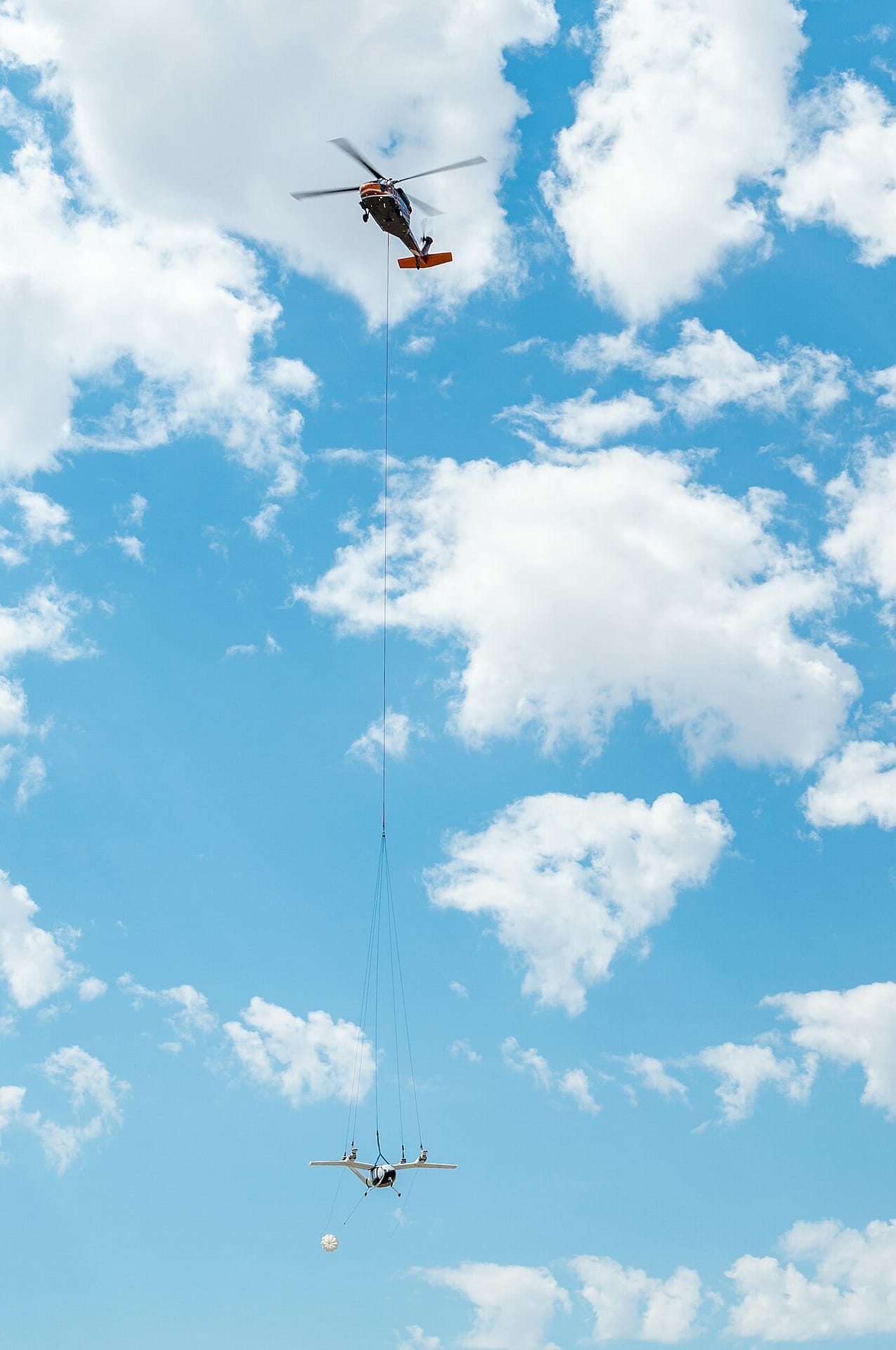
From concept to commercial product
Aeroberm went commercial on 5 May 2026, unveiled simultaneously at Rotortech 2026 on the Gold Coast and at the Vertical Flight Society Forum 82 in Florida. A peer-reviewed computational-fluid-dynamics study by Swinburne University, released the same day, found that the fractal panels dissipate airflow energy roughly 30 percent faster than grated panels and up to 90 percent better than flat surfaces. The much-shared images of an Aeroberm pad on a Dubai high-rise are renderings, not an installed site — the company showing where the system could go.
Partnerships are already forming. Enter Ave of Tallahassee, Florida, is the first US partner, and the system has been offered to participants in the FAA eVTOL Integration Pilot Program, a three-year air-taxi flight-test campaign. Skyportz will handle deployment in Australia, with an eye toward the 2032 Olympic Games in Brisbane, and the company has further partners in China, Japan, India and Oman — with London and Paris on the wish list.
What this means for urban air mobility
The financial side is the part the eVTOL industry has been waiting for. Modular, off-the-shelf pads are far cheaper to install than bespoke vertiports, and through a partnership with insurance underwriter Advanced Technology Assurance, Aeroberm plans to offer operators insurance from day one. That kind of de-risking is what could eventually put urban air mobility into competition with helicopter taxis, premium ride-share and high-speed trains — not as a luxury, but as a credible commercial product.
It could also change the schedule for the entire eVTOL industry. Joby’s air taxi flew a series of demonstration flights across New York City’s heliport network and JFK this spring, but services will remain confined to existing helipads and airports until denser landing infrastructure exists. The aircraft were never the bottleneck. The places to land them were. That bottleneck may finally be starting to break.
The eVTOL industry has burned through billions of dollars to date without flying a paying passenger. The next 18 months will decide whether that capital was visionary or vapour. The bet rests, more than on any aircraft, on whether the world’s rooftops can become airports faster than the planning departments thought possible.
Sources: Flying Magazine, Skyports Infrastructure press release, Dubai Civil Aviation Authority, Joby Aviation.
Related Questions
What is the Aeroberm vertiport?
Aeroberm is a modular, prefabricated landing pad designed to retrofit eVTOL air-taxi infrastructure onto existing rooftops. Launched on 5 May 2026, it uses fractal panels that dissipate rotor outwash energy far more effectively than flat surfaces and conceals an immersion-style fire-suppression tank beneath the landing surface. It is aircraft-agnostic, built for Joby, Archer, Beta and Wisk types.
Why is building vertiports so difficult?
Vertiports are hard because the challenge is half political and half engineering. City helipads are scarce and noise-sensitive, while a true vertiport needs approach paths, emergency egress, ground handling, megawatt charging and fire protection. New-build pads can cost tens of millions and take years to permit, which is partly why eVTOLs need a whole new kind of airport.
What is an eVTOL aircraft?
An eVTOL is an electric vertical takeoff and landing aircraft — a battery-powered design that lifts off like a helicopter, then flies forward like a plane, intended for short urban air-taxi hops. Leading developers include Joby, Archer, Beta Technologies and Wisk. Their biggest obstacle is no longer the aircraft but where to land it in cities.
How does the Aeroberm pad reduce rotor downwash and noise?
The Aeroberm pad uses fractal, self-similar panels that break up rotor downwash and outwash and scatter noise. A Swinburne University CFD study found the panels dissipate rotor outwash energy up to 90% more effectively than a flat surface. The same structure hides an immersion-style fire-suppression tank to contain eVTOL battery fires.
Who created Aeroberm?
Aeroberm was developed by the company of the same name, a sister company of Australian vertiport developer Skyportz, working with partners in six countries. It launched simultaneously on 5 May 2026 at Rotortech 2026 on Australia's Gold Coast and at the Vertical Flight Society's Forum 82 in Florida.
Has any eVTOL air taxi carried paying passengers yet?
Not in the West. Despite billions invested and thousands of test flights, no Western eVTOL maker had carried a paying passenger as of 2026, with first commercial service expected in Dubai. The industry has spent heavily — see how $12 billion was burned with zero passengers carried — partly because the landing infrastructure still isn't ready.

0 Comments