
Geschichte & Legenden, Militärische Luftfahrt
Am 1. August 1955 hob Tony LeVier ein seltsames neues Lockheed-Flugzeug von einem ausgetrockneten See in der Wüste Nevadas ab. Das Flugzeug hatte unglaublich lange, schmale Flügel – ähnlich einem Motorsegler – und wurde von einem einzigen Strahltriebwerk angetrieben. Es stieg wie kein anderes Flugzeug, das er je geflogen hatte ….

Geschichte & Legenden, Militärische Luftfahrt
On 10 September 1956, in the high desert above Edwards Air Force Base, North American Aviation's chief test pilot Bob Baker pushed the throttle of an aircraft nobody outside the U.S. Air Force fighter procurement office had ever heard of into afterburner. The...
Geschichte & Legenden, Militärische Luftfahrt
In late 1958, in the high Texas sky over Naval Air Station Dallas, Vought's chief test pilot John Konrad flew an aircraft that could outmanoeuvre, outclimb, outrun and outturn the future F-4 Phantom II. The aircraft had a single engine. It had no radar operator....
Geschichte & Legenden, Militärische Luftfahrt
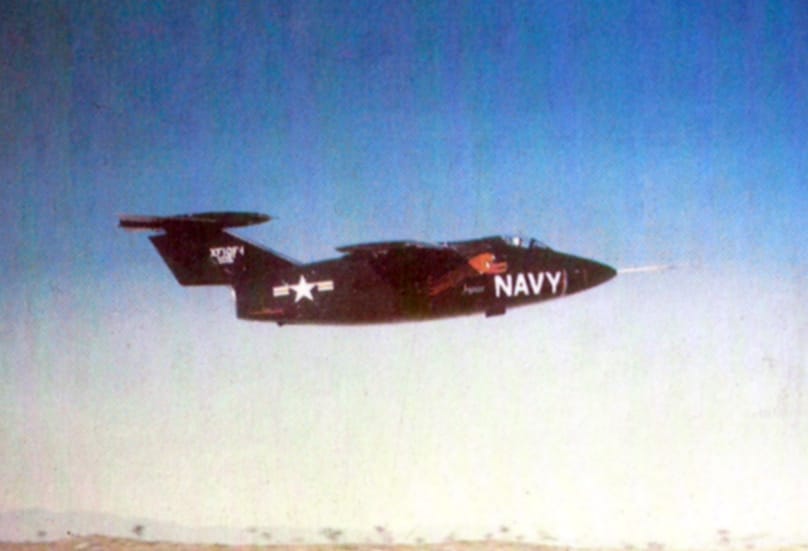
Seventy-four years ago today — 19 May 1952 — at Edwards Air Force Base in the high California desert, Grumman test pilot Corwin “Corky” Meyer climbed into the cockpit of an aircraft so strange that nobody else in the U.S. Navy was qualified to...
Militärische Luftfahrt, Nachricht
Helicopters do something fixed-wing aircraft cannot. They land on rooftops, in jungles, on the back of a destroyer, on a forest road, on a Pacific atoll smaller than a basketball court. The price they pay is speed. A helicopter that cruises at 150 knots is unusual....
Geschichte & Legenden, Militärische Luftfahrt
Das Vorhaben war unmöglich. Bob Hoover startete mit seiner Rockwell Shrike Commander – einem zweimotorigen Geschäftsreiseflugzeug, kein Kunstflugzeug –, stieg auf Höhe und schaltete beide Triebwerke ab. Dann flog er, nur mit Schwung und Schwerkraft, einen Looping und...
Geschichte & Legenden, Militärische Luftfahrt
On the morning of 18 June 1914 — ten years and six months after Orville Wright lifted off Kitty Hawk — a 21-year-old American named Lawrence Burst Sperry flew a Curtiss C-2 biplane down the Seine at 50 feet above the water in front of a crowd of astonished Parisians....
Geschichte & Legenden, Militärische Luftfahrt
Am 13. September 1935 bestieg Howard Hughes das Cockpit eines eleganten, silbernen Rennflugzeugs aus eigener Konstruktion und flog damit mit 566,2 km/h (352,39 mph) über eine vermessene Strecke in Santa Ana, Kalifornien – schneller als je zuvor ein Landflugzeug. Er war 29 Jahre alt und hatte bereits….






Neueste Kommentare