
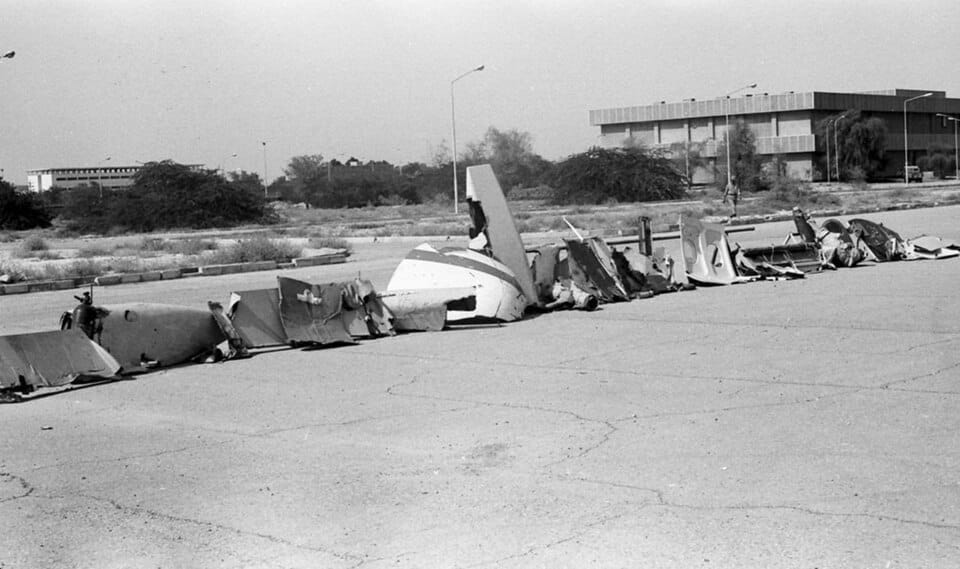
Quick Facts: Iran Air Flight 655
- Date: 3 July 1988
- Aircraft: Airbus A300B2-203, registration EP-IBU
- Route: Bandar Abbas (BND) to Dubai (DXB)
- Fatalities: 290 (all aboard) — 254 Iranians, 13 Emiratis, 10 Indians, others
- Ship: USS Vincennes (CG-49), Ticonderoga-class Aegis cruiser
- Commanding officer: Captain William C. Rogers III
- Weapons used: Two SM-2MR Block II surface-to-air missiles
Seven Minutes
The Vincennes was engaged in a surface action against Iranian gunboats when its radar detected a contact climbing out of Bandar Abbas. The airport served both civilian and military traffic — Iranian F-14 Tomcats operated from the same field. The crew classified the contact as a possible F-14 descending toward the ship in an attack profile. It was not descending. Iran Air 655 was climbing through 13,500 feet on a standard commercial departure, squawking Mode III (civilian) transponder code 6760. The aircraft was on the published airway, at the expected altitude, climbing at the expected rate. Everything about the flight was normal. The Vincennes issued eleven radio challenges — seven on military frequencies and four on civilian emergency channels. The crew of Flight 655 almost certainly never heard them. The military calls used a frequency the airliner had no reason to monitor. The civilian calls identified the contact by speed and altitude parameters that did not match what the A300 crew would have seen on their own instruments.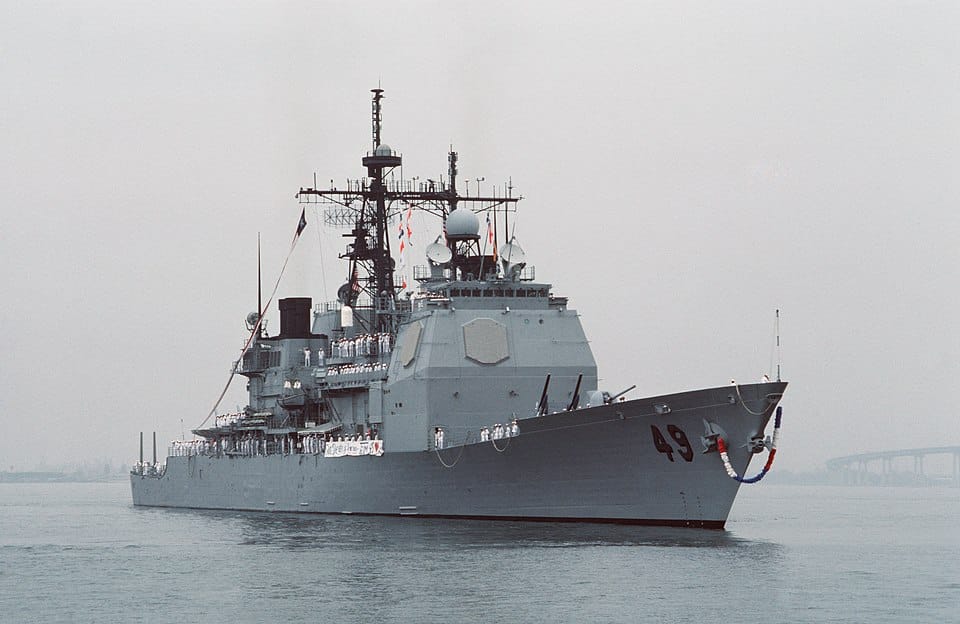
How the Aegis Got It Wrong
The Vincennes carried the most advanced naval combat system in the world. The Aegis radar could track hundreds of contacts simultaneously. It correctly identified Flight 655 as a climbing commercial aircraft squawking civilian codes. The system worked perfectly. The humans operating it did not. Under the stress of an ongoing surface engagement — the ship was firing its five-inch gun at Iranian gunboats — the combat information centre crew experienced what investigators later described as a cascading series of confirmation biases. Once the initial assessment classified the contact as a threat, subsequent data was interpreted to confirm that assessment rather than challenge it. Crew members reported the aircraft descending when it was climbing. The captain had approximately three minutes to decide. He chose to fire.The Aftermath
President Reagan called the shootdown "a proper defensive action" while expressing regret for the loss of life. The United States never formally apologised. Captain Rogers received the Legion of Merit in 1990 — the citation made no mention of Flight 655. Iran called it a deliberate act of war. In 1996, the International Court of Justice brokered a settlement: the United States paid $131.8 million in compensation — $300,000 for each wage-earning victim and $150,000 for each non-wage-earner. The payment was not accompanied by an admission of guilt or wrongdoing.Sources: Fogarty Investigation Report (1988), ICAO Report, "Vincennes: A Case Study" (MIT), "Storm Center" by Rogers & Gregston, Wikipedia
Related Questions
What happened to Iran Air Flight 655?
On 3 July 1988, Iran Air Flight 655, an Airbus A300 flying from Bandar Abbas to Dubai, was shot down over the Strait of Hormuz by two SM-2 missiles fired from the US Navy cruiser USS Vincennes. All 290 people aboard were killed, including 66 children. It remains the deadliest incident involving a civilian airliner and a warship.
Why did the USS Vincennes shoot down Iran Air 655?
The Vincennes was fighting Iranian gunboats when its radar detected an aircraft climbing out of Bandar Abbas, a field used by both airliners and Iranian F-14 Tomcats. Under stress, the crew misidentified the climbing Airbus as an F-14 Tomcat descending to attack, despite its civilian transponder, and fired.
How many people died on Iran Air Flight 655?
All 290 people aboard Iran Air Flight 655 were killed, including 66 children. The victims were mostly Iranian, along with citizens of the United Arab Emirates, India and other nations. The Airbus A300 was destroyed roughly seven minutes after take-off while still climbing on its normal departure route.
What is the Aegis combat system?
Aegis is an advanced naval combat system built around a powerful radar that can track hundreds of contacts at once. Aboard the USS Vincennes it correctly identified Iran Air 655 as a climbing aircraft squawking a civilian transponder code. The system worked as designed, but the crew's interpretation of its data under combat stress was wrong.
What aircraft was Iran Air Flight 655?
Iran Air Flight 655 was an Airbus A300B2, a wide-body twin-engine airliner. On the day it was shot down it was flying a scheduled 28-minute route from Bandar Abbas to Dubai, squawking a civilian Mode III transponder code and following the published airway at the expected altitude and climb rate.
Was Iran Air 655 flying normally when it was hit?
Yes. Every parameter of the flight was normal. Iran Air 655 was climbing through about 13,500 feet on a standard commercial departure, on the published airway, at the expected altitude and rate, squawking a civilian transponder code. The Aegis data confirmed a normal ascent; the crew simply interpreted it as a descending attacker.
Related Posts
0 Kommentare