
On 24 June 2026, the U.S. government signed one of the largest missile-defense checks in its history and handed it to a single company for a single job: build interceptors, and build them faster than America has ever built them before. The award to Lockheed Martin is worth up to $35 billion, and its entire purpose is to quadruple production of the THAAD interceptor.
The timing is not subtle. America spent the spring firing expensive interceptors at Iranian ballistic missiles during Operation Epic Fury, and the magazines came back lighter than the Pentagon would like to admit. This contract is the restock order — and a down payment on the much larger “Golden Dome” homeland-defense ambition.
Technically it is a seven-year undefinitized contract action, which means work starts now and the final price gets nailed down later. The $35 billion is a ceiling, not a settled bill; Defense News reported that roughly $843 million in fiscal-2026 money was obligated the day it was signed.
Kurzinfo
| Wert des Geschäfts | Up to $35 billion (seven-year ceiling) |
| Awarded | 24 June 2026 |
| Was | Quadruple THAAD interceptor production |
| Output | From ~96 to about 400 interceptors per year |
| Contract span | March 2026 – June 2032 |
| Hauptauftragnehmer | Lockheed Martin Raketen und Feuerleitanlage |
Why the Pentagon is suddenly in a hurry
THAAD — Terminal High Altitude Area Defense — is the only U.S. system designed to catch a ballistic missile both inside and just outside the atmosphere. It is the upper tier of the shield, the catcher’s mitt that swats down short-, medium-, and intermediate-range missiles before they reach their targets.
That capability got a brutal real-world workout. THAAD batteries helped defend bases and infrastructure during this spring’s fighting, and every successful intercept burned a multimillion-dollar round that takes months to replace. When a war actually starts, the limiting factor isn’t the launcher — it’s how many interceptors sit in the rack behind it.
From handshake to factory floor
This award doesn’t come out of nowhere. In January, Lockheed Martin and the Department of War signed a framework agreement to quadruple THAAD capacity. The June contract is the moment that handshake becomes a purchase order — one of the first full transitions from framework to execution under the Pentagon’s new Acquisition Transformation Strategy.
To physically build the missiles, Lockheed has been pouring concrete. It broke ground weeks earlier on a new Munitions Production Center in Troy, Alabama, part of more than $9 billion in planned investment through 2030 spanning over 20 new or modernized facilities, including a Next Generation Interceptor plant in Courtland, Alabama, and a Munitions Acceleration Center in Camden, Arkansas.
Quadrupling is easier said than done
Going from roughly 96 interceptors a year to about 400 is a staggering ramp. Solid rocket motors, seekers, and skilled hands don’t materialize overnight, and the undefinitized structure of the deal is itself a tell: the Pentagon wanted production moving before the lawyers finished arguing over price.
THAAD is also just one piece of a wider surge. In April the government handed Lockheed a $4.7 billion contract to accelerate PAC-3 MSE production, with Precision Strike Missile output ramping too. The common thread is a hard lesson from the last year of shooting: you cannot manufacture a missile-defense reserve in the middle of the war that drains it.
The bottom line
America learned the expensive way that interceptors are a consumable, not a keepsake. The $35 billion is a bet that the next time the sirens go off over a base in the Gulf — or, under Golden Dome, over the homeland — the racks won’t run dry. Whether the factories can actually hit 400 a year is the multibillion-dollar question hanging over every groundbreaking ceremony.
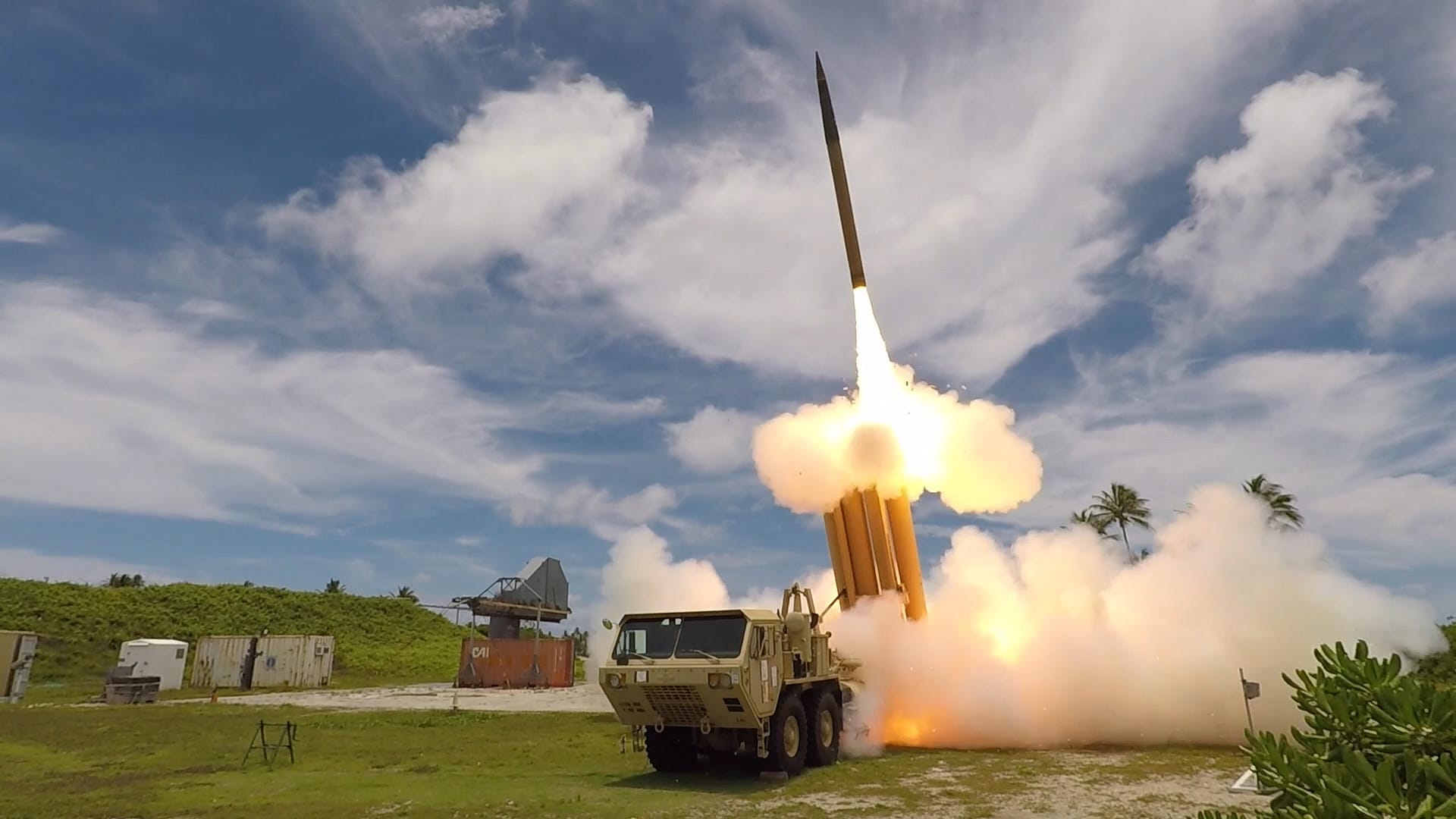
A THAAD interceptor destroys a ballistic-missile target over the Pacific in a Missile Defense Agency flight test — the kind of shot the new contract is meant to keep in stock.
Sources: Lockheed Martin news release (24 June 2026); Defense News; The Hill; Army Recognition.
Verwandte Fragen
What is THAAD?
THAAD (Terminal High Altitude Area Defense) is a U.S. missile-defense system that intercepts short-, medium-, and intermediate-range ballistic missiles during their final phase of flight. It is the only U.S. system able to engage threats both inside and just outside the atmosphere, forming the upper layer of a layered defense.
How much is the new THAAD contract worth?
The U.S. government awarded Lockheed Martin a seven-year undefinitized contract action worth up to $35 billion, announced on 24 June 2026. The figure is a ceiling rather than a fixed price, with about $843 million in fiscal-2026 funds obligated at signing.
How many THAAD interceptors will be produced?
The contract is intended to quadruple output, raising annual production from roughly 96 interceptors to about 400 per year. The ramp runs across a contract spanning March 2026 to June 2032.
Why did the United States order more THAAD interceptors?
U.S. forces expended interceptors defending bases and infrastructure against ballistic-missile attacks during Operation Epic Fury, drawing down stockpiles. The award restocks those reserves and supports the broader Golden Dome homeland missile-defense effort.
Who builds the THAAD interceptor?
Lockheed Martin Missiles and Fire Control is the prime contractor. Production is being expanded across new and modernized U.S. facilities, including a Munitions Production Center in Troy, Alabama.
Can THAAD shoot down an intercontinental ballistic missile?
No. THAAD is designed for short-, medium-, and intermediate-range ballistic missiles, not ICBMs. Intercepting long-range ICBMs aimed at the U.S. homeland is the job of the separate Ground-based Midcourse Defense system.
Ähnliche Beiträge



0 Kommentare