
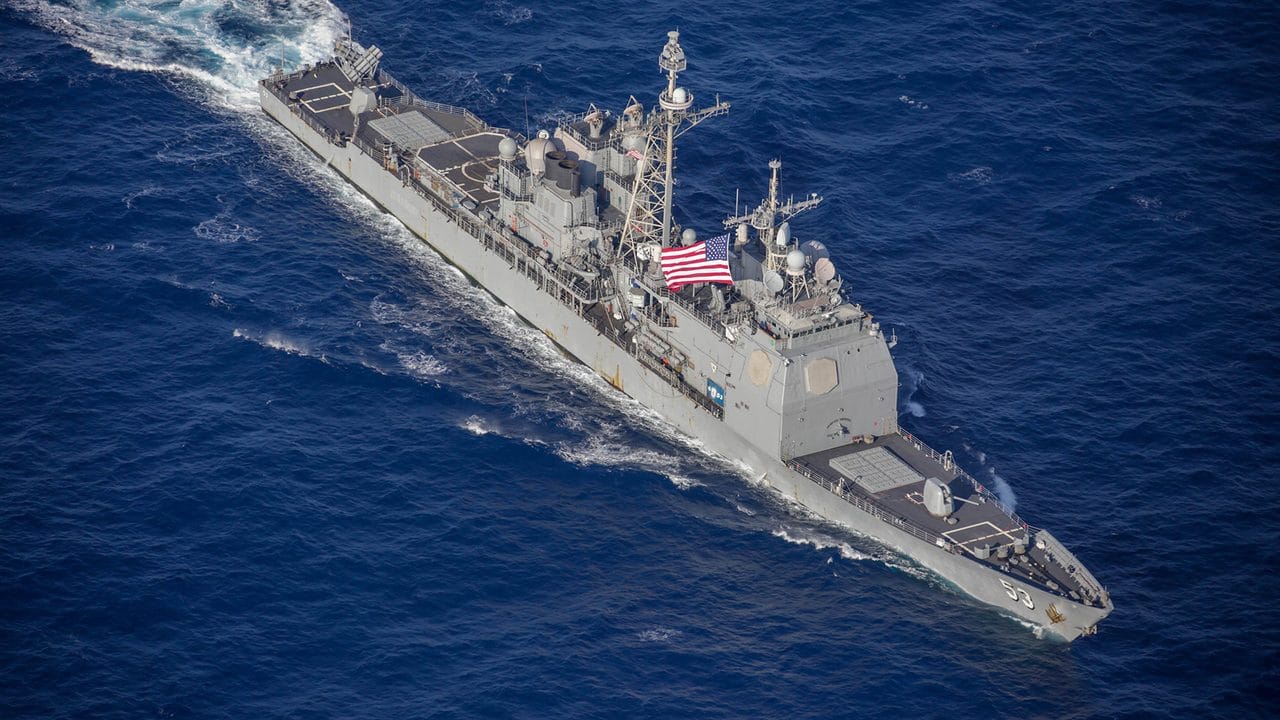
Somewhere in the Pacific in the coming weeks, a US Navy cruiser that fired Tomahawks in two wars will be hit by torpedoes, missiles and bombs until she slips under — and the people shooting will be her friends. The decommissioned USS Mobile Bay is about to become the main event of RIMPAC 2026: the SINKEX.
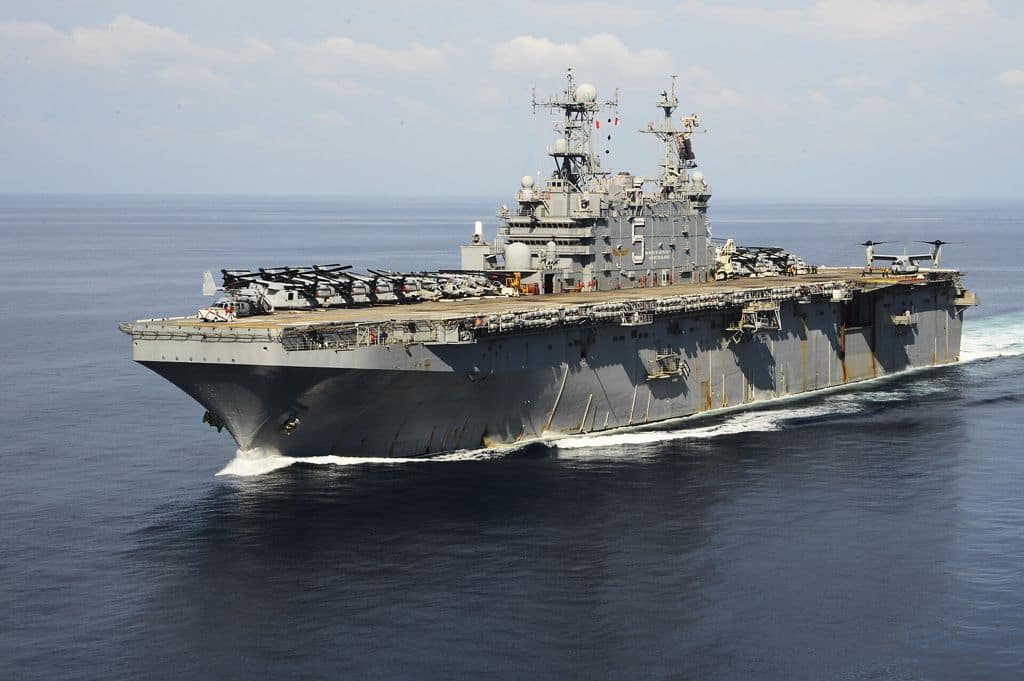
She won’t go alone. The amphibious assault ship ex-USS Peleliu — a 40,000-ton flat-deck veteran — is also slated to be pummelled to the bottom during the exercise, according to reporting by the San Diego Union-Tribune picked up by The War Zone. Two very different targets, one shared fate, and dozens of navies taking notes.
Quick Facts: RIMPAC 2026 SINKEX
| The targets | Ex-USS Mobile Bay (CG-53, Ticonderoga-class cruiser) and ex-USS Peleliu (LHA-5, Tarawa-class assault ship) |
| Wann | During RIMPAC 2026 (June 24 – July 31, around Hawaii); exact date not announced |
| What happens | Live-fire sinking exercise — the capstone event of every RIMPAC |
| Mobile Bay’s record | Commissioned 1987; 22 Tomahawks fired in Desert Storm; strikes in Iraq 2003; 36 years of service |
| Class status | One of four decommissioned Ticonderogas earmarked for sinking; nine remain in service |
A Warship’s Last Job
A SINKEX sounds brutal, and it is — deliberately so. Retired hulls are stripped, cleaned to environmental standards, towed far offshore and then used as the most realistic target the world’s navies ever get: a real warship, built with real compartments and real damage control philosophy, absorbing real weapons. Torpedoes, anti-ship missiles, guided bombs, artillery — SINKEX targets often take an astonishing amount of punishment before going down, and every hit teaches engineers something about how modern warships die.
The most recent example came just days ago, when a B-2 stealth bomber sank the ex-USS Juneau with a stealthy LRASM cruise missile during Valiant Shield — the first time that combination had ever been revealed. What weapons will finish Mobile Bay hasn’t been announced, which is part of the drama: at RIMPAC, more than two dozen navies bring their arsenals.
36 Years of Stories
Mobile Bay isn’t just any target. Commissioned on February 21, 1987, the seventh Ticonderoga-class cruiser spent 36 years doing a bit of everything the US Navy does.
Add to that a drug bust that netted 10.5 metric tons of cocaine off Mexico and more Tomahawks fired at Iraq in 2003, and you have a résumé few ships can match. She was decommissioned in 2023; a year later she was ruled ineligible for the National Register of Historic Places — the bureaucratic sentence that sealed her fate as a target rather than a museum.
The Slow Goodbye of the Ticonderogas
Mobile Bay’s sinking is one chapter in a longer story: the drawn-out death of the Ticonderoga class. These cruisers — Tomahawk shooters, air-defence command ships, the protective backbone of every carrier strike group since the 1980s — are leaving service faster than replacements arrive. Nine are still in commission; six of those are headed for decommissioning within years, leaving just a modernized trio — Gettysburg, Chosin and Cape St. George — to soldier on toward the end of the decade.
Four of their retired sisters — Mobile Bay, Vella Gulf, Antietam and Port Royal — are all earmarked for sinking exercises, following the ex-Valley Forge, sunk off Hawaii back in 2006. It is an oddly honest way for a warship class to end: not rusting at a pier, but going down fighting — even if, this time, the fight is one-sided by design.
Sources: The War Zone (TWZ), San Diego Union-Tribune, US Navy, The National Interest
Verwandte Fragen
What is a SINKEX?
A SINKEX, or sinking exercise, is a live-fire drill in which a decommissioned warship is used as a target and sunk by missiles, torpedoes and bombs. It lets crews practice with real weapons against a full-size ship and teaches engineers how modern vessels absorb damage and ultimately go down.
What ships is the US Navy sinking at RIMPAC 2026?
At RIMPAC 2026 the U.S. Navy plans to sink two decommissioned ships as targets: the ex-USS Mobile Bay, a Ticonderoga-class guided-missile cruiser, and the ex-USS Peleliu, a roughly 40,000-ton Tarawa-class amphibious assault ship. The exact SINKEX date has not been announced, but it falls within the exercise window.
Was ist RIMPAC?
RIMPAC (Rim of the Pacific) is the world's largest international maritime exercise, held around Hawaii. The 2026 edition runs from 24 June to 31 July and draws dozens of navies and hundreds of aircraft. Its live-fire sinking exercises let many nations observe how modern weapons perform against real warships.
What was USS Mobile Bay?
USS Mobile Bay (CG-53) was the seventh Ticonderoga-class guided-missile cruiser, commissioned on 21 February 1987. Over 36 years of service she fired Tomahawk cruise missiles in two wars and took part in operations including the 1989 evacuation, before being decommissioned and slated to become the main target of the RIMPAC 2026 sinking exercise.
Why does the Navy sink its own decommissioned ships?
The Navy sinks retired ships in SINKEX drills because a full-size hull is the most realistic target available for testing weapons and training crews. Each hit reveals how modern warships take damage and sink, informing both weapon development and ship design. Recent tests include a B-2 bomber sinking a ship with a stealthy cruise missile.
What is a Ticonderoga-class cruiser?
The Ticonderoga class is a series of U.S. Navy guided-missile cruisers built around the Aegis combat system, armed with Tomahawk and other missiles for air defence and strike. USS Mobile Bay was the seventh of the class. As the aging cruisers retire, decommissioned examples are being expended as SINKEX targets.
0 Kommentare