
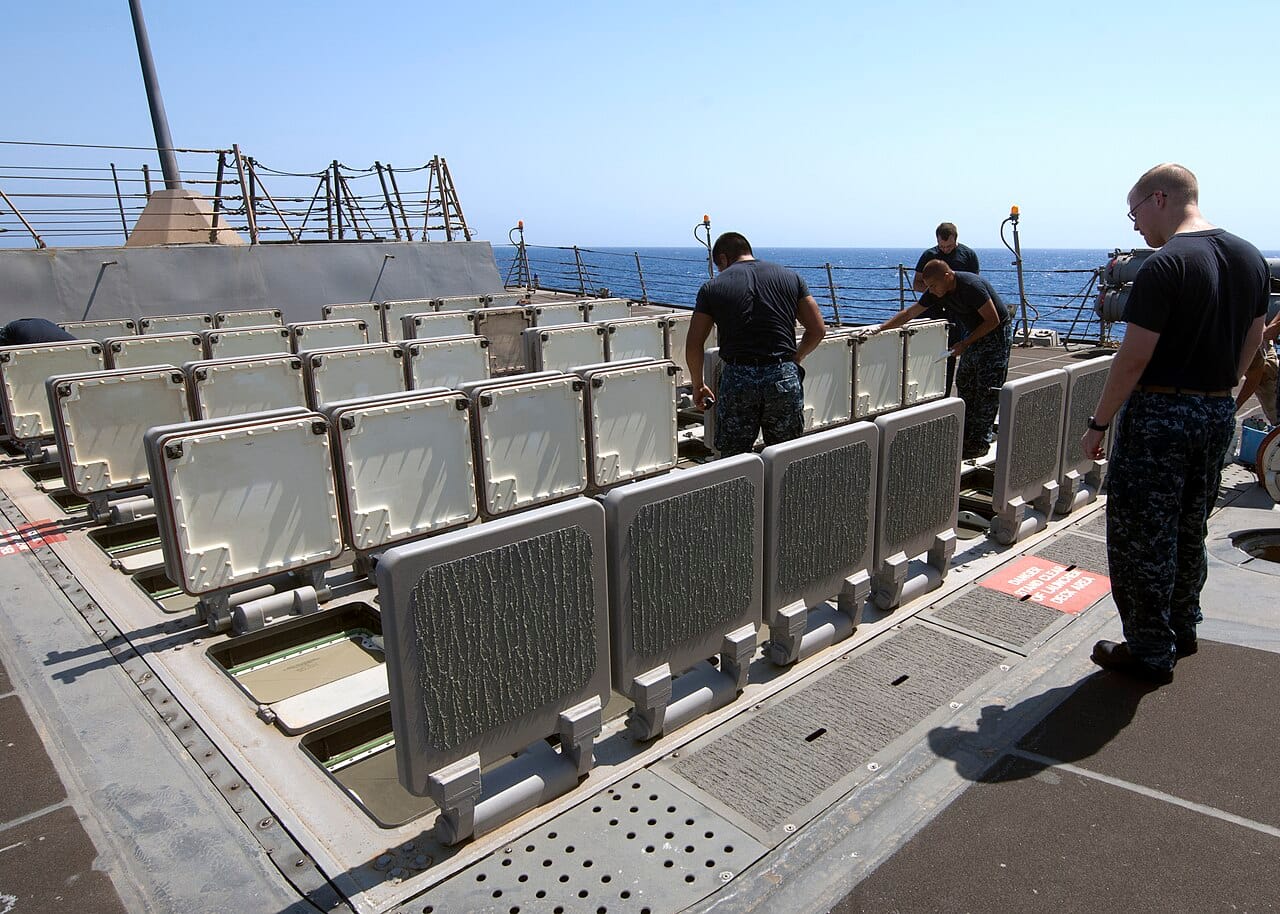
In just four weeks of Operation Epic Fury against Iran, the United States burned through more than 850 Tomahawk cruise missiles. That staggering figure—enough firepower to level multiple cities—represented more than five to eight years of normal production consumed in a single month.
Pentagon officials have stopped mincing words. The regional Tomahawk supply is "alarmingly low." Some senior commanders are using military slang that sends a chill down the spine: the system is approaching "Winchester"—the code for completely out of ammunition.
The Mathematics of Depletion
The numbers expose a structural vulnerability in American military planning. RTX Corporation, the primary manufacturer, currently produces roughly 90 Tomahawks per year under existing contracts. At that rate, the 850 missiles expended in four weeks represent nearly a decade of peacetime production.
Each missile carries a price tag between $1.5 and $2 million. The four-week campaign therefore consumed somewhere between $1.275 billion and $1.7 billion in precision-strike capability. That's not including the operational costs, maintenance, training, and logistical overhead required to deploy them.
RTX has announced a framework to scale production to 1,000 missiles per year—a more than tenfold increase from current rates. But frameworks exist in planning offices. Actual factories, supply chains, and skilled workers take time to build. Years, in fact.
A Familiar Crisis
This scenario feels disturbingly familiar to defense analysts tracking the Ukraine war. Western nations discovered they had vastly underestimated munitions consumption rates. Artillery shells, air defense missiles, and precision weapons flowed to Kyiv far faster than factories could replace them. NATO allies scrambled to increase production lines that had atrophied during decades of relative peace.
The Tomahawk crisis suggests the same lesson hasn't been fully absorbed: the industrial base matters more than possession matters. It's not enough to own 2,000 cruise missiles if you can only manufacture 90 per year. Modern warfare consumes ordnance at rates that peacetime production cannot sustain.
The Pacific Problem
Strategic planners face an uncomfortable question that keeps them awake at night: What if this happens again, but in the Pacific?
The Tomahawk remains America's premier land-attack cruise missile. Its range, accuracy, and survivability make it irreplaceable for certain mission sets. If a conflict erupted with China over Taiwan, or if regional tensions escalated into open warfare, the US military would need every Tomahawk it could field—and many more.
Instead, the stockpile cupboards are approaching empty. The four-week burn rate in the Middle East has hollowed out a critical capability at precisely the moment when having reserves matters most.
The Reckoning Ahead
The Pentagon will accelerate Tomahawk production. Congress will likely approve supplemental defense spending. RTX will hire workers and expand facilities. These changes take time, but they're coming.
What won't change is the reality that America's defense industrial base was built for a different era—one of overwhelming superiority and minimal peer competition. That era is ending. The next conflict, whenever it comes, will demand factories running at full capacity from day one. There will be no time to ramp up production. There will be no possibility of surging output when supplies run low.
The 850 Tomahawks fired in four weeks represent more than a budget line or an operational metric. They represent a warning written in missile contrails across Middle Eastern skies. America's military readiness depends not just on what it owns, but on what it can replace.
Right now, the answer is: not nearly enough.
Sources: The War Zone; The Washington Post; CBS News; 19FortyFive
Preguntas relacionadas
How many Tomahawk missiles did the US fire at Iran in Operation Epic Fury?
In just four weeks of Operation Epic Fury, the US fired more than 850 Tomahawk cruise missiles at Iran — equivalent to five to eight years of normal production consumed in a single month. Pentagon officials called the regional supply 'alarmingly low,' with some commanders warning the system was nearing 'Winchester,' the code for out of ammunition.
How many Tomahawk missiles can the US produce per year?
RTX Corporation, the primary manufacturer, currently builds roughly 90 Tomahawks per year under existing contracts. At that rate, the 850 missiles expended in four weeks represent nearly a decade of peacetime production — a gap examined alongside the question of whether America is running out of missiles.
How much does a Tomahawk cruise missile cost?
Each Tomahawk carried a price tag between $1.5 and $2 million in this accounting, meaning the four-week campaign consumed well over a billion dollars in cruise missiles alone. The cost and slow production rate are why planners worry about sustaining long campaigns against a heavily defended adversary like Iran.
What does 'Winchester' mean in military terms?
'Winchester' is military brevity code meaning a unit or platform is completely out of ammunition. When senior commanders describe the regional Tomahawk supply as approaching Winchester, they are signaling that stocks of the cruise missile are dangerously close to exhaustion in the theater.
Why is the US missile stockpile a strategic vulnerability?
High-intensity campaigns burn precision munitions far faster than industry can replace them. Firing 850 Tomahawks in four weeks against production of about 90 a year exposes a structural mismatch: the US can win the opening phase of a war but struggles to sustain it. The broader toll appears in 39 aeronaves perdidas: El costo total de Epic Fury.


0 Comentarios