
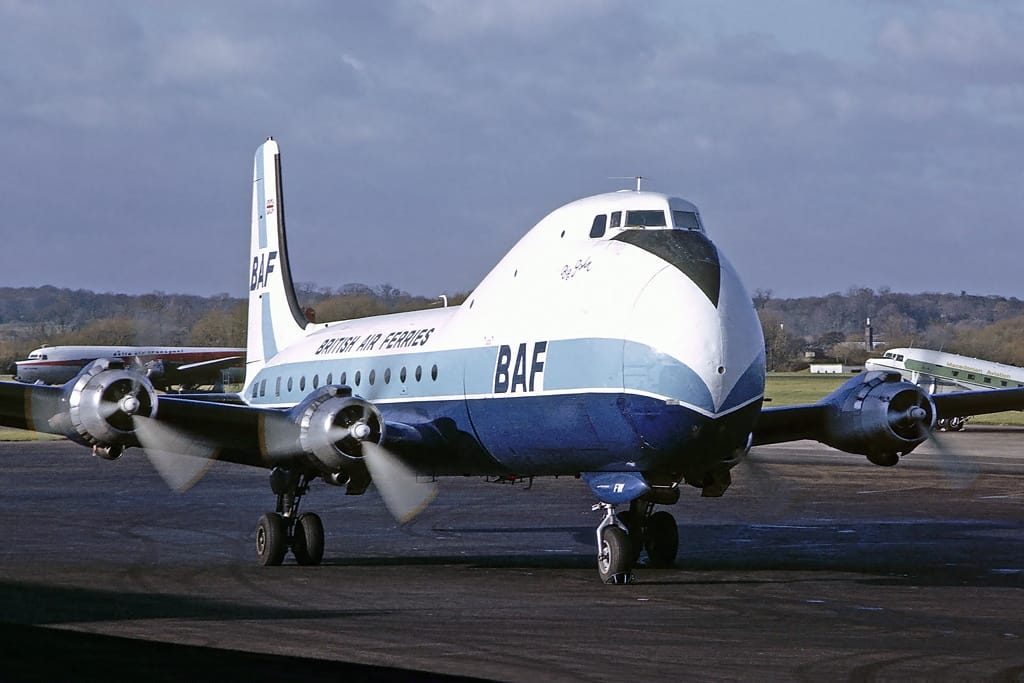
Before there was a Channel Tunnel, and before roll-on, roll-off ferries could swallow a hundred cars at a time, there was a stranger, more glamorous way to take your car to France: you drove it into the nose of an aeroplane. The aircraft that did the swallowing was the Aviation Traders ATL-98 Carvair, a bulbous-nosed oddity whose name said it all: Car via Air.
With its swollen forehead and cockpit perched high above a gaping nose door, the Carvair looked, to modern eyes, uncannily like a shrunken Boeing 747, a full seven years before the real 747 flew. It was the brainchild of a young entrepreneur named Freddie Laker, and for a brief, glorious moment it made flying your Jaguar across the Channel an ordinary thing to do.
Datos rápidos
| Aeronave | Aviation Traders ATL-98 Carvair |
| Base airframe | Converted Douglas DC-4 / C-54 |
| Created by | Freddie Laker’s Aviation Traders (Engineering) Ltd |
| Primer vuelo | 21 June 1961 |
| Capacidad | Five cars loaded through the nose, plus 22 passengers in the rear |
| Firma | Raised nose with a swing door and an elevated cockpit |
| Construido | 21 conversions, the last in 1968 |
| Screen fame | Appeared in the James Bond film Goldfinger (1964) |
Recycling a Warhorse
The genius of the Carvair was that it was not built from scratch. Laker's engineers took the reliable, plentiful Douglas DC-4, a wartime workhorse available cheaply as surplus, and rebuilt its front end entirely. They grafted on a longer nose with a hydraulically operated door that swung aside, and lifted the flight deck up and over it so that cars could be driven straight in at the front. Behind them sat a passenger cabin for 22.
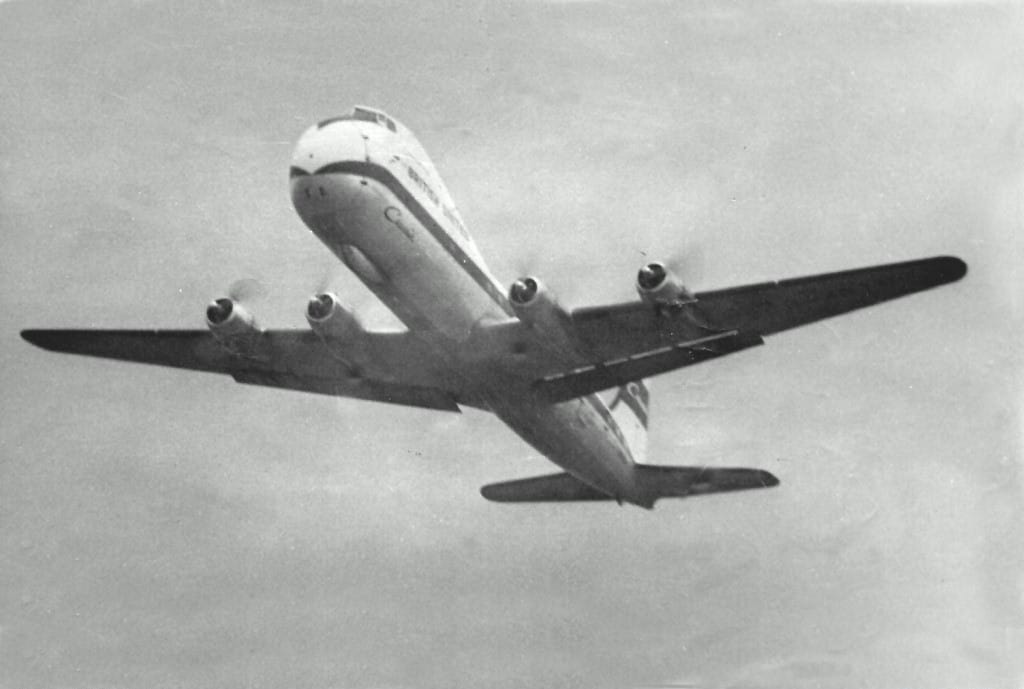
That raised cockpit gave the Carvair its unmistakable humped profile, and its place in aviation trivia. The layout solved a practical loading problem, but it also happened to prefigure the most famous silhouette in aviation.
The Golden Age of the Air Ferry
Through the 1960s, the Carvair worked the cross-Channel car-ferry routes, replacing the older Bristol Freighter. For well-heeled motorists it was pure jet-set glamour: drive up, watch your car vanish into the nose, climb aboard, and be in France in time for lunch. The type became so emblematic of the era that it earned a cameo in Goldfinger, ferrying the villain's Rolls-Royce, and his henchman Oddjob, across to the Continent.
Sunk by the Ferry and the Tunnel
The air ferry's problem was that it was always going to be beaten on price. As the cross-Channel roll-on, roll-off car ferries grew bigger and cheaper, and airports and roads improved, flying a handful of cars across at a time simply could not compete. The market that had justified the Carvair steadily evaporated, and only 21 were ever converted.
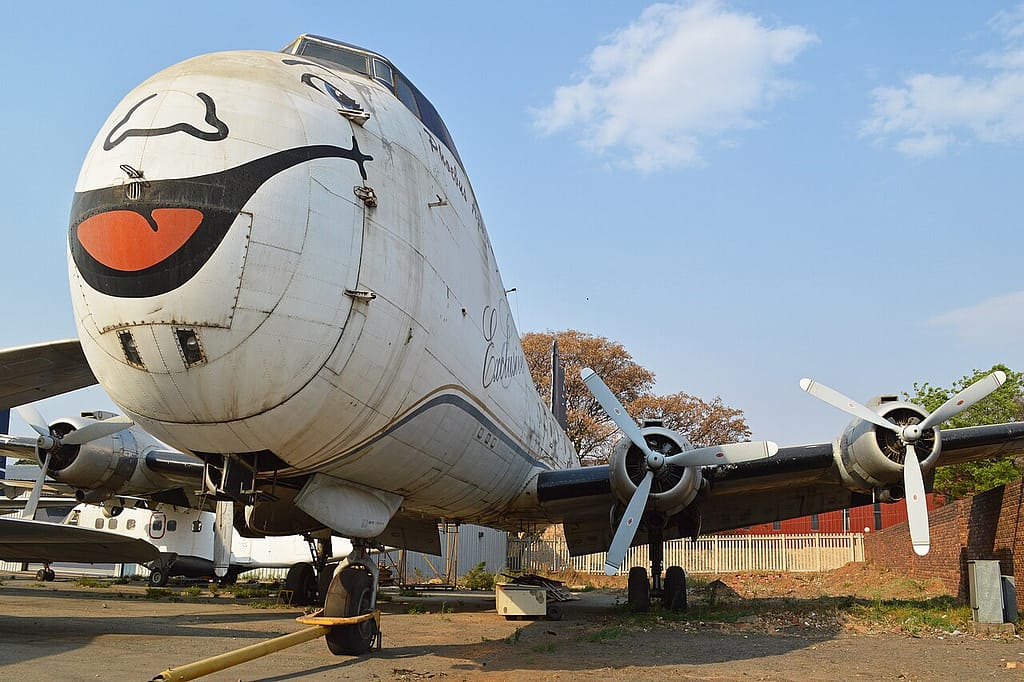
But the Carvairs themselves proved wonderfully durable. Retired from the car-ferry trade, they scattered across the world as humble freighters, hauling cargo everywhere from Africa to Alaska, some soldiering on for decades. A few survive in museums and private hands to this day: strange, lovable, whale-nosed reminders of a time when the most stylish way across the Channel was through the front of an aeroplane.
Sources: Wikipedia; CNN; Airliners.net; Aviation Traders histories.

0 Comentarios