
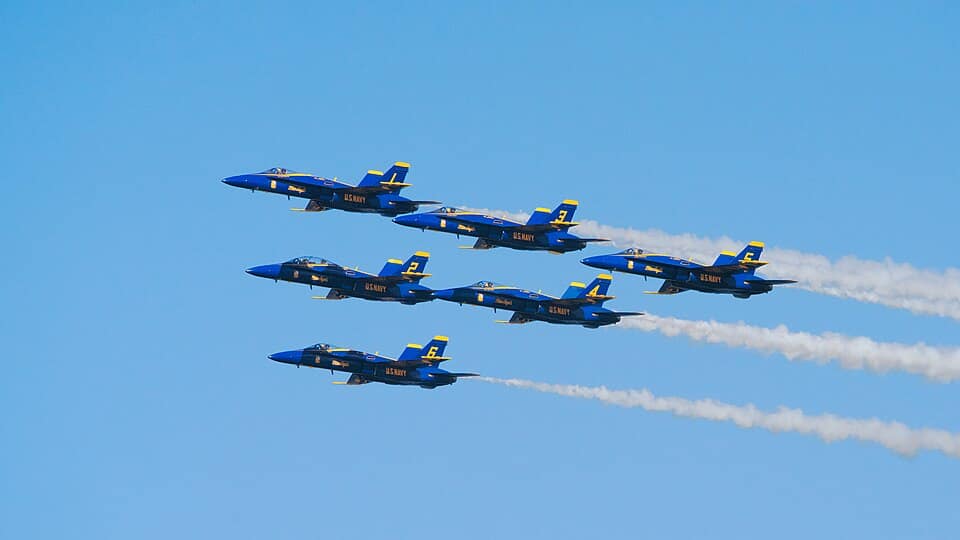
Aeronave Boeing F/A-18E/F Super Hornet (transición desde los Hornets anteriores en 2021)
Fundado 1946 — celebrando su 80 aniversario en 2026
Espectáculos cancelados NAS El Centro (14 de marzo) y NAS Lemoore (21 y 22 de marzo)
Razón Mayores medidas de seguridad en las instalaciones militares debido a la guerra de Irán.
Estado de Fat Albert Los aviones C-130J Super Hercules permanecen en tierra en el Reino Unido desde noviembre de 2025 para la sustitución de la caja del ala.
Próximo (incierto) Cocoa Beach (11-12 de abril), NAS Kingsville (18-19 de abril), Vidalia, GA (25-26 de abril)

Cada primavera, millones de estadounidenses alzan la vista hacia el cielo y observan cómo seis aviones de la Armada pasan a toda velocidad en formación tan cerrada que las puntas de sus alas casi se tocan. Es uno de los grandes espectáculos gratuitos del país, y en 2026, podría no celebrarse.
Los Blue Angels han suspendido sus vuelos. El escuadrón de demostración aérea de élite de la Armada, fundado en 1946 y que este año celebra su 80.º aniversario, ya ha cancelado al menos dos exhibiciones y ha advertido que el resto de la temporada está en peligro. El motivo no es mecánico. No es el clima. Es la guerra.
A medida que la Operación Furia Épica se intensifica en Irán, las instalaciones militares en todo Estados Unidos han reforzado sus medidas de seguridad. Los espectáculos aéreos requieren bases abiertas, puertas abiertas y la presencia de cientos de miles de civiles en instalaciones militares activas. En el contexto actual de amenazas, la Armada no está dispuesta a arriesgarse a esa combinación.
Dos caídos, más en riesgo
La primera cancelación se produjo el 4 de marzo, cuando los Blue Angels cancelaron su presentación prevista en la Base Aeronaval de El Centro, California, programada para el 14 de marzo. Una semana después, el espectáculo en la Base Aeronaval de Lemoore, previsto para el 21 y 22 de marzo, también fue cancelado. Ambas cancelaciones se produjeron apenas unas semanas después de que el equipo recibiera su certificación anual de rendimiento, la luz verde que normalmente marca el inicio de una temporada completa de exhibiciones aéreas.
La Armada citó el "aumento de las medidas de seguridad y la evolución de los requisitos de protección de las fuerzas" en las instalaciones militares. En otras palabras: con las fuerzas estadounidenses en combate activo contra Irán, el Pentágono no quiere desviar recursos de seguridad para gestionar las multitudes en exhibiciones aéreas, ni quiere objetivos fáciles en las puertas de las bases aéreas operativas.
A principios de abril, los espectáculos en Cocoa Beach, Florida (11 y 12 de abril), NAS Kingsville, Texas (18 y 19 de abril) y Vidalia, Georgia (25 y 26 de abril) siguen programados, pero todas las fechas tienen la misma advertencia: están sujetas a cambios a medida que la Armada reasigna recursos. Nadie en Pensacola está haciendo promesas por el momento.

Fat Albert atrapado al otro lado del Atlántico
La interrupción del espectáculo aéreo sería dolorosa incluso si todo el equipo estuviera disponible. Pero la situación es aún peor. Fat Albert, el icónico avión de transporte C-130J Super Hercules de los Blue Angels, ni siquiera se encuentra en el país.
El avión se encuentra en el Reino Unido desde noviembre, donde se le está reemplazando la caja central integral del ala, una revisión estructural masiva que los Marines describen como la reconstrucción completa de la columna vertebral del avión. El C-130J fue adquirido originalmente a la Real Fuerza Aérea en 2019 y se unió a los Blue Angels en 2020. Fat Albert suele abrir cada espectáculo con una atronadora demostración en solitario de 15 minutos que incluye un despegue en pista corta, aproximaciones tácticas pronunciadas y pasadas a baja altura. Sin ella, incluso los espectáculos que se realizan se sentirán incompletos.
Los Blue Angels han incluido un C-130 en sus espectáculos desde 1970. Toda una generación de aficionados a la aviación nunca ha visto una actuación de los Blue Angels sin el gran turbohélice animando al público antes de la llegada de los aviones a reacción. En 2026, tal vez tengan que acostumbrarse.

Un aniversario sin fiesta
El momento es particularmente amargo. En 2026 se conmemora el 80.º aniversario de los Blue Angels. El escuadrón se fundó el 24 de abril de 1946, apenas ocho meses después del fin de la Segunda Guerra Mundial, cuando el almirante Chester Nimitz ordenó a la Armada la creación de un equipo de demostración aérea para mantener el interés del público en la aviación naval. El equipo original volaba Grumman F6F Hellcat. Ocho décadas después, sus sucesores vuelan Boeing F/A-18E/F Super Hornet a velocidades superiores a 1126 km/h, realizando maniobras con una fuerza de 7,5 G que ponen a prueba los límites de la resistencia humana.
Entre 1946 y 2025, los Blue Angels actuaron ante unos quinientos millones de espectadores. Son, sin duda alguna, la herramienta de reclutamiento más eficaz que la Armada de los Estados Unidos haya creado jamás. Tras cada espectáculo, la carpa de relaciones públicas del equipo se llena de adolescentes que quieren saber cómo convertirse en aviadores navales. Para muchos de ellos, el espectáculo de los Blue Angels marca el momento en que la aviación deja de ser un simple póster en la pared y se convierte en un sueño hecho realidad.
Que esos adolescentes puedan realizar su exhibición este año depende de algo que ocurra a 6000 millas de distancia. Si la guerra en Irán disminuye, las puertas podrían abrirse. Si no, la temporada del 80.º aniversario de los Blue Angels podría ser la más tranquila en la historia del escuadrón. Los aviones están listos. Los pilotos están listos. La guerra simplemente tiene otros planes.
Fuentes: Flying Magazine, Aero-News Network, Marina de los EE. UU.
Preguntas relacionadas
¿Quiénes son los Ángeles Azules?
Los Blue Angels son el escuadrón de demostración aérea de la Armada de los Estados Unidos, fundado en 1946 y uno de los equipos acrobáticos más antiguos del mundo. Con base en la Estación Aeronaval de Pensacola, realizan exhibiciones de vuelo en formación de precisión en festivales aéreos por todo Estados Unidos, atrayendo a millones de espectadores cada año. En 2026 celebraron su 80.º aniversario.
¿Qué aviones utilizan los Blue Angels?
Los Blue Angels vuelan el Boeing F/A-18E/F Super Hornet, habiendo realizado la transición desde los Hornets más pequeños en 2021. Es el mismo caza de ataque embarcado utilizado por los escuadrones de primera línea de la Armada, el tipo de avión que se vuela en misiones exigentes como aterrizajes nocturnos en portaaviones.
¿Por qué se cancelaron los espectáculos de los Blue Angels de 2026?
Los Blue Angels cancelaron sus espectáculos en NAS El Centro y NAS Lemoore en marzo de 2026 debido al aumento de la seguridad en las bases militares durante la guerra con Irán. Los espectáculos aéreos necesitan bases abiertas y grandes multitudes civiles, una combinación que la Armada no arriesgaría mientras las fuerzas estadounidenses estuvieran en combate activo, la misma presión que Retiraron al equipo de demostración del F-22 de los espectáculos aéreos..
¿Qué es Fat Albert?
Fat Albert es el avión de transporte C-130J Super Hercules de los Blue Angels, que abre cada espectáculo con un solo de aproximadamente 15 minutos de despegues en pistas cortas y pasadas a baja altura. Adquirido de la Real Fuerza Aérea en 2019, permanece en tierra en el Reino Unido desde noviembre de 2025 para la sustitución de la caja central del ala.
¿A qué distancia vuelan los Blue Angels entre sí?
En su característica formación de diamante, los aviones de los Blue Angels vuelan con las puntas de las alas separadas apenas unos 45 centímetros, pilotados manualmente sin asistencia informática. Esa precisión es lo que convierte al equipo en uno de los grandes espectáculos gratuitos de la aviación.
¿Cuál es la diferencia entre el Super Hornet y el Hornet clásico?
El Boeing F/A-18E/F Super Hornet es más grande y potente que el F/A-18 Hornet original, con mayor alcance, capacidad de carga y empuje. Los Blue Angels lo adoptaron en 2021 para equipararlo a las aeronaves utilizadas actualmente por las alas aéreas de los portaaviones.
0 Comentarios