Historia y leyendas, Aviación militar
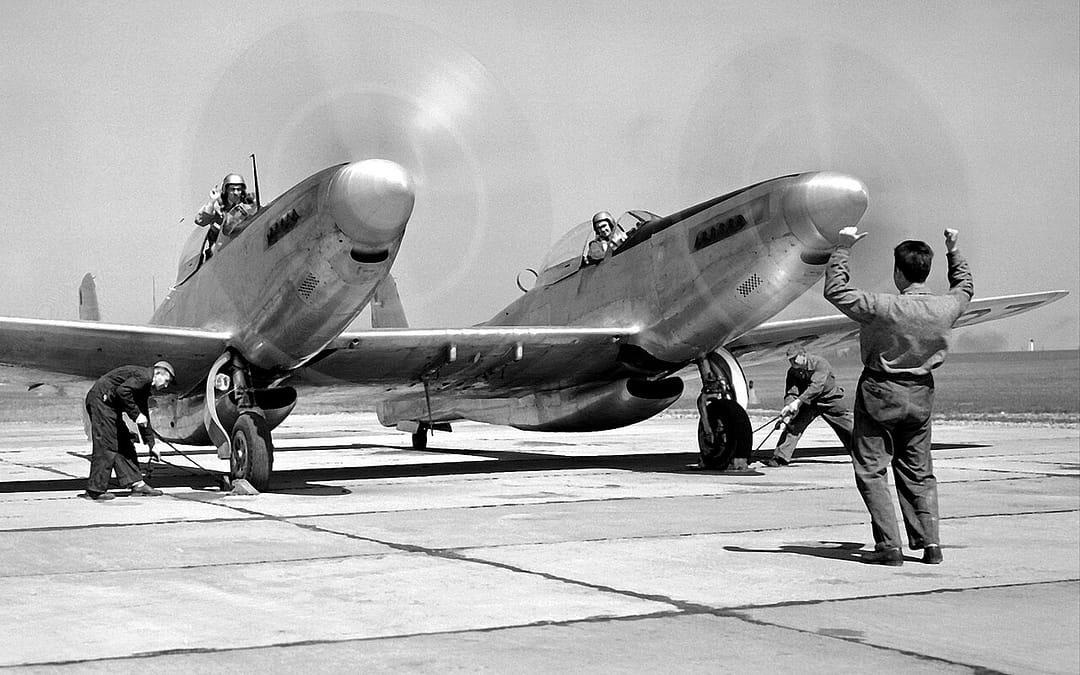
Glue two P-51 Mustangs together along the wing. Share a tailplane between them. Put the radio operator’s seat in the right fuselage. Tell the pilot in the left fuselage to fly the aircraft. The result is the F-82 Twin Mustang — the longest-range piston fighter...

Historia y leyendas, Aviación militar
He had been awake for 23 hours before he even took off. Charles Lindbergh spent the night of 19 May 1927 in a hotel near Roosevelt Field, Long Island, unable to sleep, while rain hammered the airfield and weather reports from the Atlantic were ambiguous at best. At...
Historia y leyendas, Aviación militar
Every military pilot flying today sits on a device that can blast them out of a crippled aircraft in a fraction of a second. From the moment of handle pull to full parachute deployment takes less than two seconds. The seat fires its occupant at up to 20g and 600 mph...
Historia y leyendas, Aviación militar
Of all the strange aircraft the United States built during the Second World War — and there were many — none was stranger, on paper or in person, than the Northrop XP-79. The XP-79 has gone down in history as a manned missile. Its mission, so the famous story goes,...
Historia y leyendas, Aviación militar
The standard British Quick Reaction Alert intercept, in the Cold War era, went something like this. NATO radar would call out an unidentified contact entering the United Kingdom Air Defence Region. Two RAF Phantom FGR.2s, held at ten minutes’ readiness around...
Historia y leyendas, Aviación militar
Louis Blériot was flying on a badly burned foot. His monoplane — a fragile structure of spruce, ash, and rubberised canvas — had a 25-horsepower engine that overheated on long runs. He had no compass. No radio. No life jacket. As he climbed to 250 feet over the...
Historia y leyendas, Aviación militar
In 1924, flying around the world meant crossing the Pacific Ocean in open biplanes, with engines that had to be rebuilt every few thousand miles, relying on supply ships pre-positioned across the widest ocean on Earth by a US Navy that had deployed its vessels months...
Historia y leyendas, Aviación militar
They were bicycle mechanics. No formal engineering degrees, no government funding, no team of PhDs. Just Wilbur and Orville Wright, a shed in Dayton, Ohio, and an obsession that bordered on madness. By the time they arrived at Kill Devil Hills, North Carolina in...
Historia y leyendas, Aviación militar
The US Army Air Forces didn’t want them. The military establishment was convinced, and had “proved” through pseudo-scientific studies, that Black men lacked the intelligence, the nerve, and the coordination to fly combat aircraft. When political...
Historia y leyendas, Aviación militar
Durante 34 días consecutivos, celebramos a los mejores ases de la aviación de combate de la historia: desde Adolphe Pégoud, el francés que inventó el combate aéreo, hasta MM Alam, el as pakistaní que derribó cinco aviones en menos de un minuto. Si te perdiste alguna de esas publicaciones, aún puedes encontrarlas...
Historia y leyendas, Aviación militar
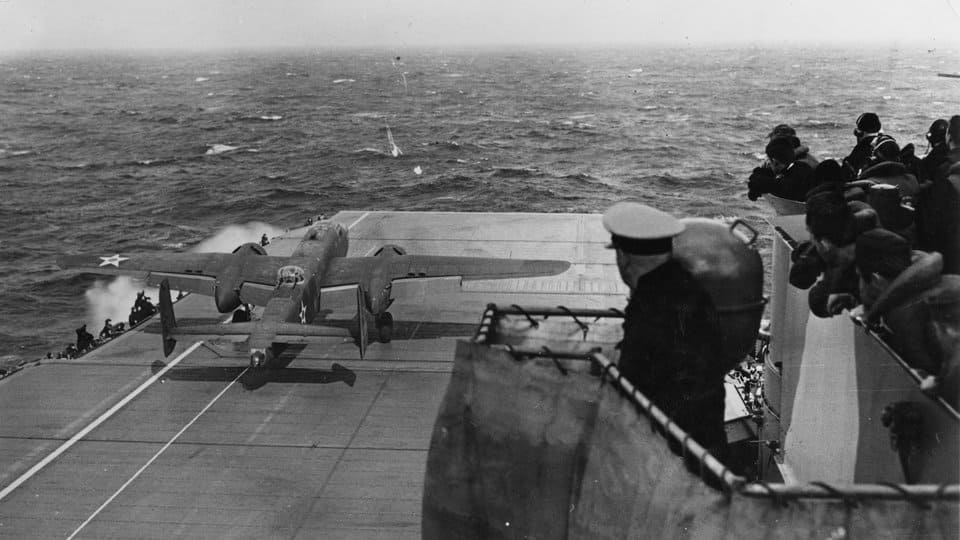
On 18 April 1942, four months after Pearl Harbor, sixteen B-25 Mitchell medium bombers launched from the deck of USS Hornet — something that had never been done before and would never be attempted again — and flew 1,000 miles to bomb Tokyo. The military damage they...
Historia y leyendas, Aviación militar
Quick FactsNationalityPakistani 🇵🇰Aerial Victories9 (5 in under 60 seconds — world record sortie)Aircraft FlownF-86 SabreWars1965 Indo-Pakistani WarBorn / Died6 Jul 1935 – 18 Mar 2013 (age 77)UnitNo. 11 Squadron PAF “Arrows” Mohammad Mahmood Alam 1965 —...



Comentarios recientes